

Nutrition Career & Education:What Nutritionists Know and What You Can Apply Every Week
Two kinds of people read about nutrition careers. The first is exploring nutrition as a professional path — researching degrees, certifications, coaching credentials, and what each actually earns. The second has no intention of becoming a nutritionist but wants to understand what nutrition professionals know and how they apply it — so they can apply the same structured thinking to their own plate. This guide serves both. It covers what a nutrition degree qualifies you for, how to become a certified nutrition coach or specialist, what different credentials require and pay, and then does something most career guides skip entirely: it takes the structured, evidence-based weekly systems that professional nutritionists use with clients and makes them directly applicable to anyone. Because professional nutrition knowledge and practical daily nutrition are the same discipline — just at different scales.
What can you do with a nutrition degree?
A nutrition degree qualifies graduates for roles including registered dietitian, public health nutritionist, community health educator, food service director, corporate wellness specialist, and nutrition researcher. Graduate-level study opens clinical, research, and sports nutrition pathways. Many degree holders also complete nutrition coaching certifications to work independently with individual clients.
The nutrition profession covers a wider range of roles than most career guides acknowledge, and the degree level determines how wide. A bachelor’s degree in nutrition, dietetics, or nutritional science typically opens positions in community health education, food service management, corporate wellness programme coordination, and public health outreach. These roles apply nutrition knowledge at the population and institutional level.
Graduate study reshapes the career landscape. A master’s degree in clinical nutrition or dietetics — combined with an accredited supervised practicum and a licensing examination — leads to the Registered Dietitian Nutritionist (RDN) credential, the gold-standard clinical qualification in the United States. Master’s degrees in nutritional science open research positions, hospital-based clinical nutrition roles, and academic careers. A doctoral degree (PhD) in nutrition science or nutritional biochemistry supports senior research, university faculty, and public health policy leadership.
A fourth path runs independently of advanced academic credentials: completing a recognised coaching certification alongside or instead of graduate study, then building an independent client-facing practice in wellness, fitness, or performance nutrition. This path is accessible without a graduate degree and is one of the fastest-growing segments of the nutrition industry. The comparison table below maps all four pathways side by side.
Nutrition Career Pathways — Credentials, Training & Salary Ranges (Approximate — verify current BLS.gov data before publishing)
| Role | Credential | Training Path | Approx. Salary Range | Degree Req’d | Section |
|---|---|---|---|---|---|
| Nutrition Coach | NASM / ISSA / Precision Nutrition | Cert. program, 3–12 months | $30K–$70K | None required | H2 #4, #5 |
| Registered Dietitian (RDN) | RDN via CDR exam | Master’s + 1,200hr internship + exam | $60K–$85K | Master’s+ | H2 #1, #2 |
| Certified Nutrition Specialist | CNS via BCNS board | Master’s + 1,000 supervised hrs + exam | $65K–$95K | Master’s | H2 #4, #5 |
| Public Health Nutritionist | MPH or state licence | Graduate degree + state requirements | $50K–$80K | Master’s | H2 #2, #3 |
| Sports Nutritionist | CISSN or RD specialisation | Certification or degree + sports focus | $45K–$75K | Cert. or degree | H2 #3 |
| Nutrition Researcher | PhD (most senior roles) | Doctoral degree + research position | $65K–$110K | Doctoral | H2 #2 |
What can you do with a masters in nutrition?
A master’s in nutrition opens clinical, research, and specialist roles unavailable to bachelor’s graduates. Paths include registered dietitian practice requiring supervised internship and licensure, clinical nutrition specialist, public health nutritionist, nutrition researcher, and corporate wellness director. Many master’s-level nutritionists also qualify for the Certified Nutrition Specialist credential after completing supervised practice hours.
The master’s degree is the threshold at which the nutrition profession’s most demanding and best-compensated roles become accessible. As of 2024, the Commission on Dietetic Registration (CDR) moved the minimum educational requirement for the RDN credential to graduate level — meaning an accredited master’s degree is now the standard pathway into clinical dietetics practice in the United States.
The Registered Dietitian Nutritionist (RDN) pathway requires: an accredited graduate-level nutrition or dietetics programme, completion of an accredited dietetic internship providing 1,200 or more supervised practice hours, and a passing score on the CDR examination. RDNs practice in hospitals, outpatient clinics, long-term care facilities, and private practice. They are the profession’s clinical standard for medical nutrition therapy.
The Certified Nutrition Specialist (CNS) credential is the highest non-medical nutrition qualification in the United States. Eligibility requires a master’s or doctoral degree in a nutrition-related field, 1,000 supervised practice hours across defined competency areas, and a passing score on the Board for Certification of Nutrition Specialists (BCNS) examination. CNS holders work in functional medicine clinics, sports medicine, and specialist private practice.
A master’s in nutritional science — the research track rather than clinical — opens roles as a nutrition researcher, public health nutritionist, food policy analyst, or university lecturer. Many graduates combine research positions with clinical or coaching practice, creating hybrid career profiles that span both the laboratory and the consultation room.
What jobs can you get with a nutrition degree or nutritional science degree?
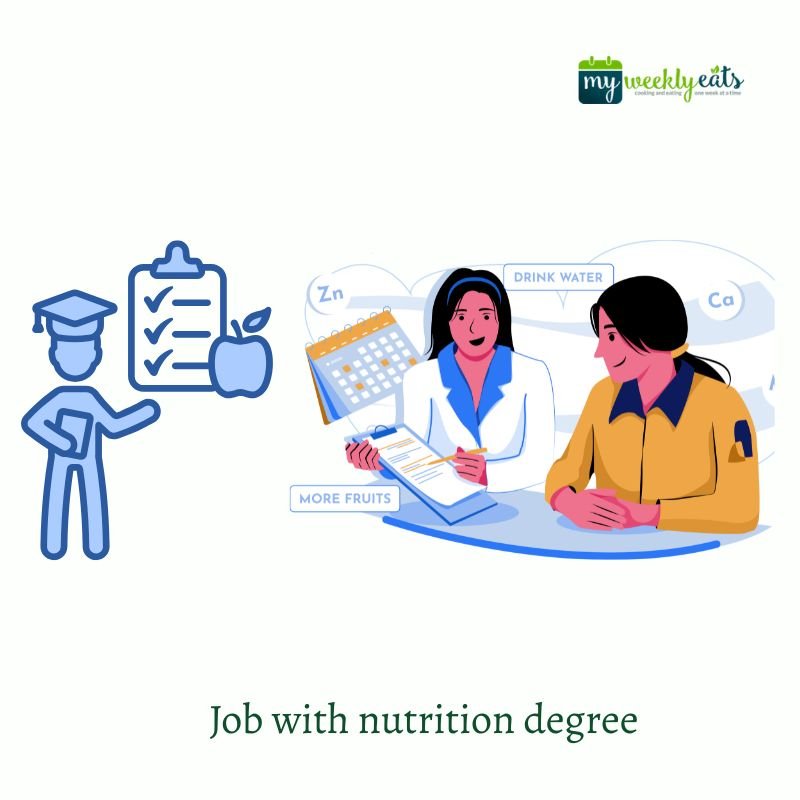
Nutrition degree holders work as registered dietitians, public health nutritionists, community health educators, food scientists, school nutrition directors, and corporate wellness specialists. Nutritional science degrees support additional research and laboratory roles. Higher-earning positions — clinical dietitian, nutrition researcher, sports nutritionist — typically require graduate study or board certification beyond the bachelor’s.
Six job categories account for the majority of nutrition degree placements in the United States. Each is summarised below with education requirements and approximate salary ranges, sourced from Bureau of Labor Statistics data and salary aggregators — verify current figures at bls.gov before publishing, as these update annually.
Registered Dietitian Nutritionist (RDN)
~$66K–$85K · Master’s + CDR exam
The primary clinical nutrition role in the US. Practises medical nutrition therapy in hospitals, outpatient clinics, and long-term care. Requires graduate degree, accredited internship, and CDR licensing examination. The most regulated and widely recognised nutrition qualification.
Public Health Nutritionist
~$50K–$75K · Bachelor’s minimum
Designs and implements community nutrition programmes. Works with government health departments, NGOs, and public health agencies to address population-level nutritional challenges. Master’s degree increasingly required for senior roles.
Food Scientist
~$55K–$80K · Nutritional science degree
Develops nutritional products, conducts food safety testing, and works in research and development. Often requires a nutritional science degree rather than clinical nutrition. Strong overlap with food technology and biochemistry.
Corporate Wellness Specialist
~$45K–$70K · Bachelor’s + certification
Designs employee wellness programmes incorporating nutrition, physical activity, and health coaching for organisations. Bachelor’s degree plus a coaching certification is often sufficient for entry-level positions in corporate settings.
Sports Nutritionist
~$45K–$75K · CISSN or RD + sports focus
Works with athletes and teams on performance nutrition, body composition, and recovery. Often requires the CISSN (Certified International Sports Sciences Nutritionist) specialisation credential or an RDN with sports nutrition training.
School Nutrition Director
~$50K–$80K · Nutrition degree + state credential
Manages school meal programmes at district level, ensuring nutritional compliance with federal standards. Requires a nutrition degree and often a state-specific School Nutrition Director credential or equivalent qualification.
How do you become a certified nutrition coach or certified nutrition specialist?
To become a certified nutrition coach, complete an accredited program — offered by NASM, ISSA, Precision Nutrition, or ACE — requiring three to twelve months of coursework and a passing examination. To become a Certified Nutrition Specialist (CNS), a master’s degree in nutrition, 1,000 supervised practice hours, and a board examination administered by the Board for Certification of Nutrition Specialists are required.
Two distinct pathways lead to professional nutrition practice. The first is accessible to anyone with a high school diploma. The second requires graduate-level academic commitment. Both produce practitioners who build the structured weekly nutrition systems that change client outcomes — the same systems this guide applies to everyday meal planning.
Becoming a Nutrition Coach
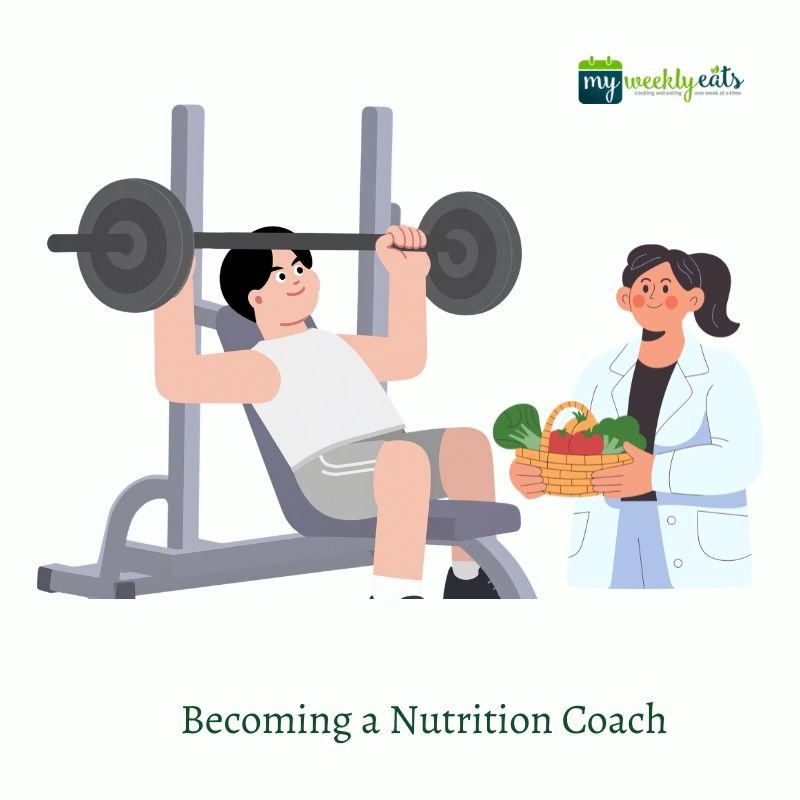
The nutrition coaching pathway is the most accessible entry point into professional nutrition practice. No bachelor’s degree is required by the five leading certification bodies. A high school diploma, completion of coursework, and a passing examination are the standard prerequisites.
Organisation & CredentialDurationApprox. Cost
NASM — Certified Nutrition Coach (CNC)~3 months~$600–$700
Precision Nutrition — PN Level 1~12 months~$1,200
ISSA — Nutritionist Certification~4 months~$500–$600
ACE — Fitness Nutrition Specialist~4 months~$799
AFPA — Holistic Nutrition Coach~6 months~$499
Certification costs and program structures change regularly. Verify current pricing directly on each organisation’s official website before enrolling. NASM stands for the National Academy of Sports Medicine; ISSA is the International Sports Sciences Association; ACE is the American Council on Exercise; AFPA is the American Fitness Professionals & Associates.
Nutrition coaches guide lifestyle and habit change, set nutritional goals, and build sustainable eating structures. They do NOT diagnose medical conditions, treat nutritional deficiencies, or prescribe therapeutic diets. These are legally the domain of Registered Dietitian Nutritionists in most US states. This boundary protects both the coach and the client — and it is non-negotiable regardless of certification level.
Becoming a Certified Nutrition Specialist (CNS)
The CNS is the highest non-medical nutrition credential available in the United States and is designed for practitioners who need clinical-level authority without a medical degree. Eligibility requirements are specific and non-negotiable.
A master’s or doctoral degree in a nutrition-related field — nutritional science, clinical nutrition, or biochemistry — is required. Beyond the degree, candidates must complete 1,000 supervised practice hours across specific competency domains, including medical nutrition therapy, functional nutrition, and patient education. These hours must be supervised by a qualified practitioner and documented for BCNS review. The Board for Certification of Nutrition Specialists administers the final examination.
CNS holders work in functional medicine clinics, hospital-based nutrition departments, sports medicine centres, and independent specialist practice. The credential is recognised by an increasing number of insurance providers and medical institutions — a meaningful distinction from coaching-level certifications.
These are the professionals who build the structured, evidence-based weekly nutrition systems that transform client health over time. The same five principles they use with clients are covered in H2 #7 — and apply directly to your own weekly plate.
How do you get a nutrition certification?
Nutrition certifications are obtained through accredited programs offered by organisations including NASM, ACE, ISSA, Precision Nutrition, and AFPA. Most coaching-level certifications require a high school diploma, completed coursework, and a passing exam score. Higher-level credentials — CNS, RD — additionally require graduate education and supervised clinical or practice hours before eligibility.
The nutrition certification landscape operates across three distinct tiers. Understanding which tier matches your goals prevents investing time and money in a credential that does not fit your intended practice scope.
Tier 1 — Coaching Certifications
Entry credentials from NASM, ACE, ISSA, Precision Nutrition, and AFPA. Open to candidates without a nutrition degree. Self-paced, largely online delivery. Cost approximately $400–$1,200. A passing examination is required. These credentials qualify practitioners for wellness coaching, gym-based nutrition support, and independent lifestyle nutrition practice.
Tier 2 — Registered Dietitian Nutritionist (RDN)
Administered by the Commission on Dietetic Registration (CDR). Requires an accredited graduate-level nutrition or dietetics programme, an accredited dietetic internship of 1,200 or more supervised hours, and a passing CDR examination. The RDN is both a voluntary certification and a legally recognised professional qualification — in most US states, providing medical nutrition therapy without RDN status is regulated or prohibited.
Tier 3 — Certified Nutrition Specialist (CNS)
Administered by the Board for Certification of Nutrition Specialists (BCNS). Requires a graduate or doctoral degree in a nutrition-related field, 1,000 supervised practice hours across specific competency domains, and a passing BCNS board examination. The CNS opens clinical and specialist practice pathways that coaching-level certifications do not.
The distinction between certification (a voluntary credential from a professional organisation) and licensure (a state-regulated legal requirement to practise) matters in practice. Most US states regulate clinical nutrition practice — meaning the RDN or an equivalent state licence is legally required to provide clinical nutrition services, regardless of any other certifications held. Verify your specific state’s requirements at your state’s dietetics licensing board before entering any paid nutrition practice.
How much does a nutrition coach make?KD 16–19 · Quick Win
Nutrition coach earnings range from approximately $30,000 to $70,000 annually, depending on certification level, client base, and whether practice is in-person or online. Self-employed coaches set their own rates — reported averages range from $60 to $120 per session. Certified Nutrition Specialists and Registered Dietitians with clinical credentials typically earn in the $55,000 to $90,000+ range.
Nutrition coach income varies more than most career guides acknowledge — because the role spans employed positions with fixed salaries and self-employed practice with variable, potentially uncapped earnings. The setting, not just the credential, determines what a nutrition coach earns.
Employed Position
$35K–$55K
Gyms, corporate wellness programmes, health centres. Predictable salary, benefits included. Lower floor than self-employment; lower ceiling too. Stable for building early experience.
Self-Employed
$60–$120/hr
Reported session rates. Monthly packages ($200–$600/mo per client) common. Full client roster can reach or exceed $70K annually. Requires consistent client acquisition.
RDN / Clinical
$66K–$85K
Bureau of Labor Statistics median for dietitians and nutritionists (verify current BLS.gov data before publishing). Hospital and outpatient clinical roles with licensure earn at this range.
CNS / Specialist
$65K–$95K+
Certified Nutrition Specialists in clinical, functional medicine, or specialist private practice. Graduate credential and supervised hours investment returns measurably in long-term earnings.
Factors that measurably increase earnings across all nutrition roles: advanced certification level (CNS above basic coaching credential), specialisation (sports nutrition, prenatal nutrition, eating disorder recovery), online practice extending reach beyond local geography, and a content presence building an audience alongside direct coaching. All salary figures above are approximate reported ranges — individual income varies significantly based on location, experience, and client base.
How do you make a nutrition plan — the way professional nutritionists do?⭐
Professional nutritionists build plans around five principles: calculating individual caloric and macronutrient needs, prioritising micronutrient density across food groups, planning meals weekly rather than daily, accounting for lifestyle and food preferences, and building in adjustment flexibility. These same five principles apply whether you are a professional building client plans or an individual planning your own weekly plate.
Here is where the two audiences in this article — career researchers and everyday people who want to eat better — meet the same answer. The structured approach professional nutritionists use with clients is not proprietary clinical knowledge. It is a set of evidence-based principles that anyone can apply, with the right framework. The professionals you have read about above do not use different nutritional science from what everyone else eats. They apply it more deliberately.
1
Calculate Caloric & Macronutrient Needs
Professional nutritionists begin every client plan by calculating Total Daily Energy Expenditure (TDEE) — the total calories burned across basal metabolism, physical activity, and the thermic effect of food. Macronutrient targets (carbohydrates, protein, fat) are set based on health goal, activity level, and individual metabolic response. This is not guesswork — it is a structured starting point that every professional plan shares.
2
Prioritise Micronutrient Density Across Food Groups
Professionals do not plan around calories alone. They rotate food groups across the week — leafy greens, cruciferous vegetables, legumes, quality proteins, whole grains, and healthy fats — to hit vitamin and mineral targets that no single food provides. This is the nutrient-density approach that distinguishes professional plans from simple calorie counting.
3
Plan Weekly, Not Daily
The professional consensus is that a single day’s nutritional intake is far less important than the weekly pattern. Nutritionists build week-long frameworks rather than rigid daily menus — because life disrupts daily plans and weekly patterns absorb that disruption. A missed Tuesday meal does not derail a well-structured weekly plan.
4
Account for Lifestyle, Budget & Food Preferences
Sustainable plans are built for adherence, not perfection. Professional nutritionists integrate cooking time, budget constraints, cultural food traditions, and genuine food preferences into every plan they build. A plan the client will not follow is not a plan — it is a document. This principle is the reason professional nutrition plans outperform generic diet advice in long-term outcomes.
5
Build In Flexibility & Review
Professional plans are not static. They are reviewed based on how the client responds — in energy levels, digestion, weight, and overall wellbeing — and adjusted accordingly. Rigidity produces short-term compliance and long-term abandonment. Built-in flexibility is not a weakness in a nutrition plan; it is the mechanism that makes it sustainable past the first month.
MyWeeklyEats was built around these same five professional principles — to give every person access to the structured weekly approach that trained nutritionists use with paying clients every day, without a degree, a certification, or a consultation fee.
How do you improve your diet and nutrition — practically, this week?Conversion
Improving nutrition consistently requires weekly structure, not daily willpower. Evidence supports three core strategies: planning meals in advance to prevent convenience-driven choices, rotating food groups across the week to ensure broad micronutrient coverage, and reviewing weekly patterns rather than individual meals. Weekly planning converts nutrition knowledge into lasting dietary change.
You now understand what nutrition professionals do — the credentials they hold, the systems they build, and the five principles they apply with every client. The question that follows is immediate and practical: how do you apply what you just learned, this week, without a nutrition degree or a coaching session?
Professional nutritionists give every new client the same starting answer: begin with structure. Not perfection. Structure.
Plan Before You Shop
Research consistently links meal planning to better dietary quality and reduced dependence on convenience food. A 2017 study in the International Journal of Behavioral Nutrition and Physical Activity found that meal planning was significantly associated with improved diet quality and greater food variety. Professional nutritionists plan their clients’ weeks before the week begins — not during it, when hunger and convenience dominate every choice. The same applies to planning your own plate.
Rotate Food Groups Weekly, Not Daily
As Principle 3 in H2 #7 covered, professional nutrition plans are built around weekly patterns. Dark leafy greens, cruciferous vegetables, legumes, whole grains, quality proteins, and healthy fats each contribute distinct vitamins and minerals that no other food group replaces. Rotating across all of them weekly is what professional plans actually do — and what most people who eat without a plan consistently miss. Daily perfection is not the goal. Weekly coverage is.
Review Patterns, Not Meals
Professional nutritionists do not critique individual meals. They assess the week’s aggregate: total vegetable servings, protein distribution, fiber intake, micronutrient coverage. This frame removes guilt from single-meal decisions and redirects attention to the pattern that determines long-term health outcomes. Applied weekly — not daily — it is the most sustainable and evidence-consistent approach to lasting dietary improvement available to anyone.
Every nutritionist who works with clients on long-term dietary habits names weekly structure as the single most reliable factor in sustained improvement. Not motivation. Not discipline. Structure. MyWeeklyEats makes that structure available — without a nutrition degree, a coaching session, or a referral.
Apply What Professionals Know to Your Plate
The five-principle nutrition planning system used by certified nutritionists and registered dietitians — applied practically to your weekly meals, starting today.Apply Professional Nutrition Principles at MyWeeklyEats.com →
The Bottom Line
Two things are consistently true about nutrition, whether you are pursuing it as a career or applying it to your own plate. The first is that professional nutrition practice is more structured and evidence-based than most people realise — credentials, supervision requirements, scope of practice boundaries, and systematic weekly planning all exist because nutrition outcomes depend on methodology, not just motivation or information.
The second is that the methodology professionals use is not beyond reach. The five principles covered in H2 #7, the weekly rotation approach, and the pattern-over-meal-perfection framework are accessible to anyone willing to apply them consistently. The gap between what nutritionists know and what you can do this week is smaller than it looks from a distance. Structure is what closes it.