Nutrition Fundamentals & Definitions: What the Core Terms Actually Mean
Nutrition is one of the most discussed topics in modern life — and one of the most poorly defined. You see the word on food labels, in medical appointments, across social media, and in school curricula every week.
Yet if you tried to explain the precise difference between nutritional value and nutritional density, or distinguish nutrition science from nutritional therapy, or define what nutritional epigenetics actually studies — most people would struggle. Not because they are uninformed, but because no one ever laid out the vocabulary clearly.
These are not obscure academic terms. They appear on every food package, every dietary guideline, and every piece of health content you encounter. Getting them wrong changes how you evaluate food, read research, and make decisions about professional nutrition support.
This guide defines eight core nutrition terms precisely — including what each one is not, which is the distinction most glossaries skip. The most commonly misunderstood term in the entire cluster is not the most complex one. It is the most basic: the difference between nutrition and nutritional value. Those two words are used interchangeably every day, and they describe fundamentally different things.
What is nutrition — and what is the short, precise answer?
| Quick AnswerNutrition is the biological process by which organisms ingest, digest, absorb, and use food compounds to sustain life, produce energy, build tissue, and regulate all physiological systems. The short answer: nutrition is what the body does with food. A nutrient is the compound in food that the body extracts through that process. |
Most definitions of nutrition describe what it is in one sentence and move on. That approach leaves the most important distinctions untouched. Nutrition has three levels of meaning that operate simultaneously, and understanding all three changes how you read every piece of food content you encounter.
Nutrition at the cellular level
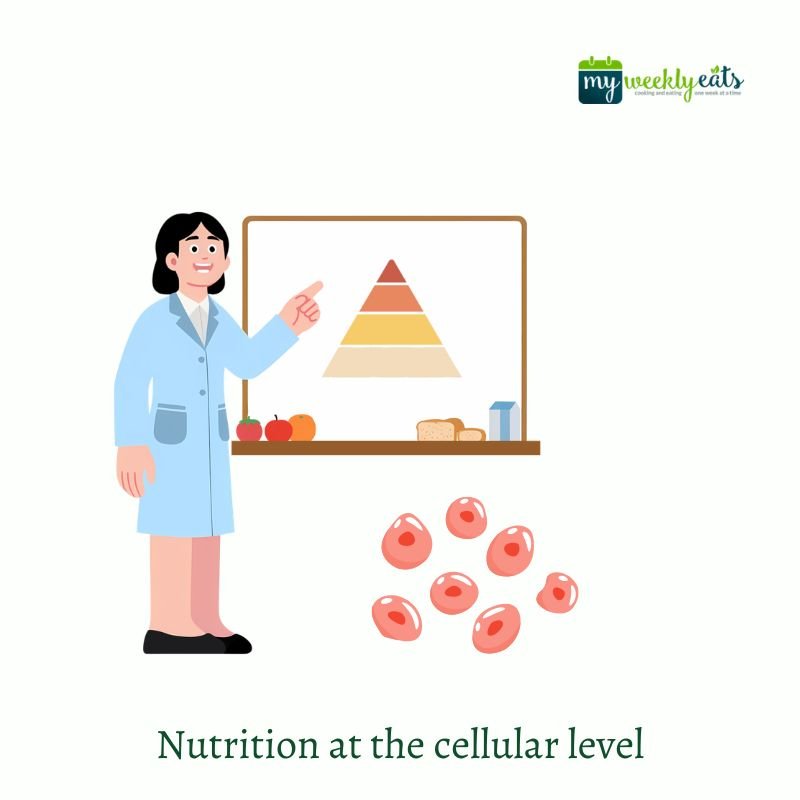
At the cellular level, nutrition describes the uptake and metabolism of nutrients by individual cells. A cell receives amino acids, glucose, fatty acids, vitamins, and minerals from the bloodstream and uses them to produce energy, build structural proteins, replicate DNA, and carry out the thousands of enzymatic reactions that constitute life. When a cell cannot access adequate nutrients — due to poor intake, impaired absorption, or systemic disease — cellular function degrades in specific, measurable ways.
Nutrition at the organism level
At the organism level, nutrition describes the complete physiological chain: ingestion, digestion, absorption, transport, cellular use, and excretion of waste products. This is the level most relevant to daily food choices. A highly nutritious food consumed alongside compounds that block its absorption delivers less nutritional benefit than a moderately nutritious food consumed in conditions that maximise absorption. The process matters as much as the input.
Nutrition at the population level
At the population level, nutrition describes the collective dietary patterns that produce measurable health outcomes across groups over time. This is the level at which nutrition science operates — observing that populations with higher fish consumption show lower rates of cardiovascular disease, or that populations with consistently low dietary fiber intake show higher rates of colorectal cancer. Population-level associations do not guarantee individual outcomes, but they guide dietary recommendations.
What ‘nutritive’ means — and why it matters
The adjective form of nutrition is nutritive — meaning ‘having nutritional value‘ or ‘relating to the nourishment process.’ Nutritive value and nutritional value are interchangeable. ‘Nutritive sweeteners’ is a specific regulatory term: sweeteners that provide calories, such as sugar, honey, and corn syrup, are nutritive. Non-nutritive sweeteners — stevia, sucralose, aspartame — provide sweetness with negligible caloric energy. This distinction appears on food labels and in dietary research, and confusing the two categories produces real misreadings of nutritional content.
The short answer, ready to use
For anyone who needs a one-sentence definition: Nutrition is the process by which the body takes in and uses food to grow, repair, and sustain itself. Everything that follows in this guide — nutritional value, density, science, deficiency, therapy — is a specific aspect of that central process.
Here is the full core vocabulary of nutrition fundamentals, with each term defined and distinguished from what it is most commonly confused with:
| Term | Plain-English Definition | Distinct From | Why It Matters Weekly |
| Nutrition | The process by which the body ingests, digests, absorbs, and uses food to sustain life, produce energy, repair tissue, and regulate all biological systems | Nutrition is the process. A nutrient is the compound. ‘Good nutrition’ = quality of the process. ‘Nutritious food’ = content of the food. | Nutrition as a process explains why the same meal produces different outcomes in different people — gut health, cooking method, and meal pairing all affect what the body actually extracts. |
| Nutritional Value | The measurable quantity of nutrients in a food per standard serving — determined by laboratory analysis and reported as macronutrients, micronutrients, fiber, and water | Nutritional value = what is in the food. Nutritional density = how concentrated those nutrients are relative to calories. High value does not automatically mean high density. | Nutritional value tells you what a food contains — not what your body absorbs. Bioavailability, cooking method, and food pairing all influence how much value is actually delivered to your cells. |
| Nutritional Density | The concentration of beneficial nutrients per calorie of food — the ratio of micronutrient content to energy content. A nutrient-dense food delivers more nutrition per calorie. | Calorie-dense foods are not automatically nutrient-dense. Salmon: high calories, high density. Soda: high calories, near-zero density. Spinach: low calories, very high density. | Building a weekly plan around nutrient-dense foods is the most effective way to meet micronutrient needs without exceeding calorie targets. This metric matters more than ‘nutritional value’ alone. |
| Nutrition Science | The academic discipline studying how nutrients interact with biological systems at cellular, organ, and population levels — integrating biochemistry, physiology, epidemiology, and food science | Nutrition science produces the evidence. Nutritional therapy applies it clinically. Nutrition counselling applies it behaviourally. Nutrition quackery misrepresents or ignores it. | Nutrition science is why dietary guidelines update as evidence accumulates. Changes in sodium targets, vitamin D recommendations, or added sugar guidelines are research outputs — not trend-following. |
| Nutritional Deficiency | The clinical state in which the body cannot maintain normal biological function because one or more essential nutrients are chronically insufficient — producing measurable physiological consequences | Insufficiency = intake below recommended level, not yet producing clinical symptoms. Deficiency = measurable physiological impairment. Insufficiency precedes deficiency — the timeline varies by nutrient. | The four most common shortfall nutrients in US adults — vitamin D, potassium, calcium, dietary fiber — produce no obvious short-term symptoms. Deficiencies compound silently over months. |
| Good Nutrition | The state of dietary adequacy in which all six essential nutrient categories are consistently supplied in sufficient amounts through a varied diet, without significant excess or deficiency in any category | Good nutrition is a functional standard — not eating ‘clean,’ following a named protocol, or avoiding all processed food. The measure is coverage and consistency across six essential categories. | The simplest weekly test: did your meals cover dark leafy greens, legumes, whole grains, quality protein, healthy fat, and sufficient water across seven days? If yes, you have good nutrition. |
| Nutritional Therapy | A practitioner-led clinical approach using targeted dietary interventions, supplementation, and lifestyle modification as primary or complementary treatment for specific health conditions | Nutritional therapy is condition-specific and practitioner-delivered. Nutritional counselling focuses on general dietary guidance and habit change. Nutrition coaching is non-clinical behavioural support. | Readers searching this term often explore options alongside conventional medical care. Always direct to credentialled professionals — registered dietitians, clinical nutritionists — for condition-specific guidance. |
| Nutritional Epigenetics | The study of how specific dietary compounds alter gene expression without changing the underlying DNA sequence — influencing which genes are active or silenced across a lifetime | Genetics determines which genes you carry. Epigenetics determines which are expressed. Nutritional epigenetics specifically examines how diet influences that expression through methylation and histone modification. | Evidence indicates folate, B12, zinc, and phytonutrients participate in epigenetic processes. This is an actively developing field — findings are promising but not yet translated into specific dietary prescriptions. |
Definitions compiled with reference to USDA FoodData Central, National Academies Dietary Reference Intakes, and Academy of Nutrition and Dietetics position papers.
What is nutritional value — and what is nutritional density?
| Quick AnswerNutritional value is the measurable quantity of nutrients in a specific food per serving. Nutritional density is how concentrated those nutrients are relative to the food’s calorie content. A food can have high nutritional value and low density (whole milk: many nutrients, many calories) or low value and low density (iceberg lettuce: few nutrients, few calories). |
These two terms describe different things, and conflating them is one of the most consistent errors in everyday nutrition communication. Nutritional value is an absolute measure. Nutritional density is a ratio. Both matter — but they matter for different decisions.
Nutritional value — how it is measured
Nutritional value is determined by proximate analysis and advanced laboratory techniques — chromatography, mass spectrometry, and atomic absorption spectroscopy — that quantify each nutrient category in a food sample. Results are expressed per 100 g of food and per standard serving size. The Nutrition Facts label on packaged foods and USDA FoodData Central are the primary public-facing expressions of nutritional value data in the US.
Nutritional value describes potential. What the body actually extracts from a food — its bioavailable nutritional value — depends on factors the label does not capture: cooking method, food pairing, gut health, and the presence of absorption enhancers or inhibitors in the same meal.
Nutritional density — the more useful planning metric
Nutrient density was developed as a concept because calorie-based food evaluation alone produces misleading comparisons. Salmon and cheesecake both contain protein and fat. Salmon’s ratio of beneficial nutrients to calories — omega-3 fatty acids, vitamin D, selenium, high-quality protein — is dramatically higher per calorie. Cheesecake delivers primarily calories, fat, and added sugars against a modest nutrient contribution.
Nutritional density is the basis for nutrient profiling systems used in public health policy internationally — including the scoring frameworks that underpin front-of-package labelling systems in various countries. A weekly meal plan built around nutritionally dense foods meets micronutrient targets without overcrowding calorie budgets.
Nutritional value of tomatoes
Per 100 g, raw tomatoes provide approximately 18 kcal, 0.9 g protein, 3.9 g carbohydrates, 1.2 g fiber, vitamin C at roughly 21% of the Daily Value, potassium at approximately 7% DV, and meaningful vitamin K. The more significant nutritional story for tomatoes is lycopene — a carotenoid antioxidant that is more bioavailable from cooked and processed tomatoes than from raw. Canned tomatoes and tomato paste deliver more bioavailable lycopene per serving than fresh, making processed tomato products genuinely nutritionally competitive with fresh for this specific compound.
Nutritional value of lettuce — variety is everything
‘Lettuce has no nutritional value’ is a persistent myth that confuses low caloric density with low nutrient content. All lettuce delivers nutrition — the question is how much and of what kind. Romaine lettuce provides approximately 64% of the Daily Value for folate per cup, along with meaningful vitamin K and vitamin C. Iceberg lettuce provides trace vitamins A and K with lower micronutrient density overall — but 96% water content, genuine hydration value, and dietary fiber that the ‘no nutritional value’ dismissal ignores entirely. Low nutritional density is not the same as no nutritional value.
| 18 kcalper 100g raw tomatoes | 64% DVfolate in one cup of romaine lettuce | 96%water content of iceberg lettuce |
What is the difference between nutrition and diet?
| Quick AnswerNutrition refers to the biological process and the science of how the body uses food. Diet refers to the totality of what a person habitually eats and drinks. Nutrition is the mechanism; diet is the input. A person can have a varied diet and poor nutrition if absorption is impaired, or a limited diet and adequate nutrition if it consistently covers all essential nutrient categories. |
This distinction matters practically because most food advice conflates the two. ‘Eat a better diet’ and ‘improve your nutrition’ are not the same instruction. The first addresses what you put in your mouth. The second addresses what your body successfully extracts and uses from what you put in your mouth. The gap between those two things is why nutrition science exists.
Diet as input, nutrition as process
Diet describes the pattern of foods and drinks consumed — the Mediterranean diet, a plant-based diet, a low-sodium diet. All these labels describe inputs: what types of food, in what proportions, how often. Nutrition describes what happens after ingestion. Two people eating identical diets can have different nutritional status if they differ in digestive function, gut microbiome composition, stomach acid production, or the presence of absorption-impairing conditions like coeliac disease, Crohn’s disease, or gastric bypass surgery.
This is why individual dietary advice matters more than population dietary guidelines for people with compromised absorption. The guideline assumes the process works normally. For people where the process does not work normally, the input alone does not determine nutritional outcome.
What ‘food and nutrition’ means together
The phrase ‘food and nutrition’ appears in academic programmes, government agencies, and professional titles — ‘food and nutrition services,’ ‘food and nutrition science.’ In this context, food refers to the commodity and its composition, while nutrition refers to the physiological and health consequences of consuming it. Food science studies what food contains and how processing affects it. Nutrition science studies what the body does with what food contains.
How plants get their nutrition — a different mechanism entirely
Queries about ‘nutrition in plant’ often come from students studying biology alongside human nutrition. The distinction is fundamental: plants do not ingest food. They obtain nutrition through two completely separate mechanisms — photosynthesis, which converts carbon dioxide, water, and sunlight into glucose, and mineral absorption, which draws inorganic elements (nitrogen, phosphorus, potassium, calcium, magnesium) from soil through root structures. The word nutrition applies to both organisms, but the biological process shares almost nothing between them. Human nutrition is entirely dependent on consuming external food sources. Plant nutrition is largely self-synthesised from environmental inputs.
What is nutrition science — and what does it actually study?
| Quick AnswerNutrition science is the academic discipline studying how nutrients in food interact with biological systems at cellular, organ, and population levels. It integrates biochemistry, physiology, epidemiology, food science, and public health to understand how dietary patterns produce health and disease outcomes across human populations over time. |
Nutrition science is not a single discipline. It is an integration of several sciences applied to a common set of questions: what does the body need, how does food provide it, what happens when the supply is insufficient or excessive, and how do dietary patterns across populations predict health outcomes over decades?
The four disciplines it integrates
- Biochemistry: How specific nutrients function at the molecular level. How vitamin D activates gene expression through nuclear receptor binding. How iron binds to haemoglobin to transport oxygen. How folate participates in DNA synthesis as a methyl group donor. These mechanisms are precisely described, reproducible, and form the biological foundation of every dietary recommendation.
- Physiology: How the digestive and metabolic systems process nutrients at the organ level. How the small intestine’s villi increase surface area for absorption. How the liver processes fructose differently from glucose. How the pancreas regulates insulin release in response to carbohydrate intake. Physiology explains why timing, food form, and meal composition affect nutritional outcomes.
- Epidemiology: How dietary patterns across populations correlate with disease incidence, morbidity, and longevity over decades. The landmark studies linking Mediterranean diet patterns to cardiovascular outcomes, or dietary fiber intake to colorectal cancer risk, are epidemiological in design. They identify associations at scale — not mechanisms at the cellular level, but patterns at the population level that guide public health policy.
- Food science: How processing, cooking, storage, and preparation affect nutrient content, bioavailability, and food safety. Why heating tomatoes increases lycopene bioavailability. Why freezing vegetables preserves water-soluble vitamins better than refrigeration over time. Why soaking legumes reduces phytic acid and improves mineral absorption. Food science bridges the gap between laboratory nutrient content and real-world dietary outcomes.
What nutrition science produces — and how it reaches you
The Dietary Guidelines for Americans, Recommended Dietary Allowances, Dietary Reference Intakes, and the FDA Nutrition Facts label are all direct outputs of nutrition science applied to public health policy. When the sodium Daily Value dropped from 2,400 mg to 2,300 mg in the 2020 label update, it reflected updated research on cardiovascular outcomes. When the vitamin D Daily Value moved from 400 IU to 800 IU, it reflected accumulated evidence on widespread insufficiency and bone health consequences.
These changes are not arbitrary. They represent the scientific consensus at a moment in time — and they will continue to evolve as evidence accumulates. Nutrition science is not finished; it is iterative. Understanding that means reading dietary guidance with appropriate context rather than frustration when recommendations change.
What is good nutrition — and what does proper nutrition actually require?
| Quick AnswerGood nutrition is the state in which all six essential nutrient categories — carbohydrates, protein, fat, vitamins, minerals, and water — are consistently supplied in adequate amounts through a varied diet, without significant excess or deficiency in any category. It is a functional standard measured by dietary adequacy, not by adherence to any single dietary philosophy. |
Good nutrition is one of the most searched and most vaguely answered concepts in the entire nutrition vocabulary. The high KD (91) reflects fierce competition for this query, and most of the competing content answers it with motivational language rather than a functional definition. That gap is what this section closes.
What ‘adequate amounts’ means operationally
The Dietary Reference Intake framework establishes adequate amounts for each essential nutrient by age group, sex, and life stage. For most nutrients, adequate means meeting the Recommended Dietary Allowance or Adequate Intake on average over several days — not hitting a precise target at every single meal. A day with low iron intake followed by a day with high iron intake produces a different outcome than two consecutive days of the same low intake. The body manages reserves across time, not across individual meals.
This is why dietary adequacy is assessed over weeks and months in clinical practice, not over single days. Nutritional status reflects cumulative intake against cumulative need — a fact that makes weekly meal planning a more biologically meaningful framework than daily calorie tracking.
The four nutrients most commonly inadequate in US adults
Federal dietary surveys consistently identify four nutrients as chronically under-consumed across the US population: vitamin D, potassium, calcium, and dietary fiber. These are the FDA’s ‘nutrients of public health concern’ — present on every Nutrition Facts label since 2020 specifically because the population consistently falls short.
What makes these four particularly relevant is that none produces obvious short-term deficiency symptoms. Low vitamin D develops over months before affecting bone density or immune function. Low dietary fiber reshapes gut microbiome composition gradually without producing acute illness. Insufficient potassium affects blood pressure regulation over years, not overnight. Proper nutrition requires deliberate attention to these four specifically — not because they are exciting, but because their deficiency is silent and cumulative.
What good nutrition is not
Good nutrition is not the elimination of entire food groups. It is not eating according to any specific named protocol. It is not consuming the same ‘superfood’ daily. It is not achieving a perfect macronutrient ratio at every meal. These approaches may or may not support nutritional adequacy — the measure is always whether all six essential nutrient categories are covered consistently across the week, not whether a specific protocol is followed.
| The weekly test for good nutrition: After any given week of eating, ask five questions: Did I eat a dark green vegetable? A legume? A whole grain? A quality fat source (avocado, olive oil, nuts, or fatty fish)? A varied protein source? If yes to all five, most days of the week, your diet meets the functional standard for good nutrition — without a calorie tracker, a named diet protocol, or a supplement stack. |
What is nutritional deficiency — and which types are most common?
| Quick AnswerNutritional deficiency is the clinical state in which the body cannot maintain normal function because one or more essential nutrients are chronically insufficient. It is distinct from inadequate intake — deficiency is the measurable physiological consequence of sustained insufficiency. The most common global deficiencies are iron, vitamin A, iodine, and vitamin D. |
Understanding deficiency requires understanding its relationship to insufficiency — two words that describe different points on the same spectrum, not synonyms.
Deficiency vs. insufficiency — the clinical distinction
Insufficiency describes intake below the recommended level without yet producing measurable clinical symptoms. Serum ferritin levels may drop, indicating depleted iron stores, before haemoglobin production is affected enough to cause anaemia. That is insufficiency — the body is compensating, reserves are depleting, but function has not yet visibly impaired. Iron deficiency anaemia describes the point at which iron stores are exhausted, haemoglobin production falls below normal, red blood cell size and haemoglobin concentration decline, and measurable consequences emerge: fatigue, pallor, reduced exercise tolerance, impaired cognitive function.
The transition from insufficiency to deficiency depends on the nutrient, the individual’s baseline reserves, dietary intake trends, and any conditions affecting absorption or utilisation. This is why deficiencies often go undetected until they are clinically significant — the symptomatic threshold arrives after months or years of gradual depletion.
Four types of nutritional deficiency by mechanism
- Dietary deficiency: Insufficient intake from food. The most common mechanism globally — populations or individuals simply do not consume enough of a nutrient through their habitual diet. Iodine deficiency in land-locked regions without iodised salt is a classic example.
- Absorption deficiency: Sufficient dietary intake but impaired absorption. Pernicious anaemia impairs vitamin B12 absorption by destroying the cells that produce intrinsic factor — the gastric protein required for B12 to cross the intestinal wall. Someone with pernicious anaemia can consume abundant B12 and still develop severe deficiency without targeted injectable or high-dose supplementation.
- Utilisation deficiency: Nutrients are present in the body but cannot be effectively used. Vitamin D-dependent rickets type II involves a genetic defect in the vitamin D receptor — the body cannot respond to vitamin D even when serum levels are normal. Zinc deficiency in acrodermatitis enteropathica involves impaired zinc transport proteins rather than insufficient dietary zinc.
- Increased requirement deficiency: Standard intake becomes insufficient due to elevated physiological demand. Pregnancy dramatically increases requirements for folate, iron, calcium, and iodine — women consuming amounts adequate for their pre-pregnancy state can develop deficiency during pregnancy without any change in dietary intake.
Most common in the US — not what most people expect
In the US, the most clinically significant nutritional gaps are not the dramatic deficiencies associated with severe food scarcity. Vitamin D insufficiency affects an estimated 40% or more of the US adult population — a consequence of reduced sun exposure, increased indoor activity, and limited dietary sources. Dietary fiber intake averages 10–15 g/day against a 28 g Daily Value across the US population. Potassium intake consistently falls below the 4,700 mg Adequate Intake. These are not acute crises — they are chronic under-consumptions that compound over years and contribute to elevated rates of bone disease, gut dysbiosis, and cardiovascular conditions.
What is nutritional therapy — and how does it differ from nutritional counselling?
| Quick AnswerNutritional therapy is a practitioner-led clinical approach using targeted dietary interventions, supplementation, and lifestyle modification as primary or complementary treatment for specific health conditions. Nutritional counselling focuses on general dietary guidance and behaviour change. Nutrition coaching is non-clinical habit support. These are distinct services with different training, credentials, and regulatory standing. |
These three terms are used interchangeably in public conversation but describe genuinely different types of professional service. Getting this distinction right matters if you are considering professional nutrition support for yourself or a family member.
Nutritional therapy — clinical context
Nutritional therapy is practised by registered nutritional therapists or clinical dietitians with advanced training who use evidence-based dietary and supplemental interventions to address specific diagnosed conditions — gut disorders, autoimmune conditions, hormonal imbalances, metabolic conditions, eating disorder recovery, and clinical recovery nutrition. It sits at the intersection of functional medicine and clinical nutrition, using detailed clinical assessment to develop condition-specific protocols that typically include targeted supplementation alongside dietary restructuring.
In the US, the scope of practice for nutritional therapists varies significantly by state licensing laws. Some states restrict nutrition practice to licensed registered dietitians. Others permit broader practice by certified nutritional therapists or clinical nutritionists. Any reader seeking nutritional therapy for a diagnosed health condition should verify their practitioner’s credentials and state licensing status before beginning treatment.
Nutritional counselling — guidance context
Nutritional counselling is delivered by registered dietitians (RDs) or licensed nutritionists within clinical or community settings. It translates dietary guidelines and nutritional science into individual behaviour change — addressing weight management, chronic disease prevention, eating disorder support, and medical nutrition therapy for conditions including diabetes, kidney disease, cardiovascular disease, and cancer recovery. In clinical settings, nutritional counselling is a reimbursable service under many insurance plans when delivered by a credentialled provider.
The distinction from nutritional therapy is largely one of scope and depth. Counselling focuses on dietary pattern change and evidence-based guidance. Therapy involves more detailed clinical assessment, targeted supplement protocols, and condition-specific intervention — typically for people with diagnosed conditions whose needs extend beyond standard dietary guidance.
Nutrition coaching — non-clinical support
Nutrition coaching is not regulated in most US states. Coaches support general healthy eating habit formation, meal planning, and lifestyle change without diagnosing, treating, or prescribing for specific medical conditions. Quality varies widely by training background and credentials. The ‘certified nutrition coach’ designation exists across multiple unregulated certification programmes with no standardised educational requirement.
| Important: Readers experiencing symptoms that could reflect a nutritional deficiency or considering nutrition support for a diagnosed health condition should consult a registered dietitian or licensed clinical nutritionist — not an unregulated coach. For general meal planning support, a nutrition coach or a structured meal planning tool like MyWeeklyEats is appropriate. |
What are nutritional epigenetics, nutritional ketosis, and other specialist nutrition terms?
| Quick AnswerNutritional epigenetics studies how dietary compounds alter gene expression without changing the DNA sequence — influencing which genes are active across a lifetime. Nutritional ketosis is the metabolic state in which the liver produces ketone bodies as the primary fuel source due to very low carbohydrate intake. Both terms appear frequently in nutrition content with inconsistent accuracy. |
The specialist nutrition vocabulary below appears regularly in health content, research summaries, and dietary product marketing. Each term describes a real concept — but the gap between the scientific definition and the popular use is wide in every case.
Nutritional epigenetics
Epigenetics describes changes in gene expression that do not alter the underlying DNA sequence. Your DNA sequence is largely fixed at conception. Which of those genes are actively expressed — producing proteins, regulating metabolism, influencing disease risk — is dynamic, influenced by environment, lifestyle, and diet across a lifetime. Nutritional epigenetics specifically studies how dietary compounds participate in these regulatory mechanisms.
The primary mechanisms studied are DNA methylation (the addition of methyl groups to DNA, which typically silences gene expression) and histone modification (changes to the proteins around which DNA is coiled, which alter how accessible genes are to transcription). Evidence indicates that folate, vitamin B12, zinc, selenium, and polyphenols participate in methylation processes. Choline is required for methyl group donation. Omega-3 fatty acids influence inflammatory gene expression pathways.
This is an actively developing field. Evidence from observational studies and laboratory research is compelling — suggesting that dietary patterns across a lifetime influence epigenetic programming in ways that affect disease susceptibility, metabolism, and even intergenerational health outcomes. Studies indicate, however, that clinical translation into specific dietary prescriptions for most individuals remains limited. Evidence suggests rather than confirms most specific claims in this space. Use appropriate scepticism toward products marketed as ‘epigenetic nutrition solutions.’
Nutritional ketosis
Nutritional ketosis is the metabolic state achieved when carbohydrate intake drops low enough — typically below 50 g per day — that the liver shifts from glucose metabolism to fat catabolism as the primary energy source. In this state, the liver converts fatty acids into ketone bodies (primarily beta-hydroxybutyrate and acetoacetate) that substitute for glucose as cellular fuel, particularly in the brain and heart muscle.
Nutritional ketosis is distinct from diabetic ketoacidosis — a dangerous medical emergency in people with type 1 diabetes or severely uncontrolled type 2 diabetes, in which insulin absence allows uncontrolled ketone production and dangerous blood acidification. Nutritional ketosis involves the body’s normal metabolic response to low carbohydrate availability, with insulin present and functional. The two states share a biological mechanism but differ profoundly in metabolic control and clinical significance.
Evidence supports short-term weight loss outcomes from ketogenic dietary patterns. Whether long-term ketogenic eating produces health benefits beyond weight management for most people remains an active area of research, with study quality varying significantly across the literature. Use hedged language when evaluating claims.
Nutrition care process
The Nutrition Care Process (NCP) is a standardised four-step clinical framework developed by the Academy of Nutrition and Dietetics for use by registered dietitians in clinical settings: Nutrition Assessment (evaluating dietary intake, nutritional status, medical history, and anthropometric data), Nutrition Diagnosis (identifying the specific nutrition problem using standardised terminology), Nutrition Intervention (developing and implementing the targeted plan), and Nutrition Monitoring and Evaluation (assessing outcomes and adjusting the plan). The NCP standardises how clinical nutrition care is documented, delivered, and measured across healthcare settings.
Nutrition quackery
Nutrition quackery describes fraudulent, misleading, or scientifically unsupported nutritional products, services, or claims — typically involving unproven supplements marketed as disease cures, misrepresented or cherry-picked research cited to support impossible claims, or testimonial-based evidence substituted for peer-reviewed data. The Federal Trade Commission and the FDA share regulatory jurisdiction over nutrition marketing claims, but enforcement capacity is limited relative to the volume of questionable content in the marketplace.
The most reliable protection against nutrition quackery is the same in every case: look for evidence from peer-reviewed, randomised controlled trials or systematic reviews in indexed scientific journals. Check practitioner credentials against state licensing boards. Look for transparent financial disclosure. If a product or protocol claims to cure, prevent, or treat a specific disease without FDA approval, that claim is either unevidenced or illegal — and usually both.
Nutritional medicine
Nutritional medicine is an integrative medical approach practised by medical doctors and osteopathic physicians with additional training in nutrition, using dietary intervention and targeted supplementation as primary or adjunctive treatment for disease. It overlaps with functional medicine in its emphasis on root-cause metabolic assessment and personalised therapeutic protocols. It is distinct from conventional dietetics in its greater reliance on therapeutic supplementation — often at doses above standard dietary recommendations — and its integration with broader functional medicine diagnostics including advanced laboratory testing.
The Bottom Line on Nutrition Fundamentals
Three definitional clarifications from this guide change how you think about every piece of nutrition content you encounter.
First: nutrition is a process, not a property. The same food delivers different nutritional outcomes in different bodies depending on absorption, gut health, food pairing, and cooking method. Evaluating food only by its nutritional value label misses half the story.
Second: nutritional value and nutritional density describe different things, and nutritional density is the more useful metric for building a weekly meal plan. A food’s nutritional value tells you what nutrients are present. Its nutritional density tells you how much nutrition you get per calorie consumed. Building a weekly meal plan around foods with high nutrient density covers micronutrient needs without overwhelming calorie budgets — which is the practical goal.
Third: the specialist vocabulary — nutritional therapy, nutritional epigenetics, nutritional ketosis, nutrition quackery — describes real, distinct concepts that determine how you evaluate health claims and choose professional support. Nutritional therapy is clinical, condition-specific, and credential-dependent. Nutritional epigenetics is a developing field with compelling early evidence and significant remaining uncertainty. Nutrition quackery is rampant and follows predictable patterns that are identifiable with a small number of critical questions.
Knowing the vocabulary does not change what you eat tonight. Applying it — consistently, across a full week of deliberate food choices — does.
| Turn What You Know Into How You Eat.Build Your Weekly Plant-Food Meal Plan on MyWeeklyEats.comNutrient-dense. Weekly. Already planned. |
Nutritional data: USDA FoodData Central. Dietary reference values: National Academies Dietary Reference Intakes (2011–2019). FDA regulatory information: 21 CFR 101.9. Epigenetics references: current peer-reviewed literature as of 2024. This content is for educational purposes only and is not intended as medical or dietary advice.