
What Is a Balanced Meal for Lunch?
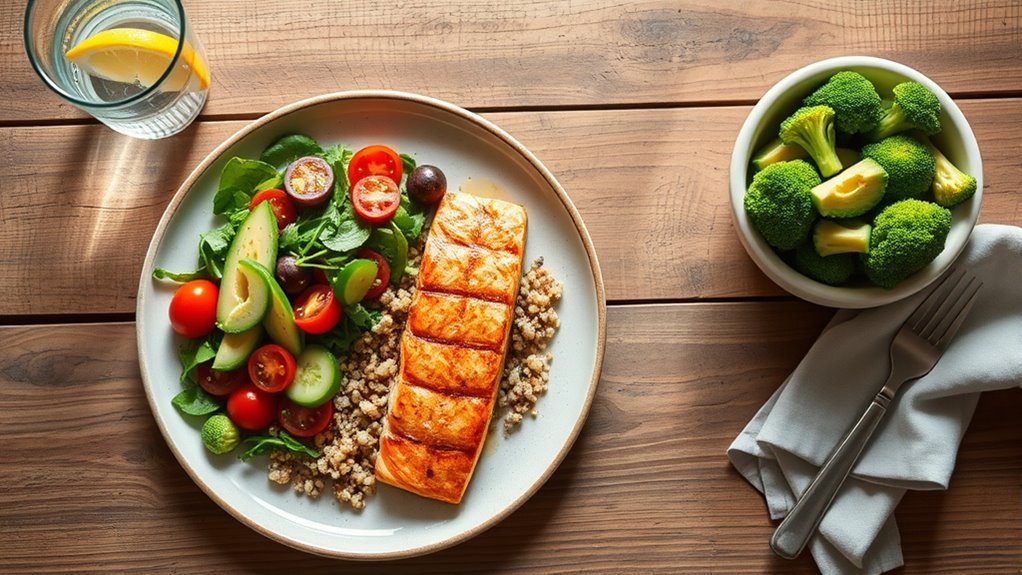
You can create a balanced lunch by filling half your plate with colorful vegetables and fruits for fiber and vitamins.
Add lean proteins like chicken, fish, beans, or tofu to support muscle health and satiety.
Include whole grains such as brown rice or whole-wheat bread for lasting energy.
Don’t forget healthy fats like avocado or nuts to boost brain and heart health.
Keep your meals varied and nutrient-rich, and you’ll find easy ways to customize lunches for your lifestyle.
What Makes a Lunch Balanced and Healthy?
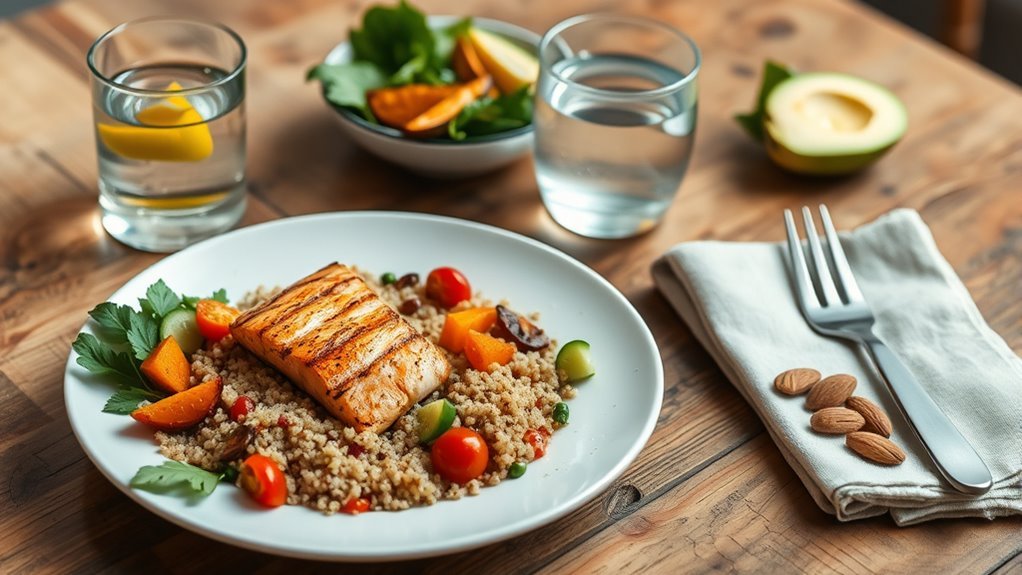
When you build a balanced lunch, including a variety of food groups like vegetables, fruits, whole grains, lean proteins, and healthy fats is key. Focusing on nutrient diversity guarantees you get essential vitamins and minerals that support overall health.
Vegetables provide fiber and antioxidants, aiding digestion and reducing disease risk. Including whole grains adds more fiber, keeping you full longer and stabilizing blood sugar.
Lean proteins like fish, poultry, beans, or nuts help maintain muscle health and promote satiety without excess saturated fat. Healthy fats from sources such as avocados, nuts, or olive oil support brain function and heart health.
By combining these elements, you create a balanced meal that fuels your body efficiently and reduces the likelihood of chronic illnesses. Avoiding processed foods, added sugars, and excessive red meat further enhances your lunch’s nutritional quality.
This balanced approach keeps your energy steady and supports long-term wellness.
Why Vegetables and Fruits Should Cover Half Your Plate
Because vegetables and fruits supply essential fiber, vitamins, and minerals, filling half your plate with them considerably boosts your meal’s nutritional value. Including a variety of colorful vegetables and fruits increases nutrient density, giving you a wide range of antioxidants and phytochemicals.
Filling half your plate with colorful fruits and vegetables boosts nutrition with essential fiber, vitamins, and antioxidants.
These compounds help protect your body against chronic diseases like heart disease, stroke, and certain cancers. Vegetables and fruits are naturally low in calories and fat, which supports maintaining a healthy weight without sacrificing nutrition.
By choosing them over processed or fried options like French fries, you improve your balanced meal and diversify your nutrient intake. The dietary fiber found in vegetables and fruits also promotes digestive health and keeps you feeling full longer, helping to prevent overeating.
When you make vegetables and fruits the focus at lunch, you’re setting yourself up for sustained energy and better overall health throughout the day.
How to Choose the Right Proteins for a Balanced Lunch
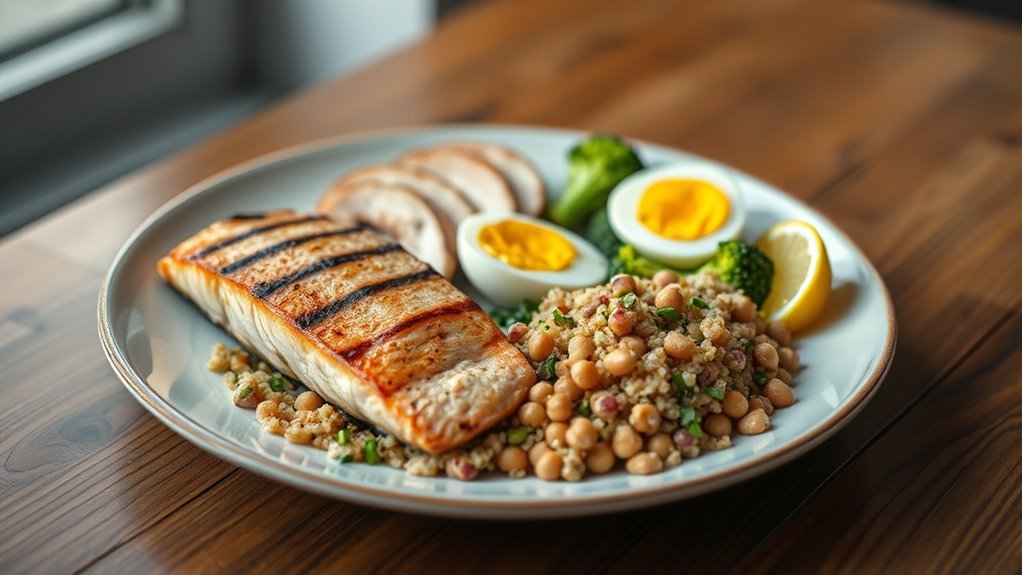
When you’re picking proteins for your lunch, try to include a mix of lean animal options and plant-based sources. Adding beans, lentils, or tofu is a great way to up your protein while also getting fiber and important nutrients.
Plus, combining different protein types makes your meal more balanced and satisfying. It’s all about variety to keep things interesting and nutritious!
Protein Sources Variety
Although choosing the right proteins for lunch might seem straightforward, incorporating a variety of sources guarantees you get a full range of essential amino acids and nutrients. To keep your meal balanced and nutrient-rich, focus on mixing protein types.
Here are three tips to diversify your protein sources:
- Include plant-based options like lentils, chickpeas, and tofu to boost fiber and reduce saturated fat.
- Choose fish, especially fatty kinds like salmon or mackerel, for heart-healthy omega-3s.
- Opt for lean meats such as poultry and avoid red or processed meats to lower health risks.
Plant-Based Protein Benefits
Choosing plant-based proteins for your lunch not only boosts your nutrient intake but also supports your overall health in powerful ways. Plant proteins like beans, lentils, and tofu provide fiber, antioxidants, and essential vitamins that promote heart health and reduce inflammation.
By opting for a plant-based diet, you lower your risk of chronic diseases such as heart disease, type 2 diabetes, and certain cancers. These proteins offer nutritional benefits beyond protein, including magnesium and B vitamins.
Plus, incorporating a variety of plant proteins helps maintain balanced blood pressure and healthy cholesterol levels. Choosing plant-based options also contributes to chronic disease prevention and supports sustainable eating practices.
The Role of Whole Grains in a Healthy Midday Meal
Including whole grains like brown rice, whole-wheat bread, or oats in your lunch boosts your energy by providing complex carbohydrates that release fuel steadily throughout the afternoon. Whole grains play an essential role in balanced meals by enhancing dietary fiber intake, which supports digestion and helps regulate blood sugar levels.
Plus, they promote satiety, keeping you full longer and preventing overeating. Incorporating whole grains also benefits heart health, reducing the risk of heart disease and type 2 diabetes thanks to their rich nutrient profile.
Here are three reasons to add whole grains to your midday meal:
- Steady blood sugar control, avoiding energy crashes.
- Improved digestion through increased dietary fiber.
- Enhanced satiety, reducing unhealthy snacking.
Healthy Fats to Include and Avoid at Lunchtime
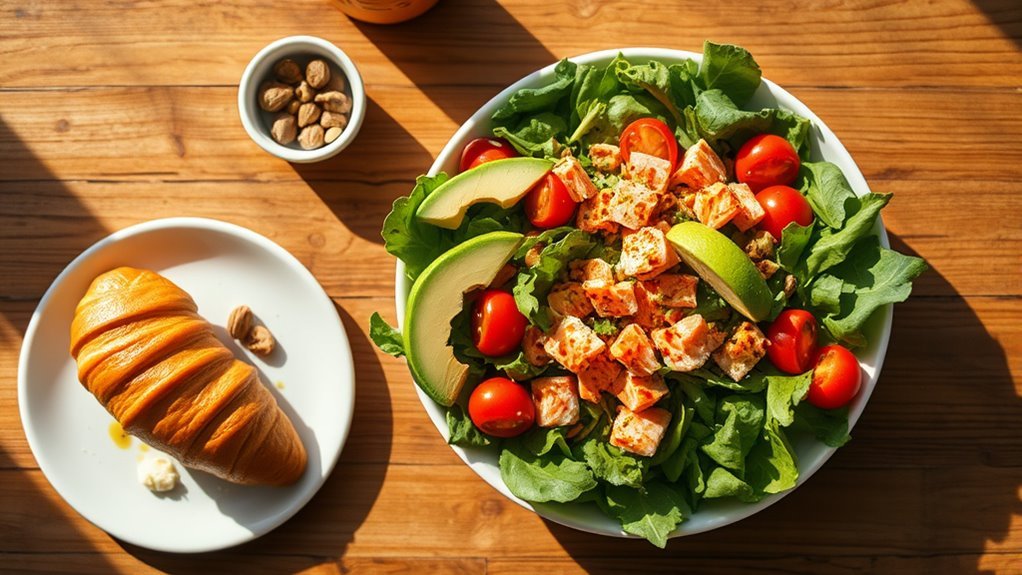
When you add healthy fats like olive oil, nuts, and avocados to your lunch, you support heart health by lowering bad cholesterol levels. These healthy fats, including omega-3 fatty acids found in fatty fish like salmon, not only benefit your heart but also reduce inflammation and promote brain health.
However, it’s important to avoid trans fats, commonly found in processed foods, baked goods, and fried items, as they raise your risk of heart disease. You should also limit saturated fats from sources like red meat and full-fat dairy since they can elevate LDL cholesterol.
Using healthy fats in moderation is key because they’re calorie-dense, providing 9 calories per gram. Still, they’re essential for nutrient absorption and hormone production. By choosing olive oil over processed fats and incorporating omega-3-rich foods, you create a balanced lunch that nourishes your body and protects your heart health.
Limiting Sugar and Processed Foods at Lunch
While healthy fats play an essential role in a balanced lunch, keeping an eye on sugar and processed foods is just as important. Limiting added sugars and avoiding heavily processed foods can help reduce your risk of obesity, type 2 diabetes, and heart disease.
Many processed foods contain high levels of sodium, trans fats, and artificial additives that contribute to inflammation and high blood pressure.
To make smarter choices, focus on these three tips:
- Choose whole grains, fresh vegetables, and lean protein over packaged snacks and cold cuts to minimize sodium and preservatives.
- Replace sugary drinks with water, tea, or black coffee to cut down on added sugars and unnecessary calories.
- Opt for minimally processed foods that support better blood sugar regulation and long-term health.
How to Size Your Lunch Plate for Balance
To create a balanced lunch, you need to pay close attention to how you size your plate. Filling half your lunch plate with vegetables guarantees essential vitamins, minerals, and fiber.
Next, allocate about 25% of the plate to whole grains like brown rice or whole-wheat bread for lasting energy. The remaining 25% should be lean protein such as fish, poultry, beans, or nuts to support muscle health and satiety.
Using clear visual meal proportions helps you manage portion sizes easily without counting each serving. Remember to adjust these portions based on your calorie needs and activity level for a truly balanced meal.
| Portion | Food Group | Benefits |
|---|---|---|
| 50% (Half) | Vegetables | Vitamins, minerals, fiber |
| 25% (Quarter) | Whole Grains | Energy, dietary fiber |
| 25% (Quarter) | Protein | Muscle maintenance, fullness |
Sizing your lunch plate this way guarantees a nutritious, balanced meal every time.
Adding Colorful Vegetables and Fruits to Your Balanced Lunch
Filling half your plate with vegetables sets a strong foundation for a balanced lunch, but adding a variety of colorful vegetables and fruits can take your meal to the next level. Including a rainbow of nutrient-dense produce not only boosts fiber and antioxidants but also enhances your meal’s visual appeal, making it more enjoyable to eat.
To maximize benefits:
- Choose a mix of colors like red tomatoes, orange carrots, and green spinach to guarantee a variety of phytonutrients and antioxidants.
- Add fruits such as blueberries or sliced yellow peppers for natural sweetness and extra fiber.
- Incorporate both raw and cooked colorful vegetables to diversify taste and texture, which supports better nutrient absorption.
This variety helps reduce inflammation and supports overall health, while fiber promotes fullness. By focusing on colorful vegetables and fruits, you turn an ordinary lunch into a vibrant, nutrient-packed meal you’ll look forward to every day.
Health Benefits of Eating Balanced Lunches Regularly
Eating balanced lunches regularly helps you maintain steady blood sugar levels, preventing energy crashes that can disrupt your afternoon. By choosing a nutrient-dense balanced lunch that includes a variety of food groups, you provide your body with essential vitamins and minerals.
This supports immune function and helps keep your cells healthy. Regularly fueling yourself with balanced meals also plays a key role in chronic disease prevention, lowering risks of heart disease and diabetes.
When you eat well, you tend to manage your weight better and reduce obesity risk. Furthermore, consistent intake of balanced lunches enhances your mental focus and productivity throughout the day.
You’ll find it easier to concentrate on tasks and stay sharp during afternoon activities. Prioritizing a balanced lunch not only boosts your physical health but also improves how you perform mentally, making it a simple yet powerful habit to adopt every day.
Tips for Adapting Balanced Lunches to Different Cultures
When planning balanced lunches for different cultures, it’s important to think about local food preferences and how meals are usually presented. This way, you can make the meals both appealing and familiar to those enjoying them.
You’ll also want to substitute ingredients thoughtfully. This helps respect any dietary restrictions while still keeping the nutrition balanced.
And don’t forget to pay attention to how meals are traditionally served. Doing this can really help you create lunches that feel satisfying and culturally appropriate.
Cultural Food Preferences
Although balancing nutrients is essential, you should also consider cultural food preferences to create lunches that feel familiar and satisfying. By incorporating traditional ingredients and flavor profiles from diverse cuisines, you can guarantee balanced nutrition while respecting cultural tastes. When planning your meals, keep these tips in mind:
- Use culturally relevant vegetables, grains, and proteins to maintain meal planning that honors traditional ingredients and dietary restrictions.
- Adapt portion sizes and meal components according to cultural eating habits, whether that means smaller, frequent meals or larger main dishes.
- Include familiar seasonings and cooking methods to enhance appeal and make healthy lunches enjoyable within different cultural contexts.
This approach helps you combine balanced nutrition with respect for cultural preferences and dietary needs effectively.
Ingredient Substitutions
Respecting cultural food preferences means more than just choosing familiar ingredients. It often requires thoughtful substitutions to keep meals both balanced and authentic.
When making ingredient substitutions, focus on incorporating local vegetables and plant-based proteins like beans or lentils. This helps maintain nutrient diversity and cultural relevance.
Swap common grains, such as rice, for alternatives like quinoa or barley to vary nutrient profiles while honoring traditional flavors. You can also replace dairy with plant-based options like coconut yogurt or nut cheeses to support vegetarian or vegan dietary adaptations without sacrificing calcium.
Finally, adjust portion sizes and meal components to fit cultural eating patterns, ensuring your balanced lunch respects both nutritional needs and cultural identity. These strategies help you create meals that are nourishing and culturally meaningful.
Meal Presentation Styles
Adapting meal presentation styles to different cultures helps you create balanced lunches that feel familiar and inviting. By respecting meal customs and cultural plating traditions, you guarantee your meals are both nutritious and visually appealing. Focus on incorporating all essential food groups while honoring traditional dishes and portion sizes.
Here’s how to adapt meal presentation effectively:
- Use culturally relevant ingredients and cooking methods to maintain authenticity and appeal.
- Adjust portion sizes to align with local eating habits, whether it’s family-style sharing or individual plating.
- Arrange food to highlight visual appeal and balance, reflecting the culture’s aesthetic preferences.
Quick and Packable Balanced Lunch Ideas
When you need a quick and packable lunch, focus on combining lean protein, whole grains, and colorful vegetables to create balanced meals that support your nutrient needs. Meal prep grain salads or wraps using sturdy vegetables like kale or broccoli to keep your lunch fresh and crisp throughout the day.
Combine lean protein, whole grains, and vibrant vegetables for quick, balanced, and fresh packable lunches.
Including healthy fats like avocado or nuts not only boosts flavor but also helps your body absorb nutrients better and keeps you full longer. Aim for portion-controlled, nutrient-rich ingredients to improve diet quality and support long-term health.
Preparing balanced lunches in advance saves time during busy weekdays and ensures you have a satisfying, well-rounded meal on hand. By mixing lean protein sources with whole grains and a variety of vegetables, you’ll enjoy a packable lunch that fuels your body efficiently and tastes great.
This approach makes it easy to maintain a balanced diet, even when you’re short on time.
How to Plan Balanced Lunches for the Week Ahead
Although it may seem time-consuming at first, planning balanced lunches for the week ahead can save you effort and stress during busy days. With smart meal planning and meal prep, you guarantee a balanced diet rich in vegetables, whole grains, and lean proteins. Portion control plays a key role in maintaining consistency and avoiding overeating.
Here’s how to get started:
- Batch cook meals featuring a variety of vegetables, lean proteins, and whole grains, then portion them into containers for easy grab-and-go lunches.
- Follow guidelines like filling half your plate with vegetables and fruits, and dividing the rest between whole grains and proteins to boost nutrient diversity.
- Create a detailed shopping list to stock up on essentials, so you’re less tempted to rely on convenience foods.
Frequently Asked Questions
Can Drinking Water Improve the Balance of My Lunch?
Yes, drinking water can improve the balance of your lunch by boosting hydration benefits that support water and digestion. Proper hydration helps with water and nutrient absorption, keeping your energy steady and enhancing hydration for focus throughout the afternoon.
To maximize these effects, develop drinking water habits like sipping regularly during your meal. Simple water intake tips, such as avoiding sugary drinks, also help you maintain balance and improve overall digestion and energy.
How Does Meal Timing Affect the Benefits of a Balanced Lunch?
Meal timing plays a big role in maximizing a balanced lunch’s benefits. By keeping consistent meal frequency, you prevent fasting effects that slow metabolism and cause energy dips.
Eating lunch at the right time boosts metabolism, improves digestion timing, and helps control hunger, so you avoid overeating later. Proper snack timing also supports stable energy levels throughout the day.
When you time your meals well, you stay energized and keep your metabolism running smoothly.
Are Supplements Necessary if I Eat a Balanced Lunch?
Supplements seldom serve as substitutes when you savor a well-rounded, whole-food lunch. With thoughtful meal planning and food variety, you harness nutrient synergy that boosts nutrient absorption naturally.
Unless dietary restrictions or specific health goals limit your intake, supplement timing won’t make much difference. You’re better off focusing on food sources to fulfill your nutritional needs.
How Can I Make a Balanced Lunch More Affordable?
You can make a balanced lunch more affordable by choosing cost-effective proteins like canned beans or eggs and pairing them with inexpensive grains such as brown rice or oats. Incorporate economical produce by selecting seasonal fruits and veggies.
Practice value meal planning by preparing meals in bulk and using budget-friendly snacks to complement your lunch. Opt for cheap healthy options like store brands or buying in bulk to stretch your dollar without sacrificing nutrition.
What Are Some Common Mistakes When Packing a Balanced Lunch?
When packing lunch, don’t let your meal become a jumbled puzzle with mismatched pieces. Common mistakes include ignoring food portioning, which tips nutrient balance off-kilter, and skimping on food variety, making meals dull and less nutritious.
Overstuffing food packaging leads to overeating, while neglecting snack inclusion can cause energy slumps. Also, overlook dietary restrictions or rush meal prep, and you risk a lunch that doesn’t fuel you right or satisfy your tastes.
Conclusion
Picture your lunch plate bursting with vibrant greens, juicy fruits, lean proteins, and wholesome grains. Each bite fuels your energy and focus. By choosing balanced meals, you’re not just filling your stomach; you’re nourishing your body and mind for the rest of the day.
Keep these colorful, nutrient-packed choices in mind, and you’ll feel the difference in every afternoon task. Your healthy lunch habit is a simple, delicious step toward a stronger, happier you.