7 Key Nutritional Values of Oysters You Should Know
Oysters pack a punch with seven key nutrients you’ll want to know. They’re rich in vitamin B12 for nerve and brain health, zinc to boost your immunity, and selenium that supports your thyroid and heart.
Iron, copper, and manganese help your blood and metabolism function smoothly. Plus, oyster protein builds your body, while omega-3s promote brain and heart health.
Their antioxidants fight oxidative stress, protecting your cells. Keep exploring to discover all the health benefits they offer.
Vitamin B12: A Powerhouse Nutrient in Oysters

Although many foods contain vitamin B12, oysters stand out by providing over 1000% of your daily value in just a 100g serving. This makes oyster nutrition a true nutrient powerhouse, especially for those seeking an excellent dietary source of vitamin B12.
Just six medium oysters deliver around 16 micrograms of this essential vitamin, indispensable for red blood cell formation and maintaining nerve health. If you struggle with absorption issues or want to prevent B12 deficiency, adding oysters to your diet can support cognitive health and reduce risks of anemia.
Thanks to their rich vitamin B12 content, oysters rank among the best seafood nutrients to keep your nervous system functioning at its best. Whether you’re vegetarian or face challenges absorbing B12 from other foods, oysters offer a potent and efficient way to meet your nutritional needs.
Incorporating them regularly helps you maintain essential processes linked to energy and brain function.
Zinc in Oysters: How It Boosts Your Immunity
Beyond their impressive vitamin B12 content, oysters also pack a powerful punch of zinc, a mineral that plays an essential role in keeping your immune system strong. With about 16.6 mg of zinc per 100g serving, oysters exceed 100% of your daily recommended intake, making them a top choice for boosting immune health. Zinc supports your immune response by aiding immune cells in fighting infections and promoting wound healing through cell growth and tissue repair.
Oysters deliver over 100% of your daily zinc needs, essential for a strong immune system and healing.
Here’s why zinc in oysters matters for you:
- Prevents zinc deficiency, which can weaken your immune system
- Reduces the severity and duration of respiratory illnesses like colds
- Enhances infection prevention by strengthening immune defenses
- Supports faster wound healing and tissue repair
Including oysters in your diet is a strategic way to tap into their rich nutritional value, helping you maintain a resilient immune system and better overall health.
How Selenium Supports Your Thyroid and Heart

Since selenium plays a crucial role in your body’s thyroid function and heart health, including oysters in your diet can offer significant benefits. Selenium supports thyroid hormone production, which is essential for regulating metabolism and energy. Without enough selenium, your thyroid can struggle, leading to mineral deficiency and impaired nutrient absorption.
Oysters provide a rich source of selenium, exceeding daily needs in just a 100g serving.
Selenium also activates powerful antioxidants like glutathione peroxidase. These protect your thyroid and heart tissues from oxidative stress and cellular damage. By reducing inflammation, selenium helps lower your risk of cardiovascular disease.
When selenium levels drop, your heart health may suffer, increasing vulnerability to oxidative damage. Eating oysters regularly ensures you get enough selenium to maintain both thyroid function and heart health, helping your body work efficiently and defend against disease.
Iron, Copper, and Manganese: Supporting Blood and Metabolism
How do iron, copper, and manganese in oysters support your body’s essential functions? These key minerals play a vital role in maintaining your blood health and metabolism. Oysters’ rich mineral content provides nutrients that work together to keep you energized and healthy.
Iron, copper, and manganese in oysters support blood health and metabolism, keeping you energized and healthy.
Here’s what they do for you:
Iron helps produce red blood cells, ensuring oxygen reaches your tissues efficiently.
Copper enhances iron absorption and supports connective tissue formation, plus it acts as a powerful antioxidant.
Manganese aids metabolic enzyme function and contributes to bone development.
Together, these minerals promote healthy blood flow, boost your immune system, and optimize energy metabolism.
Oyster Protein: Building Blocks for Your Body
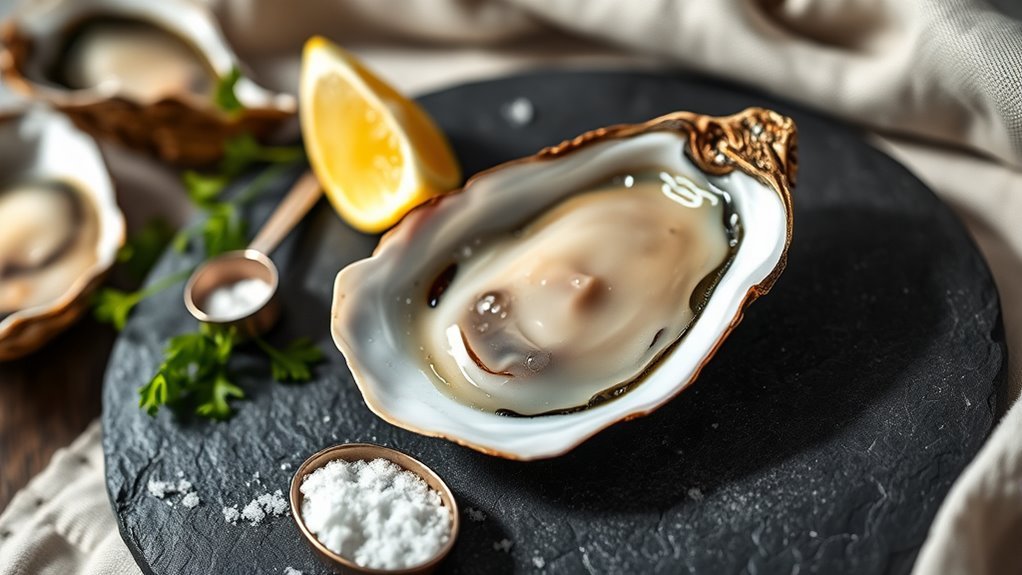
You get all nine essential amino acids from just 3.5 ounces of oysters, which means you’re getting complete, high-quality protein. This kind of protein is great for supporting muscle growth and tissue repair, helping your body function at its best.
On top of that, it can help control your appetite by making you feel fuller and keeping your hunger hormones balanced. So, oysters aren’t just tasty—they’re really good for you too!
Complete Essential Amino Acids
Oyster protein delivers all nine essential amino acids your body needs, making it a complete and powerful source for muscle growth and tissue repair. With about 9 grams of high-quality protein per 100g serving, oysters help you meet daily amino acid requirements crucial for overall health.
The essential amino acids found in oyster protein include leucine, isoleucine, valine, lysine, methionine, phenylalanine, threonine, tryptophan, and histidine. These complete amino acids support various bodily functions beyond muscle repair.
When you include oysters in your diet, you benefit from enhanced immune function, efficient enzyme production, balanced hormone synthesis, and prime muscle growth and tissue repair.
Oyster protein is an excellent choice if you want to fuel your body with essential amino acids efficiently.
Protein Benefits And Functions
Why does protein matter so much for your body? Protein is essential for muscle repair, tissue growth, and overall maintenance. Oysters provide about 9 grams of high-quality protein per 3.5 oz (100g) serving, making them a rich source of complete protein with all nine essential amino acids. This nutritional content supports your body’s building blocks efficiently.
Beyond muscle health, oyster protein promotes feelings of fullness, helping with weight management by stabilizing hunger hormones. Including oysters in your diet can also improve insulin sensitivity, which is crucial for blood sugar control.
Furthermore, their protein contributes to cardiovascular health, making oysters a smart choice for a balanced diet. When you eat oysters, you’re fueling your body with a powerful combination of nutrients that support multiple essential functions.
Omega-3s in Oysters: Supporting Brain and Heart Health
Since omega-3 fatty acids play an essential role in maintaining brain and heart health, including oysters in your diet can offer significant benefits. These shellfish are rich in EPA and DHA, two vital omega-3s that support cognitive function and cardiovascular protection. A 3-ounce serving delivers a substantial amount of these fatty acids, helping reduce inflammation linked to heart disease and stroke.
Oysters provide essential omega-3s like EPA and DHA, supporting brain function and heart health.
Regularly eating oysters can also enhance your mental health by supporting brain health.
Here’s how omega-3s in oysters help you:
- Reduce inflammation, lowering your risk of atherosclerosis and other heart conditions
- Support heart health by protecting blood vessels and improving circulation
- Boost cognitive function, helping maintain sharp mental abilities
- Promote mental health through anti-inflammatory effects and brain nourishment
Adding oysters to your meals is a smart way to fuel both your heart and brain with essential omega-3 fatty acids.
Oyster Antioxidants That Combat Oxidative Stress
Although oxidative stress can damage your cells and speed up aging, the antioxidants in oysters work hard to neutralize these harmful effects. Oysters contain phenolic compounds like DHMBA, which are up to 15 times more potent than vitamin E at fighting oxidative stress.
Alongside DHMBA, selenium, iron, and manganese help protect your cells from damage caused by free radicals. The mineral-rich oysters also support antioxidant enzyme activity, thanks to zinc and copper. Plus, their high vitamin B12 and vitamin D content further reduces oxidative damage in nervous and immune system cells.
| Antioxidant | Role | Benefit |
|---|---|---|
| DHMBA | Phenolic compound | Neutralizes oxidative stress |
| Selenium | Mineral | Protects cells from free radicals |
| Vitamin B12 | Vitamin | Supports nervous system health |
| Zinc & Copper | Minerals | Boost antioxidant enzymes |
| Vitamin D | Vitamin | Reduces immune cell damage |
Including oysters in your diet helps fight oxidative stress effectively.
Frequently Asked Questions
How Should Oysters Be Stored for Maximum Freshness?
To maintain oyster freshness, you should focus on oyster refrigeration between 35°F and 40°F. Use breathable storage containers like mesh bags or bowls with damp cloths to sustain moisture.
Keep oysters in their shells and avoid airtight plastic bags to guarantee proper temperature control and freshness preservation. Store them in the coldest part of your fridge, and consume within 1 to 2 days for ideal shelf life and quality indicators.
Handle oysters gently to protect their texture.
Are Raw Oysters Safe to Eat During Pregnancy?
You shouldn’t eat raw oysters during pregnancy because pregnancy safety is a top priority. Raw oyster risks include contamination concerns from bacteria and viruses, which can harm prenatal health and weaken your immune system.
Although mercury levels are generally low in oysters, toxin exposure from raw shellfish poses serious threats. Following seafood guidelines and dietary restrictions helps protect you and your baby, ensuring pregnancy nutrition supports healthy development without unnecessary risks.
What Is the Best Way to Cook Oysters Without Losing Nutrients?
To preserve oyster nutrition, you should focus on oyster steaming, grilling, or baking. Steaming oysters until shells open guarantees nutrient retention and safety. Grilled oysters quickly cooked over high heat keep protein and micronutrients intact.
Baking oysters at 450°F for about 10 minutes also helps with nutrient retention. Avoid raw oyster safety risks by cooking properly. Use oyster shucking techniques for flavor enhancement and follow oyster cooking tips for best oyster serving methods.
Can Oyster Consumption Cause Allergic Reactions?
Oyster consumption can definitely spark a storm in your immune system if you have a shellfish allergy. Your body might confuse oyster proteins as hidden allergens, triggering allergic symptoms like hives or worse, anaphylactic risk.
If you face seafood sensitivity, watch out for cross reactivity issues with other shellfish. Always get allergy testing and take dietary precautions seriously to avoid severe allergic reactions. Don’t gamble with your health!
How Environmentally Sustainable Is Oyster Farming?
Oyster farming is highly environmentally sustainable because it has a minimal environmental impact and uses eco-friendly farming techniques. You’ll benefit from sustainability practices like water conservation since oysters filter water, improving quality.
This renewable resource supports habitat preservation and boosts biodiversity benefits in the marine ecosystem. Plus, oyster farming reduces pollution effects and has a low carbon footprint, making it one of the most responsible seafood choices for protecting our oceans.
Conclusion
Now that you know oysters offer a wealth of wellness, you can confidently crave these coastal capsules of essential nutrients. From boosting your brain with B12 to strengthening your shields with zinc, selenium, and antioxidants, oysters pack a powerful punch.
Their protein, iron, and omega-3s support your system steadily, making them a smart, savory snack. So, savor the sea’s superfood and supercharge your health with every shell you shuck!