Does Salmon Skin Have Nutritional Value and How to Unlock It?
Yes, salmon skin is packed with concentrated omega-3s, vitamins B and D, and collagen that support your heart, brain, and skin health.
To access these benefits, dry the skin well and cook it gently using moderate heat methods like baking or pan-frying with healthy oils. This helps keep nutrients intact and achieve a crispy texture.
Choosing wild-caught salmon ensures safer, nutrient-rich skin.
Keep going to discover the best ways to prepare, select, and enjoy salmon skin for a healthy diet.
Why Salmon Skin Is Packed With Nutrients
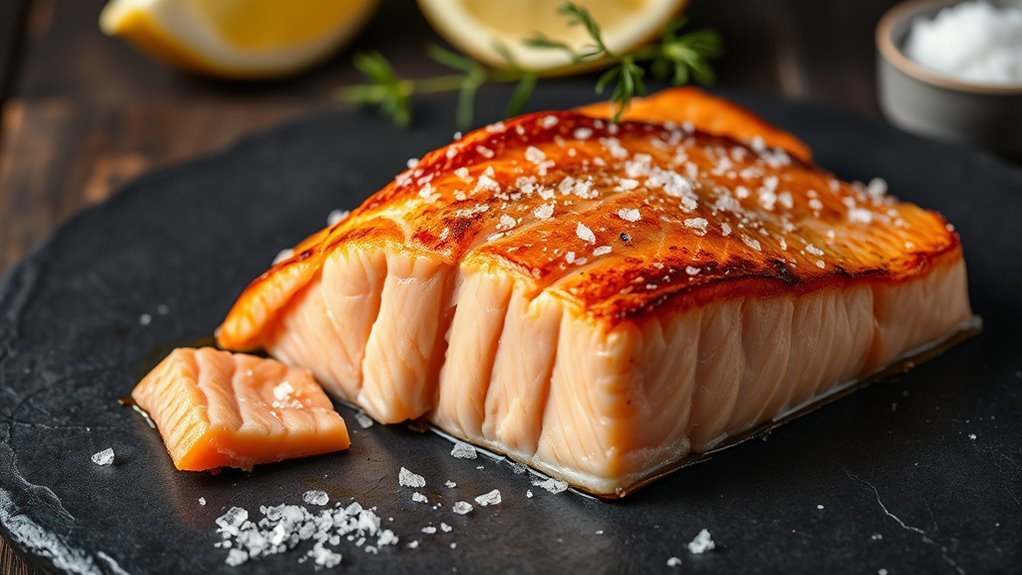
Although many people discard it, salmon skin is packed with nutrients that can profoundly benefit your health. When you eat salmon skin, you tap into a rich source of omega-3 fatty acids, often more concentrated here than in the salmon’s flesh. These healthy fats play a vital role in your overall well-being.
Beyond omega-3s, salmon skin offers essential vitamins B and D, which support energy metabolism and bone health. The skin’s nutritional value also comes from the fatty layer beneath, known as the “fat line,” which holds many of these nutrients.
Furthermore, salmon skin contains collagen, promoting skin elasticity and joint function. Cooking salmon with the skin on helps you retain these nutrients, making sure you get the most from every bite. So, instead of tossing the skin, savor it to reveal its powerful nutritional benefits.
Salmon Skin’s Role in Heart and Brain Health
When you include salmon skin in your diet, you boost your heart and brain health thanks to its rich omega-3 content, especially EPA and DHA. These essential fatty acids help lower triglyceride levels, reducing your risk of heart disease.
They also support neural cell membrane health, promoting ideal brain function and protecting against cognitive decline. Plus, the anti-inflammatory properties of omega-3s may shield you from neurodegenerative diseases like Alzheimer’s.
Salmon skin also provides vitamin D, which helps regulate blood pressure and enhances vascular function for better cardiovascular health.
| Nutrient | Benefit for Heart Health | Benefit for Brain Health |
|---|---|---|
| Omega-3 (EPA) | Lowers triglycerides, reduces risk | Supports neural cells, reduces decline |
| Omega-3 (DHA) | Improves vascular function | Enhances cognitive function |
| Vitamin D | Regulates blood pressure | Supports brain cell function |
| Anti-inflammatory Properties | Reduces inflammation, heart protection | Protects against neurodegeneration |
| Overall Effect | Promotes cardiovascular wellness | Maintains brain health |
Which Salmon Has the Safest Skin to Eat?
Salmon skin offers impressive health benefits, but not all skin is equally safe to eat. When choosing which salmon has the safest skin to eat, wild salmon stands out. Wild Pacific salmon, like sockeye and coho, generally contain lower levels of contamination compared to farmed Atlantic salmon.
That’s because farmed salmon often live in controlled environments where pollutants like PCBs and dioxins accumulate, raising contamination risks. Wild salmon from reputable, certified sources tends to have fewer environmental toxins and less methylmercury, making their skin safer to enjoy.
Besides being safer, wild salmon skin is rich in healthy fats that support your heart and brain health. To minimize exposure to harmful substances, it’s best to opt for wild-caught salmon whenever possible.
When to Avoid Eating Contaminated Salmon Skin
Because contaminated salmon skin can carry harmful toxins like PCBs, dioxins, and methylmercury, you should avoid eating it if the fish comes from polluted waters or questionable sources. Farmed Atlantic salmon tend to have higher levels of these harmful contaminants compared to wild Pacific salmon, increasing your health risks.
Pregnant or breastfeeding women should be especially cautious and avoid salmon skin from contaminated sources to reduce exposure to these toxins. The FDA also recommends limiting consumption of fish with known or suspected contamination, particularly when eating the skin.
Here’s when to avoid contaminated salmon skin:
| Situation | Reason |
|---|---|
| Fish from polluted waters | High levels of toxins like PCBs |
| Farmed Atlantic salmon | Greater concentration of harmful contaminants |
| Pregnant or breastfeeding women | Increased sensitivity to health risks |
Why Cooking Method Matters for Salmon Skin Nutrition
You’ll want to cook salmon skin carefully to protect its omega-3s and vitamin D from high heat damage. When you use moderate temperatures, it helps keep the skin crispy without losing those important nutrients. So, picking the right cooking method really makes all the difference—not just for taste but for your health too.
Heat Impact On Nutrients
While cooking salmon skin enhances its flavor and texture, the method you choose considerably affects its nutritional value. High heat can degrade heat-sensitive nutrients like vitamin D and omega-3 fatty acids, so frying or broiling at very high temperatures may reduce the skin’s nutrient density.
Instead, baking or gentle steaming preserves more nutrients by applying moderate heat and shorter cooking times. Overcooking salmon skin not only makes it rubbery but also diminishes healthy fats and other essential nutrients.
If you want to maximize nutrient preservation, avoid excessive heat and lengthy cooking. By choosing cooking methods that balance flavor with nutrient preservation, you *guarantee* that salmon skin remains a nutritious part of your meal rather than just a crispy treat.
Retaining Omega-3 Benefits
When you cook salmon skin at moderate temperatures, you help preserve its valuable omega-3 fatty acids. These start to break down under intense heat. Choosing the right cooking methods is essential for omega-3 retention in salmon skin.
Baking, steaming, or poaching gently heat the skin, maintaining its nutritional benefits. In contrast, frying or grilling at high temperatures can degrade omega-3 fats, reducing salmon skin’s health value. Use this guide to maximize omega-3 retention:
| Cooking Method | Temperature | Omega-3 Retention |
|---|---|---|
| Baking | Moderate | High |
| Poaching | Moderate | High |
| Steaming | Moderate | High |
| Frying/Grilling | High | Low |
Achieving Crispy Texture
Although high heat helps achieve the crispy texture many crave, cooking salmon skin too intensely can degrade its omega-3 fats and vitamin D. When cooking salmon, it’s essential to balance heat to protect these nutrients.
Start by searing the skin over high heat to crisp it, then lower the temperature to moderate levels to finish cooking. This method locks in the omega-3 fatty acids while preventing nutrient loss.
Alternatively, baking salmon skin at moderate temperatures offers a gentler approach that maintains both crispiness and nutritional value. Avoid overcooking, as it makes the skin rubbery and reduces its beneficial fats.
Preparing Salmon Skin for Maximum Health Benefits
How can you guarantee salmon skin delivers its full nutritional potential? Start by choosing the right cooking methods. Moderate heat, like baking or gentle pan-searing, helps preserve key nutrients such as omega-3 fatty acids, vitamins D, and B12.
Before cooking, properly dry the salmon skin to achieve a crispy texture that seals in flavor and nutrients. Use healthy fats like avocado oil to cook the skin; this not only enhances crispiness but also prevents nutrient loss.
Whether you cook the skin attached to the flesh or separately, controlling the temperature is essential to avoid overcooking, which can reduce its health benefits. Avoid removing the skin improperly, as that can damage its nutrient content.
Flavor Profiles of Perfectly Cooked Salmon Skin
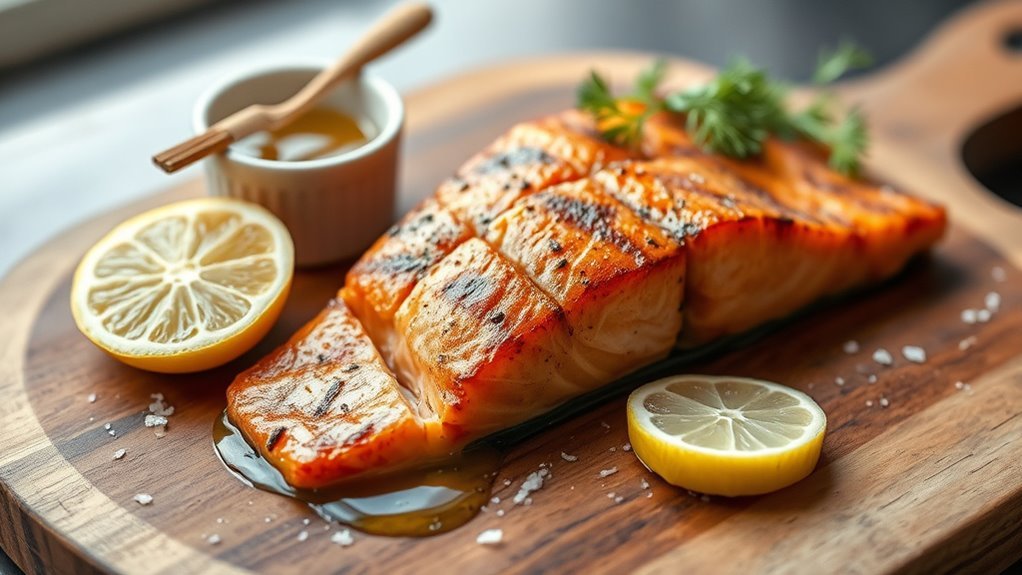
Mastering the flavor profiles of perfectly cooked salmon skin starts with achieving a crispy texture that reveals its rich, umami-packed taste. When you use cooking methods like pan-searing or broiling at moderate temperatures, you unlock the skin’s natural oils and deepen its flavor without burning it.
This process highlights a slightly smoky, caramelized taste that pairs beautifully with the tender, moist flesh beneath. Adding simple seasonings like salt, lemon, or herbs during cooking enhances the skin’s savory notes, making every bite more appetizing.
Beyond flavor, cooking salmon skin properly helps preserve its valuable nutrients, giving you a tasty and nutritious experience. The contrast between the crispy skin and delicate fish creates a balanced sensation that lets you fully appreciate the quality of the salmon.
Making Crispy Salmon Skin Snacks at Home
To make crispy salmon skin snacks, the first thing you want to do is dry the skin really well. Getting rid of all the moisture is key to making sure it turns out nice and crunchy.
Next, grab some oil that can handle the heat—avocado or canola oil works great. Heat it up over medium-high and cook the skin until it’s golden and crispy.
You can season it with your favorite spices either before or after cooking. This will give it an extra boost of flavor. And just like that, you’ve got yourself a tasty, bacon-like snack to enjoy!
Preparing Salmon Skin
Wondering what it takes to turn salmon skin into a crispy, flavorful snack? Preparing salmon skin correctly is key to locking in nutrients and achieving that perfect crunch. Follow these steps to get started:
- Pat the salmon skin dry with paper towels to remove moisture, which is essential for crispiness.
- Heat a skillet over medium-high heat with a bit of avocado or coconut oil, then cook the skin until the edges are golden and crispy.
- Flip carefully and cook for 2-3 more minutes to avoid a rubbery texture.
Once done, season immediately with salt, pepper, or spices to boost flavor. Drain on paper towels before serving or storing. This simple prep method helps you enjoy crispy salmon skin snacks rich in nutrients.
Cooking Techniques
Getting crispy salmon skin just right starts with the cooking technique you choose. Begin by patting the skin dry, then sear it in hot avocado oil or a non-stick skillet over medium-high heat. This cooking method helps render the fat and locks in omega-3 nutrients while creating excellent crispiness.
Flip the skin frequently to guarantee even cooking and prevent burning, aiming for a golden brown finish. Once cooked, season the skin with salt, pepper, or your favorite spices to enhance its flavor. Finally, let the crispy salmon skin drain on paper towels, which removes excess oil and keeps your snack crunchy.
With these simple steps, you’ll enjoy a delicious and nutritious salmon skin treat at home.
Tips for Buying Salmon With Healthy Skin
When selecting salmon, choosing wild-caught varieties from Pacific regions can considerably reduce your exposure to pollutants like PCBs and methylmercury. To guarantee you get salmon with healthy skin and maximize its nutritional value, focus on these key buying tips:
- Choose wild-caught salmon with sustainability certifications like MSC or BAP, which indicate better environmental practices and higher quality.
- Look for fresh salmon with shiny, moist, and firm skin free from discoloration or dryness; this signals nutrient-rich, healthy skin.
- Avoid salmon with dull, slimy skin or unpleasant odors, as these signs point to poor quality or spoilage.
Incorporating Salmon Skin Into a Balanced Diet
Although many people focus on the salmon fillet, including the skin in your meals can considerably boost your intake of omega-3 fatty acids, vitamin D, B12, and collagen. Incorporating salmon skin into a balanced diet enhances these nutritional benefits, supporting heart and brain health.
To make the most of its nutrients, opt for wild-caught salmon and practice healthy cooking methods like baking or pan-frying. These techniques preserve the delicate omega-3s and vitamins while adding a crispy, flavorful element to your dishes.
Including salmon skin regularly also helps you meet the FDA’s recommendation of consuming fish two to three times weekly, promoting overall well-being. By adding salmon skin to your meals, you diversify your nutrient sources and enjoy a tasty, healthful boost.
Frequently Asked Questions
Can Salmon Skin Help Improve Joint Mobility and Reduce Inflammation?
Yes, salmon skin can help improve your joint mobility and reduce inflammation. It’s packed with collagen and omega-3s, which have strong anti-inflammatory properties that support joint health.
How Does Salmon Skin Compare Nutritionally to Other Fish Skins?
Think of salmon skin benefits as the crown jewel in a fish skin comparison. When you look at nutritional content, salmon skin outshines others with higher omega-3s, vitamins D and B12, and healthier fats.
Compared to cod or tilapia, it packs more health advantages, especially for inflammation and joint support. So, if you want the richest nutritional boost from fish skins, salmon skin is your top pick.
Are There Specific Herbs or Spices That Enhance Salmon Skin’s Flavor?
You can boost salmon skin’s flavor with smart herb pairing and spice enhancements. Try dill or parsley for a fresh herb pairing that complements its richness. Spice enhancements like black pepper, garlic powder, or smoked paprika add a savory kick.
For flavor boosting, incorporate lemon zest or thyme to brighten the dish. Use culinary techniques like marinating with ginger and soy sauce to deepen the umami, making each bite more delicious.
What Are the Best Side Dishes to Pair With Salmon Skin?
For the best side dishes with your salmon skin recipes, pair crisped salmon skin with light salads or steamed veggies like asparagus to balance its rich texture. Use flavor pairing tips like tangy citrus salsa or lemon juice to brighten the dish.
Incorporate rice or quinoa bowls for added crunch and nutritional benefits, boosting omega-3s. Cooking techniques like crisping make sure you discover maximum flavor and health perks in every bite.
Can Salmon Skin Be Safely Frozen and Reheated Without Losing Nutrients?
You can safely freeze salmon skin for up to 6 months while preserving its nutrients! Using proper freezing techniques, like airtight packaging, helps maximize nutrient retention.
When reheating, choose gentle methods such as skillet or oven to avoid nutrient loss. Always thaw salmon skin slowly in the refrigerator to maintain texture and flavor.
Following these storage tips guarantees you enjoy its collagen, vitamins, and omega-3s without compromising quality or taste.
Conclusion
Salmon skin serves as a surprising source of super nutrients, supporting heart and brain health with every bite. To truly taste its treasure, you’ve got to get the cooking right—crispy, crunchy, and enthralling.
Choosing safe, sustainably sourced salmon ensures you’re savoring skin that’s both safe and satisfying. So, slip salmon skin into your snacks and salads; it’s a smart, savory way to boost your balanced diet with bold, beneficial bites.