3 Easy Low Fat Low Cholesterol Diet Meal Plans
You can start your day with a low-fat, low-cholesterol breakfast like oatmeal topped with flaxseeds and fresh berries or an egg-white omelet with spinach.
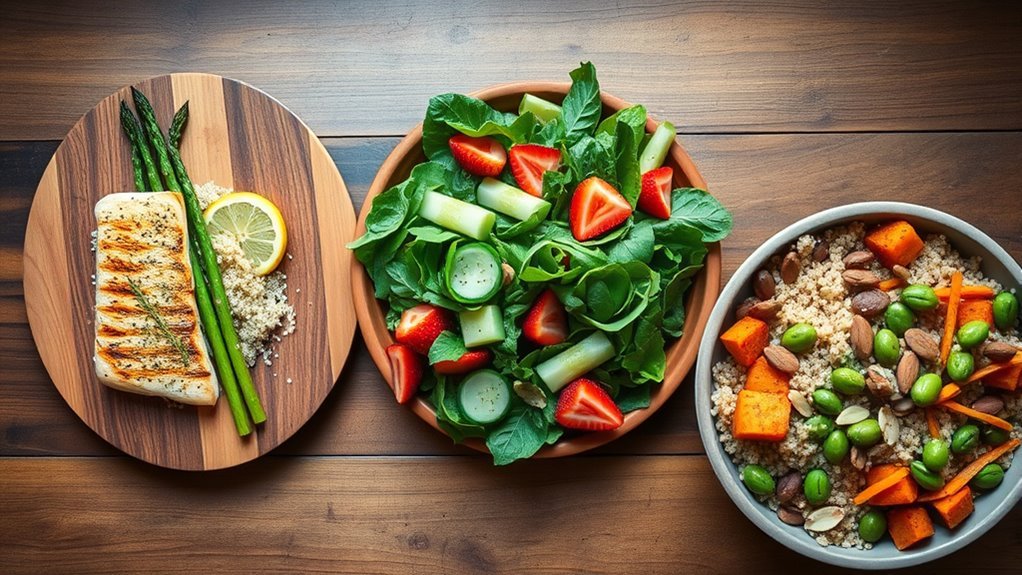
For lunch and dinner, focus on omega-3 rich fish, whole grains, and plenty of veggies tossed in olive oil.
Snacks like veggie sticks with hummus or plain yogurt keep you satisfied without extra fat.
Preparing meals ahead helps you stick to your plan easily. Keep going to explore more simple, heart-healthy ideas.
Low-Fat, Low-Cholesterol Breakfast Ideas
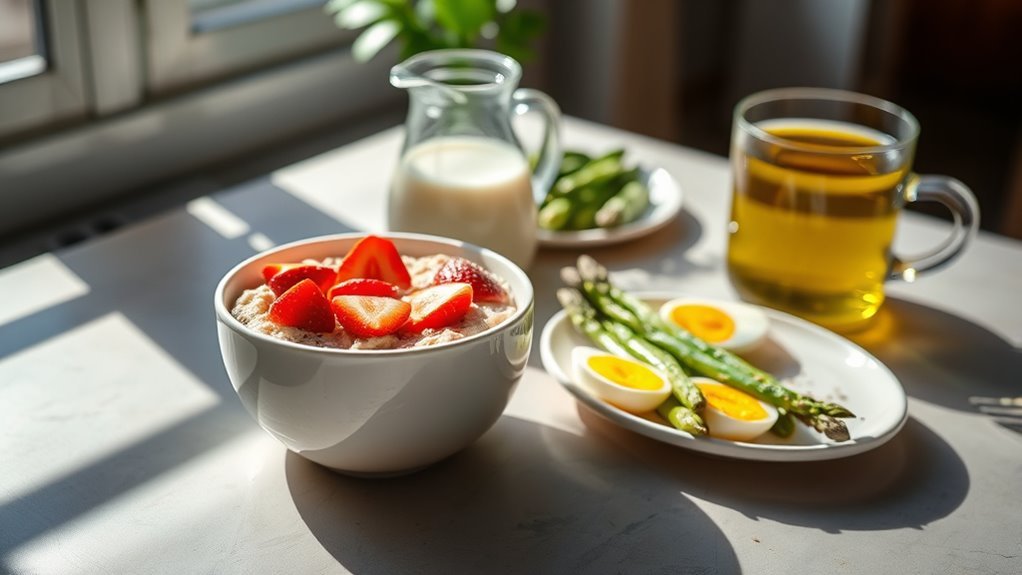
When you want to start your day with a low-fat, low-cholesterol meal, choosing options like oatmeal topped with flaxseeds and fresh berries can boost your fiber and healthy fat intake. You can also enjoy an egg-white omelet filled with spinach and tomatoes, which offers a heart-healthy way to get protein without the added cholesterol from yolks.
Greek yogurt paired with chia seeds and blueberries provides a protein-rich, antioxidant-packed breakfast that supports cholesterol management. For a plant-based twist, whole-grain toast topped with avocado and a boiled egg delivers healthy fats and fiber while keeping saturated fat low.
If you prefer something quick, a smoothie made with leafy greens, bananas, and unsweetened almond milk fits perfectly into a low-fat, low-cholesterol breakfast plan. These choices help you maintain a heart-healthy diet without sacrificing flavor or satisfaction, making it easier to stick to your goals every morning.
Heart-Healthy Lunch and Dinner Plans
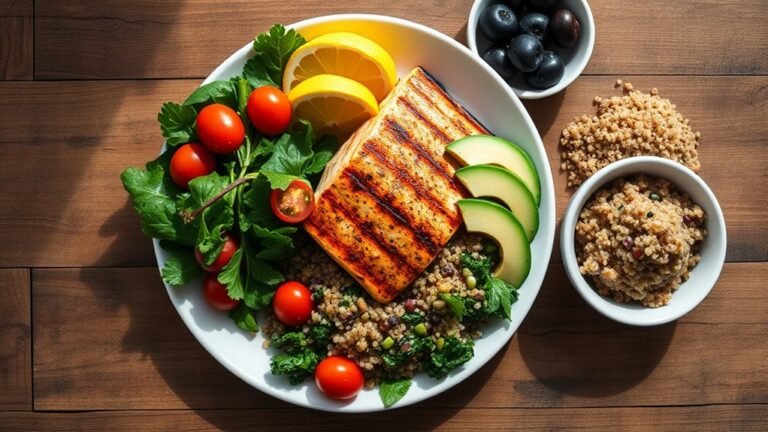
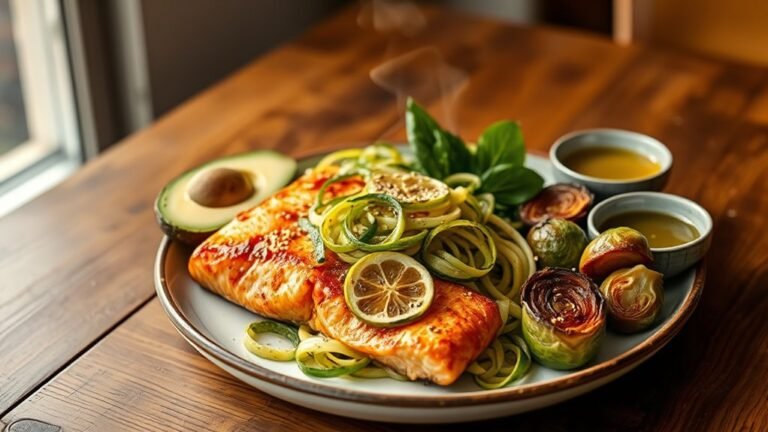
After starting your day with a low-fat, low-cholesterol breakfast, you can continue supporting heart health through thoughtful lunch and dinner choices. A heart-healthy meal plan focuses on incorporating omega-3 fatty acids by choosing fish like salmon or trout, which help reduce the risk of heart disease.
Begin with a low-fat breakfast, then boost heart health with omega-3 rich fish like salmon or trout.
You’ll want to include plenty of vegetables, like roasted Brussels sprouts, peppers, and leafy greens, to boost fiber and essential nutrients. Swap saturated fats for healthy fats such as olive oil, avocado, and nuts to enhance cardiovascular benefits.
Whole grains provide additional fiber and sustained energy, making them a great base for your meals. Including plant-based proteins like beans, tofu, and lentils supports cholesterol management while keeping saturated fat low.
Keep your dishes low-sodium by minimizing salt and avoiding processed ingredients to protect your arteries and maintain healthy blood pressure. By combining these elements, your lunch and dinner choices will effectively promote heart health and overall wellness.
Healthy Snack Ideas and Meal Prep Tips
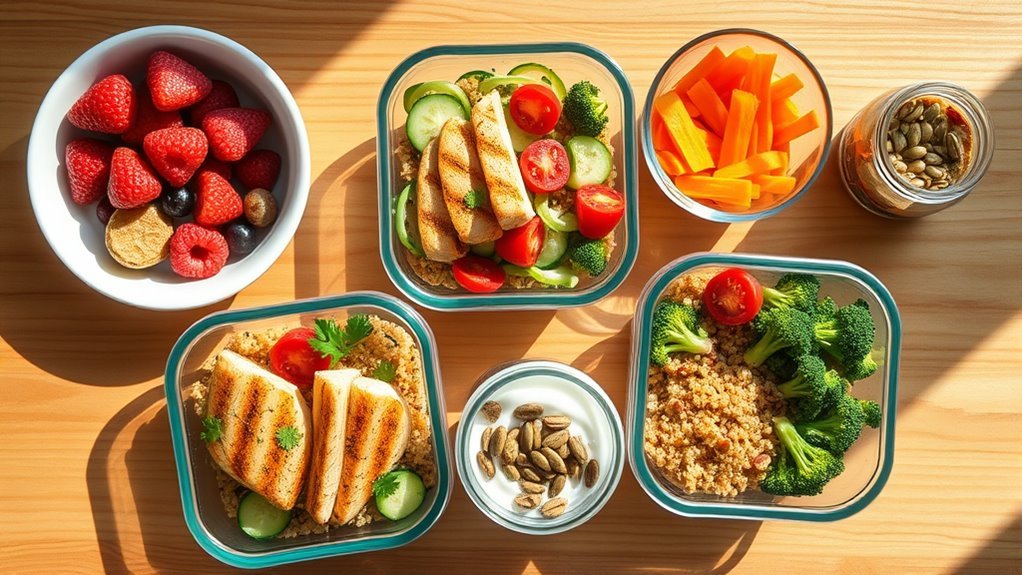
Although snacks often get overlooked, choosing healthy options can considerably support your low-fat, low-cholesterol diet. Focus on fiber-rich, whole foods like fruit, veggie sticks with hummus, or plain yogurt to keep your cholesterol in check.
When you visit the grocery store, pick nutrient-dense ingredients such as nuts, seeds, frozen peas, and grated carrots to enhance your snack ideas.
Effective meal prep saves time and encourages better eating habits. Prepare larger portions of easy recipes and store leftovers for convenient, ready-to-eat meals.
Keep healthy snacks accessible by slicing vegetables or fruit in advance. This helps you avoid less nutritious choices. Practice portion control by dividing snacks into single servings to prevent overeating.
Incorporate these meal planning strategies to make healthy snacks a natural part of your day. With a bit of organization, you’ll find it simple to stay on track while enjoying delicious, satisfying options that nourish your body and support your diet goals.
Frequently Asked Questions
How Can I Eat Out While Following a Low-Fat, Low-Cholesterol Diet?
When eating out, use restaurant tips like scanning the menu for grilled, baked, or steamed options. Focus on menu choices low in fat and cholesterol, and practice portion control by sharing dishes or asking for half portions.
Be ingredient aware. Avoid creamy sauces and fried foods. Politely request food substitutions, like extra veggies instead of fries.
Watch your alcohol options, opt for water or wine, and mind meal timing to avoid overeating. Respect restaurant etiquette while managing calorie counting and dining companions’ preferences.
What Are the Best Plant-Based Protein Sources for This Diet?
You’ll want to focus on tofu varieties and lentil options since they’re versatile and low in fat. Chickpea recipes and quinoa dishes provide great protein with fiber.
Edamame snacks and seitan cuts add variety and texture. Don’t forget hemp seeds and pumpkin seeds for a nutrient boost. Black beans are hearty, while soy milk offers a smooth, protein-rich alternative.
Incorporating these keeps your meals tasty and heart-healthy.
How Do I Handle Cravings for High-Fat or Fried Foods?
When cravings for high-fat or fried foods hit, use craving management by reaching for healthy snacking options like air-popped popcorn or veggie sticks with hummus. Flavorful alternatives with spice enhancement, like roasted chickpeas with chili powder, satisfy your taste buds.
Practice mindful eating and portion control to avoid overindulging. Meal prepping helps you stay on track, while hydration strategies curb false hunger. Recognize emotional triggers and work on habit formation to make lasting changes.
Can I Include Dairy Products in a Low-Cholesterol Meal Plan?
Yes, you can include dairy products, but choose wisely. Opt for low-fat yogurt and skim milk options to keep cholesterol low.
If you’re lactose intolerant or prefer plant-based choices, try dairy alternatives like vegan dairy substitutes, plant-based cheeses, and cheese substitutes. Non-dairy creamers and dairy-free desserts also fit well.
Fermented dairy like kefir may benefit digestion, but always watch portion sizes to manage cholesterol effectively.
How Does This Diet Impact Cholesterol Medication Effectiveness?
Imagine you’re taking statins while following a low-fat, low-cholesterol diet. This diet improves drug efficacy by reducing cholesterol absorption and enhancing lipid metabolism, creating medication synergy.
However, dietary interactions and nutritional timing matter. Taking supplements like fiber can affect statin compatibility.
Regular cholesterol monitoring helps you and your doctor adjust treatment for the best health outcomes. So, your diet can boost medication effectiveness but requires careful management.
Conclusion
By choosing low-fat, low-cholesterol meals, you’re taking a big step toward a healthier heart.
Did you know that heart disease is the leading cause of death worldwide? Simple diet changes can reduce your risk by up to 30%.
With easy breakfast options, satisfying lunches, and smart snacks, you can enjoy delicious food while protecting your heart.
Stick to these meal plans, and you’ll feel better and more energized every day.