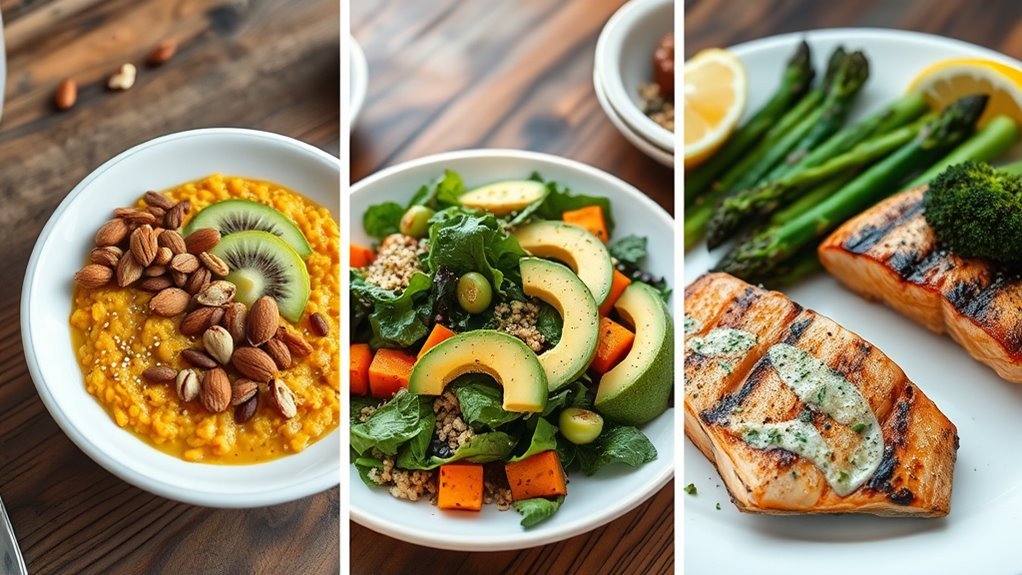
3 Essential Meals in a 7 Day Anti-Inflammatory Diet Meal Plan
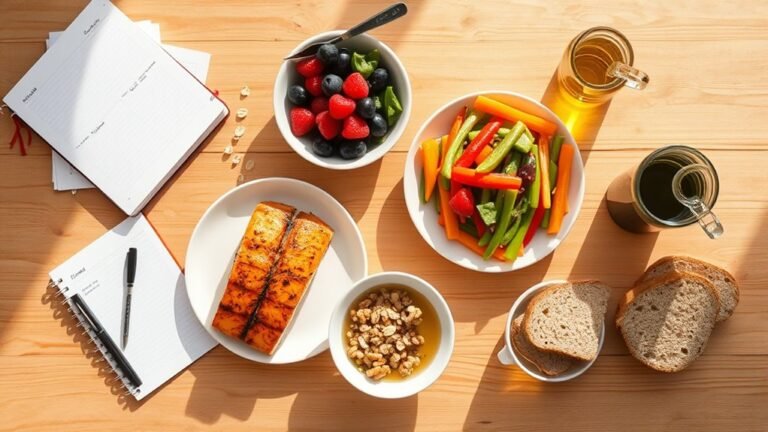
You’ll want to start your day with anti-inflammatory breakfasts like oatmeal topped with chia seeds and berries for omega-3s and antioxidants.
For lunch, focus on nutrient-packed meals with leafy greens, wild salmon, and fermented foods to boost gut health.
At dinner, choose omega-3-rich fish paired with vegetables and anti-inflammatory spices like turmeric and ginger.
Using these balanced meals promotes healing and reduces inflammation.
Keep exploring to discover how to optimize each meal for maximum benefits.
Anti-Inflammatory Breakfasts and How to Prepare Them
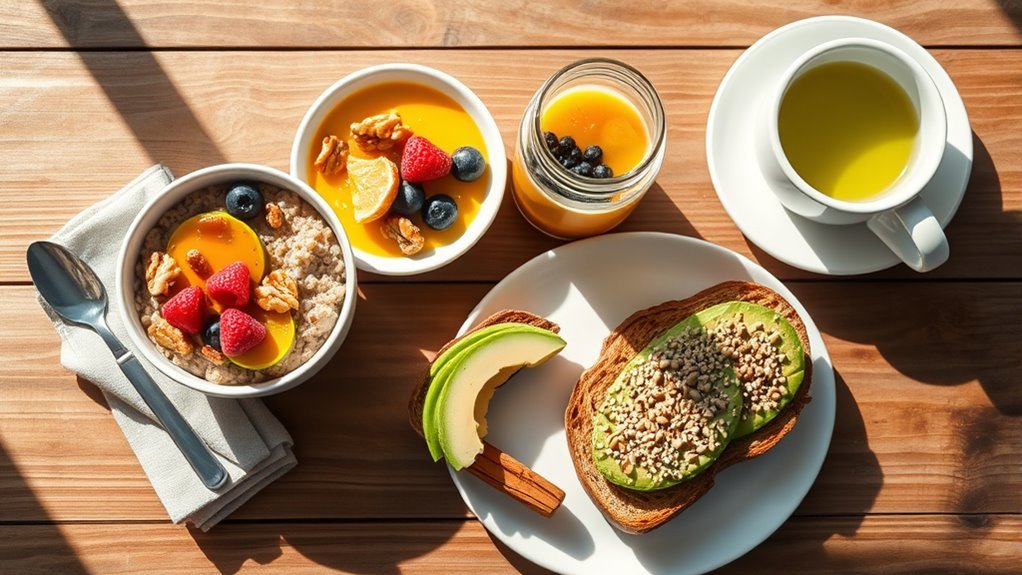
How can you kickstart your day with meals that fight inflammation? Start with anti-inflammatory breakfasts packed with nutrient-dense foods like berries, leafy greens, nuts, and seeds. These ingredients deliver antioxidants and fiber that help reduce inflammation.
For example, oatmeal topped with chia seeds, blueberries, and a drizzle of honey gives you omega-3 fatty acids, antioxidants, and fiber all at once. You can also whip up a smoothie using spinach, frozen berries, flaxseeds, and almond milk for a quick, nutrient-rich option.
Don’t forget to incorporate healthy fats through avocado or olive oil, which support your body’s defense against inflammation. Adding spices like turmeric to your meals amplifies these benefits by providing powerful anti-inflammatory compounds.
Try mashed avocado on whole grain toast sprinkled with turmeric or pepper for a simple, delicious breakfast. By focusing on these foods, your mornings become a proactive step in fighting inflammation effectively.
Nutrient-Packed Lunches to Boost Gut Health and Reduce Inflammation
When you build your lunch around leafy greens, colorful vegetables, and healthy fats, you actively support your gut health and reduce inflammation. Including anti-inflammatory foods like omega-3 fatty acids from wild salmon or walnuts helps lower systemic inflammation by decreasing cytokine production.
Whole grains such as quinoa or brown rice provide fiber, which nourishes beneficial gut bacteria and promotes microbiome diversity. Fermented foods like sauerkraut or probiotic yogurt further boost these bacteria, enhancing digestion and immune function. Adding spices like turmeric not only flavors your meal but also amplifies its anti-inflammatory effects.
Try these nutrient-packed lunch ideas to optimize gut health and fight inflammation:
- A salad with kale, walnuts, quinoa, and a turmeric vinaigrette
- Brown rice bowl with wild salmon, kimchi, and steamed veggies
- Whole-grain wrap filled with leafy greens, avocado, and probiotic yogurt dressing
These choices help you reduce inflammation while supporting your digestive wellness.
Balanced Anti-Inflammatory Dinners to Support Healing and Wellness
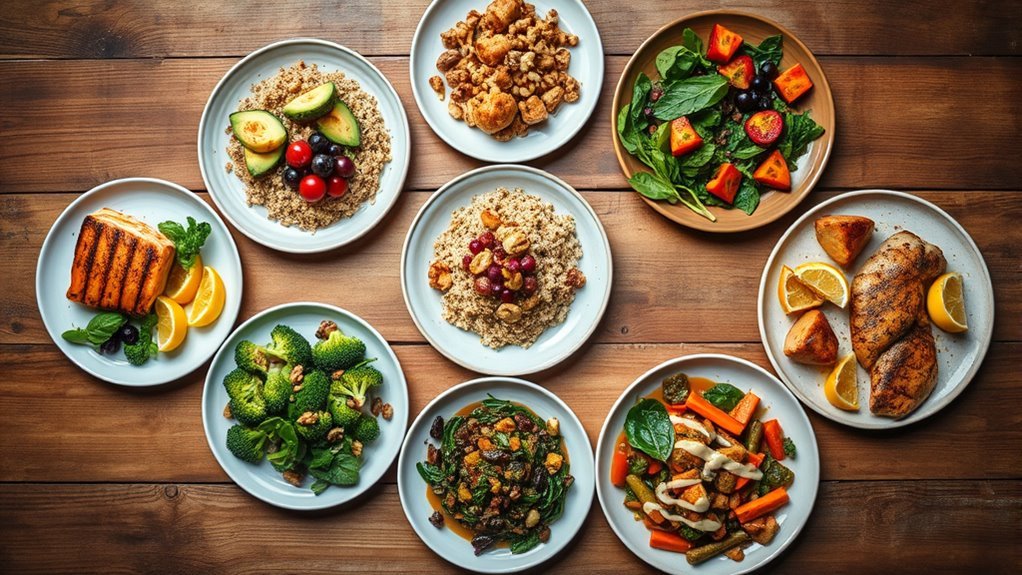
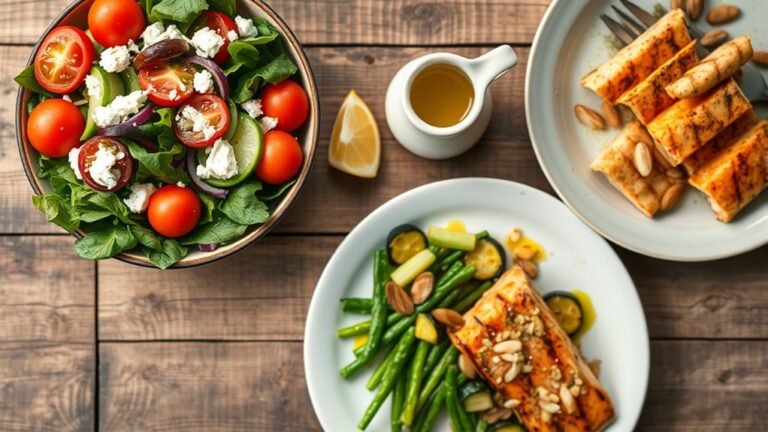
Lunches packed with gut-friendly ingredients set a strong foundation, but your dinners play an equally important role in managing inflammation and supporting healing. Balanced anti-inflammatory dinners often include omega-3-rich foods like salmon or sardines paired with colorful vegetables such as broccoli or sweet potatoes.
These nutrient-dense ingredients promote tissue repair and help reduce systemic inflammation. Incorporating leafy greens, herbs, and anti-inflammatory spices like turmeric and ginger further enhances your meal’s benefits.
Preparing your meals through grilling, roasting, or steaming preserves the nutritional value while avoiding inflammatory triggers from processed cooking methods. Including healthy fats from sources like olive oil, avocados, and nuts supports cellular health and modulates inflammatory responses.
Frequently Asked Questions
Which Spices Have the Strongest Anti-Inflammatory Properties?
You’ll find turmeric benefits and ginger advantages among the strongest anti-inflammatory spices. Cinnamon effects help reduce inflammation, while cayenne properties boost circulation and ease pain.
Clove benefits include antioxidant support, and black pepper enhances absorption of other spices. Cardamom health perks and nutmeg uses also contribute, while mustard seed and fenugreek health effects round out this powerful lineup.
Adding these spices can really help you fight inflammation naturally.
How Much Water Should I Drink Daily on This Diet?
Think of your body as a garden thirsty for a steady rain. Aim for about 8 cups (64 ounces) daily to meet hydration guidelines. Staying consistent with your water intake benefits inflammation reduction, digestion, and overall health.
Set daily water goals and sip throughout the day for ideal hydration timing. If you’re active or a senior, boost intake to avoid dehydration risks. Try flavored water options to keep it interesting while supporting your anti-inflammatory journey.
Can I Include Dairy in an Anti-Inflammatory Meal Plan?
You can include dairy, but it depends on your sensitivity. If you have lactose intolerance or casein sensitivity, it’s best to choose dairy alternatives like plant-based dairy or cheese substitutes.
Fermented dairy like yogurt options often have anti-inflammatory benefits and may be easier to digest. However, some people find regular dairy triggers inflammation, so try dairy-free recipes to see how you feel.
Balance is key to managing inflammation effectively.
What Snacks Are Best Between Anti-Inflammatory Meals?
Craving something between meals? You’ll love these healthy snack options that keep inflammation at bay. Try protein-packed snacks like roasted chickpeas or a handful of fruit and nut snacks.
For quick snack recipes, whip up whole grain snack ideas like oat bars or choose low sugar snack choices such as veggie sticks with hummus. Don’t forget dairy-free snack options like avocado toast or plant-based snack ideas that satisfy without the inflammation.
How Do I Adjust the Plan for Food Allergies?
You can adjust the plan by choosing allergy friendly substitutions and safe food choices. Check allergen labeling carefully to avoid hidden triggers.
Prevent cross contamination by using separate utensils and surfaces. Swap common allergens with alternative protein sources or hypoallergenic ingredients.
For nut free options, try seeds; for gluten free adjustments, use quinoa or rice; and for dairy free alternatives, opt for coconut or almond milk. Use flavor enhancement techniques like herbs and spices to keep meals tasty.
Conclusion
By choosing anti-inflammatory meals, you’re taking powerful steps toward better health. Did you know chronic inflammation affects over 50% of adults worldwide? That means your daily food choices can make a huge difference.
With nutrient-packed breakfasts, gut-friendly lunches, and healing dinners, you’re not just eating—you’re actively reducing inflammation and supporting your body’s wellness. Stick to this 7-day plan, and you’ll feel the positive effects sooner than you think!