What Is a Keto Meal Plan?
A keto meal plan helps you eat high fat, moderate protein, and very low carbs to shift your body into ketosis, where fat becomes your main fuel instead of glucose.
You’ll focus on foods like fatty fish, eggs, healthy oils, and low-carb veggies while keeping carbs below 20-50 grams daily.
This approach supports weight loss, blood sugar control, and more.
Keep going to discover how to build meals, prep smartly, and customize the plan for your needs.
What Is a Keto Meal Plan and How Does It Work?
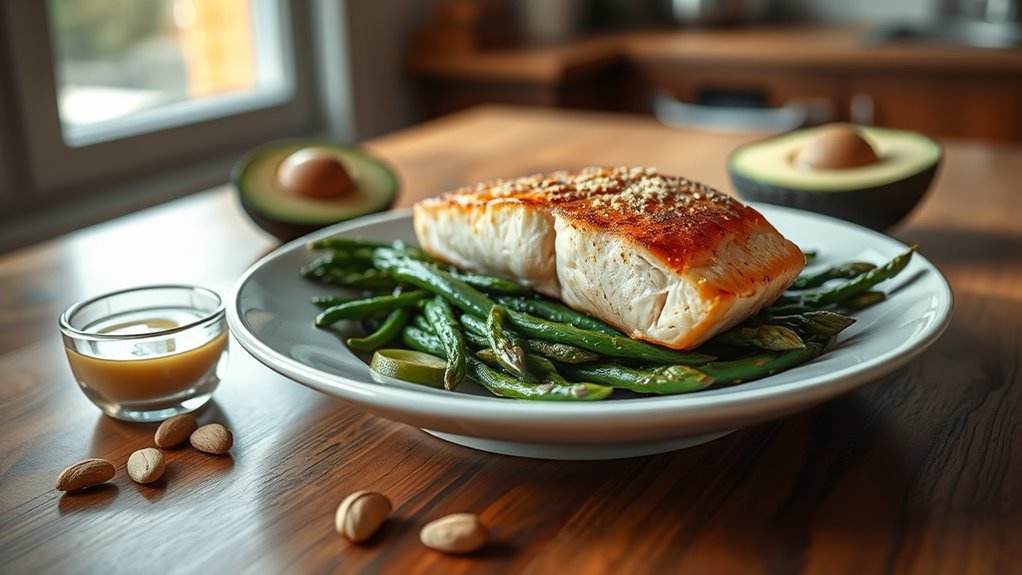
Although it may seem complex at first, a keto meal plan guides you to eat high-fat, moderate-protein, and very low-carb foods that push your body into ketosis. This means your body switches from using glucose to burning fat for energy.
A keto meal plan helps your body burn fat by eating high-fat, moderate-protein, and very low-carb foods.
The keto diet typically limits net carbs to under 20-50 grams per day, ensuring you stay in this fat-burning state. Your meals focus on the right balance of macronutrients, mostly fats, some protein, and minimal carbs, helping you maintain ketosis effectively.
A structured keto meal plan includes recipes, portion sizes, and shopping lists to simplify your low-carb meals. By following this plan, your body produces ketones, which support weight loss and improve metabolic health.
Plus, many plans are designed for multiple days, with leftovers and easy options to keep things manageable. This approach helps you stay consistent and reap the benefits of the keto diet without stress.
Who Benefits From a Keto Meal Plan?
Following a keto meal plan can offer benefits to a variety of people depending on their health goals and conditions. If you’re aiming for weight loss, the keto diet’s focus on low-carb foods helps reduce appetite and manage cravings, making it easier to stick with long-term.
People with metabolic health issues, like obesity or metabolic syndrome, often see improved insulin sensitivity and significant weight loss. If you have type 2 diabetes, a keto diet may help you control blood sugar better and even reduce your medication needs.
Athletes sometimes use keto to boost fat-burning efficiency and endurance during training. Furthermore, those with epilepsy may experience fewer seizures when following a ketogenic diet prescribed for neurological health.
Whether you’re targeting weight loss, better blood sugar control, or enhanced metabolic health, a keto meal plan can be a powerful tool tailored to your specific needs.
Core Keto Foods to Include in Your Meal Plan
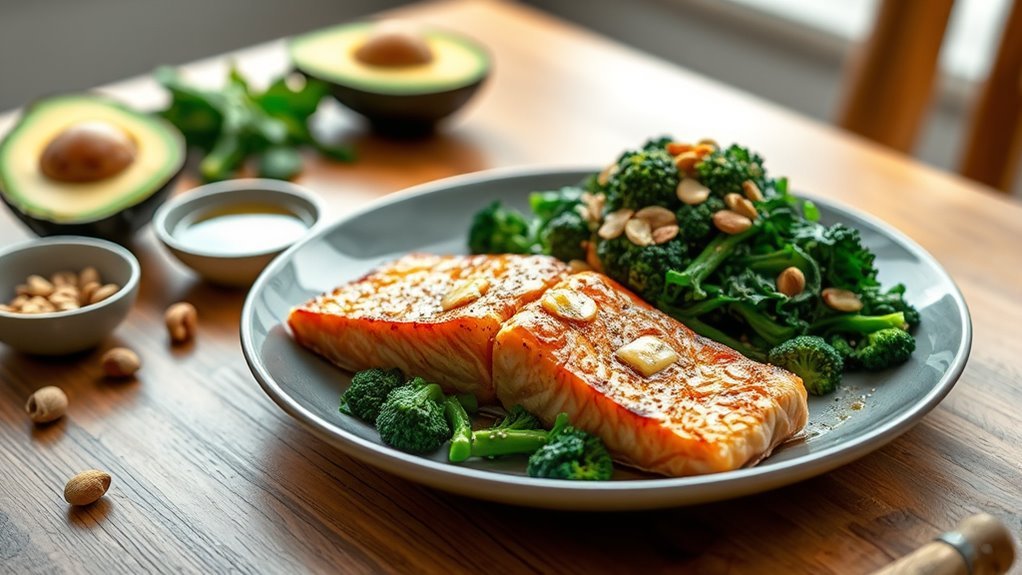
You’ll want to focus on protein sources like fatty fish, eggs, and full-fat dairy to keep your muscles strong and help you stay full. Healthy fats from avocados, nuts, olive oil, and butter are great too—they’ll fuel your body and support ketosis. And don’t forget to include low-carb veggies like spinach and broccoli; they provide essential nutrients without adding extra carbs.
Essential Keto Protein Sources
When building your keto meal plan, choosing the right protein sources is key to staying in ketosis while supporting muscle health. Fatty fish like salmon and mackerel offer high-quality protein and omega-3 fatty acids, making them an excellent choice.
Lean meats such as beef, pork, and chicken provide essential protein with minimal carbs, perfect for maintaining muscle. Don’t overlook full-fat dairy like cheese, Greek yogurt, and heavy cream; they supply both protein and fats that fit your plan.
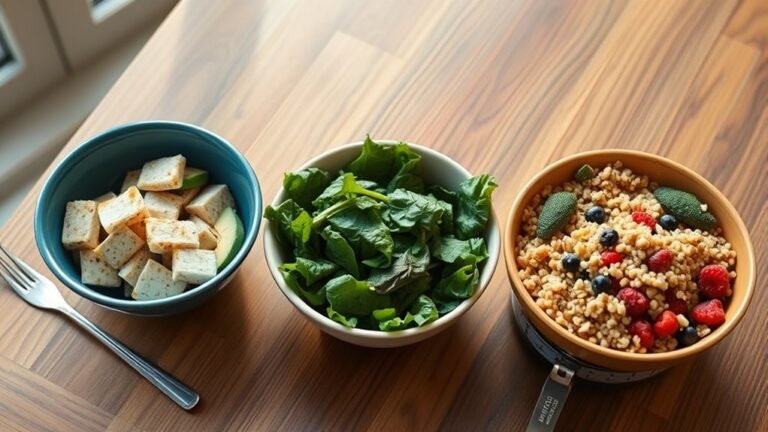
For variety, include plant-based options like tofu, tempeh, and certain nuts and seeds, but keep their carb content in mind and consume them in moderation. Balancing these protein sources helps you stay satisfied and energized on keto.
Healthy Fats For Keto
Balancing your protein choices with the right fats will keep your keto meal plan both satisfying and effective. Healthy fats are essential on a keto diet to provide energy, support hormone production, and improve nutrient absorption.
Include monounsaturated fats from sources like olive oil, avocados, and macadamia nuts to promote heart health. Don’t forget omega-3 fatty acids found in fatty fish and chia seeds, which help reduce inflammation and support brain function.
Coconut oil is a standout because its medium-chain triglycerides quickly convert to ketones, fueling your body efficiently. Traditional fats like butter and ghee also play a key role in maintaining ketosis.
Low-Carb Vegetables Choices
Although choosing the right vegetables might seem challenging on a keto diet, focusing on low-carb options makes it easier to stay in ketosis while enjoying nutrient-rich meals. Keto vegetables like leafy greens and cruciferous vegetables are staples because they have low net carbs and high fiber.
Incorporating keto-friendly produce such as spinach, broccoli, and zucchini helps you maintain variety without exceeding carb limits.
Here’s a quick guide to low-carb vegetables:
| Vegetable Type | Examples |
|---|---|
| Leafy Greens | Spinach, Kale, Arugula |
| Cruciferous Vegetables | Broccoli, Cauliflower, Cabbage |
| Other Keto Vegetables | Zucchini, Asparagus, Celery |
These core keto vegetables keep your meals flavorful and keto-compliant.
How to Build a Balanced Keto Meal Plate
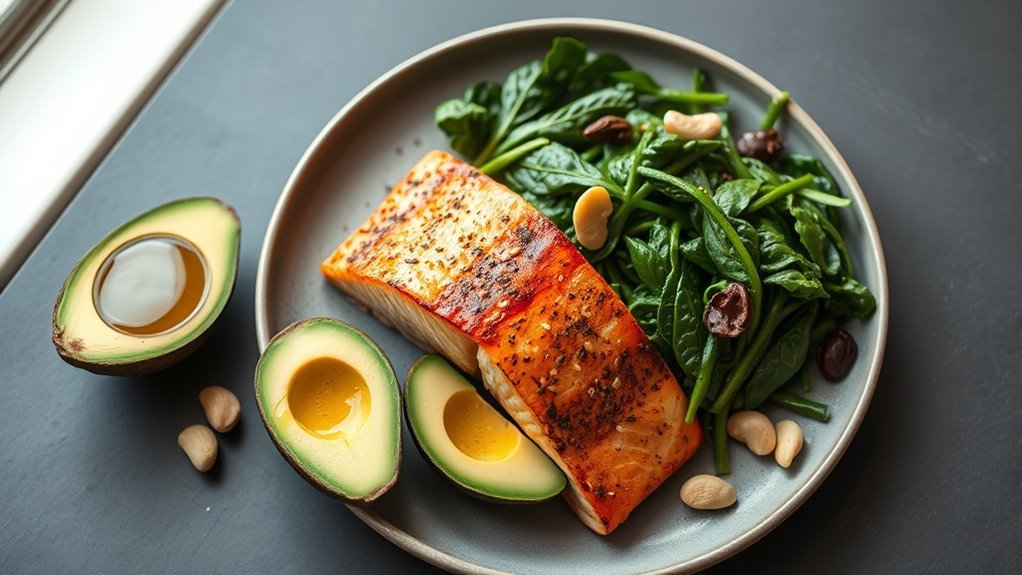
To build a balanced keto meal plate, start by filling most of your plate with healthy fats. Then, add a moderate amount of protein to keep things satisfying. Don’t forget to include a small portion of low-carb veggies to round it out.
It’s a good idea to choose nutrient-rich, non-starchy vegetables alongside quality protein sources like eggs or fish. This way, you’re getting the best of both worlds.
Essential Keto Plate Components
When you build a keto meal plate, focusing on healthy fats is essential since they make up the bulk of your energy intake. Include sources like avocado or olive oil to meet these high-fat needs.
Pair fats with moderate protein sources such as eggs, fatty fish, or lean meats to support muscle maintenance while staying in ketosis. Add non-starchy vegetables like leafy greens, broccoli, and zucchini to provide fiber and crucial nutrients without raising your carb count.
Portion control plays a vital role: aim for about 70-80% fats, 15-25% protein, and only 5-10% carbohydrates to maintain low-carb intake. You can enhance flavor with keto-friendly toppings or sugar-free sauces, keeping your plate balanced and satisfying without compromising your macros.
Balancing Macros Effectively
How do you guarantee your keto meal plate stays perfectly balanced? Focus on the right ratios of macronutrients to maintain ketosis. Aim for 70-75% healthy fats, 20-25% protein, and 5-10% net carbs. Tracking these helps you stay on target.
Include non-starchy vegetables for fiber and essential micronutrients without spiking carbs. Choose quality fats like avocados, olive oil, and nuts, and moderate protein from meats, fish, eggs, and dairy to support muscle without breaking ketosis.
- Prioritize healthy fats for energy and satiety
- Include moderate protein portions for muscle maintenance
- Keep net carbs low with non-starchy vegetables
- Measure macronutrients to maintain ideal keto balance
- Avoid high-carb foods that disrupt ketosis
Balancing macros effectively ensures your keto meal plan works.
What a Day on a Keto Meal Plan Looks Like
Although starting a keto meal plan might seem challenging, you’ll find that a typical day revolves around high-fat, moderate-protein, and very low-carb meals designed to keep you in ketosis. Your meals focus on low-carb meals with net carbs usually under 20-50 grams, ensuring your body burns fat efficiently.
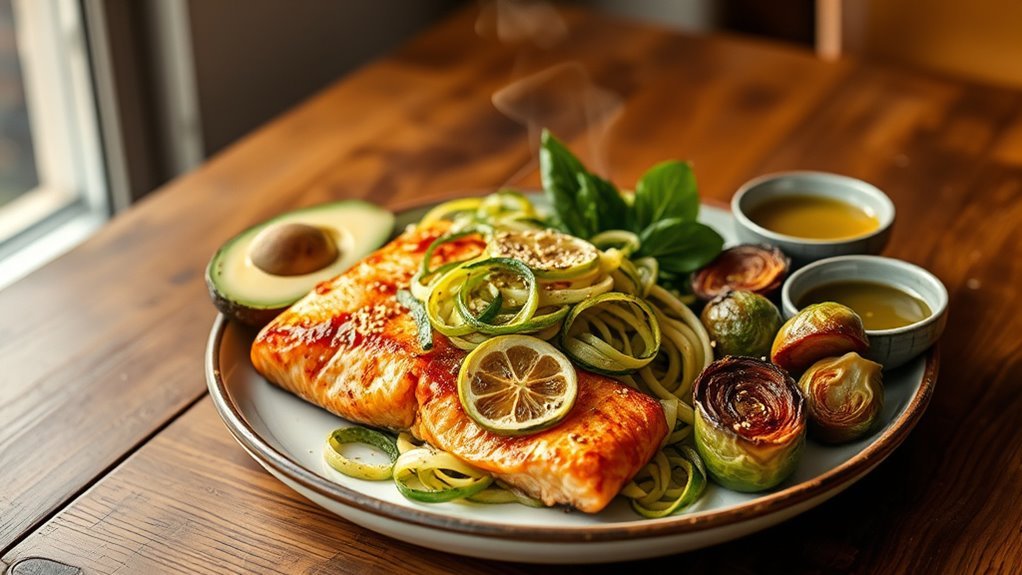
Breakfast might be eggs cooked in butter alongside avocado and spinach. For lunch and dinner, you’ll enjoy meat or fish paired with non-starchy vegetables drizzled with olive oil or topped with cheese, all rich in healthy fats. Snacks like nuts or keto-friendly bars help maintain energy without kicking you out of ketosis.
| Meal | Typical Foods |
|---|---|
| Breakfast | Eggs, butter, avocado, spinach |
| Lunch | Chicken, olive oil, broccoli |
| Dinner | Salmon, cheese, asparagus |
| Snacks | Nuts, cheese, keto bars |
| Focus | Low net carbs, healthy fats |
This structure supports your ketogenic diet goals effectively.
Easy Keto Meal Plan Prep Tips to Save Time
Saving time on your keto meal prep starts with smart planning and efficient techniques. By organizing your meal plan and streamlining your cooking process, you can reduce daily effort and stay on track with your goals.
Batch cooking is a key time-saving strategy. Prepare large portions of keto-friendly dishes to enjoy leftovers that cut down on daily meal prep. Planning your grocery list around your recipes guarantees you have all ingredients ready, avoiding last-minute trips.
Here are some easy keto meal prep tips to save time:
- Bake, chop, and marinate ingredients ahead to speed up weekday meals
- Use batch cooking to make multiple servings at once
- Create a weekly meal plan and grocery list to stay organized
- Incorporate ready-to-eat items like rotisserie chicken or pre-sliced veggies
- Simplify meals by repeating breakfast options or using versatile ingredients
These methods help you save time while sticking to your keto meal plan efficiently.
Common Keto Meal Plan Snacks and Desserts
When you follow a keto meal plan, choosing the right snacks and desserts is essential to stay within your carb limits while satisfying cravings. Keto snacks like macadamia nuts, pecans, cheese, hard-boiled eggs, and pork rinds offer low-carb, high-fat options that keep you fueled.
For low-carb desserts, try sugar-free chocolate bars, whipped heavy cream with berries, keto fat bombs, or almond flour-based baked goods. Store-bought keto-friendly options such as beef jerky and pre-made cheese crisps make snacking easy and convenient.
Dips like salsa paired with parmesan crisps or pork rinds add flavor without extra carbs. Always check nutrition labels carefully to guarantee snacks and desserts contain less than 5 grams of net carbs per serving, maintaining your keto goals.
Customize Your Keto Meal Plan for Your Needs
Since everyone’s body and lifestyle are different, you’ll get the best results by customizing your keto meal plan to fit your unique needs. A personalized approach means adjusting macronutrients and portion sizes to match your caloric requirements and health goals.
Customizing your keto plan to suit your body and lifestyle delivers the most effective and sustainable results.
You can also select keto-friendly food choices you enjoy, making it easier to stick with the plan. Adaptability plays a key role, allowing you to modify meal timing or accommodate dietary preferences like vegetarian or dairy-free options.
Tracking your progress helps fine-tune carbohydrate intake, usually between 20-50 grams daily, to optimize ketosis.
Here’s how you can tailor your keto meal plan:
- Adjust portion sizes and macronutrient ratios to your energy needs
- Include favorite keto-friendly foods for satisfaction
- Modify meal timing to fit your lifestyle, like intermittent fasting
- Accommodate dietary restrictions and preferences
- Monitor progress and tweak carbohydrate intake regularly
This personalized flexibility ensures your keto plan works best for you.
Tips for Starting and Sticking With Your Keto Meal Plan
Customizing your keto meal plan sets a strong foundation, but starting and sticking with it takes deliberate effort. To ease into ketosis, gradually reduce your carbohydrate intake to 20-50 grams daily.
Plan and prep meals ahead to avoid high-carb temptations. Incorporate healthy fats like avocado and olive oil to boost satiety and fuel your body efficiently.
Stay consistent with meal timing and minimize cheat meals to maintain ketosis. Tracking your progress with ketone test strips or breath analyzers helps keep you motivated and informed.
| Tip | Benefit |
|---|---|
| Gradual Carb Cut | Eases keto flu symptoms |
| Meal Prep | Keeps keto-friendly foods ready |
| Healthy Fats | Supports fat-burning and fullness |
Following these tips will help you stick with your keto diet and reach your goals effectively.
Frequently Asked Questions
Can a Keto Meal Plan Affect Cholesterol Levels?
Yes, a keto meal plan can cause cholesterol fluctuations. You’ll often see improvements in your lipid profile, like higher HDL (good cholesterol) and better blood markers linked to heart health.
However, some people might experience a rise in LDL (bad cholesterol). The key is focusing on healthy dietary fats to promote better results. You should regularly check your cholesterol levels to understand how your body responds and adjust your fats accordingly.
Is Intermittent Fasting Recommended With a Keto Meal Plan?
Yes, intermittent fasting is recommended with a keto meal plan because it enhances fasting benefits like improved metabolic effects and better appetite control. You’ll find meal timing easier to manage, which can fit well into your daily routines.
Fasting helps suppress hunger and supports fat loss, making keto more effective. Just remember to stay hydrated and balance electrolytes to avoid any setbacks while combining these strategies.
How Does Keto Impact Athletic Performance?
Keto energy is like switching your engine to run on a long-lasting fuel. Fat adaptation boosts your athletic endurance by sparing glycogen stores. You’ll notice muscle recovery improves, reducing downtime after workouts.
While performance enhancement shines during prolonged, steady efforts, high-intensity bursts might feel tougher due to limited quick energy. Overall, keto helps you tap into a steady energy reserve, but your results depend on how your body adapts.
Are There Any Long-Term Risks of Following Keto?
Yes, following keto long-term can pose risks if you don’t manage your keto nutrient balance carefully. You might face nutrient deficiencies and digestive issues from low keto fiber intake.
Staying on top of keto hydration needs is essential to avoid dehydration. Also, consider keto supplement safety to fill gaps.
Pay attention to keto meal timing to support energy and metabolism. Without proper planning, these factors can lead to health complications over time.
Can Keto Be Combined With Vegetarian or Vegan Diets?
Yes, you can combine keto with vegetarian or vegan diets by focusing on plant-based options like tofu, tempeh, and seitan. Use dairy alternatives such as almond or coconut milk if you’re vegetarian.
Incorporate vegan protein sources like nuts, seeds, and vegan protein powders. Snack on keto-friendly vegetables like spinach and zucchini, and enjoy vegetarian snacks like avocado or olives. With careful planning, you’ll meet your macros while staying keto-friendly.
Conclusion
Now that you know what a keto meal plan is, you’re ready to give it a try! Did you know that about 20% of people who start keto see significant weight loss within the first month?
Sticking with it can help you burn fat, boost energy, and feel great. Remember to customize your meals and prep smartly to keep yourself on track.
You’ve got this, your keto journey starts now!