
Does Nutritional Yeast Have Protein?
Yes, nutritional yeast does have protein, about 8 grams per 2-tablespoon serving, similar to one egg. It’s a complete plant-based protein, providing all nine essential amino acids and offering high bioavailability for efficient absorption.
Nutritional yeast is especially handy if you follow vegan or dairy-free diets, as it also supplies B vitamins like B12. It’s a versatile, nutrient-dense boost for your meals.
Keep exploring to uncover how it stacks up against other proteins and creative ways to use it.
What Is Nutritional Yeast, and Why Is It a Good Protein Source?
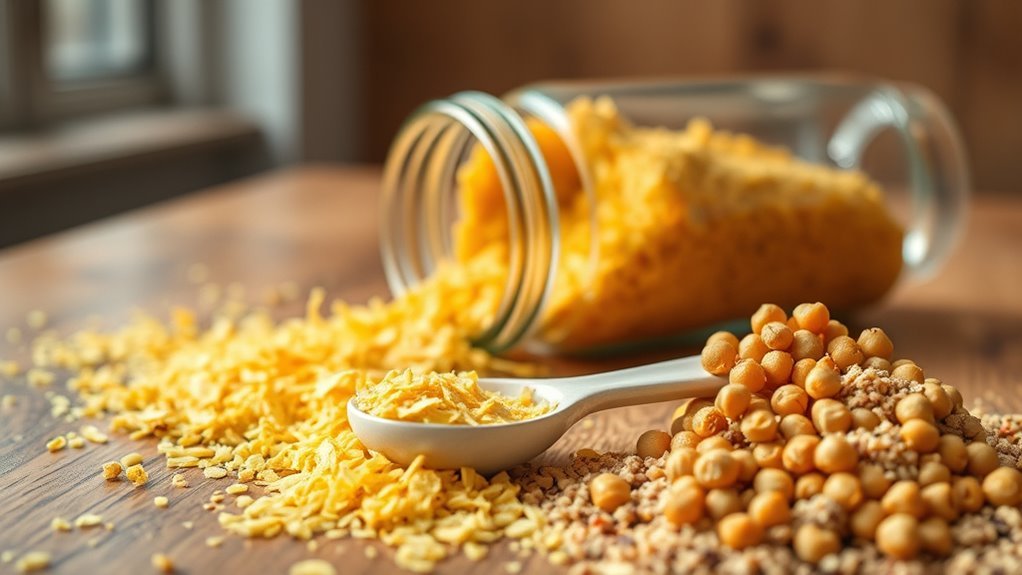
Although you might not be familiar with it, nutritional yeast is a deactivated form of Saccharomyces cerevisiae that packs about 8 grams of protein in just two tablespoons. This makes nutritional yeast an impressive plant-based protein source, especially if you follow a vegan diet.
Nutritional yeast offers 8 grams of protein per two tablespoons, making it a top vegan protein source.
What sets it apart is that it contains all nine essential amino acids, making it a complete protein. That means you’re getting all the building blocks your body needs for muscle repair and growth.
Besides protein, nutritional yeast is also a rich source of B vitamins, including B12 if it’s fortified. This is vital for vegans who might struggle to get enough from other foods.
Its savory, umami flavor lets you boost your meals’ taste while adding valuable nutrients. Whether you sprinkle it on popcorn or stir it into sauces, nutritional yeast is a convenient way to enhance your diet with quality protein and essential vitamins.
How Much Protein Is in Nutritional Yeast Per Serving?
You’ll find about 8 grams of protein in a 2-tablespoon serving of nutritional yeast. That’s pretty similar to the protein you get from one egg. What’s great is that it’s a complete plant-based protein, which means it contains all nine essential amino acids your body needs. Knowing how much protein is in each serving helps you get a clear picture of its nutritional value.
Protein Content Overview
How much protein can you get from nutritional yeast? A typical two-tablespoon (16 grams) serving delivers about 8 grams of protein, making it an excellent plant-based protein source. This protein content rivals that of one egg per serving, offering substantial protein benefits for those seeking alternatives to animal products.
Nutritional yeast stands out because it provides a complete protein, containing all nine essential amino acids your body needs. Each smaller 5-gram serving still packs around 2.6 grams of protein, making it easy to incorporate into meals.
Whether you’re vegan or just looking to boost your protein intake, nutritional yeast’s rich amino acid profile and high protein content make it a valuable addition to your diet.
Amino Acid Profile
Wondering how much protein nutritional yeast packs per serving? A typical 2-tablespoon serving contains about 5 grams of protein, making it a dense source of plant-based protein.
Nutritional yeast contains a complete protein profile, meaning it includes all nine essential amino acids your body needs but can’t produce. This makes it a valuable addition to vegetarian and vegan diets.
Among its amino acids, it also contains an amino acid called tyramine, which may affect some individuals sensitive to it. Overall, the protein content in nutritional yeast rivals that of an egg per serving, offering a solid source of protein without animal products.
Its well-rounded amino acid profile ensures you get balanced nutrition from this versatile supplement.
Serving Size Comparison
Two tablespoons of nutritional yeast deliver about 5 grams of protein, making it a convenient addition to your meals. When doing a serving size comparison, nutritional yeast flakes stand out for their high protein density.
This plant-based protein source packs nearly as much protein in a small serving as a single egg. Keep in mind, protein content can vary slightly by brand or fortification. Here’s a quick look at grams of protein per serving:
- Two tablespoons (about 5 grams) provide roughly 5 grams of protein
- Comparable protein content to a small egg per serving
- Higher protein density than many other plant-based foods
- Serving size is small but nutrient-rich, making it easy to boost your protein intake
This makes nutritional yeast a smart choice for those seeking efficient plant-based protein.
Is Nutritional Yeast a Complete Plant-Based Protein?
Because nutritional yeast contains all nine essential amino acids, it qualifies as a complete plant-based protein. This means you get a full spectrum of amino acids necessary for your body’s functions, making nutritional yeast especially valuable if you follow a vegan diet.
With about 2.6 grams of protein per 5 grams, its protein content rivals some animal products like eggs. As a plant-based protein, it’s not only complete but also highly bioavailable, so your body absorbs it efficiently.
If you’re looking to meet your daily amino acid needs without relying on animal sources, nutritional yeast offers a convenient and nutrient-rich option. Incorporating it into meals boosts your protein intake while supporting a balanced vegan lifestyle.
How Does Nutritional Yeast Protein Compare to Other Vegan Sources?
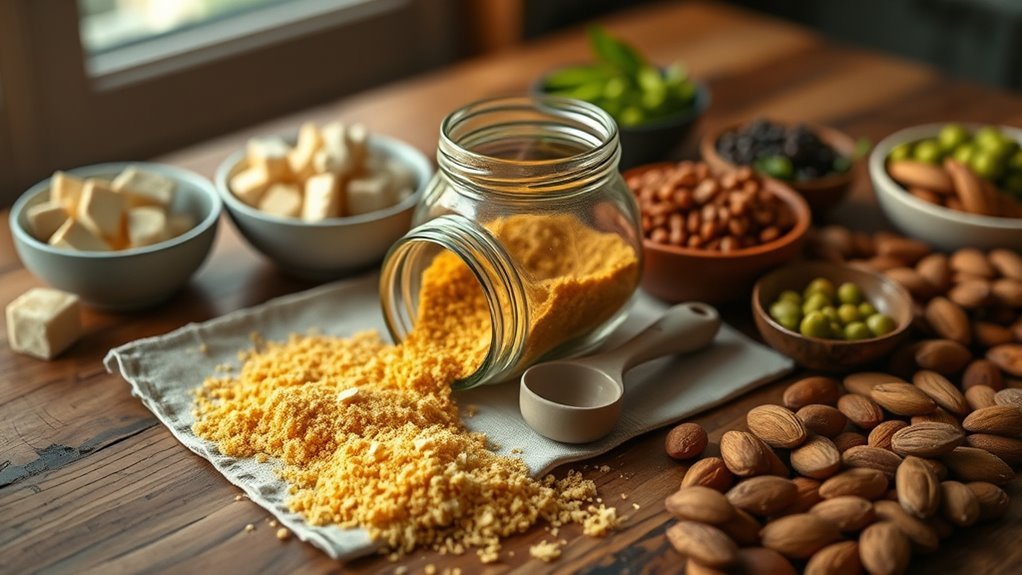
When you compare nutritional yeast to other vegan protein sources, you’ll see it offers a complete amino acid profile in just a small serving. What’s really cool is that, unlike many plant-based options, it provides all nine essential amino acids efficiently. So, it really stands out as a top choice for quality protein in a vegan diet.
Protein Quality Comparison
Although many plant-based proteins lack one or more essential amino acids, nutritional yeast stands out by providing a complete protein with all nine essential amino acids. Its protein quality matches other vegan sources like soy and quinoa, offering you a highly digestible protein that’s easy for your body to use. This makes nutritional yeast a reliable option for meeting your protein needs on a plant-based diet.
Here’s why nutritional yeast’s protein quality is impressive:
- Contains all essential amino acids, qualifying as a complete protein
- Offers high bioavailability, ensuring efficient nutrient absorption
- Provides about 2 grams of digestible protein per tablespoon
- Includes vitamin B12, often missing in other plant-based proteins
Choosing nutritional yeast means you’re getting a top-tier plant-based protein source.
Amino Acid Profile
If you want a plant-based protein that covers all your essential amino acid needs without combining multiple sources, nutritional yeast is an excellent choice. It offers a complete protein with all nine essential amino acids, making its protein profile comparable to soy and quinoa.
This vegan protein boasts high digestibility, ensuring efficient absorption of amino acids. Unlike many plant-based proteins, you don’t need to mix it with other foods to get a full range of essential amino acids. This makes nutritional yeast a convenient and effective option for muscle repair, immune support, and overall nutrition.
| Source | Protein per 5g | Contains All Essential Amino Acids? |
|---|---|---|
| Nutritional Yeast | 2.6g | Yes |
| Soy | 3.0g | Yes |
| Quinoa | 2.2g | Yes |
| Lentils | 1.8g | No |
| Chickpeas | 1.5g | No |
Who Benefits From Eating Nutritional Yeast Protein?
Because nutritional yeast provides a complete plant-based protein and essential nutrients like vitamin B12, it benefits a wide range of people. If you’re vegan or vegetarian, nutritional yeast offers a valuable source of essential amino acids and protein without animal products.
Those with dairy allergies can use it as a flavorful cheese alternative, gaining protein and trace minerals safely. Athletes and active individuals may rely on nutritional yeast to support muscle repair and energy, thanks to its rich protein and B vitamin content.
Fortified nutritional yeast is especially helpful if you need to boost vitamin B12 intake, often providing over 300% of your daily needs per serving.
You might benefit from nutritional yeast if you:
- Follow a plant-based or vegan diet
- Have dairy intolerances or allergies
- Need to increase protein for muscle recovery
- Require extra vitamin B12 from fortified nutritional yeast
In all these cases, nutritional yeast serves as a convenient, nutrient-dense protein source.
Are There Any Risks to Eating Nutritional Yeast Protein?
While nutritional yeast offers many benefits, you should be aware of some potential risks before adding it to your diet. Although it’s a great source of plant-based protein, consuming too much nutritional yeast can lead to surpassing recommended daily limits of certain B vitamins, like niacin. This may cause side effects such as skin flushing.
Furthermore, some people experience allergic reactions or have yeast sensitivities to Saccharomyces cerevisiae, the yeast used in nutritional yeast. If you suffer from inflammatory bowel diseases or have known yeast sensitivities, consult your healthcare provider before incorporating nutritional yeast regularly.
It also contains glutamate and tyramine, which can trigger adverse reactions in those sensitive to MSG or on monoamine oxidase inhibitors (MAOIs). Being mindful of these risks will help you enjoy the protein and nutritional benefits of nutritional yeast safely.
Creative Ways to Use Nutritional Yeast Protein in Your Meals
You’ve learned about the benefits and potential risks of nutritional yeast protein, so now let’s explore how to easily incorporate it into your meals. Nutritional yeast is a fantastic source of plant-based protein, offering a complete amino acid profile that makes it perfect for vegan cooking.
Its natural cheesy flavor adds depth without dairy, making it a versatile ingredient for a protein boost in various meal ideas.
Try these creative ways to use nutritional yeast protein:
- Sprinkle it over popcorn, salads, or pasta for an instant cheesy flavor and protein lift.
- Stir it into vegan cheese sauces or dips to enhance both taste and protein content.
- Mix it into scrambled tofu or plant-based egg alternatives for a savory meal.
- Add it to soups, stews, or baked goods to naturally increase protein without altering texture.
These simple methods make it easy to enjoy nutritional yeast’s protein benefits in your everyday cooking.
Frequently Asked Questions
Can Nutritional Yeast Help With Muscle Building?
Yes, nutritional yeast can help with muscle building. Its complete amino acid profile supports protein synthesis, which is vital for muscle recovery and growth.
As a dietary supplement, it fits well into workout nutrition, especially for vegetarians looking to boost their protein intake. Including it can enhance athletic performance by promoting faster muscle repair.
You’ll find it’s a practical, plant-based option to support your muscle maintenance and strength goals effectively.
Does Nutritional Yeast Contain Gluten or Allergens?
Think of nutritional yeast as a blank canvas. It’s naturally free from gluten and common allergens like soy, dairy, or nuts. You’ll find plenty of gluten-free options, but you should always check allergen labeling because of cross-contamination risks during ingredient sourcing.
While rare allergic reactions can happen, most people enjoy it safely. Staying vigilant with labels helps you avoid surprises and keeps your diet both tasty and safe.
How Should Nutritional Yeast Be Stored for Freshness?
To keep your nutritional yeast fresh, follow these storage tips: use proper containers like airtight jars or resealable bags to avoid moisture and air exposure. Store it in a cool, dark place to control temperature and limit light exposure, which helps with freshness preservation.
Avoid heat sources and humidity, as they shorten shelf life. If you live in a humid area, refrigerate it to extend its usability. Always reseal tightly after use.
Is Nutritional Yeast Safe During Pregnancy?
Think of nutritional yeast as your pregnancy nutrition ally, helping you meet nutrient requirements safely. You can enjoy its prenatal benefits, like vitamin B12 and protein, without worry when practicing safe consumption.
Just follow dietary guidelines, choose reputable brands, and consider health considerations by consulting your healthcare provider. It fits well among pregnancy supplements but shouldn’t replace a balanced diet.
Can Nutritional Yeast Be Used as a Probiotic?
No, nutritional yeast can’t be used as a probiotic because it doesn’t contain live probiotic strains or a bacterial culture. Unlike fermented foods like yogurt, which support gut flora through the fermentation process, nutritional yeast is inactive and won’t boost your digestive health in the same way.
However, it can still offer immune support and serve as a tasty yogurt alternative, but it won’t provide the benefits associated with probiotics.
Conclusion
You might think nutritional yeast is just a flavor booster, but it’s actually a powerful protein source packed with all nine essential amino acids. Imagine sprinkling it on popcorn or stirring it into soups, effortlessly boosting your protein intake without meat or dairy.
It’s perfect for anyone wanting plant-based nutrition without compromising taste or convenience. So go ahead, give nutritional yeast a try and watch your meals get healthier and more satisfying in seconds.