What Is Bioavailability in Nutrition?
Bioavailability in nutrition means how well your body absorbs and uses the nutrients from the food you eat. It depends on factors like the nutrient’s chemical form, the food matrix, and interactions with other dietary components. Some help absorption, while others block it.
Food processing and your age or health also affect how much you actually benefit from nutrients.
Understanding bioavailability helps you optimize your diet for better health and nutrient uptake, with much more to explore about how it all works.
What Is Bioavailability in Nutrition?
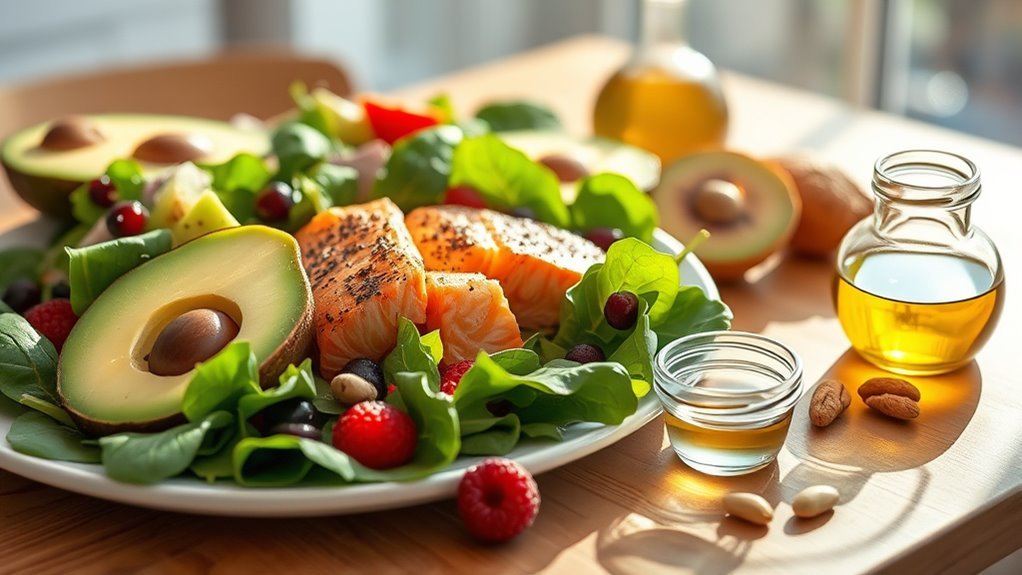
Although you might consume a nutrient-rich meal, not all the nutrients you ingest get absorbed and used by your body. This is where bioavailability comes into play. It measures the proportion of nutrients that your gastrointestinal system absorbs and makes available for use or storage.
Bioavailability depends on several factors, including the chemical form of the nutrient and the food matrix, which is the complex physical and chemical environment surrounding those nutrients. Interactions with other dietary components can either enhance or inhibit absorption. For example, heme iron from animal sources is more bioavailable than non-heme iron found in plants.
Your age, health status, and gastrointestinal function also influence how well nutrients are absorbed. Understanding bioavailability helps you recognize that what you eat isn’t the whole story. How your body handles those nutrients matters just as much.
This perspective is crucial for evaluating nutrient effectiveness and tailoring diets to improve nutrient absorption.
Why Does Bioavailability Matter for Your Health?
You might think that getting enough nutrients is all about what you eat, but there’s more to the story. Bioavailability actually plays a vital role in preventing deficiencies that can affect your health.
It basically helps protect you against diseases by making sure your body truly absorbs the vitamins and minerals it needs. And as you get older, paying attention to bioavailability becomes even more important if you want to keep your strength and overall wellbeing in good shape.
Micronutrient Deficiency Impact
When your body can’t absorb enough micronutrients like iron or calcium, even a nutritious diet won’t prevent health problems. Micronutrient deficiencies often happen not because you don’t eat enough but because the bioavailability of these nutrients is low.
Factors like dietary inhibitors such as phytates and polyphenols reduce iron absorption and calcium uptake, limiting nutrient use. This means your body might not get what it needs despite consuming enough.
Poor bioavailability directly affects your health, weakening bone strength, immune function, and overall well-being. Age, health status, and how food is processed also influence bioavailability, increasing deficiency risks.
Understanding and improving nutrient bioavailability is essential to avoid micronutrient deficiencies and support your body’s growth and maximum function.
Disease Prevention Role
Poor nutrient absorption doesn’t just weaken your body. It raises your risk for serious diseases like anemia, osteoporosis, and some cancers. Bioavailability determines how well your body absorbs and uses micronutrients, directly influencing disease prevention.
Even if you eat enough nutrient-rich foods, low bioavailability can cause deficiencies that harm your immune system and overall health. By improving nutrient absorption through better food choices, processing, or supplementation, you enhance nutrient utilization and support essential functions.
These improvements lead to better health outcomes and help reduce public health issues tied to micronutrient deficiencies. Optimizing bioavailability plays a key role in disease prevention, ensuring your body gets the essential nutrients it needs to stay strong and healthy.
Aging And Health
Although aging brings wisdom, it also challenges your body’s ability to absorb essential nutrients like vitamin B12, calcium, and iron. This happens because of decreased stomach acid and changes in gut function. These changes reduce nutrient absorption and increase risks of health decline.
| Nutrient | Aging Impact |
|---|---|
| Vitamin B12 | Reduced absorption due to less stomach acid |
| Calcium | Lower availability, risking bone loss |
| Iron | Impaired uptake, increasing anemia risk |
| Micronutrients | Overall decreased absorption, raising deficiency concerns |
Understanding these changes helps you adjust your diet or supplements to maintain ideal micronutrient levels. Prioritizing bioavailability supports your health as you age, helping to combat nutrient gaps that contribute to osteoporosis, anemia, and cognitive issues.
How Do Scientists Measure Nutrient Bioavailability?
You can measure nutrient bioavailability using a few different experimental methods. For example, isotope tracer studies and balance tests are common approaches that help track how well your body absorbs and retains nutrients.
On top of that, biomarkers found in your blood or tissues can give valuable clues about how effectively your body uses these nutrients.
It’s also important to understand the difference between true and relative bioavailability because knowing this helps you make sense of the measurements more accurately.
Experimental Measurement Methods
When scientists want to understand how well your body absorbs nutrients, they rely on several experimental methods that track and measure nutrient bioavailability. They use isotope labeling to trace nutrient absorption and retention, while balance studies compare intake against excretion to assess absorption efficiency.
In vitro digestion models simulate your gut’s conditions to predict nutrient release. These methods control experimental conditions carefully to provide reliable absorption measurement. Although biomarkers help assess nutrient status, they’re explored in a later section.
| Method | Description | Purpose |
|---|---|---|
| Isotope Labeling | Traces nutrient path in the body | Measures absorption & retention |
| Balance Studies | Compares intake & excretion | Determines absorption efficiency |
| In Vitro Digestion | Simulates gastrointestinal tract | Evaluates nutrient release |
| Animal Models | Uses rodents/pigs | Studies absorption mechanisms |
Biomarkers And Indicators
Experimental methods like isotope labeling and balance studies provide valuable data on nutrient absorption. But understanding how these nutrients function inside your body often requires specific biomarkers and indicators.
Scientists rely on biomarkers of nutritional status, such as circulating levels of vitamins D (25(OH)D) and B12, to assess nutrient absorption and utilization. For iron, serum ferritin and transferrin saturation serve as key biomarkers to evaluate bioavailability, especially after dietary changes.
These biomarkers help measure retention and distribution of nutrients in your body. The accuracy of results depends on selecting biomarkers that truly reflect physiological status and respond sensitively to variations in absorption. By monitoring these indicators, researchers can better understand how well your body absorbs and uses essential nutrients.
True Versus Relative
How do scientists determine the true impact of a nutrient on your body versus just comparing different sources? True bioavailability measures the actual proportion of a nutrient absorbed, used, and stored in your body, considering endogenous losses.
Relative bioavailability simply compares absorption between nutrient forms without accounting for these losses. To measure true bioavailability, researchers use:
- Isotopic tracers to track nutrient absorption and retention in tissues.
- Fecal analysis and balance studies to estimate absorption by comparing intake and excretion, though endogenous secretions can confound results.
- Biomarkers like circulating 25(OH)D for vitamin D, which reflect nutrient status but may be influenced by other factors.
- Calculations adjusting for endogenous losses to get an accurate picture of nutrient bioavailability.
These methods help scientists understand how well nutrients truly benefit your body.
Which Key Dietary Factors Most Affect Bioavailability?
Because the way nutrients interact with other dietary components directly impacts their absorption, understanding key dietary factors is essential to improving bioavailability. The chemical form of micronutrients, like heme versus non-heme iron, greatly affects absorption rates.
Some dietary factors, such as vitamin C, boost bioavailability by enhancing mineral absorption. On the other hand, inhibitors like phytates, polyphenols, and calcium can bind nutrients and lower their uptake. You’ll find that dietary fats help you absorb fat-soluble vitamins A, D, E, and K more efficiently.
| Dietary Factor | Effect on Bioavailability |
|---|---|
| Nutrient Form | Influences absorption rate |
| Vitamin C | Enhances iron absorption |
| Inhibitors | Reduce nutrient absorption |
| Dietary Fats | Aid fat-soluble vitamin absorption |
| Food Processing | Lowers inhibitors, indirectly improves absorption |
How Does Food Processing Affect Nutrient Bioavailability?
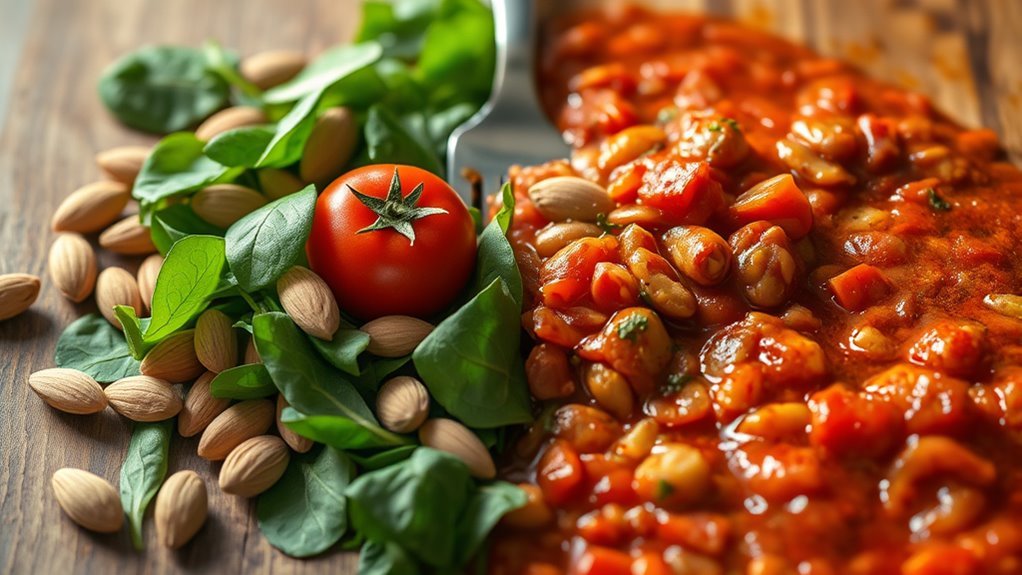
You’ve seen how certain dietary factors can either boost or hinder nutrient absorption. Food processing plays a vital role in nutrient bioavailability by altering the food’s structure and chemical composition. Here’s how it impacts you:
- Cooking, soaking, and fermentation break down cell walls, releasing trapped vitamins and minerals to enhance nutrient accessibility.
- Cooking beans reduces phytates and polyphenols, which inhibit mineral absorption, thereby improving mineral bioavailability.
- Mechanical processing like pounding grains or chopping vegetables disrupts tissue, making nutrients easier for your body to absorb.
- Some methods, especially prolonged heating or harsh alkaline treatments, can cause nutrient degradation, particularly of vitamin C and certain B-vitamins, lowering their bioavailability.
What Host Factors Influence Micronutrient Absorption?
Although food choices matter, your body’s own characteristics play a vital role in how well you absorb micronutrients. Factors like age, health status, and physiological conditions directly affect absorption efficiency.
For example, reduced gastric acid secretion, common in atrophic gastritis, lowers the bioavailability of minerals such as iron and vitamins like B12. Inflammation and obesity raise cytokine levels, which increase hepcidin, a hormone that restricts iron absorption and mobilization.
On the other hand, during pregnancy, your body lowers hepcidin to enhance iron absorption, meeting increased physiological demands. Furthermore, genetic variations influence how your body metabolizes and absorbs nutrients, contributing to individual differences in micronutrient bioavailability.
Understanding how these host factors impact absorption helps you appreciate why two people may absorb the same nutrient differently, even if their diets are identical.
Why Are Some Micronutrient Forms More Bioavailable?
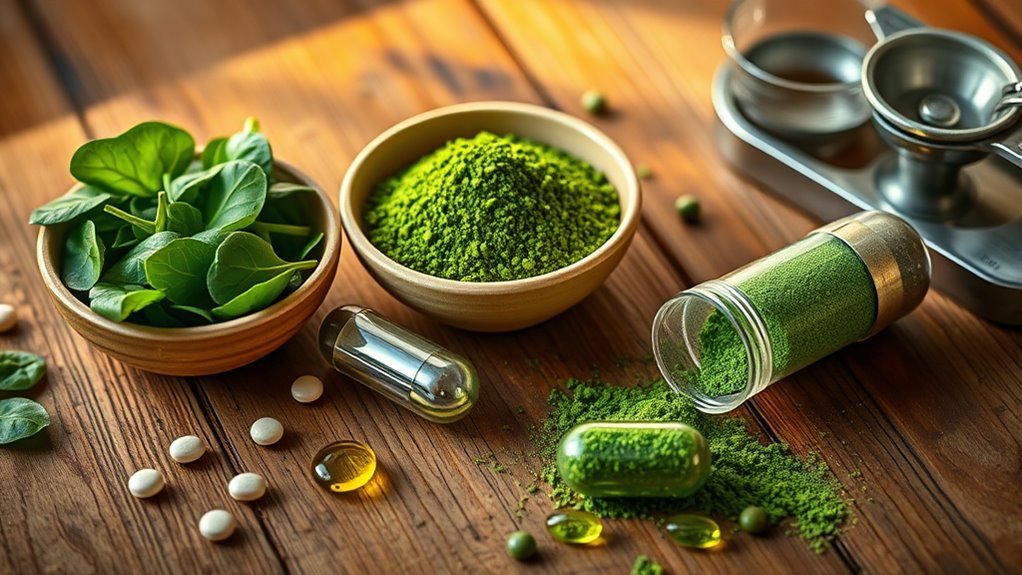
You’ll find that the chemical form of a nutrient really makes a difference in how well your body can absorb it. Often, animal-based sources tend to offer more bioavailable options compared to plant-based ones.
Some nutrients come packaged in ways that make it easier for your intestines to take them up. Others, though, need a little help from dietary enhancers like vitamin C or healthy fats to get absorbed properly.
Knowing these differences can actually help you pick the right foods and combinations that boost how well your body soaks up those important micronutrients.
Nutrient Chemical Forms
When you consider why some micronutrients absorb better than others, the chemical form plays a crucial role. The bioavailability of nutrients hinges on how their chemical form influences nutrient absorption and interacts with dietary factors affecting absorption efficiency.
- Heme iron, a chemical form in animal products, absorbs at 15-40%, while non-heme iron from plants absorbs only 2-20%, depending on dietary factors.
- Vitamin A as retinol offers higher bioavailability than its provitamin A carotenoid form, which requires conversion.
- Mineral forms like chelated complexes (e.g., magnesium bisglycinate) have superior bioavailability compared to inorganic salts.
- The chemical form dictates nutrient stability and how effectively mineral forms are absorbed in your gastrointestinal tract.
Understanding these differences helps you optimize nutrient absorption and overall nutritional health.
Plant Versus Animal Sources
Why do micronutrients from animal sources often absorb better than those from plants? It’s mainly due to differences in bioavailability. For example, heme iron in animal sources absorbs at 10-40%, while non-heme iron from plant-based nutrients absorbs only 2-20%, limited by its chemical form.
Animal-derived vitamin A (retinol) is directly usable, unlike plant carotenoids that need conversion. Minerals like zinc and calcium in plants bind to phytates and polyphenols, which reduces mineral bioavailability and absorption.
In contrast, proteins from animal tissues form soluble complexes that enhance absorption. Plant matrices can trap nutrients within cell walls, further limiting uptake. Understanding these factors helps explain why animal sources often provide more readily absorbed micronutrients compared to plant-based nutrients, despite the nutritional value both offer.
Absorption Enhancing Factors
Although the chemical form of a micronutrient plays a crucial role, other factors can boost its absorption and make it more bioavailable. Understanding these absorption enhancing factors helps you maximize micronutrient bioavailability and nutrient absorption.
- Dietary components like vitamin C enhance mineral absorption by converting iron to a more absorbable state and forming soluble complexes.
- The presence of dietary fats aids the bioavailability of fat-soluble vitamins (A, D, E, K) by promoting micelle formation in your intestine.
- Minerals in chelated or complexed forms are generally more bioavailable than inorganic salts like sulfates or oxides.
- Food processing methods such as soaking, fermenting, or cooking alter nutrient structures, improving micronutrient bioavailability.
How Do Dietary Antagonists Impact Mineral Bioavailability?
Because dietary antagonists like phytates, polyphenols, and certain proteins bind to minerals, they considerably lower your body’s ability to absorb essential nutrients such as iron, zinc, and calcium. Phytates, found in whole grains, legumes, and seeds, reduce mineral absorption by forming insoluble complexes, cutting bioavailability by up to 50-60%.
Polyphenols, present in tea, coffee, red wine, and some vegetables, also inhibit nutrient absorption by chelating metal ions, especially iron and zinc. Furthermore, consuming high amounts of calcium can compete with non-heme iron for absorption pathways, further decreasing mineral bioavailability.
These dietary antagonists directly interfere with how well your body absorbs minerals, impacting overall nutrient absorption and health. However, you can improve mineral absorption by processing foods through soaking, fermenting, or cooking, which lowers phytate and polyphenol levels. Understanding how dietary antagonists affect mineral bioavailability helps you make better dietary choices to maximize nutrient uptake and support your body’s mineral needs.
What Technologies Improve Vitamin and Mineral Bioavailability?
Dietary antagonists can limit how well your body absorbs vitamins and minerals, but modern technologies offer solutions to boost their bioavailability. These advancements enhance micronutrient absorption by improving solubility, stability, and delivery within your digestive system.
Here are four key technologies:
- Lipid-based formulations promote micelle formation, boosting absorption of fat-soluble vitamins like A, D, E, and K.
- Nanoemulsions use tiny droplets under 1 micron to increase bioavailability of poorly soluble vitamins and minerals.
- Encapsulation with delivery systems such as liposomes and solid lipid nanoparticles protects nutrients from degradation during digestion.
- Fortifying foods with bioavailable forms of minerals, like chelated complexes, improves absorption compared to traditional salts.
How Do Dietary Patterns Like Veganism Affect Nutrient Uptake?
When you follow a vegan diet, you need to pay close attention to certain nutrients that may not absorb as efficiently from plant sources. Vegan diets often have lower bioavailability for micronutrients like vitamin B12, iron, and zinc due to absorption inhibitors such as phytates and polyphenols found in plants.
However, you can enhance nutrient absorption by pairing iron-rich foods with vitamin C sources. Using food preparation techniques like soaking or fermenting can also reduce these inhibitors.
Understanding how dietary patterns impact bioavailability helps you optimize nutrient uptake and avoid deficiencies.
| Nutrient | Bioavailability in Vegan Diets | Tips to Improve Absorption |
|---|---|---|
| Vitamin B12 | Low | Use fortified foods or supplements |
| Iron (non-heme) | 2-20% | Consume with vitamin C-rich foods |
| Zinc | Reduced due to phytates | Soak or ferment plant foods |
| Calcium | Lower due to polyphenols | Choose fortified plant milks |
| Micronutrients | Varies | Employ diverse, well-planned diets |
Challenges in Measuring Nutrient Bioavailability
Understanding how different diets influence nutrient absorption is just one part of the story. When it comes to measuring bioavailability, you face several challenges that make evaluation tricky. Here are the main ones:
- Lack of universal biomarkers: There’s no single marker to accurately reflect the bioavailability of many nutrients, which complicates measurement.
- Variability in methods: You’ll encounter differences in results from in vitro, animal, and human studies, making standardization tough.
- Species differences: Data from animal models don’t always match human outcomes, and this limits accuracy.
- Biological factors: Nutrients’ short half-lives, transformations in the body, and individual differences like genetics and health status add more complexity.
Because of these challenges, gauging nutrient bioavailability demands careful consideration of variability and limitations in current methods. You’ll need to interpret data cautiously, knowing that precise measurement remains an ongoing hurdle in nutrition science.
Improving Public Health Through Better Bioavailability
Although improving nutrient bioavailability poses challenges, you can make a real difference in public health by enhancing how well people absorb essential micronutrients. Food fortification and innovative food processing techniques boost bioavailability, notably improving nutrient absorption and tackling global deficiencies.
By addressing dietary factors that limit bioavailability, like antagonists or poor food matrix use, you help create more effective nutrition interventions. These strategies don’t just reduce malnutrition; they also support healthy aging and prevent noncommunicable diseases.
Tackling dietary barriers to nutrient absorption enhances nutrition interventions, supporting healthy aging and disease prevention.
Increasing the bioavailability of micronutrients aligns with Sustainable Development Goals, promoting better health outcomes across populations. Whether through fortified foods or supplements, optimizing how nutrients are absorbed ensures people get the full benefit of their diets.
Your efforts in improving bioavailability amplify the impact of public health initiatives, reducing nutrient deficiencies and enhancing overall well-being worldwide.
Frequently Asked Questions
Can Bioavailability Vary Between Different Age Groups?
Yes, bioavailability does vary between age groups. You’ll notice age-related absorption changes as your digestive function ages, reducing elderly absorption efficiency, especially for vitamin B12.
During childhood, your nutrient intake is higher to meet developmental nutrient needs. Adolescents experience bioavailability changes due to growth and hormonal shifts.
Understanding these differences helps you adjust your diet to guarantee ideal nutrient absorption throughout life stages.
How Does Hydration Status Affect Nutrient Bioavailability?
Imagine your digestive system as a bustling river delivering nutrients to a thirsty village. When your hydration levels are balanced, the river flows smoothly, boosting nutrient absorption and absorption efficiency.
If dehydration strikes, the river slows, hampering fluid balance and causing dehydration effects that disrupt electrolyte influence. Too much water, though, can flood the river, diluting enzymes and acids, ultimately reducing nutrient uptake.
Are There Any Genetic Factors Influencing Bioavailability?
Yes, genetic variations play a big role in your nutrient bioavailability. They influence your absorption efficiency by altering how nutrient transporters work.
Hereditary traits can affect enzyme activity, changing how your body metabolizes vitamins and minerals. These metabolic differences mean you might absorb nutrients like iron, calcium, or folate differently than others.
Understanding your genetics helps explain why nutrient uptake varies from person to person.
Does Exercise Impact the Bioavailability of Certain Nutrients?
Exercise acts like a turbocharger for your body, boosting blood flow and nutrient absorption. When you increase exercise intensity, your metabolic rate rises, helping your muscles soak up more nutrients like glucose and amino acids.
Regular physical activity enhances muscle mass, which demands more vitamins and minerals, improving their bioavailability. So, the more active you are, the better your body becomes at using the nutrients you consume efficiently.
How Do Medications Interfere With Nutrient Absorption?
Medications interfere with nutrient absorption through several mechanisms. You might experience medication interactions that cause enzyme inhibition, reducing nutrient breakdown.
Gut pH alterations from drugs like antacids can change mineral solubility, while chelation effects bind minerals, making them unavailable. Absorption inhibitors, such as orlistat, block fat uptake, lowering fat-soluble vitamin levels.
Plus, nutrient competition occurs when drugs and nutrients vie for the same absorption sites, decreasing overall nutrient uptake.
Conclusion
You might think eating nutrient-rich foods guarantees good health, but bioavailability shows it’s not just what you eat, it’s what your body actually absorbs. Coincidentally, the same factors that make food tasty, like processing and preparation, can boost or block nutrient uptake.
By understanding and improving bioavailability, you’re not just changing your diet, you’re enhancing your health. This proves that how you eat truly matters as much as what you eat.