
Does Celery Have Any Nutritional Value and How Can You Maximize It?
Celery offers key nutrients like vitamins K, A, C, fiber, antioxidants, and minerals that support your heart, bones, digestion, and hydration.
To get the most out of it, eat celery raw to preserve vitamins and antioxidants.
Pair it with healthy fats like olive oil to boost absorption, and choose fresh, crisp stalks stored properly.
These simple steps help you enjoy celery’s full health benefits.
There’s plenty more to discover about using celery smartly in your diet.
Key Nutrients That Make Celery Healthy
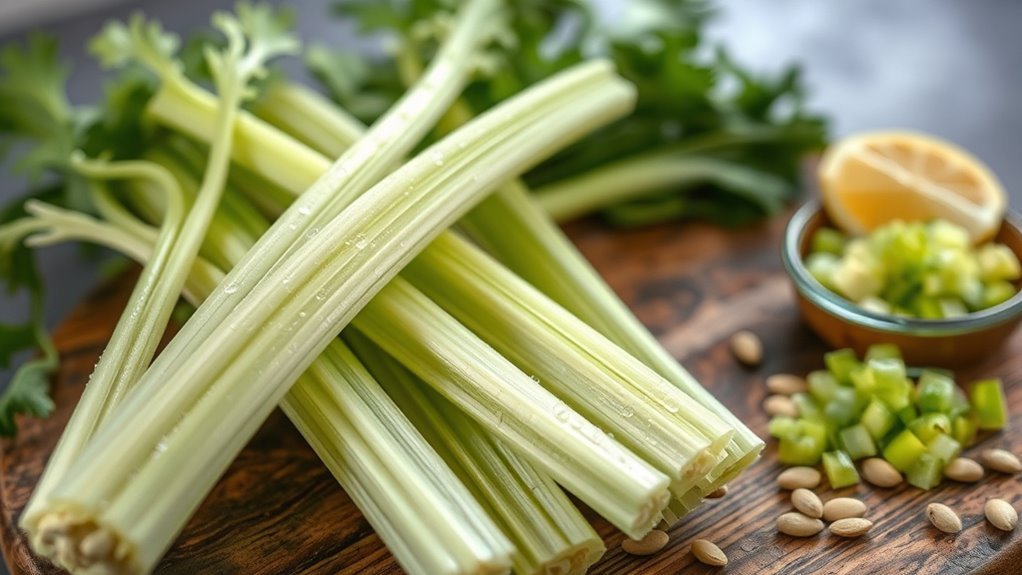
Although celery is often overlooked, it packs a powerful nutritional punch that can benefit your health in several ways. Each stalk delivers a solid dose of vitamin K, essential for blood clotting and supporting bone health.
You’ll also get dietary fiber, which aids digestion and keeps your gut functioning smoothly. Celery is rich in antioxidants like vitamin C, flavonoids, and phenolic acids that protect your cells from oxidative stress.
It provides important minerals such as potassium and magnesium, helping regulate blood pressure and promote cardiovascular health. Plus, celery contains unique bioactive compounds like apigenin and phthalides, known for their anti-inflammatory effects that contribute to overall wellness.
With about 95% water content, celery supports your hydration, making it a revitalizing and nutritious snack. Including celery in your diet means you’re fueling your body with a blend of nutrients that work together to boost your health efficiently and naturally.
Why Celery’s Low Calories and High Water Help Your Diet
Because celery is extremely low in calories and made up of nearly 95% water, it’s a smart choice when you want to manage your weight without feeling hungry. With only about 15 calories in two stalks, celery fits perfectly into any weight-loss plan that emphasizes low calories.
Its high water content not only keeps you hydrated but also helps create a feeling of fullness, which can curb your appetite and support calorie-conscious eating. Plus, celery’s fiber adds bulk to your meals, promoting satiety and aiding digestion without adding many calories.
When you include celery in your diet, you boost nutrient intake while controlling calorie consumption, making it easier to stick to your weight-loss goals. By choosing celery, you can enjoy a crunchy, satisfying snack or meal addition that supports both hydration and a calorie-conscious lifestyle.
How Does Eating Celery Raw Preserve Nutrients?
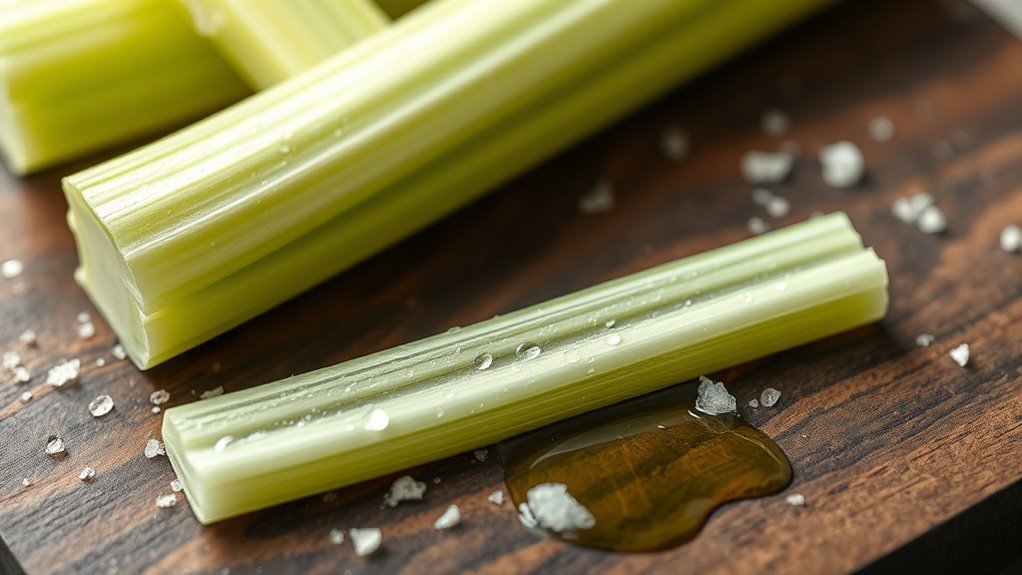
To get the most nutritional benefits from celery, eating it raw is your best bet. Raw celery preserves its water content and protects heat-sensitive vitamins like vitamin C, which cooking can destroy.
You also keep the dietary fiber intact, supporting digestion and making you feel full longer. Plus, the antioxidant compounds such as flavonoids and phenolic acids remain more potent in raw celery, boosting its nutritional value.
Here’s a quick look at how eating celery raw helps with nutrient preservation:
| Nutrient Aspect | Benefit of Eating Raw Celery |
|---|---|
| Water Content | Retained fully for hydration |
| Heat-Sensitive Vitamins | Protected from heat damage, like vitamin C |
| Dietary Fiber | Maintains structure, aiding digestion |
| Antioxidant Compounds | Preserved for maximum health impact |
| Overall Nutritional Value | Highest when consumed raw |
Cooking Celery: Effects on Vitamins and Antioxidants
When you cook celery, heat-sensitive vitamins like vitamin C start to break down, reducing its antioxidant power. Cooking celery can lead to nutrient loss, especially with prolonged heat that diminishes vitamins A and K.
To maximize nutrient retention, choose cooking methods wisely. Steaming celery is one of the best ways to preserve its vitamins and antioxidants because it limits nutrient leaching into water.
Quick methods like sautéing also help maintain more antioxidants and phytochemicals compared to boiling, which causes significant nutrient loss. While cooking alters celery’s nutrient profile, it can still be a healthy addition to your meals.
Just remember that eating celery raw provides the highest levels of vitamin C and antioxidants. If you prefer cooked celery, opt for steaming or brief sautéing to keep more nutrients intact while enjoying its flavor and texture.
Preparing Celery for Maximum Nutrient Absorption
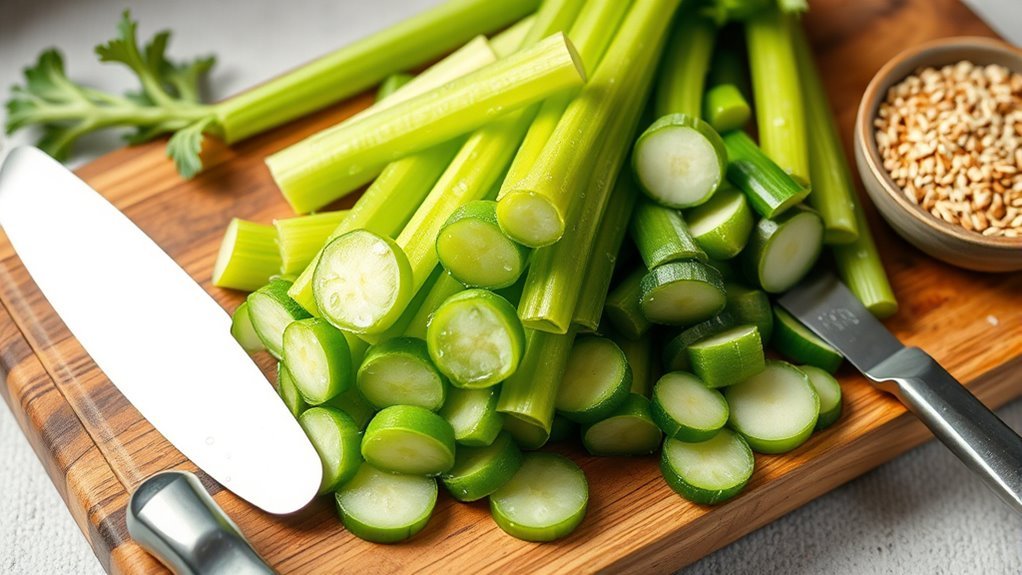
Cooking methods influence the nutrients in celery, but how you prepare it before cooking or eating can also make a big difference. First, always wash celery thoroughly under running water to remove dirt and reduce pesticide residues. Next, trim the base and peel off the outer tough strings to improve texture and help your body absorb more nutrients.
When you chop celery into smaller pieces, you increase its surface area, making it easier to digest and allowing your body to access more nutrients. Eating celery raw is ideal since it preserves water-soluble vitamins like vitamin C, but lightly steaming it can also keep most nutrients intact.
To maintain celery’s crispness and nutrient content, store it in a plastic bag inside your refrigerator’s crisper drawer. By following these simple steps to prepare and store celery, you’ll maximize its nutritional benefits and enjoy a fresher, healthier snack.
Which Vitamins in Celery Support Heart and Bone Health?
Although celery is often praised for its crunch and low calorie count, it also delivers essential vitamins that support your heart and bone health. Celery provides a rich source of vitamin K, essential for maintaining strong bones and proper blood clotting.
Alongside vitamin K, vitamins A and C work together to reduce oxidative stress and promote collagen formation, which strengthens bone tissue. Moreover, celery contains calcium, which plays a fundamental role in bone density and overall skeletal strength.
Here’s how celery’s vitamins support your health:
- Vitamin K: Enhances bone mineralization and helps maintain cardiovascular function.
- Vitamins A and C: Reduce oxidative stress and aid collagen production for bone health.
- Calcium: Supports bone density and helps prevent osteoporosis.
How Celery Fiber Supports Digestion
You’ll find that celery’s fiber is mostly insoluble, which means it helps add bulk to your stool and keeps things moving smoothly. This kind of fiber doesn’t just support regular digestion; it also feeds the good bacteria in your gut. So, by including celery in your daily meals, you can easily boost your fiber intake and enjoy these benefits.
Types Of Celery Fiber
When you eat celery, you get both soluble and insoluble fiber that work together to support your digestion. Celery’s dietary fiber plays a vital role in maintaining gut health and digestive balance.
Most of the fiber in celery is insoluble, which adds bulk to your stool and helps keep bowel movements regular. Meanwhile, the soluble fiber slows carbohydrate absorption, helping stabilize blood sugar levels.
To maximize these benefits, consume celery raw, as cooking can reduce its fiber content. Here’s how celery fiber supports you:
Insoluble fiber feeds beneficial gut bacteria and maintains intestinal integrity.
Soluble fiber assists in regulating digestive processes and blood sugar.
Dietary fiber overall promotes a healthy, well-functioning digestive system.
Including celery in your diet boosts your digestive health naturally.
Fiber’s Digestive Benefits
Celery’s fiber content, both soluble and insoluble, plays a key role in supporting your digestive health. The insoluble fiber adds bulk to your stool, helping prevent constipation and promoting smooth digestion.
Combined with celery’s high water content, this fiber softens stool, making bowel movements easier and more regular. As you digest celery, its fiber also feeds beneficial bacteria in your gut, which supports a healthy microbiome essential for efficient digestion and overall gut health.
Moreover, the soluble fiber in celery helps regulate blood sugar by slowing carbohydrate absorption in your digestive tract. Including celery in your diet can, thus, enhance digestion, maintain gut health, and help manage blood sugar levels, all thanks to its unique fiber profile.
Maximizing Fiber Intake
How can you maximize your fiber intake for better digestion? Eating raw celery is a simple way to boost your digestive health because it preserves the fiber content, especially insoluble fiber, which adds bulk to your stool. This helps maintain stool regularity and reduces constipation risk. Plus, celery’s high water content promotes hydration, softening stool for easier passage.
To get the most from celery’s fiber, consume it raw to retain maximum fiber benefits. Combine celery with plenty of water to enhance hydration and digestion. And try to include celery regularly in your diet to support consistent bowel movements.
Pairing Celery With Healthy Fats to Boost Vitamin Absorption
Because vitamins A, K, and E in celery are fat-soluble, you’ll absorb them much better by pairing celery with healthy fats like olive oil, avocado, or nuts. These fats enhance vitamin absorption and improve the nutrient bioavailability of celery’s valuable compounds.
For example, drizzling olive oil over celery salads or dipping celery sticks into avocado or nut butters boosts nutrient uptake considerably. This combination not only maximizes the benefits of fat-soluble vitamins but also supports your body’s overall fat-soluble nutrient utilization.
Including celery alongside healthy fats ensures that you get the most from its vitamin K and antioxidants. So, whenever you enjoy celery, think beyond just the crunch. Add a source of healthy fats to optimize the nutritional value.
This simple pairing can make a substantial difference in how well your body absorbs and uses celery’s nutrients, helping you maximize every bite’s health benefits.
How to Select and Store Celery for Peak Freshness
When selecting celery, look for crisp, firm stalks that are bright green and tightly bunched. Fresh celery should have leaves that are green and firmly attached. Avoid yellow or brown patches, as they signal aging or spoilage.
Choose celery with bright green, firm stalks and fresh, attached leaves; avoid any yellow or brown spots.
To keep your celery fresh, store it in a plastic bag inside the refrigerator’s crisper drawer. This helps maintain moisture and can extend freshness for over a week.
Here are some tips to maximize celery’s freshness:
- Only wash celery stalks right before use to prevent bacterial growth.
- Trim the base and remove tough outer strings or peel stalks for better texture.
- Choose bunches with vibrant, crisp stalks and intact leaves to ensure peak nutrient content.
Creative Ways to Add Celery to Meals and Snacks
Now that you know how to select and store celery for ideal freshness, it’s time to explore tasty ways to include this crunchy vegetable in your meals and snacks. You can enjoy raw celery as a quick snack paired with hummus or nut butter to keep things nutrient-dense and satisfying.
Try stuffing celery stalks with cream cheese, walnuts, or dried apricots for a colorful, wholesome appetizer. When you add to meals, diced celery enhances soups, stews, and stir-fries by boosting fiber and flavor without adding many calories.
Don’t forget celery leaves—they’re a versatile vegetable part you can use in pesto, herb butter, or as a fresh garnish packed with vitamin C and calcium. For a invigorating twist, blend celery into smoothies or juices alongside fruits and veggies to create hydrating, nutrient-dense drinks.
Pesticide Residues in Celery: What to Know
Although celery adds great flavor and crunch to your meals, it often carries pesticide residues that you should be aware of. Conventionally grown celery can contain up to 57 different pesticide residues, including imidacloprid and difenoconazole. These pesticides can be absorbed into the leaves and roots, with residue levels varying by farming methods and location.
To protect your health and guarantee food safety, consider the following:
- Choose organic celery to minimize exposure to harmful pesticide residues.
- Wash celery thoroughly under running water using a strainer to considerably reduce residue levels.
- Consult resources like the Environmental Working Group for guidance on safer produce choices and effective washing techniques.
Frequently Asked Questions
Can Celery Help Reduce Inflammation in the Body?
Yes, celery can help reduce inflammation in your body. Its anti-inflammatory compounds, including celery antioxidants like vitamin C and flavonoids, work to neutralize harmful free radicals and support your immune system.
The inflammatory properties of these bioactive substances provide notable health benefits, such as lowering inflammation markers. Plus, the dietary fiber in celery promotes overall gut health, enhancing your body’s ability to manage inflammation effectively.
Is Celery Juice More Nutritious Than Eating the Whole Stalk?
Celery juice isn’t more nutritious than eating the whole stalk because it loses celery fiber, which aids digestion. While juice potency offers concentrated vitamins and antioxidants, the nutritional content lacks fiber found in the stalk.
You’ll notice flavor differences too. Juice tastes milder, and stalks provide crunch. To maximize benefits, combine consumption methods: drink juice for quick nutrient absorption and eat whole celery for fiber and hydration.
How Does Celery Impact Blood Pressure Regulation?
Celery helps regulate your blood pressure by promoting vascular relaxation thanks to its phthalides. Its potassium benefits counteract sodium’s effects, supporting healthy blood vessel function.
The celery fiber aids mineral absorption, enhancing your body’s use of key nutrients. Plus, its hydration effects keep your blood volume steady, which also helps maintain stable pressure.
Eating celery regularly supports blood vessel health and keeps your cardiovascular system balanced.
Are There Any Potential Allergies Associated With Celery?
Yes, you can develop a celery allergy causing food sensitivity symptoms like itching or swelling. If you have pollen food syndrome or allergies to birch pollen, watch for cross-reactivity concerns with celery.
Some reactions might escalate to anaphylactic reactions, which are severe and require immediate attention. Allergy testing can help confirm your sensitivity. Always take precautions, as cooking doesn’t always eliminate allergenic proteins in celery.
Can Celery Aid in Detoxifying the Liver Naturally?
Yes, celery can aid in liver detox naturally. You’ll benefit from celery’s antioxidant properties, which help reduce inflammation and support liver health.
Its fiber benefits promote toxin removal by flushing your system efficiently. Celery liver detox also relies on its cleansing effects that boost hydration and balance electrolytes, offering celery liver support.
Including celery regularly in your diet maximizes these natural detoxifying benefits for your liver.
Conclusion
You might think celery is just crunchy water, but it’s a nutrient-packed powerhouse waiting to supercharge your health! Eating it raw locks in vitamins like a secret treasure chest, while pairing it with healthy fats turns your body into a nutrient-absorbing machine.
Store it crisp and fresh like a green superhero cape, and toss it into meals for a flavor and health explosion. Don’t underestimate celery; it’s your crunchy ticket to vibrant wellness!