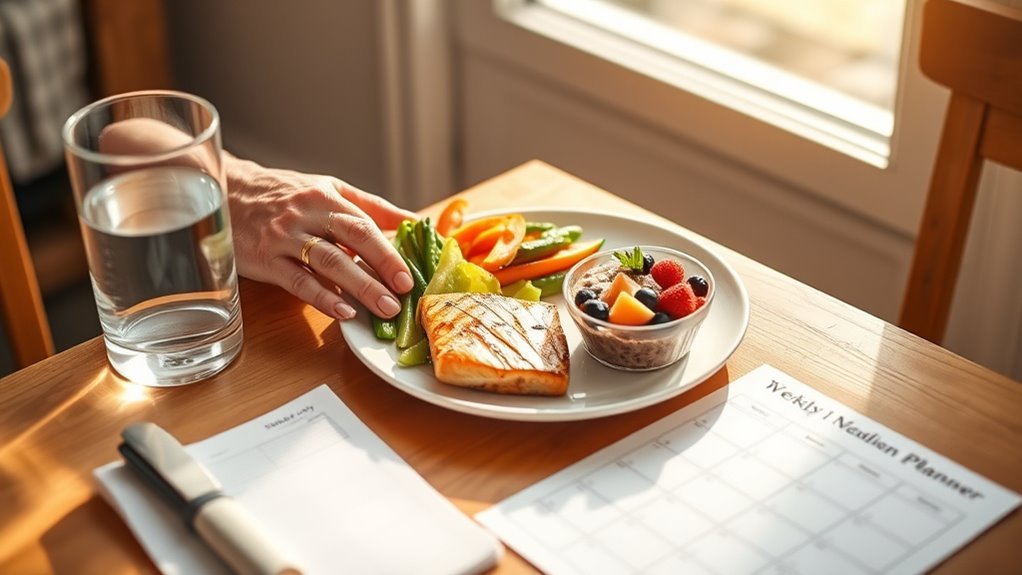
Simple Meal Plans for Seniors at Home
You can easily maintain your health at home by focusing on simple meals rich in protein, fiber, and vitamins. Think vegetable omelets, oatmeal with berries, grilled chicken salads, and yogurt with fruit.
Keep your kitchen stocked with canned beans, frozen veggies, and lean proteins for quick prep. Don’t forget to stay hydrated with water-rich fruits and snacks like nuts or cheese.
Following balanced portion sizes helps boost energy and muscle health. Explore more tips to keep your meals nutritious and stress-free.
Key Nutrients Seniors Need for Healthy Aging
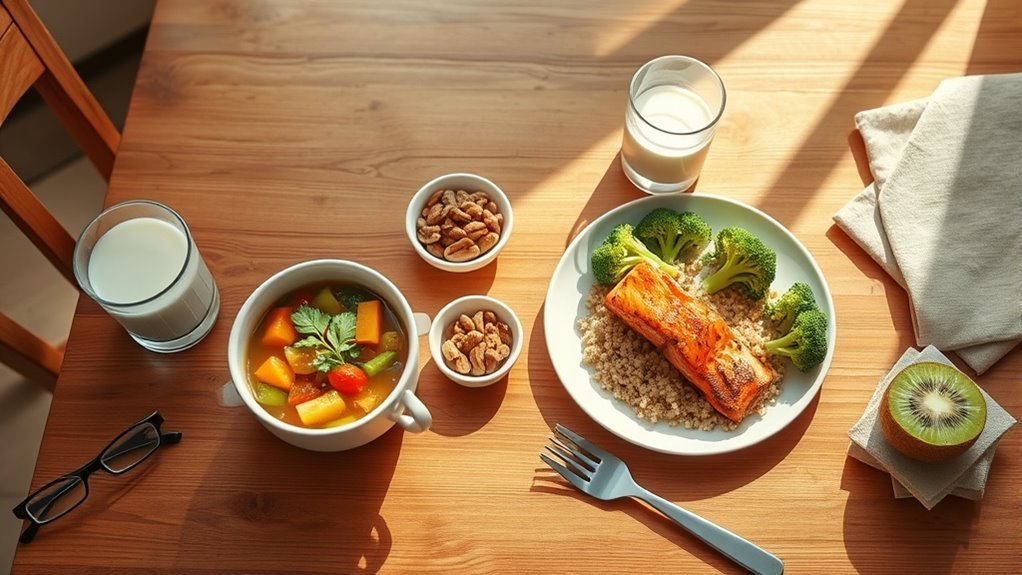
Although your nutritional needs change as you age, focusing on key nutrients can help you maintain strength and significance. For healthy aging, seniors require essential nutrients like protein, calcium, vitamin D, fiber, B vitamins, and potassium.
As you age, prioritizing key nutrients supports strength, vitality, and healthy aging.
You need about 1 to 1.2 grams of protein per kilogram of body weight daily to preserve muscle mass and overall health. Calcium (1,000-1,200 mg) and vitamin D (800-2,000 IU) are indispensable for strong bones and preventing fractures.
Fiber intake between 21-30 grams supports digestion and prevents constipation, keeping your system running smoothly. B vitamins, especially B6, B12, and folate, play a critical role in cognitive function and energy production, helping you stay sharp and active.
Don’t forget potassium-rich foods like bananas and leafy greens, which help regulate blood pressure and support heart health. Meeting these nutritional needs guarantees you can enjoy healthy aging with energy and resilience.
Simple, Nutritious Meal Ideas for Seniors
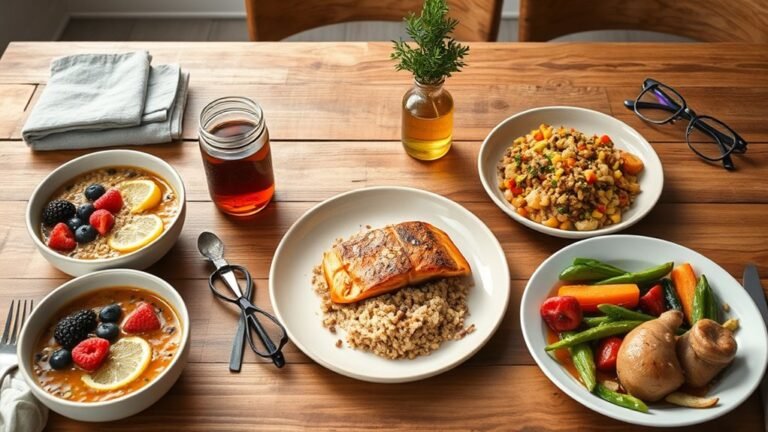
When you focus on simple, nutritious meals, staying healthy at home becomes easier and more enjoyable. As you plan easy meal ideas for seniors, aim for dishes that combine protein, whole grains, and colorful fruits or vegetables. Here are four straightforward options to try:
- Vegetable omelets packed with leafy greens and herbs for a flavorful, nutrient-dense breakfast.
- Oatmeal topped with berries to provide fiber and antioxidants without complicated prep.
- Grilled chicken salads featuring mixed greens and beans, offering protein and essential vitamins.
- Yogurt paired with fruit and a sprinkle of spices, giving you a quick, protein-rich snack.
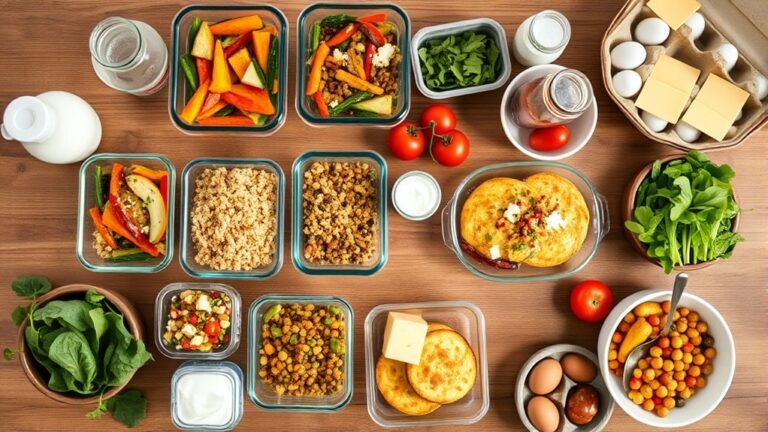
Batch cooking and meal prepping can help you maintain these nutritious choices without stress. By focusing on simple ingredients and using herbs instead of salt for flavor, you’ll support your heart health and energy levels while enjoying easy, delicious meals every day.
Picking Foods That Keep Seniors Healthy and Energized
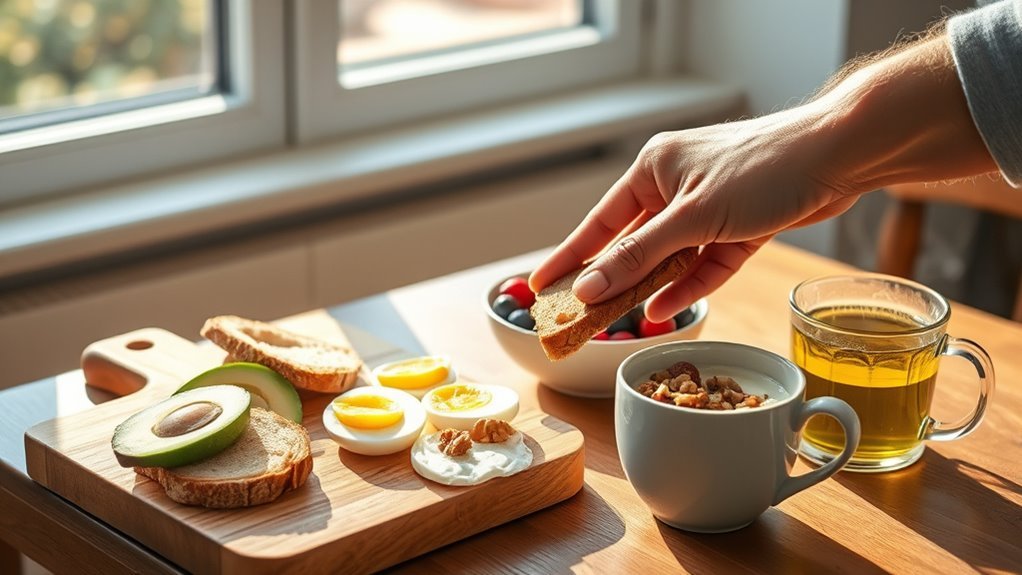
To keep your energy steady and support overall health, choose foods rich in nutrients like leafy greens, berries, and lean proteins. These nutrient-dense foods provide essential vitamins and minerals that help maintain your energy levels throughout the day.
Incorporate complex carbohydrates such as whole grains and sweet potatoes to supply slow-burning energy. This helps prevent fatigue and crashes.
Don’t forget healthy fats from sources like nuts, seeds, and avocados. They support brain health and reduce inflammation, which is crucial as you age.
Make sure you get enough protein from eggs, dairy, legumes, and fish to preserve muscle mass and keep your body strong. Avoid processed foods and added sugars since they can cause energy dips and harm your overall health.
Stocking Your Kitchen for Easy Senior Meal Prep
You’ll want to keep essential pantry staples like canned vegetables, beans, and healthy cooking oils within easy reach. It just makes grabbing what you need so much easier. Also, be sure to store proteins like canned tuna and salmon, along with frozen fruits and vegetables, which come in handy for quick meal options. Plus, organizing your kitchen with labeled containers can really simplify meal prep and keep everything accessible. That way, everything’s right where you expect it, making cooking less of a hassle.
Essential Pantry Staples
Although meal prep might seem intimidating, stocking your pantry with essential staples makes it much easier to create quick, nutritious meals. For the elderly, having healthy pantry staples ready supports simple, balanced meal plans that save time and reduce stress. Here’s what you should keep on hand:
- Canned vegetables, beans, and tuna – they’re nutrient-dense and convenient.
- Whole grains like brown rice, oats, and whole wheat pasta – fiber-rich bases for meals.
- Healthy cooking oils such as olive or canola oil, which are versatile for many recipes.
- Dried herbs, spices, and salt-free seasoning blends to boost flavor without extra sodium.
With these essentials, you’ll always have the building blocks for easy, healthy meals tailored to senior nutrition needs.
Protein and Produce Storage
Building on your stocked pantry staples, organizing protein and produce properly makes meal prep even simpler. Keep canned and frozen vegetables and fruits handy to enjoy fresh-tasting produce with minimal effort.
Store protein sources like canned tuna, salmon, and dried beans in clear, labeled containers to speed up meal assembly. Maintain stable fridge and freezer temperatures to preserve freshness and safety.
Designate specific spots for proteins and produce, helping you find items quickly and reduce waste. Regularly check expiration dates to keep your stock fresh.
| Item Type | Storage Tip | Benefit |
|---|---|---|
| Produce | Frozen & canned | Easy access, less prep |
| Protein | Clear labeled containers | Quick identification |
| Fridge | Stable temperature | Maintains freshness |
| Pantry | Designated spots | Streamlines prep |
| All items | Check expiration dates | Ensures quality |
Balanced Meal Plans With Portion Control for Seniors
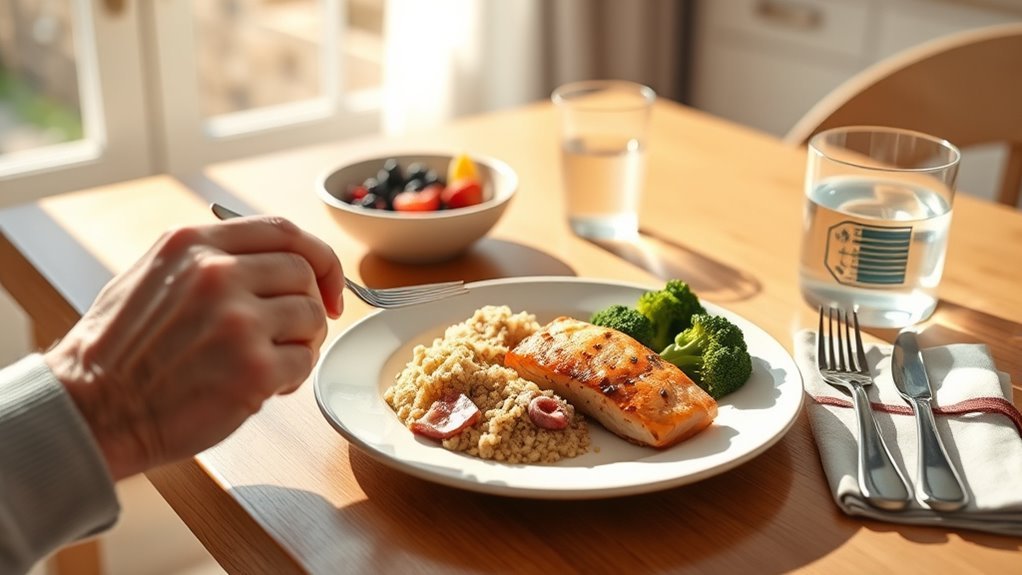
When managing meals for seniors, controlling portion sizes plays a crucial role in maintaining a healthy weight and ensuring proper nutrition. Balanced meal plans with portion control help seniors get essential nutrients without overeating or consuming excess calories. You can use simple visual cues like your palm for protein servings or a fist for vegetables to keep portions in check.
To create effective balanced meal plans for seniors, focus on these four key points:
- Include a variety of food groups in appropriate portions to support overall health and energy.
- Use portion control to provide the right amounts of protein, fiber, and vitamins while avoiding excess calories.
- Adjust portion sizes regularly based on activity levels, health conditions, and nutritional needs.
- Practice healthy eating habits by combining portion control with nutrient-dense foods.
Following these steps ensures seniors enjoy nutritious meals without risking overeating or nutrient deficiencies.
Hydration and Healthy Snacks for Seniors
You should aim to drink at least 8 cups of water daily to stay hydrated and support your health. It really helps to keep your body functioning well.
Also, try including easy hydrating foods like watermelon, cucumbers, and oranges. These not only boost your fluid intake but also add a nice bit of variety to your diet.
And don’t forget to pair these with nutritious snacks like nuts, yogurt, and fresh fruit. They’ll help keep your energy steady throughout the day.
Importance Of Proper Hydration
Why does staying properly hydrated matter so much for seniors? As you age, hydration plays an essential role in maintaining your cognitive function and overall health. Since the elderly often don’t feel thirsty, it’s important to drink fluids regularly.
Dehydration can cause serious issues like urinary tract infections and dizziness, which increase fall risk.
To keep your hydration on track, consider these tips:
- Aim for 7-8 cups of fluids daily, including water and electrolyte drinks.
- Include water-rich fruits and vegetables, like watermelon and cucumber, in your diet.
- Sip fluids consistently throughout the day, not just when thirsty.
- Use infused water to make hydration more enjoyable and beneficial.
Prioritizing hydration supports your health and helps you stay independent.
Nutritious Snack Ideas
How can you easily boost both your hydration and nutrition between meals? Choosing the right nutritious snacks plays a key role for seniors. Hydrating options like watermelon, cucumber slices, and citrus fruits help maintain proper hydration while providing essential vitamins.
You can also enjoy Greek yogurt topped with berries or nuts to get protein and antioxidants that support muscle health and immunity. Fiber-rich snacks such as dried fruits or oat-based bars aid digestion and promote regularity.
Don’t forget low-sodium vegetable smoothies or broth-based soups. They increase fluid intake and deliver crucial nutrients. Simple snacks like cheese cubes, hard-boiled eggs, or whole-grain crackers offer energy without excess sugar or salt.
These choices keep hydration and nutrition balanced, helping you feel your best every day.
Easy Hydrating Foods
Although staying hydrated can sometimes feel challenging, choosing easy hydrating foods makes it simple to maintain your fluid balance throughout the day. As a senior, including these nutritious options helps support your hydration and overall health.
- Enjoy fruits like watermelon, oranges, and strawberries. They’re packed with water and taste great.
- Add cucumber and celery to your snacks or salads for a low-calorie hydration boost.
- Drink yogurt or milk, which provide both hydration and essential nutrients.
- Blend smoothies with water-rich fruits and vegetables for an easy, tasty way to stay hydrated.
Incorporating these hydrating foods into your routine guarantees you get the hydration you need while enjoying nutritious snacks designed for seniors.
Helpful Resources for Easy Senior Meal Planning
When planning meals for seniors, you can turn to trusted organizations like USDA’s MyPlate and Oldways. They offer free, customizable templates designed specifically for older adults. These meal planning templates provide nutrient-focused meal ideas that highlight protein, fiber, and essential vitamins to meet seniors’ unique needs.
You’ll also find easy-to-follow recipes that simplify cooking while encouraging healthy food choices. The National Institute on Aging complements these tools with practical tips and sample menus to make meal prep less overwhelming. Many online platforms go a step further by including shopping lists, helping you streamline your weekly meal planning.
Frequently Asked Questions
How Can Caregivers Assist With Meal Preparation Safely?
You can assist with meal preparation safely by using adaptive equipment designed to make tasks easier and reduce injury risk. Always follow safety precautions like supervising cooking and keeping sharp utensils out of reach.
Prepare meals that maintain consistency and respect dietary restrictions to support seniors’ health. Keep the workspace clean and organized to prevent accidents.
Portion meals in advance to guarantee safe handling and reduce stress during mealtime.
What Are Common Challenges Seniors Face With Eating Habits?
You’ll often face challenges like appetite loss caused by medication side effects or decreased taste, which can lead to nutritional deficiencies. Swallowing difficulties make eating uncomfortable or risky, increasing choking hazards.
You might also struggle with food safety due to limited mobility or cognitive decline, making proper meal prep tough. Recognizing these issues helps you address them proactively to maintain your health and enjoy your meals safely.
How to Encourage Seniors to Try New Foods?
Like Odysseus exploring new lands, you can encourage seniors to try new foods by using flavor enhancement and texture modification to ease their adaptation. Control portions to avoid overwhelming them, and focus on food presentation. Vibrant colors and appealing arrangements make dishes inviting.
Share the story behind each meal’s health benefits and involve them in preparing it. This blend of strategy and care helps seniors embrace fresh tastes with confidence and curiosity.
What Kitchen Tools Make Meal Prep Easier for Seniors?
You’ll find meal prep easier with adaptive utensils designed for comfort and grip, plus ergonomic gadgets like electric can openers that save effort. Using easy clean appliances like blenders speeds up food prep without hassle.
Don’t forget non-slip mats to keep cutting boards steady and prevent accidents. These tools reduce strain and make cooking safer, so you can enjoy preparing meals with less fatigue and more confidence every day.
How Often Should Seniors Eat Throughout the Day?
You should aim to eat 3 to 5 small meals or snacks daily, spaced every 3 to 4 hours. Research shows this meal timing helps maintain steady blood sugar and energy levels.
Prioritize nutrient balance in each meal and pay attention to snack frequency to avoid overeating. Don’t forget hydration habits. Drinking water consistently supports digestion and overall health.
Sticking to a routine makes it easier for you to manage appetite and nutrient intake effectively.
Conclusion
You’ve learned how to choose the right nutrients and create simple, balanced meals that keep you energized and healthy. With easy meal ideas and smart kitchen stocking, meal prep becomes hassle-free.
Don’t forget to stay hydrated and enjoy healthy snacks throughout the day. So, why not take these tips and make your mealtime both enjoyable and nutritious? Your body will thank you, and living well at home gets a whole lot easier.