
5 Easy Healthy Meal Plans for Seniors With Chewing Needs
You can create easy, healthy meal plans by focusing on soft, nutritious foods like mashed vegetables, tender fish, scrambled eggs, and cooked grains that are gentle on chewing.
Use moist cooking methods such as steaming or slow-cooking to keep meals tender and full of flavor.
Incorporate protein-rich snacks like yogurt and purees to support strength.
Keep portions small and textures manageable for comfort and safety.
Keep going to discover simple tips and balanced menus tailored for seniors with chewing needs.
Choosing Soft, Nutritious Foods for Seniors With Chewing Needs

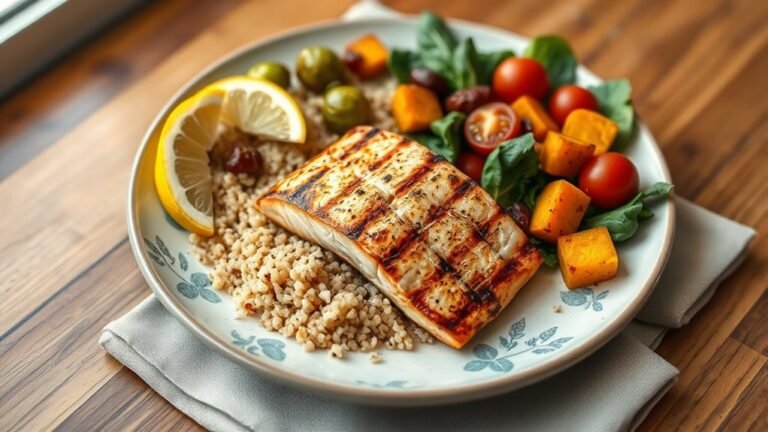
When seniors have difficulty chewing, choosing soft, nutritious foods becomes essential to guarantee they get the nutrients they need without discomfort. You’ll want to focus on soft foods like mashed potatoes, tender fish, and cooked vegetables, which provide balanced nutrition while accommodating chewing needs.
Puree or finely chop meals to create easy-to-chew options that suit various dietary restrictions. Moist cooking methods such as steaming, braising, or slow-cooking naturally soften ingredients, making every bite safer and more enjoyable.
Including protein-rich foods like scrambled eggs, yogurt, and smooth nut butters helps maintain muscle health for seniors facing chewing challenges. It’s best to avoid hard, crunchy, or sticky foods, as they increase risks of choking or dental injury.
Simple Meal Prep Tips for Chewing-Friendly Senior Meals
To make meal preparation easier and safer for seniors with chewing difficulties, focus on creating soft, manageable textures by mashing, pureeing, or chopping ingredients into small pieces. Using slow-cooking or braising methods helps soften meats and vegetables, turning them into easy-to-chew, nutrient-dense options.
When meal planning, swap firm ingredients for soft alternatives like cooked or pureed vegetables to guarantee safety and comfort. Incorporate pureed foods, mashed fruits, and yogurt to boost senior nutrition while minimizing chewing effort.
Batch cooking is a smart strategy. Prepare large quantities of soft meals, then freeze individual portions for quick, convenient meal prep throughout the week. This not only saves time but also assures consistent access to soft ingredients that meet chewing needs.
Soft Snacks and Drinks for Seniors With Chewing Needs

Building on soft meal preparation techniques, choosing the right snacks and drinks can greatly improve comfort and nutrition for seniors with chewing needs. Soft snacks like yogurt, soft cheeses, and pureed foods guarantee easy swallowing while boosting nutritional intake.
You can include protein-rich options such as pudding or mousse-like pureed snacks to meet dietary requirements without chewing effort. Moist foods like steamed vegetables and mashed potatoes pair well with hydrating drinks, such as herbal teas, flavored water, or milk, which support digestion and maintain hydration.
Blended beverages and smoothies offer both hydration and nutrients in a form that’s gentle on chewing difficulties. Avoid hard, crunchy, or sticky snacks like nuts and chips to prevent choking risks and facilitate safe eating.
Seven-Day Meal Plans for Seniors With Chewing Needs
Although it can be challenging to plan meals that meet both nutritional needs and chewing limitations, a well-designed seven-day meal plan makes it manageable and enjoyable. When focusing on meal planning for seniors, you’ll want to include soft foods like mashed vegetables, tender proteins, and cooked grains that ease chewing difficulties while guaranteeing safety and nutrition.
By incorporating nutrient-dense meals featuring omega-3-rich fish, fiber-packed soft fruits, and fortified dairy, you provide a balanced diet essential for healthy eating. Paying attention to meal textures such as purees, stews, and casseroles helps accommodate dental or swallowing challenges.
Easy-to-chew recipes prepared through baking, steaming, or slow cooking make senior-friendly meals tender and accessible. This approach ensures each day delivers the right mix of protein, calcium, and vitamins, supporting overall health. With thoughtful seven-day meal plans, you can confidently offer nutritious, enjoyable, and safe meals tailored to seniors’ chewing needs.
Caregiver Strategies to Support Chewing-Friendly Meal Plans
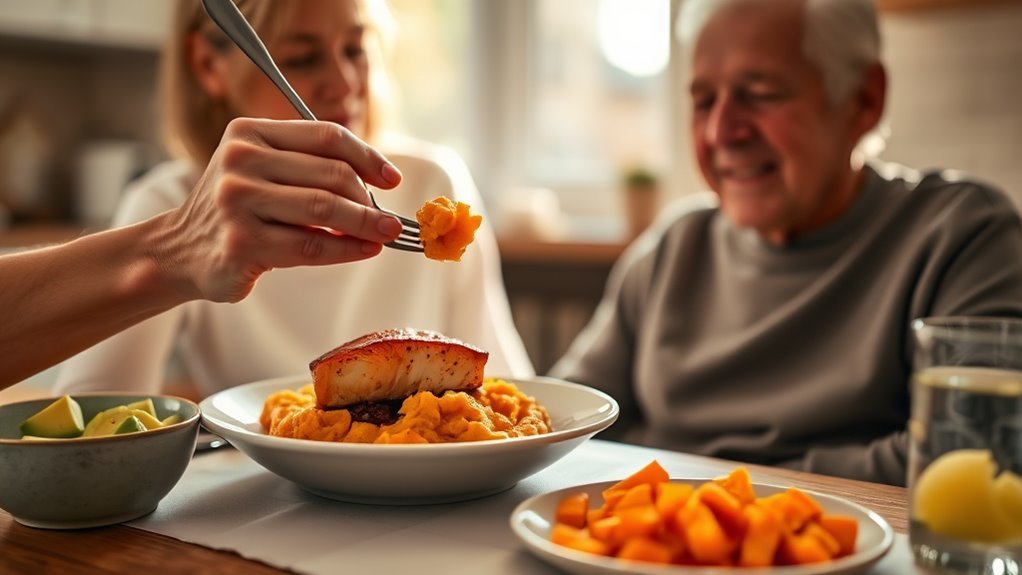
When you support seniors with chewing-friendly meal plans, your role as a caregiver becomes essential in guaranteeing both safety and enjoyment during meals. Use caregiver strategies like preparing soft foods such as mashed vegetables, scrambled eggs, or pureed fruits that address swallowing difficulties.
Modify recipes by chopping or blending ingredients into manageable, textured foods to reduce choking risks and improve safety. Pay attention to meal presentation by arranging food attractively and serving small bites, which can stimulate appetite and make chewing easier.
Practice portion control to avoid overwhelming seniors and schedule regular meal reminders to encourage consistent eating habits, especially for those with cognitive impairments. Stay alert for signs of swallowing difficulties such as coughing or prolonged chewing and adjust dietary modifications promptly.
Frequently Asked Questions
How Can I Prevent Choking While Eating Soft Foods?
To prevent choking while eating soft foods, focus on texture modification by ensuring foods are smooth and easy to swallow. Enhance flavor and use sensory stimulation to make meals appealing.
Practice safe swallowing techniques, control portions, and consider meal timing to avoid fatigue. Keep food temperature comfortable, avoid allergens, and present meals attractively to encourage eating.
Prioritize digestive comfort by eating slowly and taking small bites to reduce choking risk.
What Supplements Might Seniors Need With Soft Diets?
You need vitamin supplements, mineral supplements, and protein powders to fill nutritional gaps. Boost your calcium intake for bone strength, choose fiber options for digestion, and add omega 3 sources for heart health.
Don’t forget vitamin D to enhance calcium absorption, iron supplements to prevent anemia, and probiotic foods for gut balance. Consider multivitamin suggestions tailored to seniors to guarantee you get all essential nutrients easily and safely.
How Do Dental Implants Affect Chewing-Friendly Meal Choices?
Dental implants improve your chewing efficiency by providing implant stability and bite force enhancement, making chewing-friendly meal choices easier. With implant integration and prosthetic durability, you get reliable tooth support that boosts your oral health improvement and jawbone strength.
These dental implant benefits guarantee long-term comfort, so you can enjoy a wider variety of foods without discomfort. Overall, implants make eating more comfortable and nutritious by restoring natural chewing function.
Are There Cultural Foods Suitable for Soft Diet Adaptations?
You’ll find cultural cuisine offers a treasure trove of soft food adaptations that make eating exciting! Traditional recipes can be adjusted with ingredient substitutions and gentle cooking techniques to preserve regional flavors while respecting dietary preferences and cultural sensitivities.
How Can Hydration Be Maintained Alongside Soft Food Diets?
You can maintain hydration by following hydration tips like setting a hydration schedule to remind you to drink regularly. Include liquid options such as flavored waters, herbal teas, and broths to make beverage choices enjoyable.
Focus on fluid-rich foods like soups and smoothies, and use hydration aids like straws if needed. Monitor your water intake to guarantee electrolyte balance, especially if you’re losing fluids, and keep track with hydration monitoring tools to stay properly hydrated.
Conclusion
You’ve discovered easy, nutritious ways to make mealtime comfortable and enjoyable for seniors with chewing needs. But what if the next bite could uncover more than just nourishment?
Imagine the relief, the joy, and the connection that comes when meals are no longer a struggle but a moment of comfort. By choosing soft, healthy foods and using simple prep tips, you’re not just feeding someone—you’re transforming their everyday life.
Are you ready to make that change?