7 Easy Meal Plans for Seniors
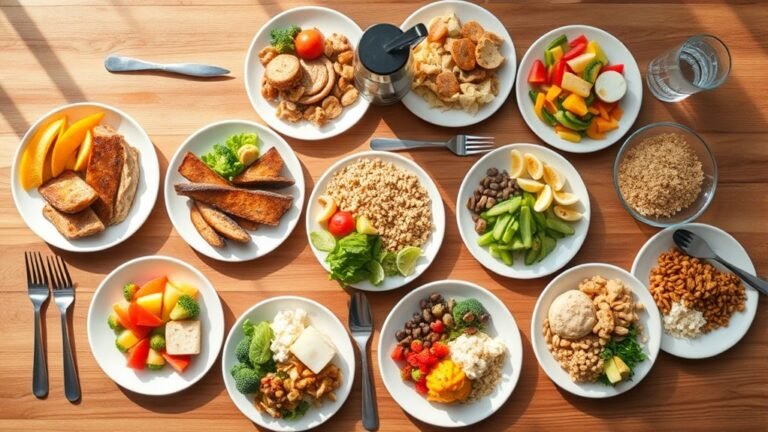
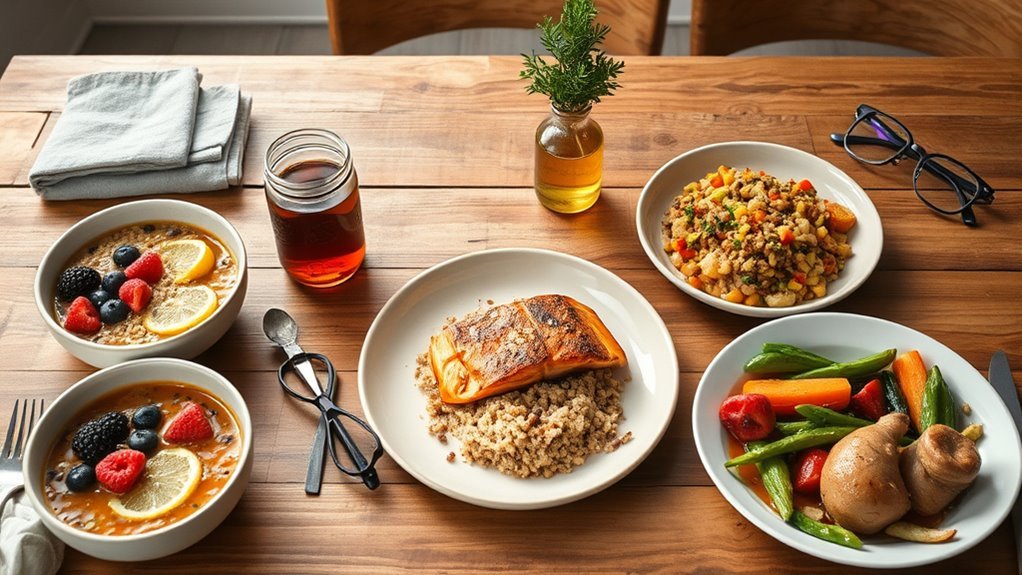
You can easily create seven simple meal plans by focusing on balanced nutrition that supports your health and energy.
Start with protein-rich breakfasts like eggs and oatmeal.
Enjoy quick lunches with lean meats and veggies.
And end with easy, colorful dinners full of protein and greens.
Use batch cooking and prepped ingredients to save time.
Pay attention to portion control and include social meal planning for motivation.
Keep exploring to discover more tips for long-lasting healthy eating habits.
Why Balanced Nutrition Matters for Seniors
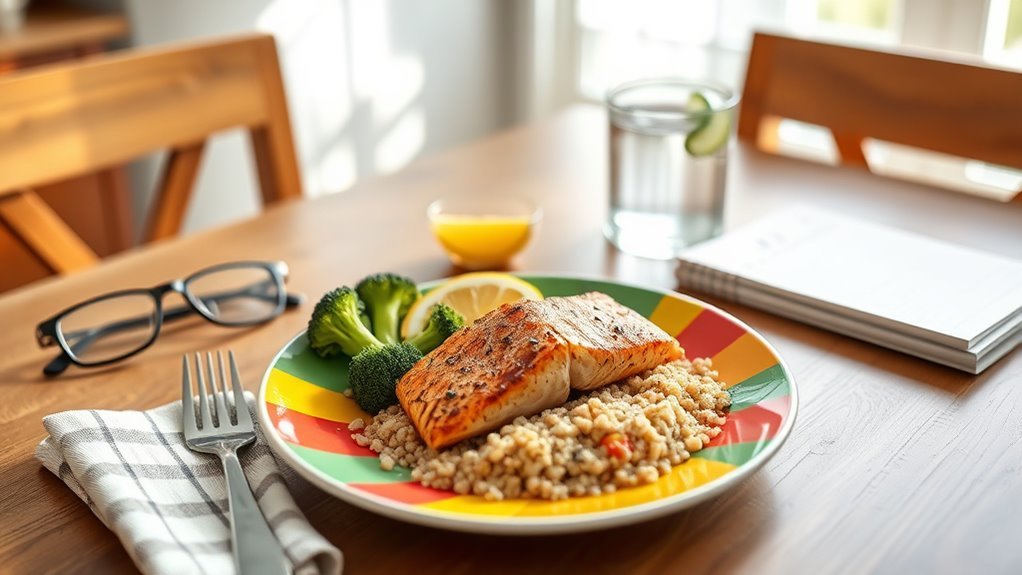
Balanced nutrition plays an essential role in helping you maintain muscle strength, cognitive health, and overall physical function as you age. For seniors, eating a variety of nutrient-dense foods guarantees you get essential vitamins and minerals that support your immune system, helping you fight off illnesses more effectively.
Balanced nutrition supports muscle strength, cognitive health, and immunity, helping seniors stay healthy and resilient as they age.
Balanced nutrition also plays a pivotal role in preserving cognitive health, potentially lowering the risk of age-related cognitive decline and dementia. By fueling your body properly, you reduce the likelihood of developing chronic conditions like diabetes, hypertension, and osteoporosis.
Meeting your nutritional needs through balanced meals not only boosts your energy levels but also helps you stay independent in daily activities. When you focus on balanced nutrition, you’re actively protecting your long-term health and quality of life.
Prioritizing this approach empowers you to enjoy an active, vibrant lifestyle well into your later years.
Balanced Breakfast Ideas for a Healthy Start
How can you kickstart your day with a meal that fuels both your body and mind? A balanced breakfast is key for seniors, combining protein, whole grains, fruits, and healthy fats to support muscle maintenance, digestion, and brain health.
Choosing simple, nutritious meals encourages healthy eating habits and makes sticking to easy meal plans effortless.
Here’s a quick guide to build your balanced breakfast:
| Component | Examples |
|---|---|
| Protein | Eggs, Greek yogurt |
| Whole Grains | Oatmeal, whole-wheat toast |
| Fruits | Berries, banana, citrus |
| Healthy Fats | Nuts, seeds, avocado |
Easy, Nutritious Lunches to Keep Seniors Energized
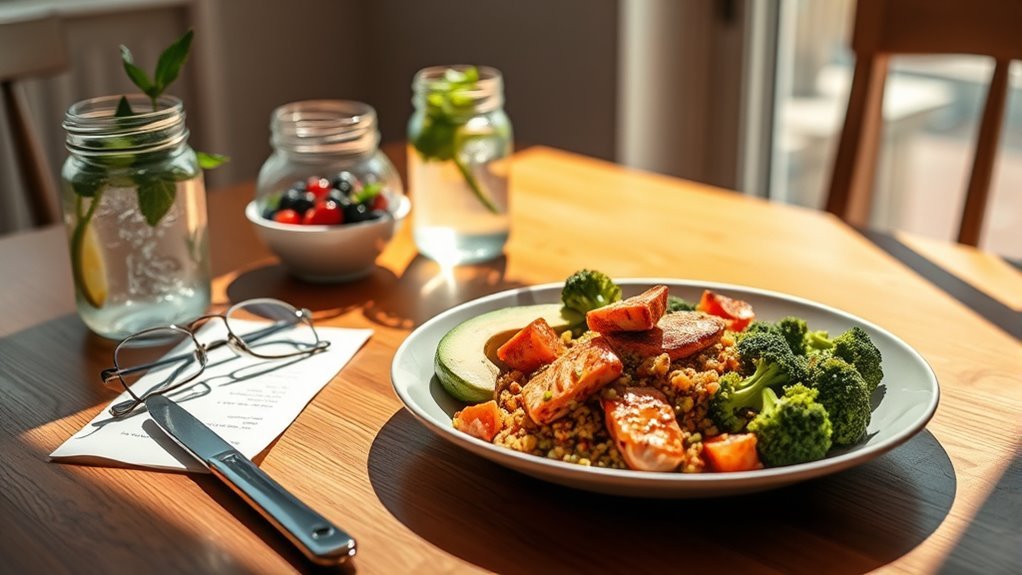
You can keep your afternoons energized with quick, balanced lunches that combine protein, healthy fats, and fiber. When you choose nutrient-dense ingredients like lean meats, whole grains, and colorful veggies, your meals become both satisfying and easy to digest. Plus, simple recipes with minimal prep make it easier to stay consistent with healthy eating every day.
Quick Balanced Meals
When you need a quick lunch that fuels your body and mind, combining lean protein, colorful veggies, whole grains, and healthy fats is key. These balanced meals support energy, muscle maintenance, and brain function while requiring minimal preparation. It’s perfect for seniors.
Here’s a simple guide to build quick, balanced meals:
| Component | Examples |
|---|---|
| Lean Protein | Turkey, beans |
| Colorful Veggies | Cherry tomatoes, spinach |
| Whole Grains | Brown rice, whole wheat bread |
| Healthy Fats | Avocado, nuts |
Mix and match these ingredients for meals ready in under 15 minutes. This approach keeps your lunches nutritious, satisfying, and easy to prepare. It helps you stay energized throughout the day.
Nutrient-Dense Ingredients
Why choose nutrient-dense ingredients for your lunches? Because they provide seniors with essential vitamins and minerals to meet their unique dietary needs while supporting overall health. Including antioxidant-rich foods like spinach and blueberries helps reduce inflammation and fight age-related oxidative stress.
Healthy eating with nutrient-dense choices also boosts brain function and heart health by adding healthy fats from avocados and olive oil.
To keep your lunches both easy and nutritious, focus on:
- Leafy greens and berries for antioxidants and vitamins
- Lean proteins and nuts to support muscle and energy
- High-fiber veggies and beans to aid digestion and weight management
Easy Meal Preparation
Three simple strategies can make meal preparation easier and keep your lunches both nutritious and satisfying. First, focus on meal prep by using easy-to-handle ingredients like canned beans, pre-washed vegetables, and cooked grains. These items speed up assembly without sacrificing nutrition.
Second, try batch cooking; prepare large portions of soups or salads to have healthy meals ready throughout the week. This saves time and reduces daily stress.
Third, balance your meals with protein, fiber, and healthy fats to maintain energy all day long. Don’t forget to label your prepared meals with dates and reheating instructions to keep food safe and fresh.
Simple Dinners Packed With Protein and Vegetables
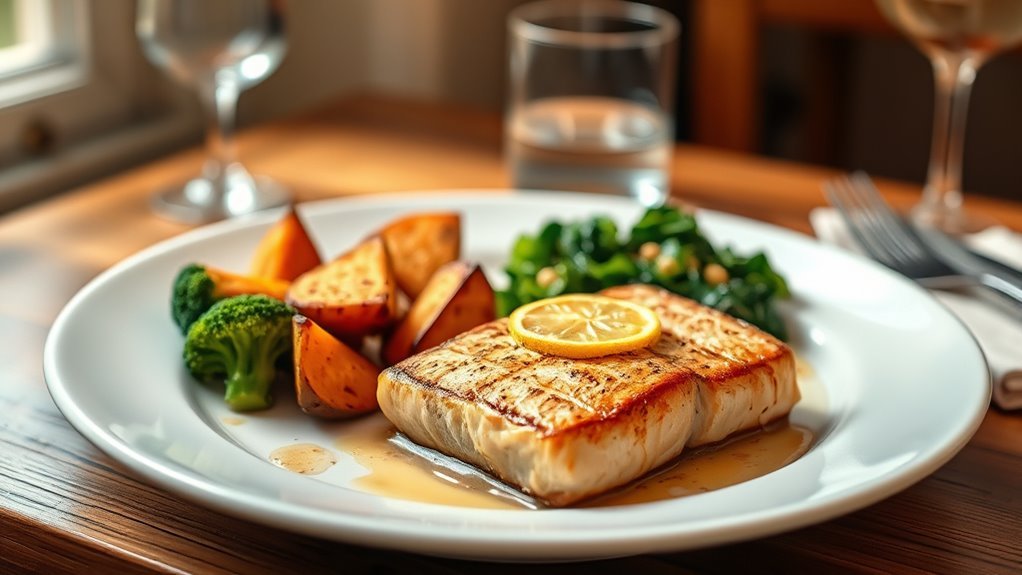
Including a lean protein like chicken, fish, or beans in your dinner helps maintain muscle health and keeps you feeling full longer. For seniors, simple dinners combining protein with vegetables ensure a balanced diet that’s both nutritious and easy to prepare.
Adding colorful vegetables such as spinach, bell peppers, and zucchini boosts vitamins, minerals, and fiber while keeping meals vibrant and tasty.
To enjoy easy dinners packed with protein and vegetables, try these ideas:
- One-pot stir-fries with tofu and mixed veggies for a quick, nutrient-rich meal.
- Sheet pan salmon with asparagus and cherry tomatoes for minimal cleanup.
- Bean and vegetable casseroles that combine protein and fiber in a comforting dish.
These options help you uphold a balanced diet with minimal fuss, supporting your health and energy levels every day.
Time-Saving Meal Prep Tips for Senior Meal Plans
When you prepare meals ahead of time, you can save valuable minutes during busy days and reduce stress around mealtime. For seniors, effective meal prep means batch cooking soups, stews, or casseroles. This way, you have ready-to-eat, healthy options throughout the week.
Pre-portioning snacks and using labels with dates and reheating instructions guarantee safety and quick access. Preparing ingredients like chopped vegetables or marinated proteins in advance streamlines your cooking routine. It makes meal prep time-saving and efficient.
| Tip | Benefit |
|---|---|
| Batch cooking | Ready meals for several days |
| Pre-portioned snacks | Quick access, less daily prep |
| Meal prep labels | Food safety and easy reheating |
| Prepped ingredients | Faster meal assembly and variety |
Personalizing Meal Plans for Dietary Needs
Although creating meal plans for seniors might seem straightforward, tailoring them to address specific dietary needs is essential for managing health conditions effectively. When you develop personalized meal plans, you must consider medical conditions like diabetes, hypertension, or kidney disease to *guarantee* the right balance of nutrients.
Tailoring senior meal plans to specific health needs ensures effective management of conditions like diabetes and hypertension.
Collaborate with healthcare professionals to respect dietary restrictions and meet nutritional needs accurately. Keep in mind that your meal plan should also reflect personal taste preferences and eating habits to encourage consistent adherence.
Regular health monitoring helps you adjust the plan as health needs evolve, preventing complications and managing symptoms effectively. To make your personalized meal plans successful, focus on:
- Incorporating nutrient-dense, condition-specific ingredients
- Consulting healthcare providers for professional guidance
- Continuously evaluating and adjusting meals based on health monitoring
How Seniors Can Build Healthy Eating Habits That Last
To build healthy eating habits that last, you need to create a consistent meal schedule and focus on nutrient-rich foods that support your long-term well-being. Sticking to regular meal times helps your digestion and establishes routine eating habits.
Incorporate a variety of nutrient-dense foods like fruits, vegetables, whole grains, and lean proteins to maintain balanced nutrition and reduce deficiencies. Use portion control to avoid overeating and stay mindful of your hunger cues. This encourages mindful eating and prevents unnecessary snacking.
Gradually swap processed foods with healthier options to make changes easier to stick with. Involve family or friends in your meal planning and preparation. It makes healthy eating more enjoyable and keeps you accountable.
Frequently Asked Questions
How Can Seniors Safely Store Prepared Meals for the Week?
You can guarantee meal prep safety by using airtight storage containers to keep your meals fresh and prevent contamination. Follow refrigeration guidelines by storing meals at or below 40°F and consuming them within 3-4 days.
For longer storage, freeze meals properly. Use labeling strategies by marking each container with the prep and reheat dates.
Practice portion control tips by dividing meals into single servings, making reheating easier and safer throughout the week.
What Kitchen Tools Are Best for Seniors With Limited Mobility?
You’ll want to use adaptive utensils with cushioned grips to reduce strain and improve control. Non-slip mats keep your workspace steady, preventing slips.
Ergonomic cookware with lightweight designs helps you handle pots and pans comfortably. Easy open jars and lids make accessing ingredients hassle-free.
Lightweight appliances reduce fatigue during meal prep. These tools work together to make cooking safer and more enjoyable, even with limited mobility.
Are There Recommended Supplements to Complement Senior Meal Plans?
Yes, you should consider adding vitamin D and calcium supplements to support bone health. Omega-3 oils can help reduce inflammation and boost heart and brain function.
Fiber powders are great if your meals lack enough fiber, aiding digestion. Taking multivitamins tailored for seniors fills nutritional gaps and supports your immune system.
Always check with your healthcare provider first to make sure these supplements suit your specific health needs.
How Can Seniors Manage Appetite Changes Due to Medications?
You can manage appetite fluctuations caused by medication effects by adjusting meal timing to when you feel hungriest. Taste alterations might make food less appealing, so try adding herbs or spices to boost flavor.
Staying hydrated also helps counteract dry mouth and digestive discomfort. Pay attention to how your body reacts and discuss any persistent issues with your doctor, who might adjust medications or suggest strategies to keep your appetite steady.
What Are Easy Snack Ideas Between Meals for Seniors?
You can choose healthy snack options like pre-portioned apple or carrot slices for a quick, nutritious snack idea. Nut butter on whole-grain crackers offers protein, while yogurt with fresh berries makes a soft, probiotic-rich treat.
Trail mix provides portable snack choices with healthy fats, and cheese cubes with crackers give you calcium without much sugar. These low sugar snacks are easy to prepare and perfect between meals.
Conclusion
You can picture yourself starting the day with a colorful, balanced breakfast that fuels your energy. Imagine easy lunches filled with vibrant veggies and wholesome grains, keeping you active and bright.
Evenings bring comforting dinners rich in protein and nutrients, all prepared with simple, time-saving tips. By personalizing your meals to fit your needs, you’ll build healthy habits that feel natural and lasting, helping you enjoy each day with energy and ease.