
Other Foods Nutrition: What These Foods Actually Deliver
These are the foods that don’t fit neatly into any nutrition category — a can of beans in the pantry, a glazed donut at a meeting, frozen spinach in the freezer, hummus by the container. Most people know roughly where vegetables and grains sit nutritionally. The foods in this guide are less certain territory. What does a can of beans actually deliver? Does jello have anything worth counting? What does coffee contribute beyond caffeine? Here are the direct answers — with the specific numbers that settle the question for each one.
What is the nutritional value of a can of beans?
Canned beans are among the most nutrient-dense foods in any grocery shop. One cup delivers approximately 15g protein, 15g fibre, and significant iron, folate, magnesium, and potassium. Most nutrients survive the canning process intact. Draining and rinsing reduces sodium content by up to 40% without meaningful nutrient loss, making them a practical, affordable meal-prep staple.
Canned beans survive the numbers check far better than their pantry-staple status suggests. One cup of drained black beans provides 227 calories, 15.2g protein, and 15g fibre — a complete macro profile from a food that costs under a dollar per serving and requires no cooking preparation whatsoever.
The canning process is nutritionally kind to beans. Minerals — iron, folate, magnesium, potassium — are heat-stable and survive without meaningful loss. Protein is entirely unaffected. Fibre remains intact. Water-soluble B vitamins reduce modestly during heat processing but retain useful quantities. The bean you eat from a can is nutritionally close to the bean cooked from dry.
The sodium caveat is real and addressable. Commercial canned beans typically contain 400–600mg of sodium per cup — up to a quarter of the recommended daily limit. Draining alone removes approximately 36% of that sodium. Rinsing with cold water reduces it by up to 40% according to USDA data, with no meaningful nutrient loss in the process.
For weekly meal prep, canned beans are the fastest complete plant protein available. No soaking, no extended cooking — open, drain, rinse, and they’re ready. The bean comparison table below maps five varieties against each other by key nutrients.
Canned Bean Nutritional Comparison — Per 1 Cup Cooked / Drained (USDA FoodData Central)
| Bean Type | Calories | Protein | Fibre | Iron (% DV) | Folate (% DV) | Best Weekly Use |
|---|---|---|---|---|---|---|
| Black Beans | 227 | 15.2g | 15.0g | ~20% DV | ~64% DV | Tacos, bowls, soups, salads |
| Chickpeas | 269 | 14.5g | 12.5g | ~26% DV | ~71% DV | Hummus, curries, roasted snacks |
| Kidney Beans | 225 | 15.3g | 11.3g | ~25% DV | ~58% DV | Chilli, stews, grain bowls |
| Lentils | 230 | 17.9g | 15.6g | ~37% DV | ~90% DV | Soups, dhal, salad base |
| Cannellini | 249 | 17.4g | 11.0g | ~36% DV | ~72% DV | Soups, pasta, Italian stews |
Does jello have any nutritional value — and what about a glazed donut?
Jello provides negligible nutrition: mainly gelatin — a low-quality protein lacking essential amino acids — sugar, and artificial colouring. A glazed donut delivers approximately 260 calories, 3g protein, and minimal micronutrients. Both are low nutrient-density foods. Understood and planned for, both have legitimate occasional places in a realistic, sustainable weekly eating pattern.
Jello
Standard serving (~95g)
Calories~70
Protein1–2g (incomplete)
Added sugar~19g
Vitamins/mineralsNegligible
Fibre0g
Glazed Donut
Standard glazed (~57g)
Calories~260–300
Protein~3g (enriched flour)
Added sugar~14–19g
Iron (fortified)~6% DV
Fibre<1g
Jello’s protein is gelatin — a hydrolysed collagen product that lacks tryptophan and is low in several other essential amino acids, making it an incomplete protein of very low quality. Sugar-free versions remove the sugar and reduce the nutritional presence to near zero. Jello is not a nutritional source — it is a textured, flavoured dessert, and that is a useful, honest category for it to occupy.
A glazed donut’s B vitamins and iron come from mandatory US enrichment of refined flour — thiamine, riboflavin, niacin, folic acid, and iron are required additions to white flour. These contributions are trace relative to the caloric load. The donut’s nutritional profile is primarily refined carbohydrates and fat.
The facts about jello and donuts are clear. Neither represents meaningful nutrition per serving. That does not mean neither belongs in a weekly plate — it means their role is defined: occasional, intentional, and surrounded by a week of meals that anchor nutrition in the foods that genuinely deliver it. A planned weekly plate makes deliberate room for the occasional donut precisely because the surrounding meals are nutritionally solid. The problem is never the donut. It is the absence of a plan that makes the donut the default.
Do canned and frozen vegetables retain their nutritional value?
Yes, substantially. Freezing preserves most vitamins and minerals at or near fresh levels because vegetables are blanched and frozen at peak ripeness. Canning preserves minerals, fibre, and fat-soluble vitamins well; water-soluble vitamins reduce during heat processing. Both are nutritionally valid alternatives to fresh — and the practical backbone of any sustainable weekly meal prep.
Freezing — Best Retention
Vegetables blanched and frozen within hours of harvest often retain more vitamin C than “fresh” produce that has spent 3–5 days in transit and refrigeration. A 2017 University of California, Davis study found frozen broccoli, green beans, and spinach had similar or higher vitamin C content than fresh store-bought equivalents. Blanching reduces some heat-sensitive vitamins slightly; the subsequent freeze halts all further degradation.
Canning — Solid Retention
Heat processing reduces water-soluble vitamins (C, B vitamins) by approximately 25–50%. Minerals, dietary fibre, and fat-soluble vitamins (A, E, K) are well preserved. Notable exception: tomato lycopene — the carotenoid antioxidant responsible for red colour — increases in bioavailability with heat. Canned tomatoes have higher accessible lycopene than raw tomatoes. The cooking liquid holds leached water-soluble vitamins — use it in soups and stews.
For weekly meal prep, canned and frozen vegetables remove the primary barrier to consistent nutritional eating — time and fresh-food availability. A freezer stocked with frozen spinach, broccoli, peas, and edamame is more nutritionally reliable across a busy week than a refrigerator of fresh vegetables that may or may not be used before they spoil. Canned and frozen vegetables are not the compromise option. They are the practical backbone of any sustainable weekly nutrition plan.
What is the nutritional value of honey?
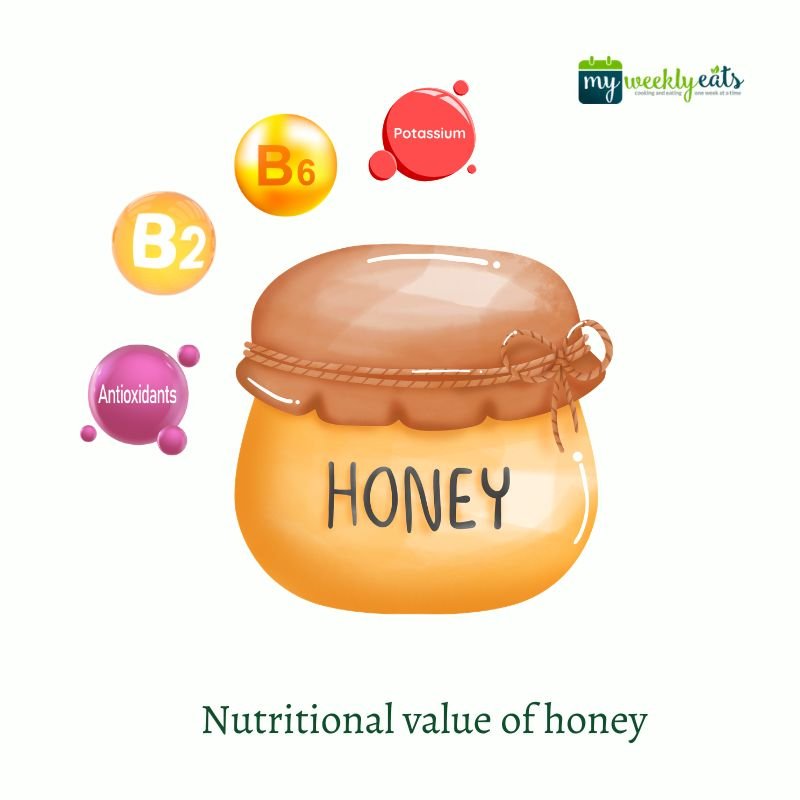
Honey provides carbohydrates (primarily fructose and glucose), trace vitamins B2 and B6, potassium, manganese, and antioxidant polyphenols including flavonoids and phenolic acids. Its antioxidant content is real and varies by floral source — darker honeys carry higher antioxidant loads. Honey is nutritionally superior to refined sugar in antioxidant terms but remains primarily a caloric sweetener requiring moderation.
What Honey Actually Delivers Per Tablespoon
One tablespoon of honey provides approximately 64 calories, 17g carbohydrate, and trace riboflavin (B2), niacin (B3), potassium, manganese, and zinc. At a standard serving size, the vitamin and mineral quantities are small — honey is not a meaningful dietary source of any single micronutrient. Its caloric density (64 cal/tbsp) is slightly higher than refined sugar (48 cal/tbsp).
Where Honey’s Genuine Advantage Lies
Honey’s nutritional distinction over refined sugar is its polyphenol content. Flavonoids and phenolic acids — including chlorogenic acid, caffeic acid, and quercetin — function as antioxidants with documented free-radical scavenging activity. Darker honeys (buckwheat, manuka) carry significantly higher antioxidant loads than lighter varieties. Evidence in vitro documents antimicrobial and anti-inflammatory properties; clinical translation at dietary serving sizes in healthy individuals remains limited — evidence suggests rather than confirms. Honey’s glycaemic index (~55–58) is modestly lower than sucrose (~65) — a real but small practical difference at a teaspoon serving.
Weekly framing: honey is a better sweetener than refined sugar for antioxidant value. It is not a micronutrient supplement. Use it as a sweetener with that context — not as a health treatment at any quantity.
Does salad have nutritional value?
Yes — and salad’s nutritional value varies enormously depending on its composition. A dark leafy green base delivers iron, folate, vitamins A and K per calorie. Iceberg lettuce provides mainly water and minimal micronutrients. Adding protein, healthy fats, and colourful vegetables transforms a garnish into one of the most micronutrient-dense meals available at any calorie count.
“Salad” is not a food. It is a category with a nutritional range spanning near-zero to genuinely excellent — determined almost entirely by composition. The base choice alone changes the micronutrient outcome substantially:
Spinach / Kale
Iron, folate, vitamins A, C, and K per calorie at rates few foods match. The strongest nutritional base choice available. Use as often as possible.
Arugula / Romaine
Folate, vitamins A and K, some vitamin C. Nutritionally solid bases, slightly lighter than spinach or kale. Romaine delivers roughly 64% DV folate per cup.
Butter lettuce
Vitamins A and K, moderate folate. Lower micronutrient density than dark greens. Pleasant texture; reasonable choice when alternated with darker bases.
Iceberg
Primarily water (~96%), trace vitamins A and K. Not nutritionally empty — but the lowest-density base option. Replace with romaine or spinach whenever possible.
What makes a salad nutritionally complete: quality protein (chickpeas, grilled chicken, hard-boiled eggs, tofu), healthy fat (olive oil dressing, avocado, nuts, seeds), and colour variety (tomatoes, peppers, carrots, beets) for broad micronutrient coverage.
The fat-dressing essential is not optional: fat-soluble vitamins A and K in leafy greens require dietary fat to absorb through the intestinal wall. A fat-free salad dressing is nutritionally counterproductive — it leaves vitamins in the bowl rather than delivering them to the bloodstream. Olive oil dressing is a functional nutritional choice, not a caloric indulgence.
What is the nutritional value of coffee?
Coffee provides B vitamins — riboflavin (B2), niacin (B3), pantothenic acid (B5) — potassium, manganese, and a substantial antioxidant load. Coffee is one of the largest single contributors to antioxidant intake in the average US diet. Evidence links regular moderate coffee consumption to reduced risk of type 2 diabetes, Parkinson’s disease, and liver disease. Black coffee contains approximately 2 calories per cup.
Coffee’s nutritional profile surprises most people who assume it’s nutritionally inert. Per standard 240ml (8oz) black cup:
~11%
DV Riboflavin (B2)
~6%
DV Pantothenic Acid (B5)
~3%
DV Potassium + Manganese
These are modest individual contributions — but consistent intake of 2–4 cups daily accumulates meaningfully across the week. Antioxidants are coffee’s nutritional headline. It contains chlorogenic acids, quinines, and caffeic acid — polyphenol antioxidants with documented free-radical scavenging activity. A 2005 study in the Journal of the American Dietetic Association found coffee was the single largest dietary antioxidant source in the average American diet — ahead of fruits and vegetables in absolute daily intake terms (though not in per-serving density).
Health associations from large cohort studies: 3–4 cups daily is associated with reduced risk of type 2 diabetes, Parkinson’s disease, and liver fibrosis. These are associations, not proven causation — they are consistent across multiple large population studies, but reverse causation and confounding cannot be fully excluded. The direction of evidence is positive; the certainty is not absolute.
Additions change everything. Black coffee is a near-zero calorie antioxidant source. A large flavoured latte with syrups and cream is a different food — different caloric load, different sugar content, different nutritional profile. The nutritional claims above apply to black coffee specifically.
What is the nutritional value of tofu and hummus?
Tofu delivers complete protein — all nine essential amino acids — plus calcium, iron, and manganese, with approximately 10g protein per half-cup serving. Hummus provides plant-based protein (7g per quarter-cup), dietary fibre, healthy fats from tahini and olive oil, and iron. Both are high-value plant protein sources that belong in any nutritionally structured weekly plate.
Tofu
Half a cup of firm tofu (~126g) provides approximately 10g of complete protein — all nine essential amino acids from soy, placing it alongside quinoa and edamame as one of the rare plant foods that meets the complete protein definition without combining sources. Calcium content is approximately 253mg (~19% DV) — particularly valuable for dairy-free and plant-based diets where calcium access requires deliberate sourcing rather than incidental dairy intake. Iron at approximately 3.4mg (~19% DV) and manganese round out the mineral profile. Silken tofu has significantly higher water content and lower nutrient density per gram than firm or extra-firm varieties — choose firm for meal-prep applications where nutrient concentration matters.
Hummus
A quarter cup (~62g) of hummus provides approximately 7g protein, 6g dietary fibre, 14g fat (primarily monounsaturated and polyunsaturated from tahini and olive oil), iron at ~8% DV, and folate. The tahini — sesame paste — in hummus contributes calcium, copper, and selenium, making it nutritionally significant beyond the chickpea base. The olive oil contributes polyphenol antioxidants including oleocanthal, a compound with anti-inflammatory properties in research settings. Hummus is substantially more nutritionally dense than most condiments and dips — its protein, fibre, and fat content make it a genuine satiety contributor, not merely a flavour vehicle. The KD 0 keyword for hummus nutritional value reflects how little competition exists: this is an easy featured snippet for any nutrition site covering it accurately.
How do all these ‘other’ foods fit into a nutritionally complete weekly plate?
Every food in this guide — from beans and tofu to jello and pizza — has a defined nutritional role when understood correctly. Nutrient-dense foods (beans, tofu, hummus, vegetables) anchor the weekly plate. Lower-density foods (jello, donuts, pizza) are planned and occasional. Water provides hydration, not nutrition. The structure of the week determines the health outcome, not any single food.
Every food covered in this guide earns a specific place on a well-planned weekly plate — the question is which role and how frequently.
Beans, Tofu & Hummus
Multiple times per week
The week’s plant protein anchors. These three cover complete protein (tofu, beans), fibre (all three), iron (all three), and calcium (tofu, tahini in hummus). Including at least two of the three in a weekly rotation means plant protein is never the nutritional weak point of the plate.
Canned & Frozen Vegetables
Daily — rely on them
The practical nutrition foundation. A freezer with frozen spinach, broccoli, and edamame, alongside a pantry with canned tomatoes and beans, delivers the week’s micronutrient target without depending on fresh-food availability that life regularly disrupts.
Salad & Coffee
Daily contributors
A well-built lunch salad (dark greens, protein, fat dressing, colour) and 2–3 black coffees add meaningful antioxidant and micronutrient loads with minimal planning effort. Both are reliable daily contributors when composed deliberately.
Pizza
Intentional, occasional
Nutritional value depends entirely on composition. A whole-wheat, vegetable-topped pizza is genuinely nutritious — fibre, protein, and micronutrients from the toppings. A processed-topping, refined-crust equivalent delivers primarily calories. Knowing the difference makes the choice deliberate rather than nutritionally invisible.
Jello, Donuts & Treats
Occasional, planned
Minimal nutritional contribution — that is the honest answer, and it need not be a problem. A weekly plate anchored by beans, vegetables, tofu, and salad has room for the occasional jello or donut without any meaningful nutritional consequence. The structure of the week absorbs it.
Water: delivers no macronutrients and negligible micronutrients beyond trace minerals in some sources. Its role is hydration — not nourishment. Adequate daily intake supports every nutritional process in this guide, but water is a hydration strategy, not a nutritional one.
Every food in this guide earns its place on a weekly plate when understood and planned for. The difference between a nutritionally functional week and an unfocused one is not the absence of donuts — it is the presence of a plan.
Build a Weekly Plate That Makes Room for Everything
The structured weekly approach that makes beans, tofu, and frozen vegetables your defaults — and gives the occasional donut its proper place without derailing anything.Build Your Weekly Plate on MyWeeklyEats.com →
The Bottom Line
Three things are consistently true about the foods in this guide. The most overlooked — canned beans, tofu, hummus, frozen vegetables — are among the most practical and nutrient-dense foods available to anyone building a weekly plate. The least nutritionally compelling — jello, glazed donuts — deliver minimal nutrition but harm no weekly plan when they are occasional and intentional rather than habitual and unplanned. And the most surprising — coffee — turns out to be one of the largest antioxidant contributors in the average US diet, one cup at a time. The common thread: a well-planned weekly plate makes deliberate room for all of them — each in the role it actually deserves.

One Comment