

7 Key Nutrition Benefits of Sardines
You get powerful heart, brain, bone, and muscle support in every serving of sardines. They’re packed with omega-3s that reduce inflammation and boost brain and cardiovascular health.
Sardines also deliver high-quality protein and calcium for muscle growth and strong bones.
Plus, vitamins like B12 and D support nerve function and immunity.
While you should watch out for sodium and contaminants, including sardines in your diet offers impressive health benefits you’ll want to explore further.
Key Nutrients That Make Sardines Healthy

Although small in size, sardines pack a powerful nutritional punch that can boost your health in several ways. They’re loaded with omega-3 fatty acids, specifically EPA and DHA, which play an essential role in supporting heart health.
Small but mighty, sardines are rich in heart-healthy omega-3s like EPA and DHA.
Alongside these, sardines provide high-quality protein, essential for muscle growth and repair. You’ll also find impressive amounts of calcium and vitamin D in sardines, both key for bone health and helping your body absorb calcium effectively.
Vitamin B12 is another standout nutrient here, with sardines offering over three times your daily requirement, supporting nerve function and red blood cell formation. Plus, sardines contain phosphorus, which aids energy metabolism and contributes to maintaining healthy bones and teeth.
With such a rich combination of omega-3 fatty acids, vitamin D, calcium, vitamin B12, phosphorus, and high-quality protein, incorporating sardines into your diet is an excellent way to strengthen your bones, support your heart, and promote overall wellness.
How Sardines’ Omega-3s Boost Your Health
Among the many nutrients in sardines, their omega-3 fatty acids stand out for their powerful health benefits. Sardines are rich in EPA and DHA, two essential omega-3s that play a vital role in reducing inflammation and promoting cardiovascular health.
By regularly including sardines in your diet, you can lower triglyceride levels by up to 20-50%, which helps protect your heart. These omega-3 fatty acids also support brain function by maintaining the integrity of neuronal cell membranes, boosting memory and mood.
Moreover, the anti-inflammatory effects of EPA and DHA ease joint discomfort and improve overall joint health. Sardines’ omega-3s help keep your blood vessels healthy by reducing clot formation and encouraging proper dilation, which lowers the risk of heart attacks and strokes.
Why Sardines Support Heart and Brain Health
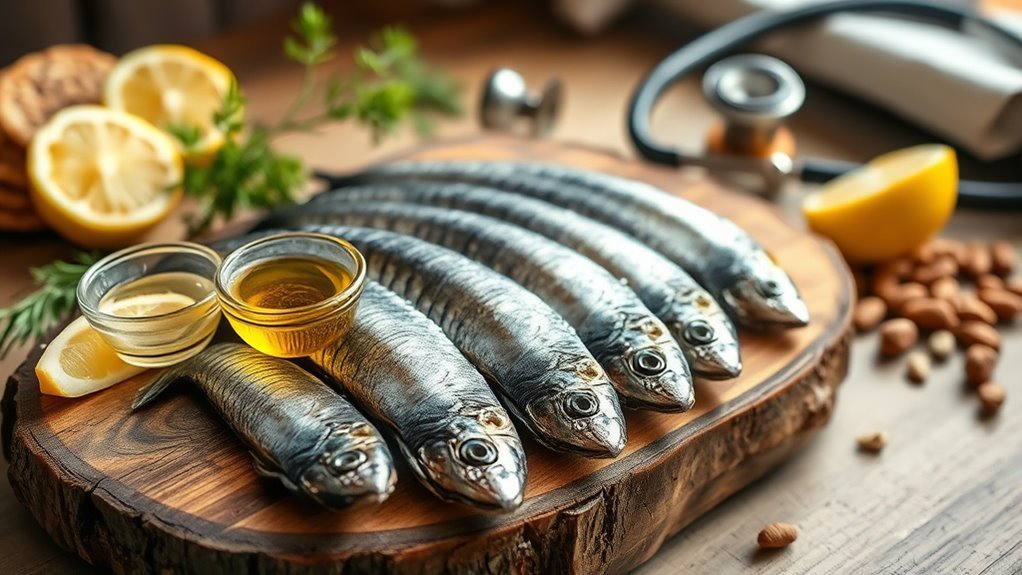
You’ll find that the omega-3s in sardines help keep your heart healthy by lowering triglycerides and improving how your blood vessels work. Plus, they’re packed with vitamin B12, which supports your brain by keeping your nerves healthy and boosting cognitive function. So, eating sardines regularly gives you a solid boost for both your heart and brain health.
Omega-3s and Cardiovascular Health
When you include sardines in your diet, you tap into a powerful source of omega-3 fatty acids EPA and DHA. These play an essential role in reducing triglyceride levels and boosting heart health.
These omega-3s enhance cardiovascular health by lowering blood pressure and decreasing inflammation, two critical factors in heart disease prevention. Sardines also support arterial flexibility, helping prevent blood clots and promoting smoother blood flow.
By regularly consuming sardines, you actively protect your arteries from damage and reduce the risk of cardiovascular issues. Beyond heart health, omega-3 fatty acids in sardines contribute to brain health, linking the benefits of a healthy heart directly to sharper cognitive function.
Including sardines in your meals is a simple way to support both your heart and brain.
Vitamin B12 and Cognitive Function
Omega-3s do more than support your heart. They also work alongside vitamin B12 in sardines to keep your brain sharp. Sardines provide over three times the daily recommended intake of vitamin B12, essential for maintaining cognitive function and nerve health.
This vitamin supports neurotransmitter production, which influences memory, mood, and overall brain health. Eating sardines regularly helps prevent cognitive decline and age-related neurological disorders by promoting nerve repair and preventing nerve damage linked to deficiency.
Here’s how sardines boost your neurological health:
- Deliver high vitamin B12 levels vital for nerve repair
- Support neurotransmitter synthesis for improved cognitive function
- Help prevent neurological disorders associated with deficiency
Including sardines in your diet supports both heart and brain health effectively.
How Sardines Build Strong Bones
You’ll really benefit from sardines’ high calcium content because it directly supports your bone density and strength. Plus, the vitamin D they provide helps your body absorb calcium more effectively. And don’t forget about phosphorus—it works hand in hand with calcium to keep your bones healthy. So, when you put all these nutrients together, sardines become a powerful choice for building strong bones.
Calcium and Bone Density
Because sardines contain edible bones packed with calcium, they offer a natural and effective way to boost your bone density. These tiny bones deliver a significant amount of calcium, essential for strong bones and overall bone health. Including sardines in your diet helps you meet daily calcium needs, reducing the risk of osteoporosis.
Here’s why sardines are a great choice for bone density:
- A single serving provides over 30% of your daily calcium requirement from edible bones.
- Calcium from sardines supports bone mineral density, promoting strong bones.
- Sardines contain vitamin D, which enhances calcium absorption, further benefiting your bones.
Eating sardines regularly can strengthen your bones and help maintain long-term bone health.
Role of Vitamin D
Sardines don’t just supply calcium; they also provide a powerful boost of vitamin D, which helps your body absorb and use that calcium effectively. With about 4.4 micrograms of vitamin D per 3.75-ounce can, sardines support calcium regulation, essential for maintaining bone density and overall bone health.
Eating sardines with edible bones increases your vitamin D intake, enhancing calcium absorption and promoting bone mineralization. This process strengthens your bones, reduces fracture risk, and plays a crucial role in osteoporosis prevention.
Regularly including sardines in your diet helps you meet recommended vitamin D intake, ensuring your bones stay strong and healthy throughout life. By supporting calcium utilization, sardines contribute markedly to building and maintaining robust bones.
Importance of Phosphorus
How exactly does phosphorus contribute to building strong bones? Sardines provide a rich source of phosphorus, essential for bone health and skeletal strength. This mineral works closely with calcium and vitamin D to boost bone mineralization and density.
Phosphorus forms hydroxyapatite, the mineral complex that gives bones their rigidity. By consuming sardines, especially with their bones, you support enhanced bone mineralization through the synergy of phosphorus, calcium, and vitamin D.
You also help neutralize acids that otherwise weaken bones, which aids in preventing osteoporosis. Plus, phosphorus supports effective bone repair by supplying key minerals necessary for rebuilding bone tissue.
Including sardines in your diet ensures you get enough phosphorus, promoting stronger bones and reducing the risk of bone-related issues.
Sardines for Muscle Growth and Repair
When you want to build muscle and speed up recovery, including nutrient-dense foods like sardines in your diet can make a big difference. Sardines are packed with high-quality protein, offering about 22.6 grams per 3.75-ounce can, which is essential for muscle growth and muscle repair. They also provide all the essential amino acids your body needs to rebuild muscle tissue effectively.
The omega-3 fatty acids EPA and DHA found in sardines help reduce inflammation and promote faster recovery after exercise. Furthermore, sardines contain magnesium and phosphorus, minerals that support energy production and muscle contraction, helping you perform better during workouts.
Eating sardines alongside other nutrient-rich foods ensures you get a balanced supply of nutrients to optimize muscle health. By adding sardines to your meals, you equip your body with the protein, healthy fats, and minerals it needs to grow stronger and recover efficiently.
How Sardines Enhance Eye Health and Immunity

Because your eyes and immune system rely on key nutrients to function at their best, including sardines in your diet can offer significant benefits. Sardines are packed with omega-3 fatty acids, especially DHA, which support visual health and reduce the risk of age-related macular degeneration. Their high vitamin B12 content helps maintain nerve health, improving your eye’s function. Plus, vitamin D in sardines reduces inflammation, protecting against eye issues like dry eye syndrome.
Including sardines in your diet supports eye health with omega-3s, vitamin B12, and vitamin D benefits.
Here’s how sardines enhance your eye health and immunity:
- Antioxidants like selenium combat oxidative stress, preventing damage to eye tissues.
- Omega-3 fatty acids support immune function, helping your body fend off infections affecting eye health.
- Vitamin B12 and vitamin D work together to maintain nerve and eye tissue health.
Balancing Sardines’ Benefits and Risks
While sardines offer impressive nutritional benefits like omega-3s, vitamin D, and protein, you need to balance these advantages with potential risks. Sardines contain contaminants such as mercury and other toxins, so consuming them in moderation is key to minimizing exposure.
If you’re pregnant or have health concerns, be especially mindful of these risks. Their high sodium content can affect blood pressure, so watch your intake if you have hypertension. Sardines also have purines, which might trigger gout or kidney stones in sensitive individuals, making moderation even more vital.
To maximize health benefits and reduce risks, choose sardines from responsible sourcing that ensures lower levels of contaminants. By balancing the nutrition and potential downsides, you can safely enjoy sardines’ health benefits without overexposure to mercury, toxins, or excessive sodium.
Moderation and informed choices help you make sardines a smart part of your diet.
Frequently Asked Questions
How Should Sardines Be Stored to Maintain Freshness?
To keep sardines fresh, follow proper storage tips like storing unopened cans at room temperature away from sunlight. Once opened, transfer sardines to airtight storage containers and refrigerate at or below 40°F using effective refrigeration methods.
Proper sealing is key to extending shelf life. Avoid freezing unless needed, as freezing techniques can affect texture. Watch for freshness indicators and spoilage signs like off smells or discoloration to guarantee safe consumption.
Are Canned Sardines as Nutritious as Fresh Ones?
Yes, canned sardines can be just as nutritious as fresh ones if you consider sardine preservation and packaging methods. While the sardine flavor and texture might differ slightly due to processing, the sardine nutritional value remains high.
When you check sardine quality, sourcing, and origin, you guarantee sustainability and variety. By choosing well-preserved sardines, you enjoy great nutrition without sacrificing sardine sustainability or flavor.
Can Sardines Be Safely Consumed Daily?
You absolutely can chow down on sardines daily without turning into a fish yourself! Just watch out if you have a sardines allergy or dietary restrictions affecting digestion or weight.
Pay attention to sardines sourcing and packaging for sustainability and environmental impact. Their vitamin content and bold sardines flavor make them a tasty, nutrient-packed choice.
Moderation helps avoid sodium overload, so balance your intake and enjoy these little powerhouses responsibly!
What Are the Best Ways to Cook Sardines?
You’ll love grilled sardines for their smoky flavor and tender texture. Try baked sardines with herbs and lemon to keep them moist and flavorful.
Pan-fried sardines in olive oil give a crispy outside while staying tender inside. Toss sardines in olive oil into pasta or a sardine salad for quick meals.
Sardines on toast or sardine skewers make great snacks. Smoked sardines add a rich, savory twist you’ll enjoy.
Do Sardines Contain Mercury or Other Contaminants?
Imagine a shimmering sardine sliding onto your plate, a safe choice with low mercury levels compared to larger fish. You don’t have to worry much about toxin accumulation or heavy metals if you pick responsibly sourced sardines.
Seafood safety relies on mercury monitoring and contaminant reduction, so choosing MSC-certified brands helps curb pollutant exposure and seafood contaminants. By eating sardines in moderation, you minimize contaminant risks, enjoying nutritious fish with peace of mind.
Conclusion
With all these amazing benefits, why wouldn’t you add sardines to your diet? They’re packed with omega-3s, vitamins, and minerals that boost your heart, brain, bones, muscles, eyes, and immunity.
Plus, they’re easy to enjoy and support your overall health in so many ways. Just remember to balance their benefits with any risks, and you’ll be making a smart choice for your well-being every time you reach for a can.