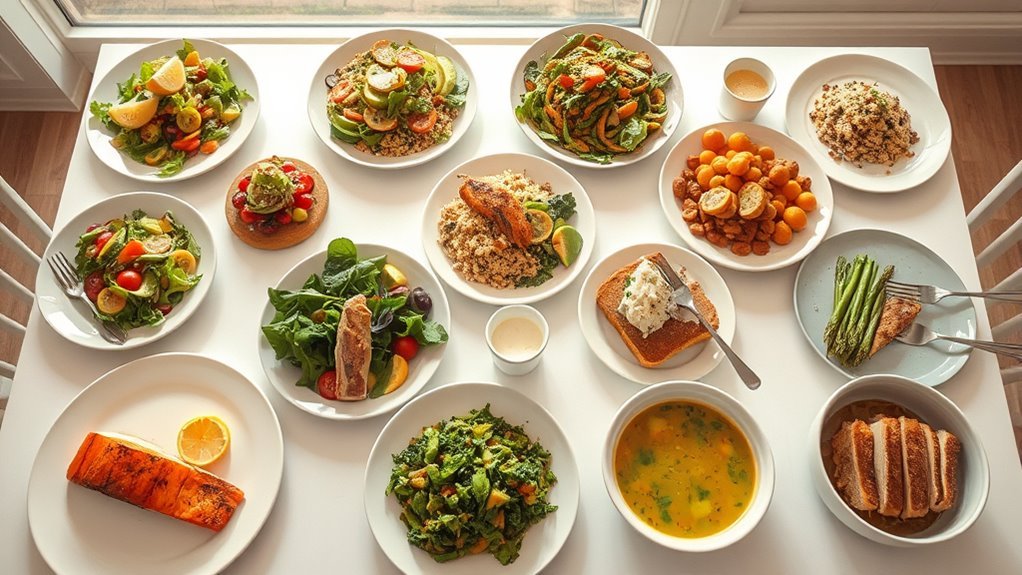
Top 10 Weight Loss Meal Plans for Women Over 40
You need meal plans tailored to women over 40 that address hormonal shifts and a slower metabolism.
Focus on balanced meals with about 30 grams of protein, fiber-rich whole foods, and healthy fats like avocado and nuts to support muscle, stabilize blood sugar, and reduce inflammation.
Eating every 3-5 hours and adjusting portions to your activity helps boost energy and fat loss.
Keep going to uncover tips for customizing meals, prepping efficiently, and boosting long-term success.
Why Tailor Weight Loss Meal Plans for Women Over 40
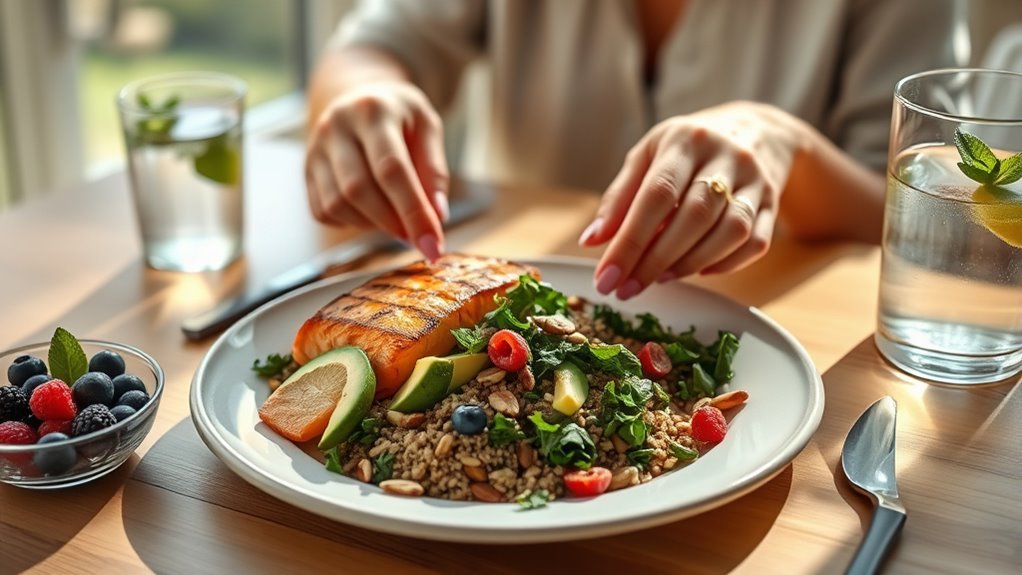
Because your body undergoes hormonal shifts and a slower metabolism after 40, you need a weight loss meal plan tailored specifically to these changes. Standard diets often overlook age-related factors like decreased estrogen and thyroid function, which can lead to muscle loss and belly fat accumulation.
A healthy, customized plan focuses on balanced macros and fiber-rich foods to support fat loss while preserving muscle mass. You’ll also want to prioritize nutrients like calcium and vitamin D, which become vital at this stage to maintain bone health.
Reducing sodium intake helps manage blood pressure and overall wellness. By addressing these unique nutritional needs, you can optimize your weight loss efforts and improve your overall health.
Tailoring your meal plan ensures you’re not just losing weight but doing it in a way that supports your body’s changing demands after 40, making your journey both effective and sustainable.
How Protein Supports Metabolism and Muscle Maintenance for Weight Loss
When you focus on protein intake, you give your metabolism an essential boost while preserving muscle mass, which naturally declines as you age. Eating around 30 grams of high-quality protein per meal stimulates muscle protein synthesis, helping you maintain lean muscle mass during weight loss.
This process is critical because muscle mass supports a higher resting metabolic rate, so preserving it helps you burn more calories even at rest. Higher protein diets also increase your metabolic rate through the thermic effect of food, meaning your body uses more energy to digest protein compared to fats or carbs.
Plus, adequate protein helps regulate blood sugar levels and curbs cravings, making it easier to stick to your meal plan. If you don’t get enough protein, especially during calorie deficits, you risk losing muscle mass, which can slow your metabolism and hinder weight loss.
Prioritizing protein supports both metabolism and muscle maintenance, key factors for successful weight management after 40.
How Fiber and Whole Foods Control Hunger and Support Digestion for Weight Loss
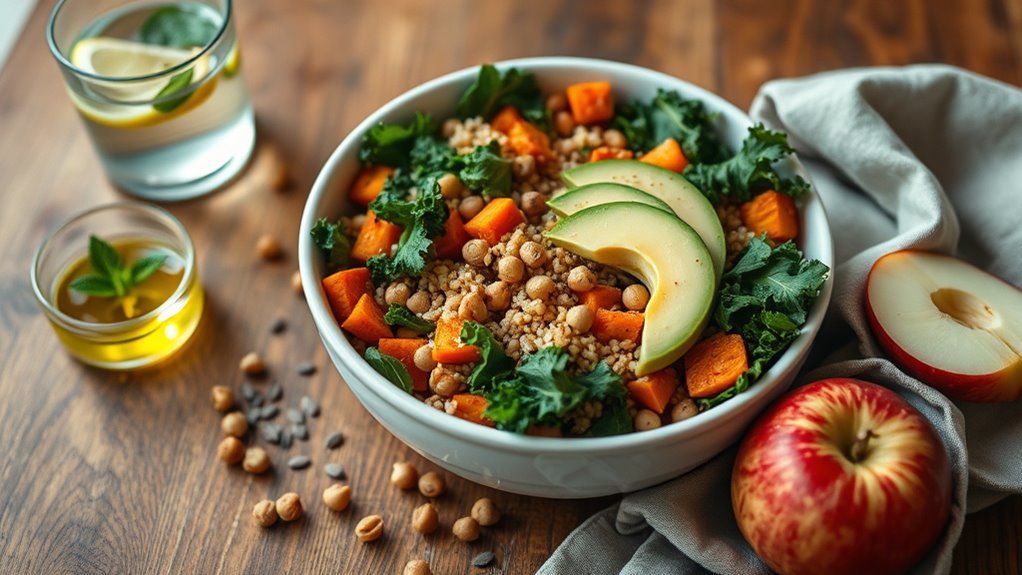
Although managing hunger can be challenging during weight loss, increasing your intake of fiber and whole foods helps you feel full longer and supports digestion. Fiber adds bulk to your meals, slowing digestion and prolonging fullness, which naturally reduces calorie intake.
By choosing whole foods like fruits, vegetables, and whole grains, you regulate blood sugar levels, preventing hunger spikes that lead to overeating. Soluble fiber, in particular, forms a gel-like substance in your gut that supports healthy digestion and can even help lower cholesterol.
Aiming for 25-30 grams of fiber daily promotes regular bowel movements and feeds beneficial gut bacteria, enhancing overall gut health. This combination not only controls hunger but also decreases cravings, making it easier to stick to your weight loss plan.
When you focus on fiber-rich whole foods, you’re setting yourself up for sustainable weight loss and better digestive health.
Incorporating Healthy Fats and Phytoestrogens in Weight Loss for Hormonal Balance
Including healthy fats and phytoestrogens in your diet plays an essential role in balancing hormones as you age. Healthy fats from sources like avocados, nuts, and olive oil support hormone production and help reduce inflammation.
Adding phytoestrogens, plant compounds found in soy, flaxseeds, and legumes, can ease menopausal symptoms and promote hormonal equilibrium. By consuming moderate amounts of healthy fats and phytoestrogens, you stabilize blood sugar levels, which reduces cravings and supports your weight loss efforts.
Incorporating phytoestrogens and healthy fats helps ease menopause symptoms and balance hormones for better weight management.
These nutrients also contribute to improved bone density and cardiovascular health, critical concerns for women over 40. When you focus on incorporating these foods into your meal plans, you enhance hormonal health and create a foundation for sustainable weight management.
Prioritizing healthy fats and phytoestrogens isn’t just about weight loss. It’s about supporting your body’s changing needs and maintaining balance throughout midlife and beyond.
How to Structure Meals for Steady Energy and Weight Loss
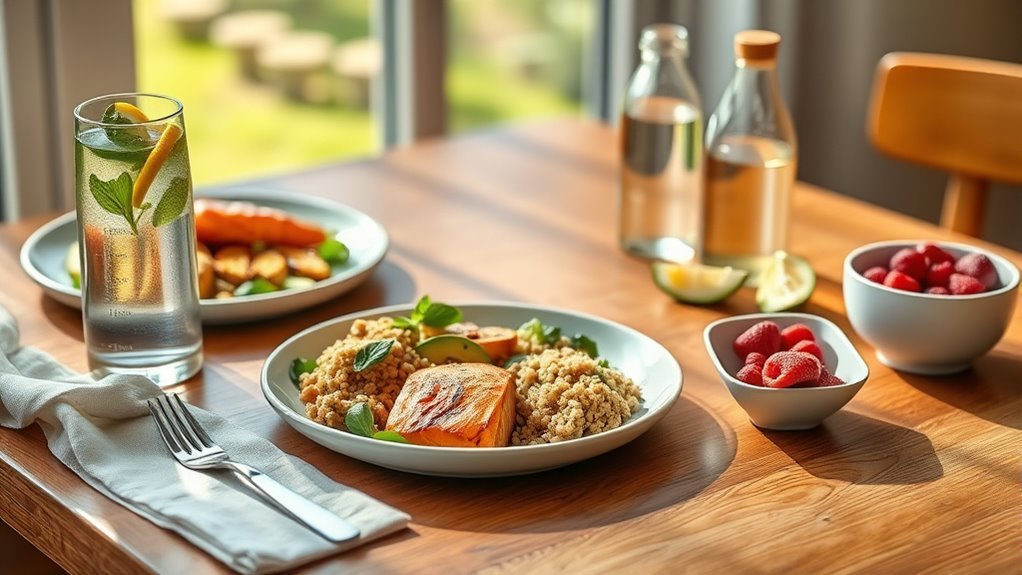
To keep your energy steady and support weight loss, try to eat balanced meals every 3 to 5 hours. It really helps to include protein at each meal because that helps preserve muscle and keeps you feeling full longer.
And when you pair protein with complex carbs and healthy fats, you’ll get sustained energy without those annoying crashes. It’s all about finding the right balance that works for you!
Balanced Macronutrient Distribution
A well-balanced macronutrient distribution plays an essential role in keeping your energy steady and supporting weight loss after 40. Aim for a meal plan with about 30% protein, 40% carbohydrates, and 30% healthy fats.
Including around 30 grams of high-quality protein in every meal helps preserve muscle and keeps you feeling full longer. Focus on complex carbs like whole grains, vegetables, and fruits to provide lasting energy and avoid blood sugar spikes.
Healthy fats from avocados, nuts, and olive oil support hormonal balance and satiety. Structuring your meals with these balanced macronutrients ensures you maintain steady energy throughout the day, making it easier to manage weight and feel your best.
Meal Timing And Frequency
When you space out 4 to 5 balanced meals every 3 to 5 hours, you help keep your blood sugar steady and your energy consistent throughout the day. Sticking to regular meals prevents long fasting periods that can trigger hormonal imbalances and intense hunger, which often lead to overeating.
Proper meal timing reduces cravings and supports better appetite control, making it easier to manage your weight. By consuming smaller, well-timed meals, you maintain steady energy levels without the usual mid-day slumps or late-night hunger.
Establishing a consistent meal timing routine also encourages sustainable weight loss by promoting metabolic stability. For women over 40, this approach guarantees your body gets the fuel it needs throughout the day without overwhelming your system or triggering unnecessary fat storage.
Protein Focus At Meals
Including about 30 grams of high-quality protein in each meal helps you maintain muscle and feel fuller longer, which can naturally diminish how much you eat. To keep your energy steady and support weight loss, spread your protein intake evenly across four to five meals daily.
This guarantees a constant supply of amino acids, aiding muscle repair and metabolism. Focus on protein-rich foods like eggs, lean meats, fish, Greek yogurt, or plant-based options at every meal. Adequate protein also stabilizes blood sugar, preventing cravings and energy dips.
Aim for a daily protein goal between 100 and 130 grams to optimize your metabolic rate. Structuring your meals this way supports fat loss while preserving lean muscle mass, a key factor for women over 40 seeking sustainable weight management.
Sample Meal Plan: A Full Day of Eating for Sustainable Weight Loss
You’ll want to focus on balanced macronutrients throughout the day to keep your energy steady and support muscle health. And don’t forget, timing your meals and staying properly hydrated are just as important for managing hunger and boosting metabolism. So, let’s explore how a full day of eating can fit these goals for sustainable weight loss.
Balanced Macronutrient Distribution
Because your body’s needs shift after 40, balancing macronutrients becomes essential for effective weight loss and lasting energy. Aim for a balanced macronutrient distribution of about 30% protein, 40% carbohydrates, and 30% healthy fats. This combo supports muscle preservation and keeps your energy steady throughout the day.
Include high-quality proteins like eggs, chicken, fish, or Greek yogurt at every meal to stay full and maintain muscle mass. Choose complex carbs such as oats, sweet potatoes, and veggies to avoid blood sugar spikes. Healthy fats from avocados, nuts, and olive oil help regulate hormones and improve nutrient absorption.
Spreading these macronutrients evenly across 4-5 meals daily boosts your metabolism and curbs cravings, making weight loss more sustainable.
Hydration And Meal Timing
While balancing macronutrients is essential, staying properly hydrated and timing your meals right play equally important roles in weight loss after 40. Aim to drink half your body weight in ounces of water daily to boost metabolism and digestion.
Space your meals every 3 to 5 hours to stabilize blood sugar, reduce cravings, and maintain muscle. Consistent hydration and meal timing also regulate hormones and keep your metabolic rate steady.
Drinking cold water can even increase calorie burn slightly by stimulating thermogenesis. Here’s a sample full day of eating with ideal hydration and meal timing:
| Time | Meal | Hydration |
|---|---|---|
| 7:00 AM | Breakfast | 16 oz cold water |
| 10:30 AM | Snack | 8 oz water |
| 1:30 PM | Lunch | 16 oz water |
| 4:30 PM | Snack | 8 oz water |
| 7:30 PM | Dinner | 16 oz water |
Overcoming Hormonal and Metabolic Challenges After 40
As estrogen levels drop after 40, your body faces new hurdles like increased insulin resistance and slower metabolism that make shedding pounds tougher. These hormonal changes contribute to fat accumulation, especially around the abdomen.
Furthermore, a declining thyroid function slows your metabolism, meaning you burn fewer calories at rest. Elevated cortisol from stress worsens this by promoting stubborn belly fat.
To overcome these challenges, focus on nutrient-dense, fiber-rich meals that stabilize blood sugar and counteract hormonal fluctuations. Incorporating resistance training is also key. It helps preserve muscle mass, which naturally declines with age, and boosts your metabolism.
Customizing Meal Plans for Your Activity Level and Preferences
You’ll want to tweak your portion sizes depending on how active you are. If you’re moving around a lot, go for more protein and carbs. But if you’re mostly sitting still, smaller, nutrient-packed meals work better.
And don’t forget to include foods you actually enjoy and that match your cultural tastes. It makes sticking to your plan way easier.
Customizing your meals like this helps you stay consistent and reach your goals without feeling like you’re missing out.
Adjusting Portion Sizes
Because your activity levels fluctuate, adjusting portion sizes helps match your energy needs more accurately. Tailoring your meal plans guarantees you get the right fuel without overeating or undereating. Here’s how to customize portion sizes effectively:
- Increase portion sizes on workout days, focusing on protein and healthy fats to support muscle and keep you full.
- Decrease portions on rest days to avoid excess calorie intake and promote fat loss.
- Use visual cues like hand portions or measuring tools to keep your portions aligned with your calorie and macro goals.
Regularly reassess your portion sizes as your routine changes. Personalizing meal plans this way makes it easier to stick with your weight loss goals and maintain balance over time.
Incorporating Preferred Foods
How can you make your weight loss journey more enjoyable and sustainable? One key is incorporating your favorite healthy foods into personalized meal plans. When you choose nuts, fruits, or lean proteins you love, sticking to your diet feels less like a chore and more like a pleasure.
Tailor your meals not only to your taste but also to your activity level by adjusting portion sizes and macronutrient ratios. This guarantees you get the energy you need while supporting weight loss. Personalization also means swapping ingredients or meals to keep variety alive and prevent diet fatigue.
Prioritizing nutrient-dense foods that match your preferences assures balanced vitamins and minerals. By customizing your plan this way, you create a sustainable, effective approach that suits your lifestyle perfectly.
Tips for Grocery Shopping and Meal Prepping for Busy Women Over 40
When managing a busy schedule, planning your grocery list around high-protein foods, fresh vegetables, and healthy fats can make all the difference in supporting your weight loss goals. Focusing on a healthy diet starts with smart shopping and meal prepping strategies that save time and reduce stress.
Here are three tips to help you stay on track:
- Shop the store’s perimeter where fresh produce, lean meats, dairy, and whole grains are located. This helps you avoid processed foods and guarantees nutritious options for meal prepping.
- Batch cook meals and prep ingredients in advance. Portion-controlled containers and freezer meals make it easy to grab balanced servings on hectic days without resorting to takeout.
- Buy seasonal and bulk items to maximize freshness and save money. This assures a steady supply of healthy ingredients, supporting consistent meal prepping and a balanced diet.
With these habits, you’ll streamline meal prepping and maintain a healthy diet even with a busy lifestyle.
Using Mindful Eating Habits to Support Long-Term Weight Loss
Although weight loss often focuses on what you eat, how you eat plays an equally important role. Practicing mindful eating helps you tune into your body’s hunger and fullness signals, preventing overeating and supporting better portion control.
When you slow down and savor each bite, you’ll find meals more satisfying, which naturally reduces the urge for unnecessary snacks. Mindful eating also encourages you to eat without distractions like screens, so you can distinguish true hunger from emotional or habitual triggers.
Research shows that this increased awareness can decrease calorie intake and reduce emotional eating, both vital for lasting weight loss. By consistently incorporating mindful eating habits, you build a healthier relationship with food and improve your chances of maintaining weight loss over the long term.
Embracing these habits empowers you to make intentional choices that support your goals beyond just the meal plan itself.
Frequently Asked Questions
Can Intermittent Fasting Benefit Women Over 40 for Weight Loss?
Yes, intermittent fasting can benefit you by improving meal timing and offering fasting benefits like better insulin sensitivity, which supports weight loss. However, because of hormonal changes after 40, strict fasting might be tough to maintain and could disrupt your balance.
You’ll likely see better, sustainable results with moderate, consistent eating patterns that respect your body’s needs instead of extended fasting periods. Listen to your body and adjust meal timing accordingly.
What Supplements Support Weight Loss After 40?
Did you know that up to 60% of women over 40 experience slower metabolism? To support weight loss, focus on supplements for metabolism like green tea extract and omega-3 fatty acids. These help boost fat burning and reduce inflammation.
Don’t forget vitamins for energy, especially vitamin D, which can improve body composition. Adding protein powders can also preserve muscle and keep you fuller longer, making your weight loss journey smoother and more effective.
How Does Stress Impact Weight Loss in Women Over 40?
Stress impacts your weight loss by raising cortisol levels, which can cause fat to build up around your abdomen and disrupt hormone balance. When you’re stressed, your metabolism slows, and you crave high-calorie foods, making it harder to shed pounds.
Poor sleep from stress also increases hunger hormones. Focusing on stress management through relaxation and exercise helps regulate cortisol, supports hormone balance, and makes your weight loss efforts much more effective.
Are There Specific Exercises Best Paired With These Meal Plans?
Yes, you’ll want to focus on exercise routines that combine resistance training and aerobic activities. Strength training helps preserve muscle while boosting metabolism, and cardio like brisk walking or cycling increases calorie burn.
Don’t forget to include flexibility exercises like yoga for stress relief. For workout tips, try incorporating HIIT sessions to accelerate fat loss and improve heart health. Balancing these routines with your meal plan will maximize results.
How Do Sleep Patterns Affect Weight Loss for Women Over 40?
If your sleep hygiene is a disaster, imagine your body throwing a wild party with hunger hormones running amok! Poor rest quality messes with leptin and ghrelin, making you crave everything in sight.
For women over 40, this hormonal chaos slows weight loss and boosts fat storage, especially around your belly. Prioritizing good sleep hygiene and solid rest quality helps you balance hormones and turbocharge your weight loss efforts, making your goals way easier to hit.
Conclusion
You’re not alone. Did you know women over 40 often experience a 5% drop in metabolism every decade? That’s why tailoring your meal plan to include protein, fiber, healthy fats, and mindful eating really makes a difference.
By focusing on balanced meals and overcoming hormonal changes, you’ll fuel your body for steady energy and lasting weight loss. Stay consistent, customize to your lifestyle, and watch your efforts pay off in a healthier, more vibrant you!