How Many Calories Are in a Balanced Meal?
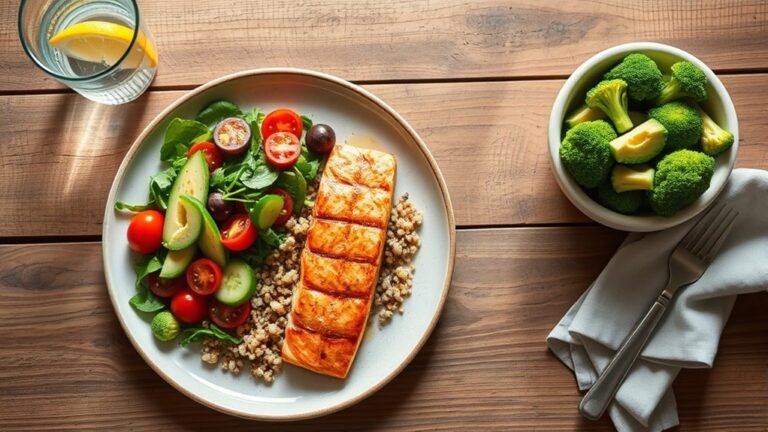
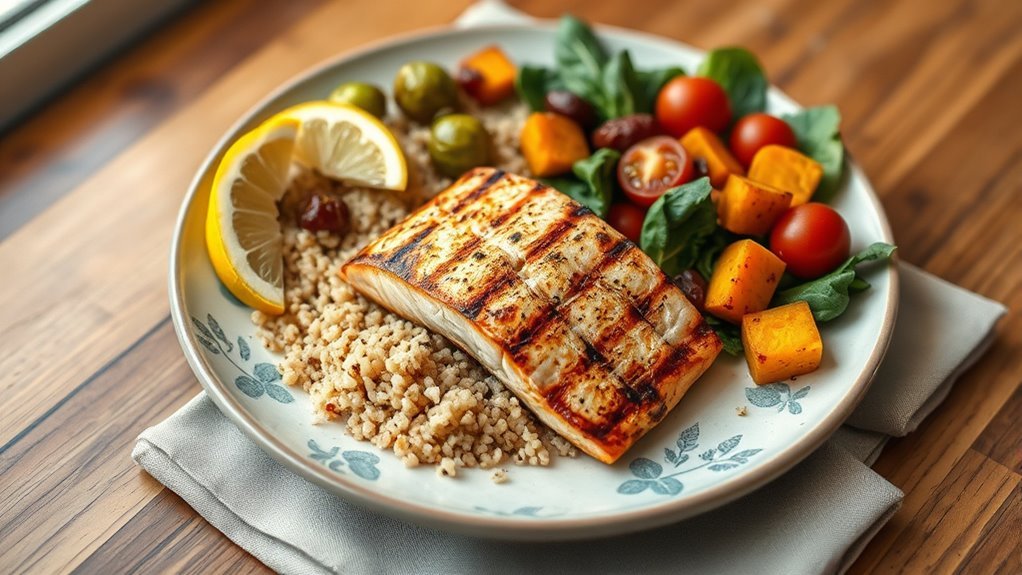
A balanced meal usually contains between 400 and 700 calories, giving you enough energy without overeating. It combines half your plate with fruits and veggies, a quarter with whole grains, and a quarter with protein.
Your personal calorie needs may vary based on age, activity, and goals.
Watch portion sizes and limit high-fat foods like butter and processed meats to keep calories in check.
Keep exploring to find smart ways to build meals that fuel you right.
What Is a Balanced Meal?
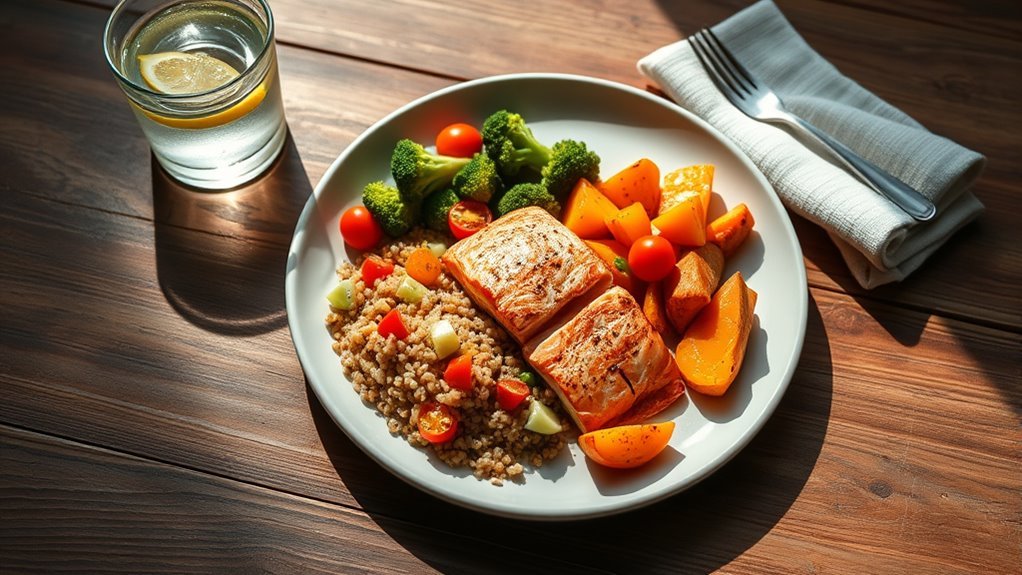
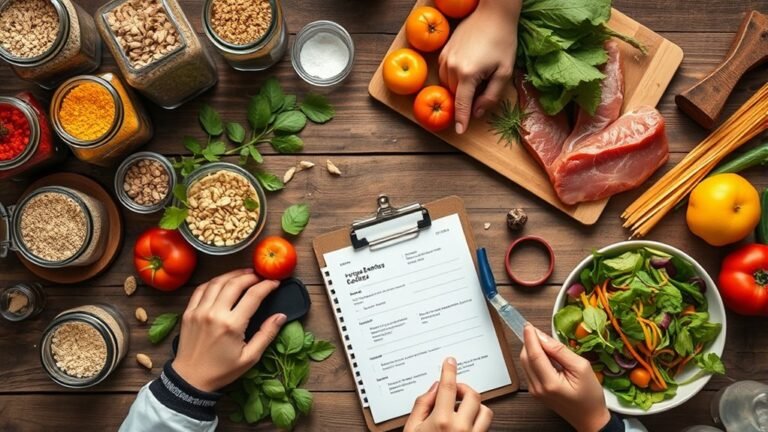
A balanced meal includes the right mix of carbohydrates, proteins, healthy fats, vitamins, and minerals to meet your nutritional needs. To create one, you’ll want to follow dietary guidelines that recommend filling about half your plate with fruits and vegetables, a quarter with whole grains, and the remaining quarter with protein sources.
Paying attention to portion sizes guarantees you get the right amount of calories without overeating. Choosing nutrient-dense foods helps you maximize the vitamins and minerals you consume while keeping calories in check.
Since your energy requirements vary, your balanced meal should be tailored accordingly, but moderation is key no matter your needs. By combining different food groups thoughtfully, you provide your body with essential nutrients that support overall health and sustained energy.
How Many Calories Should a Balanced Meal Contain?
Although calorie needs vary from person to person, you should aim for a balanced meal containing roughly 400 to 700 calories. This range helps fuel your daily activities without overeating. It supports a balanced diet that meets your energy needs and maintains nutritional balance.
Aim for balanced meals with 400 to 700 calories to fuel your day and maintain nutritional balance.
When planning meals, consider your age, sex, activity level, and overall health. These factors help you tailor your food intake appropriately.
Here are three key points for effective meal planning within this caloric range:
- Align your meal calories with your daily calorie target to support healthy eating habits.
- Adjust portion sizes to fit your energy needs, making sure you neither underconsume nor overconsume calories.
- Focus on nutrient-dense foods that provide vitamins and minerals as well as energy, enhancing your balanced diet.
Food Groups That Add the Most Calories to a Balanced Meal
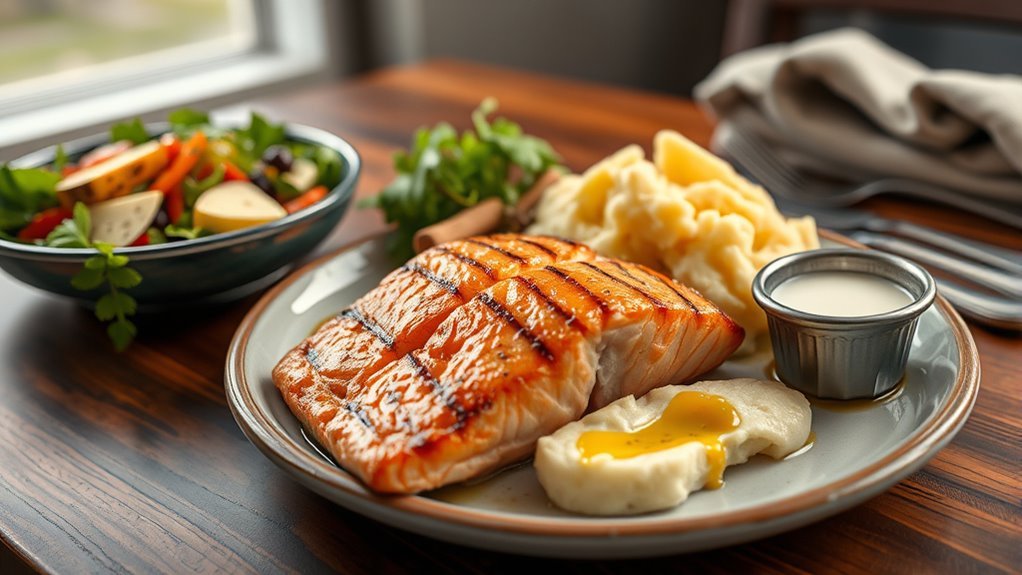
When building a balanced meal, you’ll find that certain food groups pack more calories than others, which can help you meet your energy goals efficiently. Fats are the most calorie-rich foods, providing about 9 calories per gram, so including oils, nuts, or avocados boosts the energy content quickly.
Protein sources like red meats and processed meats also add substantial calories; for example, a 3-ounce serving of red meat contains around 250 calories. Carbohydrates such as bread, rice, and pasta contribute calories too, typically offering 70-80 calories per half-cup cooked serving.
Dairy products like cheese and whole milk are calorie-dense, with cheese delivering about 110 calories per ounce. Processed foods, especially sugary desserts and sweetened beverages, can rapidly raise calorie levels, often exceeding 200 calories per serving.
Each food group’s calorie impact depends heavily on portion size, so balancing these calorie-rich foods helps you manage your meal’s overall energy content effectively.
How Portion Sizes Affect Calorie Content
Since portion sizes directly influence calorie intake, understanding how much you eat is key to managing your energy consumption. When you serve yourself larger food portions, the calorie content rises even if the food type stays the same. For example, a standard serving size of cooked rice (1/2 cup) has about 100 calories; double that, and you double your calorie intake.
Controlling portion sizes helps maintain a balanced meal and supports weight management.
Keep these points in mind:
- Larger portion sizes lead to higher calorie content, often increasing overall calorie intake unintentionally.
- Paying attention to serving size helps you practice calorie control and develop healthier dietary habits.
- Consistent portion size awareness can prevent overeating, making long-term weight management easier.
Adjusting Calories for Age, Activity, and Goals
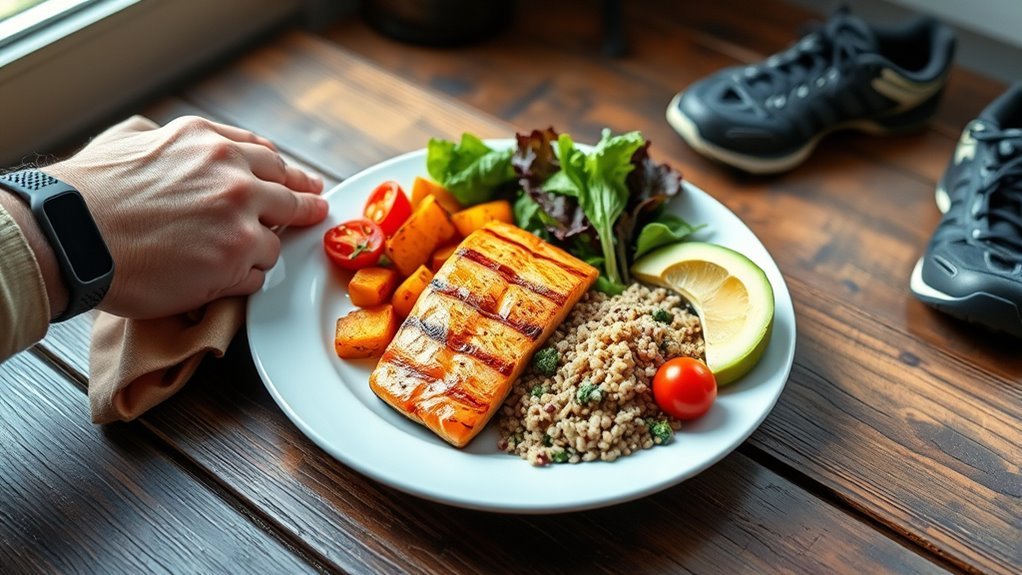
Managing portion sizes is a key step, but adjusting your calorie intake based on your age, activity level, and personal goals guarantees your meals meet your body’s needs. Your calorie needs shift as age and metabolism change; children need about 1,000-2,400 calories daily, while adults require 1,800-3,000 depending on activity level.
Active individuals have higher energy expenditure and often need 500-1,000 extra calories to support muscle recovery. Older adults typically require fewer calories, around 1,600-2,200, due to reduced metabolism and activity.
For effective weight management, tailor your caloric intake to create a deficit for loss or a surplus for gain. Personalized calories hinge on your health objectives, gender, and lifestyle, ensuring your diet stays balanced and supports overall well-being.
Tips for Building Balanced Meals Without Overeating
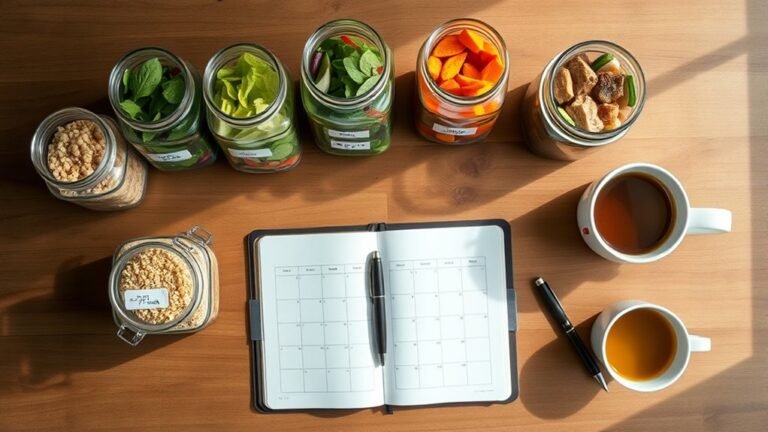
Although building balanced meals can feel challenging, focusing on portion control and nutrient quality helps you avoid overeating while meeting your energy needs. A balanced meal typically ranges from 400 to 700 calories, so managing your calorie intake through smart choices is key.
Here are three tips to build balanced meals without overdoing it:
- Use the plate method: Fill half your plate with vegetables and fruits, a quarter with proteins, and a quarter with whole grains. This ensures nutritional balance and promotes satiety.
- Watch portion sizes: Proper portions for each food group prevent excess calorie intake and help maintain your energy needs.
- Choose nutrient-dense foods: Opt for foods rich in vitamins and minerals rather than empty calories to maximize nutrition without increasing calorie load.
Common Mistakes That Make Your Meals Too Calorie-Heavy
You might be unintentionally packing too many calories into your meals without even realizing it. Serving oversized portions or adding hidden sugars are big culprits. Plus, excess unhealthy fats from butter, creamy sauces, or oils can push your calorie count way higher than you think. The good news? Recognizing these common mistakes is key to keeping your meals balanced and calorie-conscious. Just being aware can make a huge difference!
Oversized Portion Sizes
Two to three times the recommended calorie intake can easily sneak into your meal when portions are oversized. Oversized portion sizes often cause unintentional overeating, especially with restaurant meals where serving sizes exceed standard guidelines by 50% or more.
Portion distortion leads you to underestimate how much you eat, increasing calorie intake without realizing it. To maintain calorie control and improve meal planning, focus on these key points:
- Use smaller plates to help visually manage portion sizes.
- Avoid large servings of high-calorie foods like fried items and creamy sauces.
- Be mindful of your dietary habits by measuring servings based on standard serving size recommendations.
Hidden Sugars Added
Managing portion sizes is only part of controlling calorie intake; hidden sugars can quietly add up and sabotage your efforts. Many processed foods like bread, sauces, and flavored yogurts contain hidden sugars that increase calorie content without obvious sweetness.
Even condiments, dressings, and marinades often have added sugars, pushing your meals into calorie overload. Foods marketed as “healthy” or “low-fat” might still pack in significant hidden sugars, making meal planning tricky.
To keep balanced meals truly balanced, you need to read nutrition labels carefully. Spotting and limiting added sugars helps you avoid unnecessary calorie intake and maintain control over your diet. Being mindful of hidden sugars ensures your calorie counting reflects the real energy you consume.
Excessive Unhealthy Fats
Although fats are essential for a balanced diet, consuming excessive unhealthy fats can quickly inflate your meal’s calorie count. Unhealthy fats, especially trans fats and saturated fats, hide in many processed foods, fried foods, and certain oils and spreads. These fats add significant calorie content without nutritional benefits, leading to weight gain if consumed too often.
To avoid this, focus on these common pitfalls:
- Overusing oils and spreads like butter or coconut oil during cooking can rapidly increase calories.
- Eating too much red meat, bacon, or sausages packs in saturated fats and calories.
- Relying on processed snacks and fast food adds hidden trans fats and unhealthy fats.
Frequently Asked Questions
Can Drinking Water Before Meals Reduce Calorie Intake?
Yes, drinking water before meals can reduce calorie intake by using hydration benefits to promote appetite suppression. When you focus on hydration timing, water absorption helps fill your stomach, aiding digestion and triggering thirst cues that prevent overeating.
Since water has zero calorie content, it displaces calories you might otherwise consume. Using hydration strategies like drinking 500 ml before eating can effectively lower your overall calorie intake during meals.
How Do Cooking Methods Impact Meal Calorie Content?
You know the saying, “You are what you eat.” Cooking techniques directly affect your meal’s calorie density and fat content. When you choose grilling or steaming over frying, you reduce added fats and keep nutrient retention high.
Using healthy cooking oils in moderation and practicing portion control help manage calories. Ingredient selection and meal preparation, avoiding heavy food processing, also play key roles in keeping your meals balanced and calorie-conscious.
Are Calories From Snacks Counted in Daily Balanced Meal Totals?
Yes, you should count snack calories in your daily meal balance to maintain accurate calorie tracking and energy intake. Ignoring them can disrupt meal planning and portion control, leading to exceeding dietary guidelines.
Including nutrient-dense snacks helps you meet your calorie needs without compromising meal balance. By factoring in snack calories, you’ll stay on track with calorie counting and support your overall nutrition goals effectively.
Does Meal Timing Affect Calorie Absorption or Weight Management?
Sure, you can totally ignore meal timing and expect your metabolic rate, digestion speed, and nutrient absorption to behave perfectly. But if you want your calorie utilization and energy expenditure to actually support weight management, meal frequency and dietary timing matter.
Eating earlier boosts hormonal response and reduces fasting effects that slow metabolism. So, timing your meals wisely can help your body process calories better and keep your weight in check.
How Do Allergies Influence Balanced Meal Calorie Calculations?
Allergies influence your balanced meal calorie calculations by requiring allergy-safe meal planning and careful interpretation of nutritional labels. You’ll need to take into account allergy-friendly ingredients and alternative protein sources to meet calorie needs.
Watch out for hidden ingredient surprises and cross-contamination risks, as allergen labeling accuracy isn’t always perfect. Managing symptoms means you must factor in dietary restriction considerations, ensuring your calorie count supports your health without triggering reactions.
Conclusion
Think of your balanced meal like a well-tuned orchestra. Each food group plays its part, creating harmony without overpowering the melody. If one instrument gets too loud, meaning too many calories, the whole symphony feels off.
By adjusting portions and choosing wisely, you conduct a meal that fuels your body just right. Remember, you’re the maestro of your health. Keep the balance, and your energy will sing all day long.