How Much Nutritional Yeast Per Day to Take
You should aim to take 1 to 2 tablespoons of nutritional yeast daily to safely enjoy its protein, B vitamins, and antioxidants.
If you’re an athlete or want immune support, up to 3 tablespoons might work. But avoid going beyond 4 tablespoons to prevent side effects like flushing or nerve issues.
Start small to check your tolerance and choose fortified yeast for reliable B12.
Keep balancing it with your diet and learn how to adjust or incorporate it effectively for best results.
How Much Nutritional Yeast Should You Eat Daily?
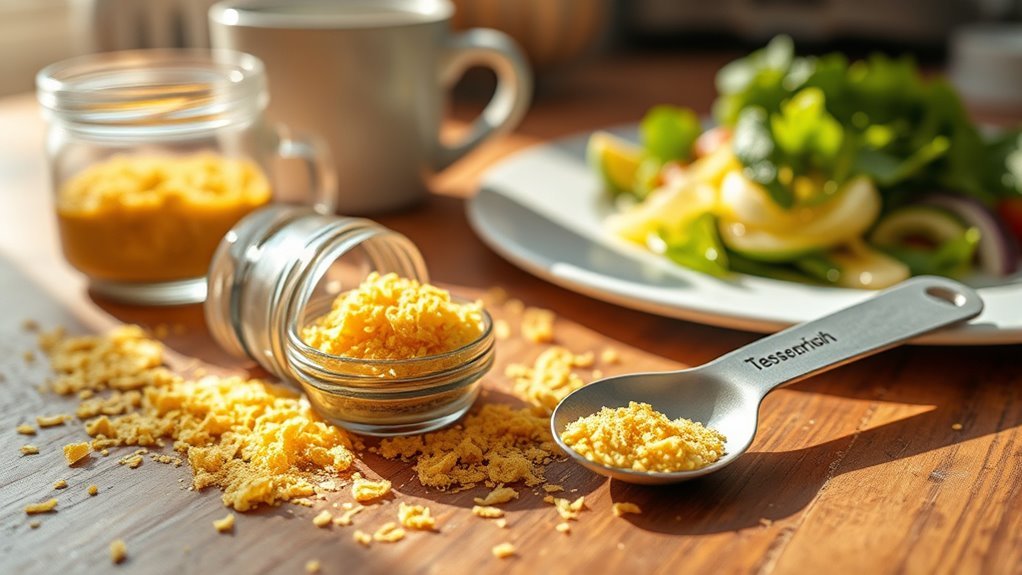
Although nutritional yeast offers many health benefits, you should adhere to about 1 to 2 tablespoons daily to get enough protein, B vitamins, and antioxidants without overdoing it. This daily intake, roughly 5 to 10 grams, provides a balanced amount of essential nutrients that support your overall health.
The recommended amount ensures you receive the benefits without risking excessive nutrient consumption, especially of B vitamins and minerals, which can occur if you exceed 3 tablespoons. Starting with this moderate serving also helps you gauge your body’s tolerance to nutritional yeast.
While doses up to 4-6 grams per day are generally safe for supplementation, sticking to 1 to 2 tablespoons is ideal for most people. This way, you avoid potential side effects and keep your nutritional yeast intake both safe and effective. Remember, moderation is key when incorporating nutritional yeast into your daily routine.
Key Factors Influencing Your Nutritional Yeast Dosage
Finding the right amount of nutritional yeast for your daily intake depends on several personal factors. The recommended daily intake typically ranges from 1 to 2 tablespoons (5 to 10 grams), balancing nutrient intake without surpassing safe limits.
Your unique nutrient needs, such as protein, vitamins, and minerals, play a big role in determining how much you should consume. If you use fortified nutritional yeast, pay close attention to vitamin B12 levels to avoid exceeding the tolerable upper intake, especially if you take larger servings.
Consider your personal nutrient needs and vitamin B12 levels when choosing your nutritional yeast serving size.
Your health status matters too. If you have migraines, yeast allergies, or other concerns, you might need to limit your dosage or talk with a healthcare professional. Athletes or those with increased nutrient demands may increase their intake up to 3 tablespoons daily but should avoid going beyond that to prevent nutrient overload.
Tailoring your nutritional yeast dosage guarantees you get benefits without risks.
Fortified vs. Unfortified Nutritional Yeast: Dosage Differences
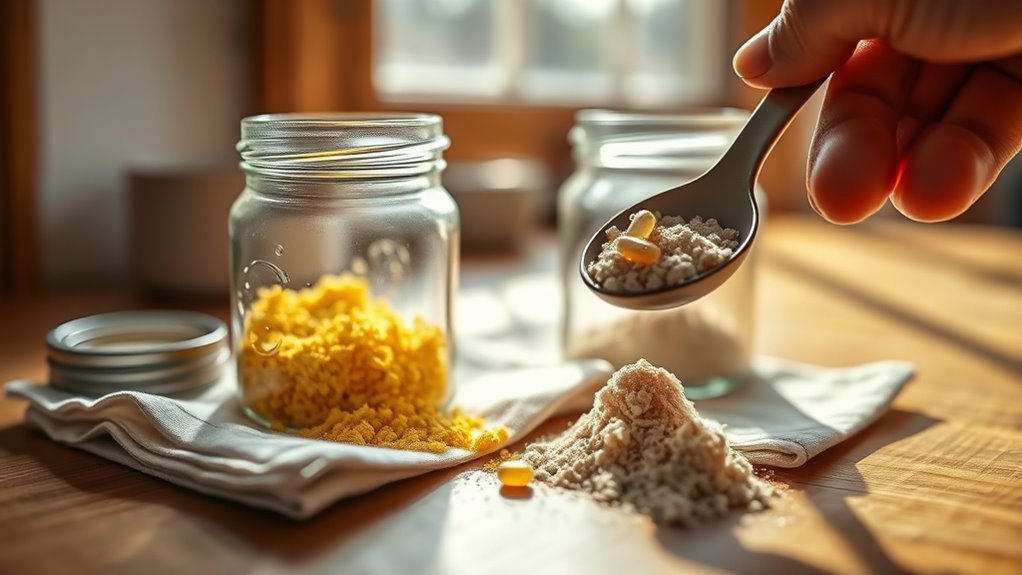
You’ll notice that fortified nutritional yeast packs a bigger punch in B12 and vitamins. So, you only need about 1-2 tablespoons daily. On the other hand, unfortified yeast has fewer nutrients. That means you might need 3-4 tablespoons to get similar benefits. Knowing these differences can help you pick the right serving size for your nutritional goals.
Nutrient Content Comparison
When choosing nutritional yeast, you should consider whether it’s fortified or unfortified, as this substantially affects the nutrient content and dosage. Fortified nutritional yeast contains markedly higher levels of B vitamins, especially B12, than unfortified varieties.
For example, just two tablespoons of fortified yeast can provide up to 313% of your daily B12 needs, while unfortified yeast offers minimal amounts. This difference means the dosage you take depends on which type you choose.
If you rely on nutritional yeast as a B12 source, especially if you’re vegan, fortified yeast is the better option for meeting your vitamin requirements. Unfortified yeast still provides natural B vitamins but in much lower concentrations, so the nutrient boost is less pronounced.
Recommended Serving Sizes
Although both fortified and unfortified nutritional yeast offer health benefits, their recommended serving sizes differ considerably due to nutrient content. Fortified nutritional yeast contains higher levels of B12 and other vitamins, so you typically need smaller servings to meet your daily nutritional intake.
Unfortified yeast has fewer added nutrients, requiring larger amounts to achieve similar benefits, but moderation is key. Here’s a quick guide to recommended serving sizes:
- Fortified nutritional yeast: about 1 tablespoon (5 grams) provides over 100% daily vitamin B12
- Unfortified nutritional yeast: 1 to 2 tablespoons (5-10 grams) for general benefits
- Check product labels for exact vitamin levels
- Avoid exceeding serving sizes to prevent nutrient overconsumption
- Adjust intake based on your diet and supplementation needs
Nutritional Yeast’s Role in Meeting Daily Nutrient Needs
Because nutritional yeast packs a powerful nutrient punch, adding just 1 to 2 tablespoons daily can substantially boost your intake of B vitamins and protein. This simple addition provides about 5 grams of protein and supplies roughly 20% of your recommended daily intake of vitamin B12 if fortified, making it a crucial nutrient source, especially if you follow a plant-based diet.
Nutritional yeast also contributes essential minerals like zinc, selenium, and potassium, which support overall health.
Incorporating nutritional yeast into your daily intake helps you meet your nutrient needs efficiently without adding many calories. This steady supply of key nutrients supports immune function, skin health, and energy production.
Safety Limits: How Much Nutritional Yeast Is Too Much

You should aim for about 1-2 tablespoons of nutritional yeast a day to get the benefits without any risks. Going overboard, like more than 4-6 tablespoons, might give you too many B vitamins, which can cause side effects such as flushing or nerve problems. If you have any health concerns, it’s a good idea to chat with a professional before upping your intake.
Recommended Daily Intake
When including nutritional yeast in your diet, sticking to about 1 to 2 tablespoons (5-10 grams) daily keeps your nutrient intake balanced and safe. This recommended daily intake helps you enjoy the benefits without risking excessive vitamin intake.
Overconsuming nutritional yeast, especially beyond 4-6 tablespoons, can push certain vitamins like niacin and B6 past safe consumption levels, which may cause health issues. To maintain safe consumption, keep these points in mind:
- Limit intake to 1-2 tablespoons daily for most adults
- Avoid exceeding 4-6 tablespoons to prevent nutrient overload
- Watch for niacin levels, as too much can cause flushing or liver problems
- Monitor vitamin B6 intake to avoid nerve damage over time
- Follow serving sizes on fortified nutritional yeast for safe vitamin B12 levels
Potential Side Effects
Although nutritional yeast offers many health benefits, consuming it in excessive amounts can lead to unwanted side effects. Eating more than 10-30 grams daily may push your intake of certain B vitamins and minerals beyond safe limits.
Fortified versions can surpass the tolerable upper intake for vitamin B6, risking nerve damage. Overdoing niacin-rich nutritional yeast might cause flushing, itching, or liver stress.
Moreover, excessive intake of glutamate from nutritional yeast could trigger headaches or migraines if you’re sensitive. To avoid these side effects, it’s vital to stick to recommended amounts.
If you have specific health conditions or sensitivities, consult a healthcare provider to determine a safe daily intake. Staying within the tolerable upper intake ensures you enjoy nutritional yeast’s benefits without harm.
Signs You’re Eating the Right Amount of Nutritional Yeast
If your energy levels rise and your skin looks healthier, you’re likely consuming the right amount of nutritional yeast. The signs that you’re within the recommended daily intake, about 1 to 2 tablespoons, are subtle but clear.
Increased energy and healthier skin indicate you’re enjoying the ideal daily amount of nutritional yeast.
You should feel more energized without experiencing adverse effects like headaches or digestive discomfort. Your immune system may also respond positively, helping you fend off minor illnesses more easily.
Here are key signs you’re eating the right amount of nutritional yeast:
- Sustained energy throughout the day
- Clearer, glowing skin
- No digestive upset or headaches
- Balanced immune function
- Consistent intake of B12, protein, and antioxidants
Adjusting Nutritional Yeast for Your Health Goals
You can tweak how much nutritional yeast you use based on what you want to achieve, like getting more B12 or giving your immune system a little extra support. It’s a good idea to start with just a small amount and slowly increase it to see how your body reacts. And if you have any health issues, it’s smart to chat with a healthcare professional before making any changes.
Dosage Based On Goals
When tailoring your nutritional yeast intake to specific health goals, consider how much you need daily to achieve the best results without overdoing it. The recommended dosage varies based on your health goals and daily intake needs.
For general health, 1 to 2 tablespoons is ideal. If you’re an athlete or want immune support, up to 3 tablespoons may be beneficial. Vegans addressing B12 deficiency should aim for at least 2.4 micrograms of B12 daily, often met with 1-2 tablespoons.
For skin, hair, and nails, 1 tablespoon provides key nutrients. Avoid exceeding 4 tablespoons to reduce risks of side effects.
- General health: 1-2 tablespoons daily
- Athletes/immune support: up to 3 tablespoons
- B12 deficiency: 1-2 tablespoons fortified
- Skin, hair, nails: about 1 tablespoon
- Max limit: 4 tablespoons to avoid excess
Adjusting Intake Safely
Adjusting your nutritional yeast intake based on your health goals requires attention to how your body responds. Start by adjusting intake gradually, considering your individual tolerance and any health conditions. If you notice digestive issues or allergic reactions, scale back.
Those with gout or histamine sensitivity should limit intake to prevent flare-ups. For boosting B12, fortified yeast is helpful, but consult your healthcare provider before exceeding 2-3 tablespoons daily.
| Purpose | Suggested Intake |
|---|---|
| General use | 1-2 tablespoons daily |
| Weight management | 3-4 tablespoons daily |
| B12 boosting | 2-3 tablespoons daily |
| Health conditions | Limit intake; consult doc |
Always balance yeast intake with your overall diet for best results.
How to Add Nutritional Yeast to Your Daily Meals
Although nutritional yeast adds a unique cheesy flavor, it’s best to start with small amounts, like 1 teaspoon, to see how your taste buds respond and to avoid any digestive issues. Gradually incorporating nutritional yeast into your meals helps you find the right balance for your daily intake while enhancing flavor and nutrition.
Here are some simple ways to add it to your meal addition routine:
- Sprinkle 1-2 tablespoons over salads, pasta, or popcorn for a savory boost.
- Stir 1 to 2 teaspoons into soups, stews, or sauces to enrich umami taste and protein.
- Blend 1 teaspoon to 1 tablespoon into smoothies or raw dips for a cheesy twist.
- Use as a topping on vegan cheese, casseroles, or baked potatoes, aiming for 1-2 tablespoons.
- Slowly increase amounts based on taste preference and comfort.
Common Nutritional Yeast Mistakes to Avoid
If you want to get the most benefits from nutritional yeast, you need to avoid some common mistakes that can reduce its effectiveness or cause health issues. First, don’t overuse it. Taking more than 4-6 tablespoons daily can lead to excessive intake of B vitamins like B12 and niacin, which might cause unwanted side effects.
Also, relying solely on unfortified nutritional yeast for your vitamin B12 could result in nutrient deficiency since natural B12 levels are minimal and inconsistent. Pay attention to proper storage. Keep your nutritional yeast in a cool, dry place to prevent spoilage and nutrient loss.
Avoid cooking it at high temperatures because heat-sensitive vitamins such as B1 and B9 degrade easily, reducing its nutritional value. Finally, be mindful if you have conditions like yeast allergies or migraines, as overuse might trigger adverse reactions. Following these tips helps you enjoy nutritional yeast safely and effectively.
When Should You Talk to a Doctor About Nutritional Yeast?
Because nutritional yeast can affect people differently, you should talk to a doctor before increasing your intake, especially if you have allergies, existing health conditions, or take certain medications. Consulting a healthcare professional helps you avoid unwanted side effects and guarantees it’s safe for your health.
You should reach out to a doctor if you notice migraines, headaches, or digestive problems after consuming nutritional yeast. It’s also important to get medical advice if you’re pregnant, breastfeeding, or have conditions like gout or inflammatory bowel disease.
Furthermore, talk to your doctor if you take medications such as MAOIs or drugs sensitive to vitamin B12 or glutamate.
Consider talking to a doctor if you:
- Have a yeast allergy or sensitivity
- Experience side effects like headaches or stomach issues
- Are pregnant or breastfeeding
- Have chronic health conditions
- Take medications interacting with nutritional yeast
This ensures your health stays protected while enjoying nutritional yeast safely.
Frequently Asked Questions
Can Nutritional Yeast Cause Allergic Reactions?
Yes, nutritional yeast can cause allergic reactions if you have yeast sensitivity. Your immune response might trigger allergic symptoms like skin rashes, itching, or respiratory issues.
If you’re allergic to *Saccharomyces cerevisiae* or related yeasts, you could experience anything from mild discomfort to severe reactions. It’s important you consult a healthcare professional before trying nutritional yeast, especially if you’ve had issues with yeast allergies in the past.
Does Nutritional Yeast Interact With Any Medications?
Imagine your daily sprinkle of nutritional yeast as a potent ingredient that could affect your medications. Yes, nutritional yeast interacts with certain drugs, including antidepressants, blood thinners, and MAOIs.
These medication interactions can lead to nutritional yeast side effects like hypertensive crises or altered blood clotting. Always consider dietary considerations and talk to your healthcare provider before adding it regularly to your meals, especially if you’re on specific medications.
How Long Does It Take to Notice Benefits From Nutritional Yeast?
You’ll typically notice benefits from nutritional yeast within 1 to 2 weeks, thanks to your body’s absorption rate and the benefit timeline. B vitamin effects, like reduced fatigue, can show up in just a few days.
But to see full consistency effects, like improved skin or immune support, you’ll want to take it daily for 4 to 6 weeks or longer. Keep at it to maximize results.
Is Nutritional Yeast Safe During Pregnancy or Breastfeeding?
Yes, nutritional yeast is safe during pregnancy and breastfeeding when you consume it in moderation. It offers nutritional benefits like B vitamins that support your baby’s development.
Keep your dietary restrictions in mind, especially if you have yeast sensitivities, and choose pasteurized, food-grade options. Also, consider your flavor preferences since nutritional yeast has a cheesy, nutty taste that can enhance meals without compromising safety or nutrition during this important time.
Can Children Consume Nutritional Yeast Daily?
You can think of nutritional yeast as a gentle breeze of nutrients for your child’s diet. For safe consumption, stick to child dosages like 1 teaspoon daily for younger kids, gradually increasing if needed.
Keep taste considerations in mind. Some children might find its cheesy flavor strong at first. Always watch for any reactions and consult your pediatrician to verify it suits your child’s health needs perfectly.
Conclusion
When it comes to nutritional yeast, a little goes a long way in boosting your health. Stick to recommended amounts, and you’ll hit the nail on the head with your nutrient intake without overdoing it.
Remember to take into account your unique needs and health goals before adding it daily. If you’re unsure or experiencing any issues, don’t hesitate to talk to a doctor.
With the right approach, nutritional yeast can be a star player in your diet.