
Nutrition Concepts & Terminology: The Definitions That Actually Change How You Eat
People use words like ‘macros,’ ‘micronutrients,’ ‘bioavailability,’ and ‘nutrient density’ constantly in nutrition conversation — but most cannot define any of them precisely when asked. That is not a sign of disinterest. It is a product of nutrition content that assumes shared vocabulary most readers never received.
The problem is concrete. The same food can be high in calories, low in nutrient density, and high in bioavailability simultaneously. Those are three different measurements describing three different things about the same food. Without clear definitions, nutritional advice becomes noise — and ‘eat more nutrient-dense foods’ means nothing if the term itself is undefined.
This guide defines the core nutrition concepts in the order they build on each other — starting with macronutrients and micronutrients, moving through nutrient density, bioavailability, glycemic index, antioxidants, the Daily Value label standard, energy metabolism, and inflammation. Every definition is precise, every claim is evidence-grounded, and every concept connects directly to decisions made in a weekly eating plan.
The single most misunderstood term in everyday nutrition conversation is bioavailability — the gap between what a food contains on paper and what the body actually absorbs.
01 MACRONUTRIENTS & MICRONUTRIENTS
What is the difference between macronutrients and micronutrients?
QUICK ANSWER
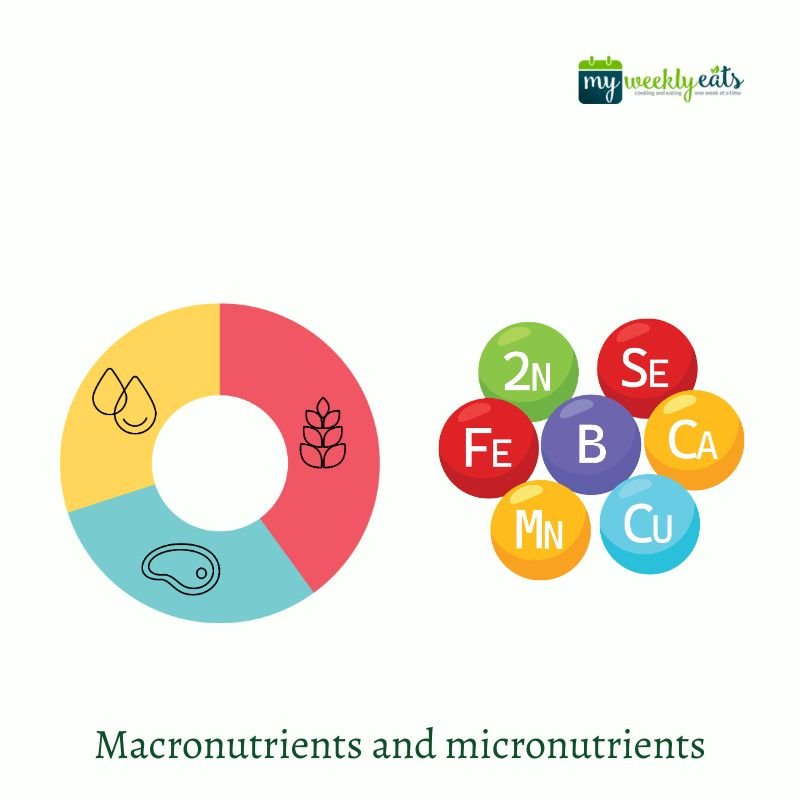
Macronutrients — carbohydrates, proteins, and fats — are needed in large amounts and provide energy measured in calories. Micronutrients — vitamins and minerals — are needed in small amounts and regulate biochemical function. The body cannot synthesise most micronutrients, so they must come from food.
The Three Macronutrients — Defined Precisely
Carbohydrates provide 4 kilocalories per gram and serve as the body’s primary energy substrate. They include simple sugars, complex starches, and dietary fiber. Proteins also provide 4 kilocalories per gram but their primary role is structural and enzymatic — building muscle, synthesising hormones, and catalysing metabolic reactions. Fats provide 9 kilocalories per gram — more than twice the energy density of the other two macronutrients — and are essential for hormone production, cell membrane integrity, and fat-soluble vitamin absorption.
Each macronutrient has a Daily Value reference range. The FDA Dietary Guidelines for Americans recommend carbohydrates at 45–65% of total calories, protein at 10–35%, and fat at 20–35%. These ranges reflect population-level health evidence, not individual optima — actual macronutrient needs vary significantly with activity level, age, health status, and dietary goals.
Why Micronutrients Don’t Provide Energy — But Are Not Optional
Micronutrients include vitamins (organic compounds) and minerals (inorganic elements). Neither provides calories. Both are essential for life. Iron enables oxygen transport in haemoglobin — without sufficient iron, cells cannot receive oxygen efficiently regardless of how much food is consumed. Vitamin D regulates calcium absorption and governs gene expression in over 200 gene pathways. B vitamins function as coenzymes in the metabolic reactions that extract energy from carbohydrates, proteins, and fats — meaning that without adequate B vitamins, macronutrients cannot be metabolised efficiently.
Micronutrient deficiency rarely causes dramatic symptoms quickly. It operates over months and years — gradually impairing immunity, cognitive function, bone density, and metabolic efficiency before presenting as a recognisable condition. This is why micronutrient coverage is a weekly planning priority, not an occasional concern.
The Interdependence Principle — Why They Cannot Be Separated
Macronutrients and micronutrients are not independent variables. Fat-soluble vitamins — A, D, E, and K — require dietary fat for absorption. Consuming a fat-free meal alongside fat-soluble vitamin sources dramatically reduces the body’s ability to absorb them. Protein supports the absorption of minerals including zinc and iron by providing amino acids that form transport proteins. Vitamin C increases non-haem iron absorption by up to 300% when consumed in the same meal.
This interdependence is why whole-food dietary patterns consistently outperform supplement-based approaches in observational and clinical research. Supplements deliver isolated nutrients without the matrix of co-factors and pairing compounds that make absorption efficient. The concept of food synergy — where the nutritional value of a complete food exceeds the sum of its individual nutrient parts — is one of the most robust findings in nutritional science.
Nutrition Concepts Reference Table — 15 Core Terms (USDA FoodData Central / FDA Standards)
| Term | Category | Plain Definition | Why It Matters for Weekly Eating | Connects To |
| Calorie | Energy unit | Unit of energy in food; technically a kilocalorie (kcal) in nutrition | Determines energy balance — intake vs expenditure underpins weight management and fueling | Macronutrients, BMR, TDEE |
| Macronutrients | Nutrient class | Carbohydrates, proteins, and fats — needed in large amounts for energy and body structure | The three main dials in any eating plan — adjusting ratios shifts energy, satiety, and body composition | Micronutrients, calorie density |
| Micronutrients | Nutrient class | Vitamins and minerals needed in small amounts to regulate biochemical function | Deficiencies are silent — iron, B12, vitamin D, zinc affect energy, immunity, and cognition | Bioavailability, Daily Value (% DV) |
| Dietary Fiber | Carbohydrate subtype | Indigestible plant carbohydrate — soluble (gel-forming) and insoluble (bulking) | Feeds gut microbiome, slows glucose absorption, reduces LDL — under-consumed in the typical US diet | Prebiotics, gut microbiome, glycemic index |
| Bioavailability | Absorption concept | Fraction of a nutrient actually absorbed and used by the body after ingestion | High nutrient data on paper ≠ high nutrient delivery — fat-soluble vitamins need dietary fat to absorb | Nutrient density, food pairing, preparation method |
| Nutrient Density | Quality metric | Amount of beneficial nutrients per calorie of food | Better decision guide than calories alone — spinach is high density; soda is zero density | Micronutrient density, empty calories |
| Glycemic Index | Blood sugar metric | Ranks carbohydrate foods by how quickly they raise blood glucose (0–100 scale) | Helps manage energy, hunger, and blood sugar — unripe banana GI 30 vs ripe banana GI 62 | Resistant starch, fiber, insulin response |
| Antioxidants | Protective compounds | Molecules that neutralise free radicals and reduce oxidative cell damage | Fruit and vegetable colour signals antioxidant type — anthocyanins (blue), lycopene (red), beta-carotene (orange) | Phytonutrients, inflammation |
| Phytonutrients | Plant compounds | Bioactive non-nutrient compounds in plants with health-relevant biological activity | Thousands of types — resveratrol, quercetin, sulforaphane — not replaceable by supplements | Antioxidants, polyphenols, flavonoids |
| Macronutrient Ratio | Diet planning | Proportion of daily calories from carbohydrate, protein, and fat | Different goals require different ratios — endurance (higher carb) vs keto (very low carb, high fat) | Macronutrients, dietary patterns |
| Daily Value (% DV) | Label standard | FDA reference on Nutrition Facts labels — based on a 2,000-calorie diet | Quick comparison tool: 20%+ DV = high, 5% or less = low — for both nutrients to seek and nutrients to limit | Nutrition labels, micronutrients |
| Empty Calories | Quality concept | Calories from food with high energy but minimal vitamins, minerals, or fiber | Refined sugar and ultra-processed foods deliver energy without nutritional return | Nutrient density, ultra-processed food |
| Basal Metabolic Rate | Energy concept | Calories the body burns at complete rest to maintain basic organ function | Largest component of TDEE — muscle mass, age, and thyroid function are key drivers | TDEE, caloric needs, metabolism |
| Prebiotics | Gut health | Non-digestible fibers that selectively feed beneficial gut bacteria | Apple pectin, resistant starch, inulin — different fibers feed different bacterial species | Fiber, probiotics, microbiome |
| Inflammatory Foods | Diet concept | Foods that promote or suppress chronic low-grade inflammation in the body | Chronic inflammation underlies cardiovascular disease and metabolic disorders — diet is a modifiable driver | Omega-3, antioxidants, ultra-processed food |
Data source: USDA FoodData Central and FDA Nutrition Facts label standards. All % DV figures based on FDA 2,000-calorie reference diet.
02 NUTRIENT DENSITY
What is nutrient density — and why does it matter more than calorie counting?
QUICK ANSWER
Nutrient density measures the amount of beneficial nutrients — vitamins, minerals, fiber, and beneficial compounds — per calorie of food. A food can be low-calorie but nutrient-poor, or calorie-dense but highly nutrient-rich. Nutrient density is a more useful quality metric than calories alone for building a weekly eating plan.
Nutrient Density — Defined Precisely
Nutrient density is not a single standardised numerical score — it is a conceptual metric describing the ratio of nutritional benefit to caloric cost. The USDA defines nutrient-dense foods as those that provide vitamins, minerals, and other health-promoting components with little added sugar, saturated fat, and sodium. Foods that score high on the nutrient density spectrum include dark leafy greens, berries, eggs, legumes, fatty fish, and whole grains. Foods that score low — refined sugar, white bread, and most ultra-processed snack products — deliver calories with minimal micronutrient return.
The practical utility of nutrient density over calorie counting is that it shifts the question from ‘how much?’ to ‘how useful?’ Two foods at identical calorie counts can have radically different nutritional profiles. 200 calories of lentils delivers protein, iron, folate, fiber, and potassium. 200 calories of a soft drink delivers sucrose and water. Calorie counting cannot distinguish between them. Nutrient density can.
The Empty Calorie Concept
Empty calories describes energy from food that provides little to no nutritional value beyond the calorie itself. The primary sources in the US diet are added sugars — found in soft drinks, candy, pastries, and sweetened cereals — and solid fats found in many ultra-processed products. The USDA estimates that empty calories from added sugars and solid fats account for a significant proportion of total caloric intake for many Americans, contributing simultaneously to overconsumption of energy and under-consumption of micronutrients.
The consequence is a pattern where total caloric intake may appear adequate while specific micronutrient needs — vitamin D, iron, calcium, potassium — remain chronically unmet. This is the mechanism behind the term ‘overfed and undernourished,’ a condition that is nutritionally coherent even if it sounds paradoxical.
Practical Application for Weekly Meal Planning
Use nutrient density as a sorting mechanism — not a reason to eat less, but a reason to eat differently. Each swap from a low-density to a high-density equivalent increases micronutrient coverage without necessarily reducing caloric intake. Whole grain over white rice. Blueberries over sweetened cereal. Legumes over processed meat. Olive oil over margarine. Each substitution moves the nutrient density of a weekly eating pattern upward without requiring precise calorie tracking.
We recommend rotating across high-density food categories each week rather than eating the same high-density food daily. Micronutrient diversity — covering different vitamins, minerals, and phytonutrients from different food sources — requires variety. Nutrient density is the quality filter; rotation is the diversity mechanism.
03 BIOAVAILABILITY
What is bioavailability — and which nutrients are most affected by it?
QUICK ANSWER
Bioavailability is the proportion of a nutrient that is actually absorbed and used by the body after ingestion. A food can contain high levels of a nutrient on paper while delivering far less to the body. Fat-soluble vitamins, iron, zinc, and calcium have the most variable bioavailability depending on food source, preparation method, and what is eaten alongside them.
Why Bioavailability Is the Most Misunderstood Concept in Everyday Nutrition
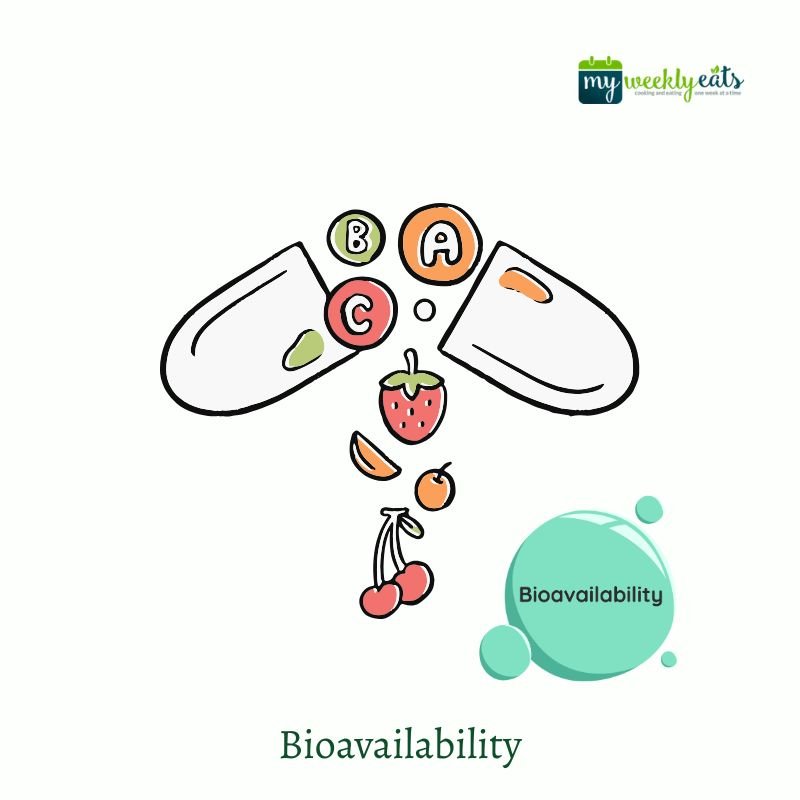
Most people assume that if a food contains a nutrient, eating that food delivers that nutrient. Bioavailability reveals the gap between these two assumptions. The fraction of a nutrient the body actually absorbs depends on multiple variables: the food matrix it is embedded in, how the food was prepared, what was consumed alongside it, the individual’s gut health and current nutrient status, and the chemical form of the nutrient itself. All of these factors operate simultaneously.
This is why the same food can produce different nutritional outcomes in different people eating in different ways. Spinach contains significant iron on paper. But the non-haem form of iron in spinach, combined with oxalates that inhibit absorption, means the body absorbs a small fraction of the listed iron content — unless vitamin C is consumed in the same meal, which can increase non-haem iron absorption by up to three times.
Haem vs Non-Haem Iron — The Clearest Bioavailability Example
Haem iron, found in red meat, poultry, and fish, is absorbed at 15–35% efficiency. Non-haem iron, found in plant sources including spinach, lentils, chickpeas, and dates, is absorbed at 2–20% efficiency depending on co-consumed compounds. The form matters as much as the quantity. A 100g serving of beef liver and a large serving of lentils may list comparable iron figures on their nutritional panels — but the liver iron is far more bioavailable under standard eating conditions.
Pairing plant iron sources with vitamin C-rich foods — bell peppers, citrus fruit, strawberries, broccoli — at the same meal meaningfully raises non-haem iron absorption. Conversely, consuming high-calcium foods, tea, or coffee alongside iron-rich meals reduces iron absorption by competing at the same intestinal absorption pathway. These interactions are not theoretical — they are the practical basis for food combining strategies in iron-deficiency management.
Fat-Soluble Vitamins — The Pairing Requirement
Vitamins A, D, E, and K are fat-soluble — meaning they dissolve in fat and require dietary fat for absorption. Consuming these vitamins without accompanying dietary fat dramatically reduces absorption efficiency. Evidence indicates that consuming beta-carotene (provitamin A) from carrots or cantaloupe with a fat-containing food increases carotenoid absorption by 3–8 times compared to eating the same vegetables with a fat-free dressing or preparation.
The practical implication is straightforward: a salad dressed with olive oil or topped with avocado delivers its fat-soluble vitamins and carotenoids more effectively than the same salad with no fat source. This is not a marginal effect — it is a substantial difference in actual micronutrient delivery from the same food. Bioavailability makes food pairing a nutritional strategy, not just a culinary preference.
Antinutrients — Phytates, Oxalates, and Preparation Methods
Some plant compounds reduce mineral bioavailability by binding to minerals before they can be absorbed. Phytates in whole grains and legumes bind to zinc and iron, reducing their absorption. Oxalates in spinach and Swiss chard bind to calcium, reducing calcium absorption specifically from those foods — though not from the rest of the day’s diet. Tannins in tea and coffee bind to non-haem iron when consumed within an hour of iron-rich meals.
Food preparation substantially reduces antinutrient content. Soaking and rinsing legumes before cooking reduces phytates by 30–70%. Fermenting whole grains (as in sourdough) degrades phytic acid through bacterial action, significantly improving zinc and iron bioavailability. Cooking reduces oxalate content in leafy greens. These are practical meal preparation strategies with measurable nutritional impact — not nutritional perfectionism.
04 GLYCEMIC INDEX & FIBER
What is glycemic index — and how does fiber change the picture?
QUICK ANSWER
Glycemic index (GI) ranks carbohydrate-containing foods on a scale of 0–100 based on how quickly they raise blood glucose after eating, relative to pure glucose at 100. Dietary fiber, fat, and protein all lower the glycemic response of a food or meal. The glycemic index of a single food is less useful than the glycemic response of the full meal.
The GI Scale — What the Numbers Actually Mean
Low GI is defined as 55 or below. This range includes most non-starchy vegetables, legumes, whole oats, unripe bananas, and dairy products. Medium GI falls between 56 and 69 — covering ripe bananas, sweet potato, basmati rice, and whole wheat bread. High GI is 70 and above — this includes white bread, white rice, cornflakes, and watermelon. The GI scale was developed by measuring blood glucose responses in healthy individuals after consuming 50g of carbohydrate from each food in isolation, fasted.
That last detail — in isolation, fasted — is critical. The GI of a food measured in a laboratory setting rarely reflects the blood glucose response of that food consumed as part of a real meal. The moment protein, fat, fiber, or another food is added to the meal, the composite glycemic response shifts downward. This is why the GI of individual foods has less practical value than it appears.
Glycemic Load — The More Useful Measure
Glycemic load (GL) corrects the primary limitation of glycemic index by accounting for actual serving size. GL multiplies the GI of a food by the grams of carbohydrate in a realistic serving, then divides by 100. A GL under 10 is low; 11–19 is medium; 20 and above is high. Watermelon illustrates the distinction clearly: its GI is 72 — technically high — but a standard one-cup serving contains only about 8g of carbohydrate, producing a GL of approximately 4. The real-world blood glucose impact of a cup of watermelon is low, despite its high GI number. Citing the GI of watermelon without the GL context creates a misleading impression of its actual metabolic effect.
How Dietary Fiber Changes the Glycemic Response
Soluble dietary fiber is the most powerful modifier of glycemic response available through food. Soluble fiber — found in oat beta-glucan, apple pectin, psyllium, and legumes — dissolves in water to form a viscous gel in the intestine. This gel physically slows the rate at which glucose molecules contact the intestinal wall for absorption, producing a lower and more gradual blood glucose rise after eating. The flatter the post-meal glucose curve, the lower the insulin demand, and the more sustained the resulting energy release.
Insoluble fiber, found in whole grains, vegetables, and fruit skins, contributes differently — adding bulk, accelerating intestinal transit, and reducing the time gut contents spend in contact with the intestinal wall. Both fiber types support a healthy glycemic pattern when consumed consistently through whole foods. Evidence indicates that populations with higher dietary fiber intake have lower rates of type 2 diabetes and cardiovascular disease in large observational cohorts — associations that hold after adjusting for other dietary and lifestyle variables.
Resistant Starch — A Special Fiber Category
Resistant starch is a form of starch that behaves like dietary fiber — it resists digestion in the small intestine, passes to the colon, and feeds beneficial Bifidobacterium and Lactobacillus species, producing short-chain fatty acids that support gut lining integrity and reduce inflammation. Common sources include unripe bananas, cooked-then-cooled rice and potatoes, legumes, and green peas. The cooling step is practical — cooking rice or potatoes and then refrigerating them for 12–24 hours significantly increases their resistant starch content compared to freshly cooked equivalents.
Resistant starch produces a very low glycemic response despite technically being a starch. For anyone managing blood sugar, adding resistant starch sources to weekly meal rotation provides a glycemic benefit alongside a microbiome benefit — two distinct mechanisms from the same dietary pattern.
05 ANTIOXIDANTS & PHYTONUTRIENTS
What are antioxidants and phytonutrients — and are they the same thing?
QUICK ANSWER
Antioxidants and phytonutrients overlap but are not the same. Phytonutrients are bioactive plant compounds — a broad category including thousands of distinct substances. Antioxidants are a functional class — compounds that neutralise free radicals. Most dietary antioxidants are phytonutrients, but not all phytonutrients are antioxidants.
Free Radicals and Oxidative Stress — Defined Plainly
Free radicals are unstable molecules produced naturally by metabolism, and also by environmental exposures including pollution, UV radiation, cigarette smoke, and chronic inflammation. They are unstable because they have an unpaired electron — and they stabilise themselves by stealing electrons from healthy molecules in the body, including DNA, proteins, and cell membrane lipids. This chain reaction of electron theft is oxidative stress. Antioxidants interrupt the chain by donating an electron to a free radical without becoming unstable themselves, neutralising the damage before it propagates.
Moderate oxidative stress is a normal part of metabolism — the immune system uses free radicals to destroy pathogens. The problem is chronic, disproportionate oxidative stress that outpaces the body’s antioxidant defences. Evidence indicates that sustained high oxidative stress is associated with accelerated cellular aging, atherosclerosis, neurodegeneration, and cancer progression. Dietary antioxidants from food sources are among the most accessible modulators of this process.
Phytonutrient Categories — The Four Most Relevant to Weekly Eating
Flavonoids are the largest class of dietary phytonutrients, found across fruits, vegetables, tea, and cocoa. The subclasses include anthocyanins (the blue-purple pigments in blueberries, red grapes, and purple cabbage), flavonols including quercetin (in apple skin, onions, and capers), and isoflavones (in soy foods). Each subclass has distinct biological activity and is not interchangeable with the others.
Carotenoids are fat-soluble pigments that produce the red, orange, and yellow colours in plant foods. Lycopene in watermelon and tomatoes. Beta-carotene in cantaloupe, carrots, and sweet potato — converted by the body to vitamin A. Lutein and zeaxanthin in avocado and leafy greens, concentrated in the macular region of the eye. Alpha-carotene in pumpkin and carrots. Each carotenoid has distinct tissue distribution and biological activity.
Glucosinolates are sulfur-containing compounds found primarily in cruciferous vegetables — broccoli, Brussels sprouts, kale, cauliflower, and cabbage. Sulforaphane, produced when glucosinolates are broken down by the enzyme myrosinase during chewing or chopping, is among the most extensively studied phytonutrients for its effects on cellular defence mechanisms.
Polyphenols is a broader category that includes flavonoids, tannins, stilbenes (including resveratrol in red grape skins), and phenolic acids (including chlorogenic acid in coffee and ellagic acid in strawberries and pomegranate). The category is wide — over 8,000 polyphenols have been identified in plant foods. No supplement formulation covers this range.
The Colour-Coding Principle — A Practical Memory Device
Phytonutrient classes correlate with the pigments that produce plant food colour. Red and pink foods — watermelon, tomatoes, pink grapefruit — contain lycopene. Blue and purple foods — blueberries, blackberries, red grapes, purple cabbage — contain anthocyanins. Orange and yellow foods — cantaloupe, carrots, mango, sweet potato, turmeric — contain beta-carotene, alpha-carotene, and other carotenoids. Green foods — spinach, kale, broccoli, avocado — contain chlorophyll, lutein, and glucosinolates. White and tan foods — garlic, onions, leeks — contain allicin and quercetin.
Eating across colour groups each week is the most practical way to achieve phytonutrient diversity without memorising compound names. A weekly rotation that includes at least one food from each colour group covers a broad spectrum of antioxidant classes, carotenoids, flavonoids, and sulfur compounds that no single food or supplement provides.
What the Evidence Actually Says
Evidence from large observational studies consistently links higher dietary phytonutrient intake — achieved through fruit and vegetable consumption — with reduced risk of cardiovascular disease, type 2 diabetes, and certain cancers. Mechanistic research in laboratory settings demonstrates anti-inflammatory, antioxidant, and gene-expression regulatory effects for many phytonutrient classes. Human clinical trials testing isolated phytonutrient supplements show considerably more modest and inconsistent effects than the observational evidence for whole food patterns suggests.
The practical conclusion is that phytonutrient benefits are best obtained through dietary diversity in whole plant foods, not through supplementation. Studies suggest that the synergistic interaction between multiple compounds in a whole food — rather than any single compound in isolation — is responsible for the health associations observed at the population level. Use appropriately hedged language for all specific compound claims: ‘evidence indicates,’ ‘studies suggest,’ ‘research links’ — not ‘prevents,’ ‘treats,’ or ‘cures.’
06 DAILY VALUE & NUTRITION LABELS
What is the Daily Value on a nutrition label — and how should you use it?
QUICK ANSWER
The Daily Value (% DV) is an FDA reference standard on Nutrition Facts labels, based on a 2,000-calorie diet. It shows how much of a nutrient one serving provides relative to the daily reference intake. 20% DV or more is high. 5% DV or less is low. It is a quick comparison tool, not a personalised daily target.
How the Daily Value Is Set
The FDA establishes Daily Values based on Dietary Reference Intakes developed by the National Academies of Sciences, Engineering, and Medicine. The current Nutrition Facts label standards, updated in 2020, reflect a 2,000-calorie reference diet. Nutrients required on the label include: total fat, saturated fat, trans fat, cholesterol, sodium, total carbohydrates, dietary fiber, total sugars, added sugars, protein, vitamin D, calcium, iron, and potassium. Vitamin D and potassium replaced vitamin A and vitamin C as required nutrients in the 2020 update — reflecting the shift in documented public health deficiencies over recent decades.
The % DV figure next to each nutrient represents what percentage of the daily reference amount one serving provides. A food with 30% DV for iron provides 30% of the daily iron reference amount per serving — leaving 70% to be covered by other meals and foods throughout the day. The label is designed for comparison between foods, not as a prescription for individual nutrient targeting.
The 20/5 Rule in Practice
5% DV or less indicates a food is low in that nutrient per serving. 20% DV or more indicates a food is high in that nutrient per serving. The rule applies bidirectionally — it is useful for nutrients to seek (dietary fiber, vitamin D, calcium, iron, potassium) and equally useful for nutrients to limit (saturated fat, sodium, added sugars). A single glance at the 5/20 threshold on those specific rows delivers the most useful label information available without reading every line.
The nutrients most commonly under-consumed in the US diet — and therefore most worth seeking above 20% DV — are dietary fiber, vitamin D, calcium, iron, and potassium. The nutrients most commonly over-consumed — and therefore most worth keeping below 5% DV per serving — are saturated fat, sodium, and added sugars. Building a mental checklist around these six to eight nutrients simplifies label reading substantially.
Critical Limitations of the % DV
The 2,000-calorie reference is an average across a general population, not an individual prescription. A 25-year-old athlete with a 3,000-calorie daily requirement has higher absolute micronutrient needs than the reference diet implies — meaning 20% DV for iron covers less of their actual requirement than it appears. Conversely, an older sedentary adult consuming 1,500 calories has lower energy needs but may have similar or higher micronutrient needs due to reduced absorption efficiency with age.
Serving size manipulation is the most common way % DV figures mislead. Many packaged foods list a serving size significantly smaller than the amount typically consumed in a sitting. A standard bag of chips may list 3 servings — requiring every % DV number to be multiplied by 3 to reflect one sitting’s consumption. Always read the serving size and number of servings per container first, before interpreting any % DV figure on the label.
07 BASAL METABOLIC RATE & ENERGY NEEDS
What is basal metabolic rate — and how does it connect to caloric needs?
QUICK ANSWER
Basal metabolic rate (BMR) is the number of calories the body burns at complete rest to maintain basic physiological functions — breathing, circulation, cell repair, and temperature regulation. BMR accounts for 60–75% of total daily energy expenditure for most people. Muscle mass, age, sex, and thyroid function are the primary BMR drivers.
BMR vs TDEE — The Distinction That Actually Matters for Planning
BMR is the baseline — the calories burned if a person were to lie completely still and do nothing for 24 hours. It is the floor of caloric need, not the ceiling. Total Daily Energy Expenditure (TDEE) is the figure that actually matters for energy balance and meal planning. TDEE adds three additional components to BMR: the thermic effect of physical activity (calories burned through deliberate exercise and movement), the thermic effect of food (the energy cost of digesting, absorbing, and metabolising food — approximately 10% of total caloric intake for a mixed diet), and non-exercise activity thermogenesis (NEAT) — the calories burned through all movement that is not deliberate exercise, including walking, standing, fidgeting, and posture maintenance.
For a sedentary desk worker, TDEE may be only 1.2–1.3 times their BMR. For a physically active individual with a physically demanding job, TDEE may reach 1.7–2.0 times BMR. The multiplier difference is substantial — it means two people of identical weight and height can have daily caloric needs that differ by 600–800 calories or more, based on activity alone.
Why Muscle Mass Is the Most Modifiable BMR Driver
Skeletal muscle tissue is metabolically active — it consumes energy at rest. Adipose (fat) tissue is largely metabolically inert at rest. Each kilogram of skeletal muscle mass increases BMR by approximately 13 kilocalories per day. While this sounds modest per kilogram, across a significant difference in lean mass — say, 10 kilograms between a trained and untrained individual — it represents a sustained 130 additional daily calories burned at rest, compounding over months and years.
This mechanism explains two well-documented nutritional phenomena. First, resistance training — which builds lean muscle — produces a sustained elevation in resting metabolic rate that persists beyond the training session. Second, severe caloric restriction that produces rapid weight loss sacrifices lean muscle alongside fat mass, reducing BMR and creating the metabolic adaptation effect commonly associated with yo-yo dieting patterns: the body’s resting caloric burn decreases as lean mass is lost, making future weight management progressively harder.
How to Use BMR Practically — Without Over-Relying on Formulas
The Mifflin-St Jeor equation is the most validated BMR formula in clinical and research settings and produces more accurate estimates than older Harris-Benedict calculations. It uses weight in kilograms, height in centimetres, and age in years. Multiplying the BMR result by an activity factor produces a TDEE estimate. The Mifflin-St Jeor formula: Men: (10 × weight in kg) + (6.25 × height in cm) − (5 × age in years) + 5. Women: (10 × weight in kg) + (6.25 × height in cm) − (5 × age in years) − 161.
Formula outputs are starting estimates, not precise measurements. Individual BMR can vary by 10–15% from formula predictions due to differences in lean mass distribution, thyroid function, gut microbiome composition, and hormonal status. We recommend treating TDEE formulas as 3–4 week calibration starting points — adjusting intake based on actual energy, body composition, and performance trends rather than treating the formula result as an absolute target.
08 INFLAMMATORY FOODS & ANTI-INFLAMMATORY EATING
What does ‘inflammatory’ mean in nutrition — and which foods are most relevant?
QUICK ANSWER
In nutrition, ‘inflammatory’ describes foods or dietary patterns that promote chronic low-grade inflammation — a sustained immune system activation linked to cardiovascular disease, diabetes, and metabolic disorders. Refined carbohydrates, trans fats, and ultra-processed foods are the most consistently identified pro-inflammatory dietary factors. Anti-inflammatory foods include fatty fish, colourful vegetables, fruit, olive oil, and legumes.
What Chronic Low-Grade Inflammation Actually Is
Acute inflammation is the immune system’s short-term, protective response to infection or tissue injury. It is essential, purposeful, and self-limiting. Chronic low-grade inflammation is a different phenomenon — a persistent, low-level immune activation without an acute trigger. It produces no dramatic symptoms in the short term but creates a sustained biochemical environment that accelerates cellular damage, disrupts insulin signalling, promotes arterial plaque formation, and impairs mitochondrial function over years.
Chronic inflammation is measured through circulating biomarkers including C-reactive protein (CRP), interleukin-6 (IL-6), and tumour necrosis factor-alpha (TNF-alpha). Elevated CRP and IL-6 are found in individuals with obesity, type 2 diabetes, cardiovascular disease, non-alcoholic fatty liver disease, and several neurodegenerative conditions. Evidence consistently associates these elevated inflammatory markers with dietary pattern — making food choices one of the most accessible and modifiable drivers of inflammatory status over time.
Pro-Inflammatory Dietary Factors — What the Evidence Names
Refined carbohydrates — white bread, sugary beverages, pastries, and breakfast cereals with added sugar — produce rapid glucose and insulin spikes that activate inflammatory signalling pathways including NF-κB, a key regulator of inflammatory gene expression. Regular high-glycemic eating patterns are associated with elevated CRP and IL-6 in multiple large cohort studies. Trans fats, produced by partial hydrogenation of vegetable oils, directly increase LDL cholesterol, lower HDL cholesterol, and raise inflammatory biomarkers — effects consistent across controlled feeding trials. Trans fats have been largely removed from the US food supply following FDA regulatory action, but remain present in some packaged and imported products.
Excess omega-6 fatty acids relative to omega-3 fatty acids tip the body’s fatty acid balance toward the production of pro-inflammatory eicosanoids — signalling molecules that regulate inflammation. The typical Western dietary pattern contains an omega-6 to omega-3 ratio of approximately 15:1 to 20:1; evolutionary dietary patterns are estimated to have maintained ratios closer to 4:1 or lower. Ultra-processed foods, typically manufactured with high-omega-6 seed oils, widen this ratio significantly when they form the majority of caloric intake.
Anti-Inflammatory Dietary Patterns — What the Evidence Supports
The Mediterranean dietary pattern is the most extensively studied anti-inflammatory eating approach in both observational and clinical research. It is characterised by high consumption of extra-virgin olive oil, fatty fish, colourful vegetables, legumes, fruit, nuts, whole grains, and herbs — with moderate red wine consumption and limited red meat and processed food. Evidence from large observational cohorts including the PREDIMED study and associated trials indicates that adherence to the Mediterranean pattern is associated with meaningfully lower CRP and IL-6 levels, reduced cardiovascular disease incidence, and improved metabolic markers across diverse populations.
The anti-inflammatory mechanism of the Mediterranean pattern is not attributable to any single food or nutrient. Olive oil’s oleic acid modulates inflammatory gene expression. Omega-3 fatty acids from fatty fish produce anti-inflammatory eicosanoids (resolvins and protectins) that actively resolve inflammation. Polyphenols from fruit and vegetables inhibit NF-κB signalling. Dietary fiber supports a gut microbiome composition associated with lower systemic inflammation. These mechanisms operate in parallel — which is why the pattern produces more consistent effects than any isolated supplement studied in clinical trials.
Practical Framing — What ‘Inflammatory Diet’ Actually Means in Practice
No single food causes chronic inflammation, and no single food eliminates it. Dietary pattern over months and years is the relevant variable. Adding anti-inflammatory foods — berries, olive oil, fatty fish, dark leafy greens, legumes, nuts — while progressively reducing ultra-processed food frequency and refined carbohydrate consumption is a measurable, evidence-consistent approach to modifying inflammatory status through diet. Evidence indicates this is achievable without eliminating food categories or following restrictive protocols.
We recommend framing anti-inflammatory eating as a pattern direction rather than a food list. The question is not ‘Is this food inflammatory or anti-inflammatory?’ — most foods exist on a spectrum, and context matters. The question is: ‘Does my overall weekly eating pattern move toward or away from the characteristics associated with lower inflammatory markers in the research evidence?’ That question is answerable from a weekly meal plan.
09 KEY TAKEAWAYS
Three Concepts That Change How You Eat
Nutrition vocabulary is not academic — the terms macronutrients, bioavailability, nutrient density, and glycemic index describe practical decisions made at every meal. A person who understands bioavailability pairs plant iron with vitamin C automatically. A person who understands nutrient density replaces empty calories with high-return alternatives without tracking numbers. A person who understands glycemic load eats watermelon without anxiety and cools their rice before eating it the next day. These concepts are not background knowledge — they are decision-making tools.
No concept works in isolation. Bioavailability depends on food pairing. Glycemic response depends on fiber content and meal composition. Micronutrient absorption depends on fat intake and preparation method. The inflammatory effect of a meal depends on its full composition, not any single ingredient. The concepts in this guide form an interconnected system — understanding one concept deepens the practical value of all the others.
The most efficient application of these concepts is in a weekly meal plan that rotates food sources, pairs nutrients strategically, prioritises nutrient density, and builds in phytonutrient diversity through colour variety. None of that requires tracking software or nutritional calculation — it requires pattern decisions made once per week, applied consistently over time.
Ready to apply these concepts to your weekly eating?
Build Your Weekly Plant-Food Meal Plan on MyWeeklyEats.com