7 Easy Recipes for a High Fiber Low Cholesterol Meal Plan
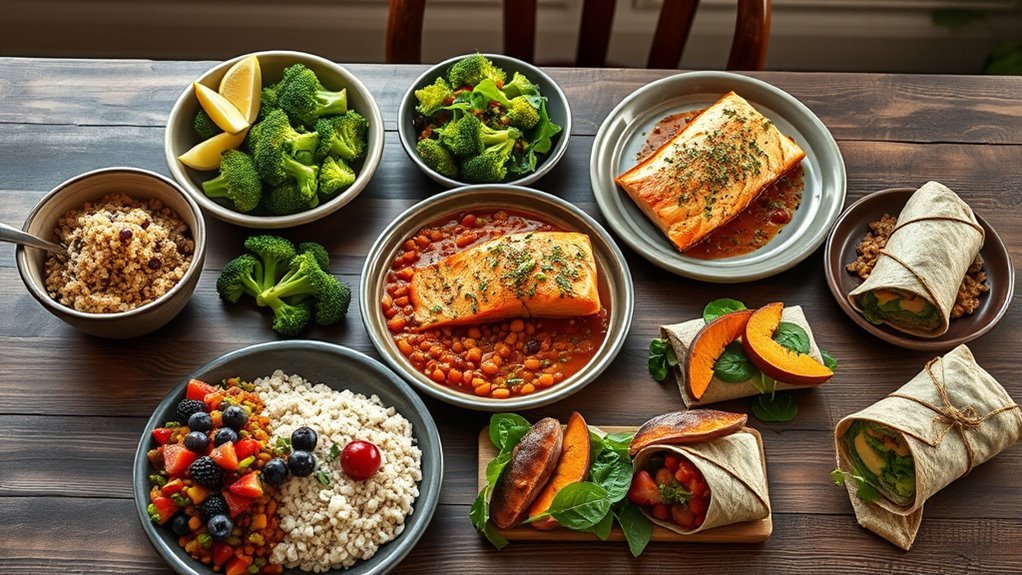
You can improve your heart health by choosing 7 easy recipes that combine high fiber with low cholesterol. Start your day with oatmeal topped with berries or whole grain toast with nut butter.
Enjoy lunches like chickpea hummus wraps or white bean soup. Try meatless meals such as sweet potato potpie or chickpea curry.
Add omega-3 rich fish twice a week and swap full-fat dairy for low-fat options. Keep vegetables and whole grains in mind; there’s more to explore for heart-smart eating.
Why High Fiber and Low Cholesterol Matter
Although you might focus on lowering cholesterol for heart health, incorporating high-fiber foods is just as important because they actively reduce LDL cholesterol by binding to it during digestion. When you eat foods rich in fiber, like oats and beans, they help trap LDL cholesterol, preventing it from entering your bloodstream.
This process lowers your overall cholesterol levels and supports better heart health. Soluble fiber, in particular, plays a key role in decreasing both total and LDL cholesterol, which reduces your risk of heart disease. By choosing a diet high in fiber and low in cholesterol, you manage existing cholesterol issues and help prevent future cardiovascular problems.
Furthermore, fiber promotes healthy blood sugar and lipid levels, further benefiting your arteries and overall cardiovascular system. So, prioritizing high-fiber foods isn’t just a dietary choice; it’s a powerful strategy to improve your lipid profile and protect your heart in the long run.
High-Fiber Breakfast Recipes to Start Your Day
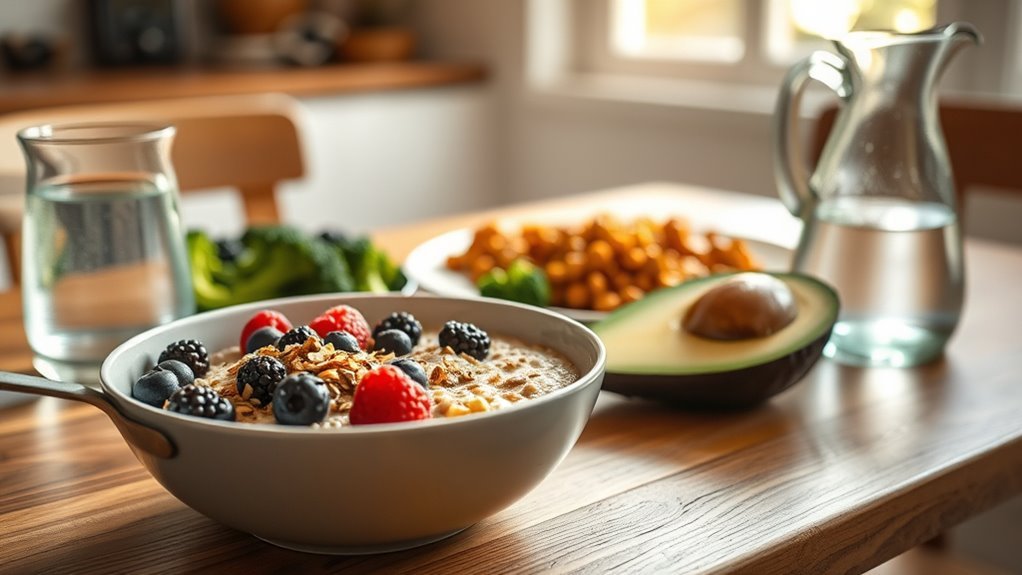
You’ll feel energized and support heart health by starting your day with high-fiber breakfasts. It’s easy to whip up simple meals like oatmeal with berries or whole-grain toast topped with nut butter. These quick, nutrient-packed options not only taste great but also help lower cholesterol and keep your digestion on track. So, why not give them a try and start your morning right?
Benefits of Fiber
Starting your day with just a few high-fiber ingredients can markedly improve your heart health and digestion. Fiber plays a vital role in lowering LDL cholesterol, especially when you choose whole grains and other fiber-rich foods.
By including high-fiber recipes in your breakfast, you’ll support better cholesterol management and reduce inflammation, which benefits your cardiovascular system.
Here’s why fiber matters:
- It helps reduce LDL cholesterol, protecting your heart health.
- Fiber from whole grains and fruits enhances digestion and stabilizes blood sugar.
- High-fiber breakfasts increase satiety, keeping you full and preventing overeating.
Incorporating fiber into your morning meal isn’t just tasty, it’s a smart step toward a healthier heart and balanced digestion.
Quick Breakfast Ideas
Incorporating fiber into your breakfast doesn’t have to be complicated or time-consuming. You can enjoy a high-fiber breakfast that supports low cholesterol and heart-healthy goals with simple, quick meal ideas.
Try oatmeal topped with berries and chia seeds for a fiber-rich start that helps reduce LDL cholesterol and keeps your energy steady. Whole grain toast with nut butter and banana also offers both soluble and insoluble fiber for a satisfying meal.
Adding plain yogurt with blackberries boosts antioxidants and dietary fiber, enhancing your breakfast’s health benefits. Including fruits like apples or pears adds pectin, a soluble fiber known to lower cholesterol.
These fiber-packed breakfasts are easy to prepare and set the stage for lasting heart-healthy habits.
Heart-Healthy Lunch Ideas With Low Cholesterol
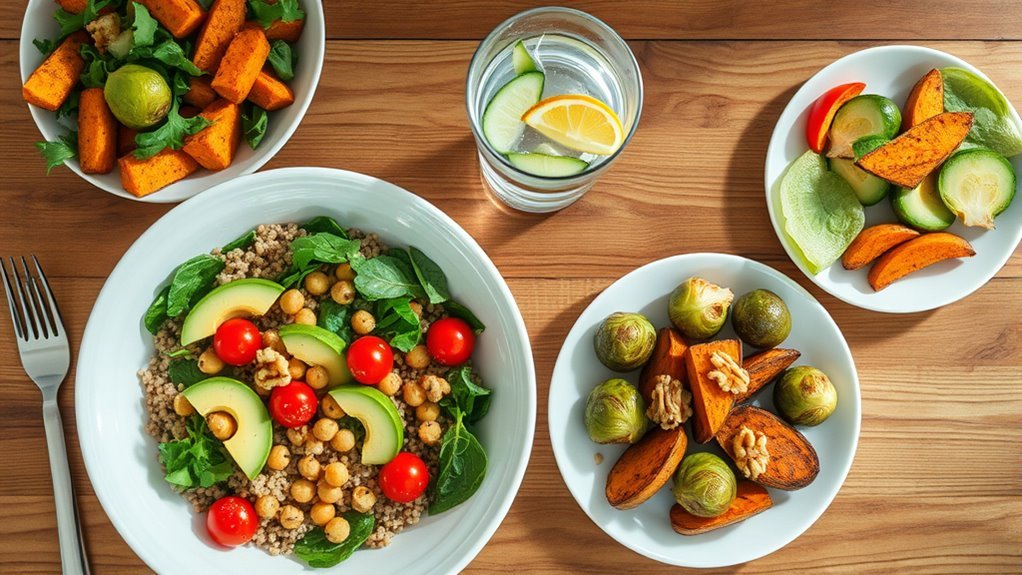
When choosing heart-healthy lunch options, focus on fiber-rich ingredients like beans, whole grains, and fresh vegetables to help lower your LDL cholesterol. These fiber-rich foods support your cardiovascular health while keeping cholesterol low. You can enjoy plant-based meals full of flavor and nutrition without sacrificing taste.
Prioritize fiber-rich beans, whole grains, and fresh veggies for flavorful, heart-healthy meals that lower LDL cholesterol.
Try these easy low cholesterol lunch ideas to keep your heart strong:
- Chickpea hummus wraps loaded with leafy greens and colorful veggies
- White bean and vegetable soup paired with a side of brown rice
- Mixed greens salad topped with antioxidant-rich berries and a lemon vinaigrette
Each option provides plenty of fiber, vitamins, and minerals, helping you maintain sustained energy throughout the day. Incorporate whole foods and lean proteins like grilled fish if you want variety, but plant-based meals alone offer excellent heart-healthy benefits. By choosing these fiber-rich lunches, you’re making a smart choice for your heart and overall well-being.
Low-Cholesterol Meatless Meals Packed With Fiber
If you enjoyed the fiber-rich, heart-healthy lunches mentioned earlier, you’ll find that meatless meals offer even more ways to support your cardiovascular health. These dishes, packed with plant-based proteins and fiber, keep cholesterol low while boosting heart health.
Meals like mushroom and sweet potato potpie, chickpea and potato curry, or ratatouille with polenta provide essential nutrients without the saturated fats found in animal products. By focusing on fiber-rich ingredients, you naturally reduce LDL cholesterol and improve your overall wellbeing.
| Dish | Key Nutrients |
|---|---|
| Mushroom & Sweet Potato Potpie | 211 calories, 5g fiber, 10g fat |
| Chickpea & Potato Curry | 240 calories, 8g protein, high fiber |
| Ratatouille & Polenta | Low saturated fat, rich fiber & antioxidants |
| Beans & Vegetables | High fiber, plant-based proteins, low cholesterol |
Try these meatless meals to nourish your heart and enjoy delicious, wholesome food.
Omega-3 Boosting Fish Dishes for Heart Health
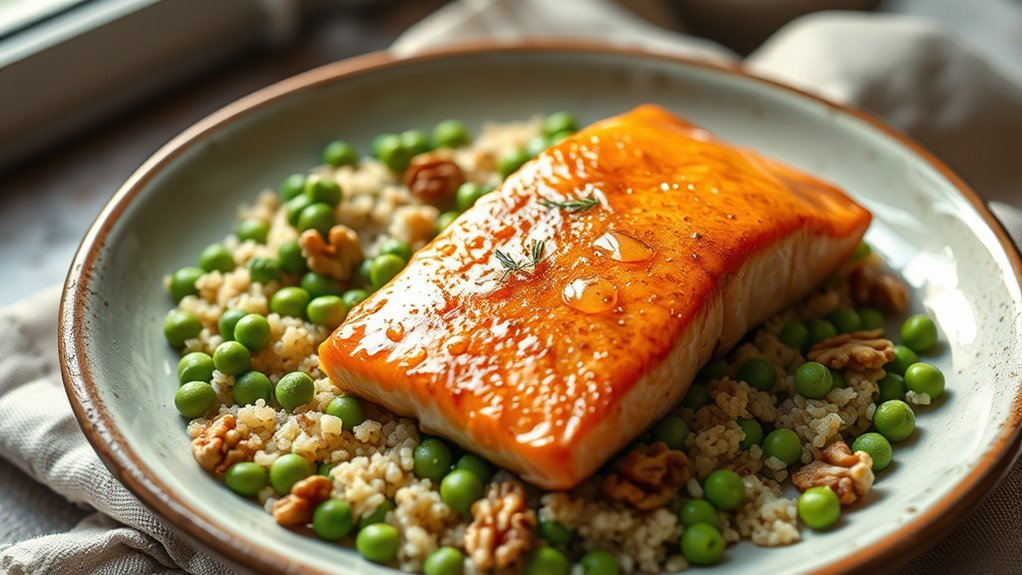
You can give your heart a healthy boost by adding omega-3-rich fish like salmon or trout to your meals at least twice a week. It’s an easy way to get those good fats your body loves.
When it comes to cooking, methods like baking or grilling are the way to go. They keep your dishes tasty without adding any unhealthy fats.
Benefits Of Omega-3
Three servings of omega-3-rich fish like salmon, mackerel, or herring each week can dramatically boost your heart health. Omega-3 fatty acids found in these fish help reduce cholesterol levels by raising HDL (good cholesterol) and lowering LDL (bad cholesterol). They also lower triglycerides, reducing your risk of heart disease.
When paired with a high fiber diet, the benefits to heart health multiply, supporting overall cardiovascular function.
Here’s why omega-3s are essential for you:
- They reduce blood pressure and improve blood vessel function.
- Their anti-inflammatory effects help prevent atherosclerosis.
- Regular intake supports a healthier lipid profile, balancing cholesterol levels.
Including omega-3-rich fish in your meals is a smart step toward a heart-healthy lifestyle.
Preparing Heart-Healthy Fish
Adding omega-3-rich fish to your meals is a powerful way to support heart health, but how you prepare these fish can make a big difference. Choose heart-healthy fish like salmon, trout, or herring, which are rich in omega-3 fatty acids that help improve cardiovascular health by lowering triglycerides.
Stick to cooking methods such as baking, broiling, grilling, or boiling to preserve these beneficial fats and avoid added saturated fats common in frying or breading. Even lower omega-3 fish like tilapia and cod fit well into a low-cholesterol diet when prepared properly.
Aim to include fish at least twice a week, pairing it with fiber-rich, plant-based foods to maximize heart benefits and support overall cholesterol management.
Easy Meat and Dairy Swaps to Lower Saturated Fat
When aiming to lower saturated fat, swapping out fatty cuts and full-fat dairy for leaner, low-fat alternatives makes a significant difference. You can easily make meal swaps that reduce saturated fat without sacrificing flavor or satisfaction.
Start by choosing lean protein options like cuts labeled “round,” “loin,” or “sirloin,” and opt for extra-lean ground meats with 15% fat or less. Trim any visible fat from poultry before cooking to keep meals heart-healthy.
Choose lean cuts like round, loin, or sirloin and trim visible fat from poultry for heart-healthy meals.
Also, swap full-fat dairy for low-fat dairy options such as skim milk or reduced-fat cheeses. These small changes help cut down saturated fat while maintaining essential nutrients. Incorporate plant-based proteins like beans and legumes as tasty meat substitutes to further lower cholesterol and boost fiber intake.
Use oil-based spreads instead of butter or lard. Choose lean cuts and trim visible fat. Replace full-fat dairy with low-fat or fat-free versions.
These simple swaps make your meals healthier and keep saturated fat in check.
How to Add More Vegetables and Whole Grains
To boost your fiber intake and support heart health, include a variety of colorful vegetables like bell peppers, carrots, and spinach in your meals. These fiber-rich vegetables not only add vibrant color but also enhance the nutritional value of your dishes.
Swap refined grains for whole grains such as brown rice, whole wheat bread, and oats to increase fiber and promote heart health. You can easily add chopped vegetables or beans to soups, stews, and casseroles for a nutritious boost.
Using whole grain pasta, bread, and crackers instead of refined versions helps you consume more fiber without sacrificing flavor. Don’t forget to include fiber-rich fruits like berries, apples, and pears as snacks or desserts to round out your meal plan.
Frequently Asked Questions
How Can I Meal Prep These Recipes for the Week?
You can meal prep by using meal prep containers to portion your meals for the week efficiently. Start with batch cooking techniques like roasting veggies or cooking grains in bulk.
Create a shopping list essentials to guarantee you have all ingredients on hand. Schedule your prep on a specific day, so it’s manageable.
For storage tips, cool food before sealing containers and refrigerate or freeze to keep meals fresh and ready to grab.
What Snacks Complement a High Fiber, Low Cholesterol Diet?
Like choosing the right tools in a master’s workshop, you’ll want fiber-rich fruits and plant-based snacks to fuel your day. Reach for cholesterol-lowering nuts like almonds or walnuts, pair them with whole grain crackers, and dip into legume-based dips such as hummus.
These snacks not only satisfy but also support your heart and digestion, making every bite a smart, healthful choice you’ll feel good about.
Are There Any Quick Tips for Improving Digestion With These Meals?
You can boost gut health by chewing your food thoroughly and eating smaller, frequent meals to aid digestion. Fiber benefits shine when you drink plenty of water, so stay hydrated.
Incorporate probiotic foods like yogurt or kefir to support your gut’s good bacteria. Also, consider meal timing. Avoid eating right before bed to give your digestion a break.
These digestion tips will help you feel lighter and more energized throughout the day.
How Do I Adjust Recipes for Food Allergies or Intolerances?
You can adjust recipes by using gluten free substitutions like rice flour or oats, nut free options such as seeds or coconut flakes, and dairy alternatives like almond or oat milk.
For soy free modifications, try coconut aminos instead of soy sauce. And for egg free adjustments, use flaxseed or chia seeds mixed with water. These swaps keep your meals safe and delicious without sacrificing nutrition or flavor.
Can These Recipes Be Frozen and Reheated Without Losing Nutrition?
Yes, you can freeze and reheat these meals without losing much nutrition. Use airtight storage containers to prevent freezer burn, and label them with dates.
For thawing, move meals to the fridge overnight for gentle defrosting. When reheating, use low to medium heat to preserve nutrient retention.
Avoid repeated freezing and thawing, which can degrade nutrients. These freezing tips and reheating methods help keep your meals tasty and healthy.
Conclusion
You might think eating high fiber and low cholesterol meals is complicated or bland, but it’s actually simple and delicious. By trying these easy recipes, you’ll nourish your heart and feel more energized without sacrificing taste.
Plus, swapping ingredients and adding veggies and whole grains can be quick and satisfying. Give it a shot; you’ll find it’s easier than you expect to enjoy meals that support your health every day.