5 High Protein Low Cholesterol Meal Plans to Try Today
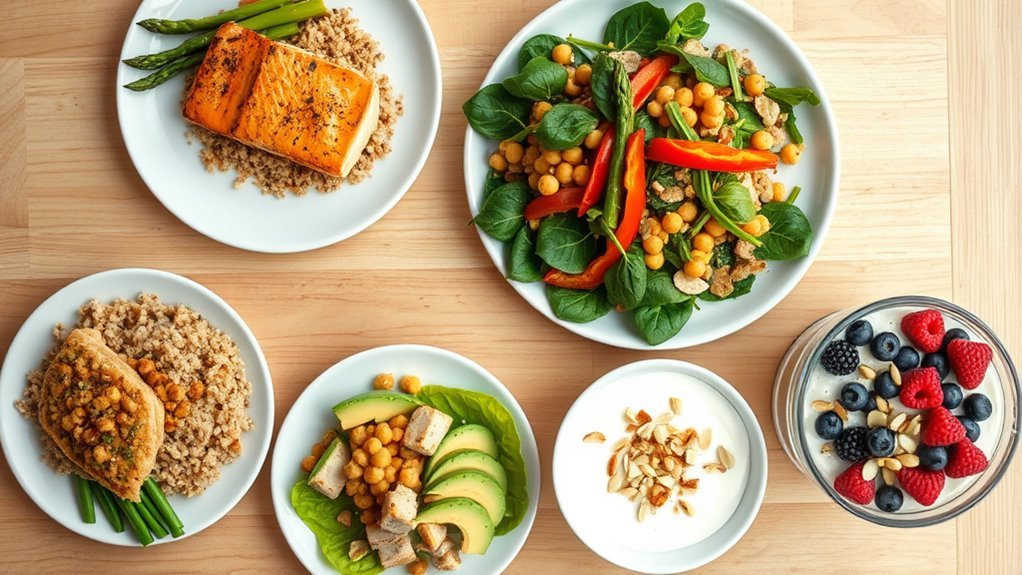
You can try five high-protein, low-cholesterol meal plans by starting your day with plant-based proteins or Greek yogurt. Then, snack on nuts and fresh fruit for steady energy.
For lunch, focus on fiber-rich veggies and lean proteins like beans or chicken breast.
Dinner is perfect with baked fish and vegetable dishes flavored with healthy oils.
Customize your meals by swapping saturated fats for heart-healthy options, and you’ll find the key to balanced, nourishing meals ahead.
High-Protein, Low-Cholesterol Breakfast Ideas
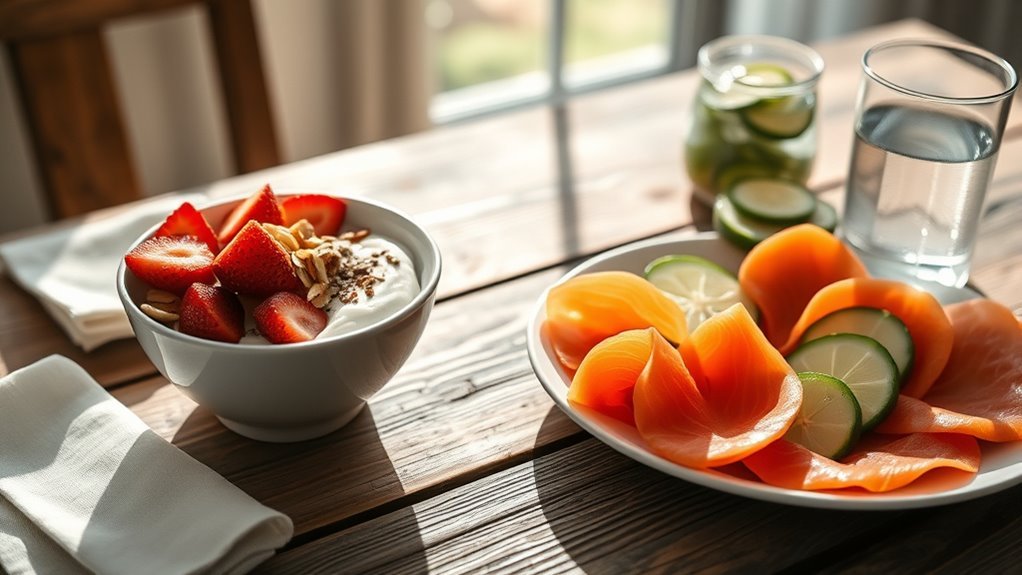
When you start your day with high-protein, low-cholesterol foods like Greek yogurt or eggs, you boost your HDL, the good cholesterol that protects your heart. For a heart-healthy breakfast, consider incorporating plant-based proteins such as beans, lentils, or tofu. These options provide essential amino acids without the saturated fats found in some animal products.
You can also enjoy oatmeal topped with nuts and seeds, combining fiber and protein to reduce LDL, the bad cholesterol. If you prefer meat, lean choices like turkey or chicken breast keep your protein intake high without raising cholesterol.
Breakfast smoothies with protein powder, fruits, and veggies offer a quick, nutritious way to maintain your energy and support heart health. By choosing a variety of high-protein, low-cholesterol breakfast options, you set a strong foundation for the day, supporting overall cardiovascular wellness while enjoying delicious, satisfying meals.
Heart-Healthy Snacks to Keep Energy Steady
Although busy days can drain your energy, choosing heart-healthy snacks helps you maintain steady fuel without raising cholesterol. When you reach for snacks rich in fiber, healthy fats, and antioxidants, you support your cardiovascular health while keeping your energy steady. These snacks avoid the pitfalls of processed options that spike cholesterol and cause energy crashes.
Consider these heart-healthy snacks to keep your energy steady throughout the day:
- Nuts and seeds, packed with monounsaturated and polyunsaturated fats that help lower LDL cholesterol.
- Fresh berries and apples, offering antioxidants and fiber to stabilize blood sugar and protect your heart.
- Vegetables paired with hummus or low-fat Greek yogurt, providing fiber, vitamins, and healthy fats.
- Whole grain snacks like air-popped popcorn or whole wheat crackers, delivering complex carbohydrates and fiber for sustained energy release.
Fiber-Rich Lunches With Lean Proteins
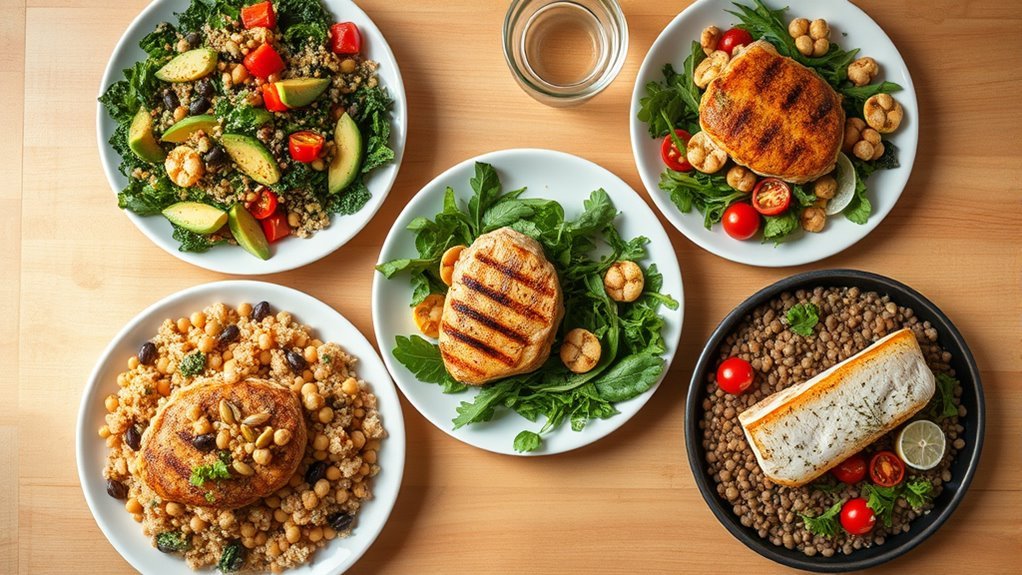
Snacking smartly keeps your energy steady, but your main meals play an even bigger role in managing cholesterol. Fiber-rich lunches with lean proteins can considerably boost your heart health by lowering LDL cholesterol.
Incorporate plant-based proteins like beans and chickpeas; they provide soluble fiber that helps reduce bad cholesterol. Pair these with high-fiber vegetables such as broccoli, carrots, and peppers to enhance nutrient density and support cardiovascular wellness.
Whole grains like brown rice, quinoa, or whole wheat pasta add extra fiber and help maintain stable blood sugar levels, making your meal balanced and satisfying. By combining lean proteins with fiber-rich ingredients, you not only reduce saturated fat intake but also improve your lipid profile.
This approach promotes low cholesterol and long-term heart health, making your midday meal both nutritious and heart-friendly. So, focus on building lunches around these wholesome ingredients to keep your cholesterol in check and your energy sustained throughout the day.
Satisfying Dinner Recipes Featuring Fish and Plants
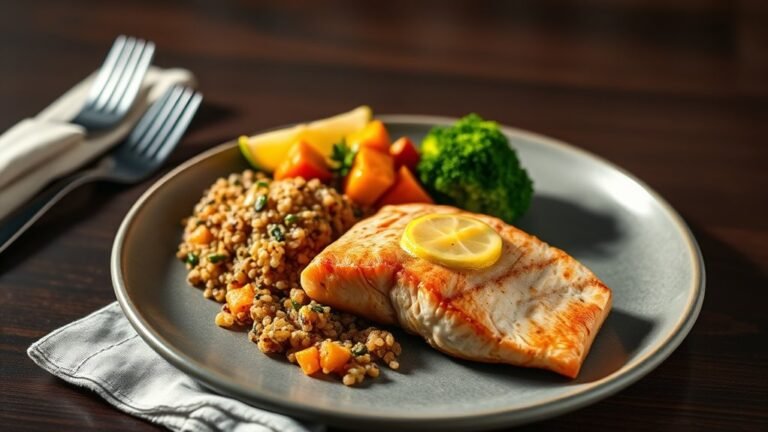
How can you create dinners that satisfy your hunger while supporting heart health? Focus on incorporating fish and plant-based ingredients into your dinner recipes. Fish like salmon, trout, and herring are excellent sources of omega-3 fatty acids, which help reduce triglycerides and promote heart-healthy benefits. Pair these with plant-based dishes rich in protein and low in saturated fat for a balanced meal.
Try these tips for satisfying, heart-healthy dinners:
Bake, grill, or broil fish to preserve omega-3s without adding unhealthy fats. Use legumes, nuts, seeds, and vegetables as plant-based protein sources. Spice up meals with herbs and healthy oils instead of adding cholesterol-raising ingredients. Explore plant-based options like vegetable stir-fries and bean casseroles for variety.
Customizing Your Low-Cholesterol Meal Plan
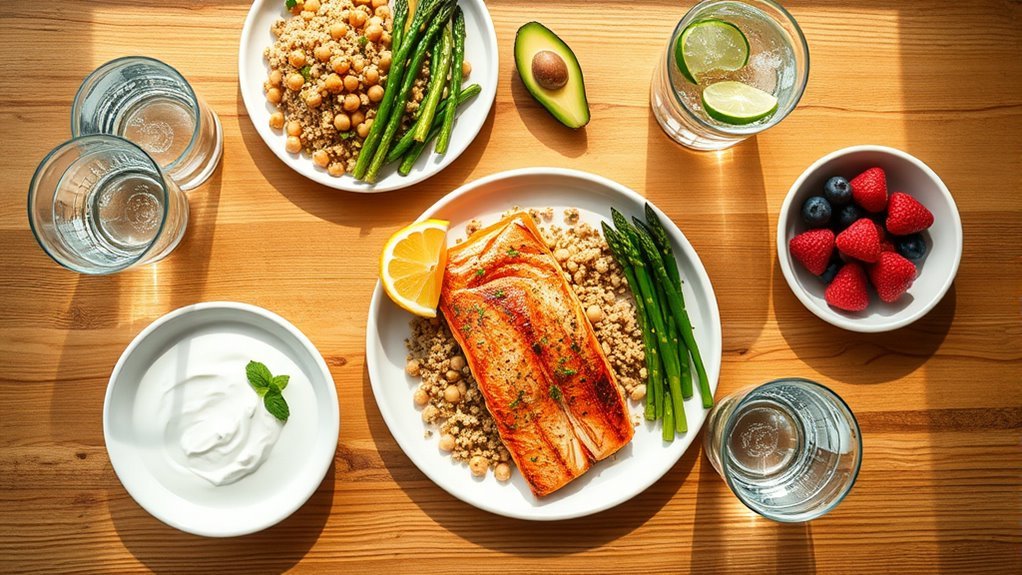
When you customize your low-cholesterol meal plan, you focus on swapping high-saturated-fat meats for plant-based proteins like beans, lentils, and tofu. Adjusting portion sizes and meal frequency helps match your calorie needs and hunger cues, promoting sustainable habits.
Meal customization also means incorporating your favorite cultural foods using cholesterol-lowering ingredients without losing flavor. Don’t forget to include healthy fats like avocados or nuts, and consider affordable options like frozen fish or whole grains to keep variety and budget in check.
Tracking your cholesterol and health responses allows you to fine-tune your plan over time.
| Protein Source | Portion Size | Healthy Fat Addition |
|---|---|---|
| Beans & Lentils | 1 cup cooked | Olive oil drizzle |
| Tofu | 4 ounces | Avocado slices |
| Frozen Fish | 3-4 ounces | Walnuts or flaxseed |
This approach guarantees your low-cholesterol meal plan fits your lifestyle and tastes perfectly.
Frequently Asked Questions
How Does High Protein Intake Affect Kidney Health in Low-Cholesterol Diets?
You might worry that high protein intake strains your kidneys, but if you don’t have existing kidney disease, your renal function can handle it well. Protein metabolism increases kidney workload slightly, but with proper dietary restrictions, it’s usually safe.
However, if you have impaired kidney function, high protein could worsen kidney strain. Always monitor your health and consult a healthcare provider to balance protein needs without risking kidney damage.
Can Plant-Based Proteins Fully Replace Animal Proteins in These Meal Plans?
Yes, you can fully replace animal proteins with plant-based alternatives in your meal planning. While plant proteins sometimes have lower protein absorption and nutrient bioavailability, combining diverse sources like legumes, nuts, and grains boosts your intake.
Plus, dietary fiber in plant foods supports digestion and overall health. By carefully balancing these foods, you’ll meet your protein needs without animal products, making your meals nutritious and cholesterol-friendly.
What Are the Best Supplements to Support a High-Protein, Low-Cholesterol Diet?
Funny enough, the best supplements for you include branched-chain amino acids and omega-3s, which enhance protein timing and nutrient synergy. You’ll want to focus on meal timing to boost supplement absorption, pairing them with dietary fiber for better digestion.
Don’t forget vitamin D and magnesium. They support muscle function. By syncing your supplements with your meals, you’ll maximize benefits without raising cholesterol, keeping your diet both effective and heart-friendly.
How to Manage Dining Out While Following a Low-Cholesterol, High-Protein Plan?
You can manage dining out by practicing smart dining etiquette. Politely asking about ingredients and cooking methods helps.
Focus on restaurant selection by choosing places that offer grilled fish, lean poultry, or plant-based proteins. Use menu customization to swap high-cholesterol sides for veggies.
Try social strategies like sharing dishes or suggesting spots that fit your plan. Ultimately, practice portion control to avoid overeating while still enjoying the social experience.
Are There Specific Cooking Oils Recommended for Heart-Healthy, High-Protein Meals?
You should choose cooking oils rich in healthy fats to boost heart health. Olive oil and avocado oil are top recommendations because they contain monounsaturated fats that support your cardiovascular system.
Oils like canola and flaxseed also offer beneficial dietary fats, including omega-3s. Avoid saturated fats like coconut oil if you’re focusing on heart health. Using these cooking oils helps you create delicious, heart-friendly, high-protein meals every time.
Conclusion
You might think high-protein meals always mean high cholesterol, but that’s not true. By choosing lean proteins and plant-based options, you can fuel your body without raising cholesterol levels.
These meal plans prove you don’t have to sacrifice taste or nutrition. Give them a try today, and you’ll see how easy it is to eat heart-healthy while enjoying satisfying, protein-packed meals that support your overall well-being.