Why Doesn’t Alcohol Have Nutrition Facts?
You don’t see nutrition facts on alcohol because U.S. laws treat it differently from food. Alcohol labeling is regulated by the Alcohol and Tobacco Tax and Trade Bureau, not the FDA, which requires detailed nutrition info on food.
This means nutrition labels on alcohol are mostly optional, with many products lacking calorie and ingredient details. However, growing pressure and upcoming rules aim to change this.
If you want to understand why labels vary and what’s coming next, there’s more to explore.
How Alcohol Labeling Became Separate From Food Nutrition Rules
Although you might expect alcohol to follow the same nutrition labeling rules as food, it doesn’t because of historical and legal reasons. After Prohibition, the 1935 Alcohol Administration Act created the TTB to regulate alcohol labeling mainly for tax purposes rather than nutrition.
When the FDA introduced mandatory nutrition labeling for packaged foods in 1990, alcohol was explicitly excluded. Instead, alcohol regulation stayed under the TTB’s control, which set different, often less detailed labeling standards compared to food regulations.
This legal split means alcohol labels don’t have to include the detailed nutrition facts you see on food packages. As a result, nutrition labeling for alcoholic beverages remains inconsistent and largely voluntary.
The separate frameworks reflect a long-standing divide between how food and alcohol are treated legally, leaving you without the clear, uniform nutrition information on alcohol that you might expect from other products.
Alcohol Content Labeling Requirements for Different Beverages
You’ll notice that alcohol content labeling varies quite a bit depending on the type of beverage you’re looking at. For example, distilled spirits and stronger wines are required to show their alcohol percentage. On the other hand, many other drinks either have optional labeling or none at all. This happens because different regulations and agencies oversee each beverage category, which leads to these variations.
Alcohol Percentage Labeling
How can you tell how much alcohol is in your drink? The answer depends on regulations that govern alcohol content labeling. Distilled spirits and wines with over 14% alcohol must display their alcohol percentage on the label, so you can easily find this info.
However, beverages like wines under 7% alcohol often don’t have mandatory labeling, as they fall under FDA rules. Beers made without malted barley and hops also face different labeling standards, making alcohol content labels optional.
This patchwork of regulations means many beverages lack clear alcohol percentage labeling, leaving you guessing. Understanding these inconsistencies helps explain why some drinks give you exact alcohol content while others don’t, impacting how you gauge your consumption.
Labeling Variations By Beverage
Understanding the rules behind alcohol percentage labeling helps clarify why different types of beverages show varying information on their labels. Alcohol labeling depends heavily on the beverage type and which regulatory agencies oversee it.
For example, distilled spirits and wines over 14% alcohol must display alcohol content labels under mandatory labeling rules enforced by the TTB. Meanwhile, wines under 7% fall under FDA regulation and must include nutrition facts if they list ingredients.
Beers without malted barley or hops also follow FDA rules, requiring nutrition facts, while traditional brewed beers face minimal labeling mandates from the TTB. This mix of regulations creates inconsistent nutrition facts and labeling requirements across beverages, making it tricky to find uniform information on alcohol products.
Why Nutrition Facts Are Optional for Most Alcoholic Drinks
Because alcoholic beverages are regulated by the Alcohol and Tobacco Tax and Trade Bureau (TTB) rather than the FDA, they don’t have to include nutrition facts like most foods and drinks you encounter. The 1988 Alcoholic Beverage Labeling Act requires a government warning but doesn’t mandate serving sizes, calorie counts, or ingredient lists.
This means nutrition facts on alcohol are voluntary labeling, and many brands skip them to avoid consumer scrutiny or health concerns. The regulatory framework around alcohol labeling is complex, with the TTB focusing mainly on alcohol content rather than full nutritional transparency.
Industry resistance also plays a role. Many producers prefer to keep nutrition facts optional to maintain flexibility and avoid potential backlash. So, while you see alcohol percentage labels on drinks over 14% ABV, detailed nutrition facts remain absent because current regulations don’t require them, leaving you without standard nutritional information like you get on most food packaging.
Current Gaps in Alcohol Nutrition and Ingredient Labels
Although alcoholic beverages often display alcohol content, they rarely provide nutrition facts or ingredient lists, leaving you in the dark about what you’re actually consuming. The current regulation landscape creates significant gaps in the information available on labels.
The Alcohol and Tobacco Tax and Trade Bureau (TTB) oversees alcohol labeling but doesn’t require full nutrition labels or ingredient disclosures. Here’s how these gaps affect you:
- Most alcoholic drinks don’t have mandatory nutrition labels, so you can’t easily see calories or nutrients.
- Only some wines over 14% alcohol must show alcohol content; others often omit this detail.
- Ingredient lists are usually missing, so you don’t know what additives or allergens might be present.
- Beers and wines with lower alcohol content fall under FDA rules but still lack consistent labeling requirements.
These gaps in regulation mean you’re often left guessing about the true nutritional content and ingredients in your favorite alcoholic beverages.
How Labeling Confusion Affects Consumer Choices
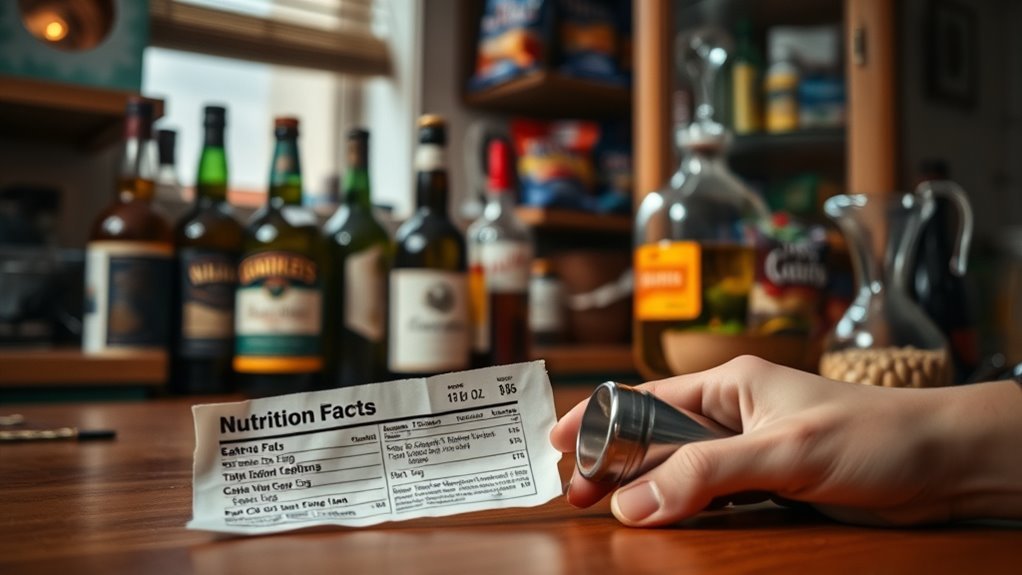
You might find it tricky to make informed choices when alcohol labels don’t consistently show nutrition facts. Because of this inconsistency, it can leave you unsure about the calories and ingredients in different drinks. And without clear information, it’s harder to keep track of how alcohol fits into your overall diet.
Labeling Inconsistencies Impact
How can you make informed choices when alcohol labels often leave out key nutrition facts? Labeling inconsistencies in alcoholic beverages create consumer confusion, making it tough to compare calorie content or understand what you’re drinking.
The regulatory disparity between agencies like the FDA and TTB means some products show detailed info while others show none. This patchwork approach leads to several issues:
- Many alcoholic beverages lack clear nutrition facts due to inconsistent rules.
- Voluntary labeling means you often won’t find calorie or ingredient info on bottles or cans.
- Without standardized labels, you might underestimate the calories you consume.
- This confusion hampers efforts to reduce excess alcohol intake and manage diet effectively.
These labeling inconsistencies leave you steering through a confusing landscape rather than making fully informed choices.
Consumer Awareness Challenges
Why does the lack of consistent nutrition labeling on alcoholic beverages make it so hard to understand what you’re drinking? Because most alcohol brands don’t provide clear nutrition labels, you’re left guessing at calorie content and nutrient details.
Voluntary labeling means many manufacturers skip sharing this info, which lowers your consumer awareness about what’s really in your drink. Regulatory challenges create a patchwork of rules, so even when nutrition facts exist, they vary widely and confuse you instead of helping.
Without mandatory, standardized labels, you might underestimate how many calories you consume or miss important ingredient information. This labeling confusion makes it tough for you to make informed choices about alcohol’s health impacts, leaving you less equipped to manage your diet and well-being effectively.
Industry Concerns Slowing Mandatory Alcohol Nutrition Labeling
Although many consumers expect clear nutrition information on their food and drinks, the alcohol industry has actively resisted mandatory nutrition labeling. They worry that providing detailed nutrition facts could make people see alcohol as healthier than it really is, influencing consumer perception.
This resistance, combined with regulatory ambiguity, has slowed the push for standardized labeling regulations. You should also know that manufacturers are concerned about manufacturing costs, as testing and labeling can be expensive and complicated by varying alcohol contents and serving sizes.
Here are four key reasons behind the industry’s stance:
- Industry resistance stems from fears of changing how consumers view alcohol.
- Labeling regulations are hard to standardize due to diverse beverage types.
- Regulatory ambiguity creates legal hurdles for mandatory disclosures.
- Manufacturing costs rise with testing and adapting labels for different products.
These factors combine to delay mandatory nutrition facts on alcoholic beverages.
Public Health Benefits of Alcohol Calorie Transparency
What impact could clear calorie labeling on alcoholic beverages have on your health choices? When nutrition labels reveal the calories in your drinks, you gain transparency that helps you understand and control your alcohol consumption better.
Knowing that many adults unknowingly consume around 400 extra calories daily from alcohol alone can motivate smarter decisions. This supports weight management and reduces health risks like obesity and liver disease.
This shift toward transparency also benefits public health by encouraging healthier habits and sparking innovation in lower-calorie alcohol options.
| Benefit | How It Helps You | Public Health Impact |
|---|---|---|
| Calories Awareness | Tracks intake accurately | Reduces hidden calorie intake |
| Informed Choices | Chooses lower-calorie options | Supports healthier drinking |
| Transparency | Understands product content | Builds trust and accountability |
| Industry Innovation | Access to healthier products | Encourages market improvements |
How Other Countries Handle Alcohol Nutrition Labeling
You might be surprised to learn that the European Union is now requiring wines to show nutritional info starting in 2024. Pretty interesting, right? Other countries, like Australia and Canada, also have rules that mandate calorie and ingredient labeling on alcohol. So, let’s take a look at how these global regulations compare and what they could mean for consumers like you.
European Union Nutrition Rules
Since 2024, the European Union has required all wine labels to display nutritional information like calories, carbohydrates, fats, and proteins. This makes it easier for you to understand what’s in your drink.
The EU regulations, under the Food Information to Consumers Regulation (EU 1169/2011), extend nutritional labeling to most packaged foods, including wine, to boost consumer transparency. Here’s what this means for you:
- Nutritional labeling on wine and other alcoholic beverages is now standardized across EU countries like France, Germany, and Italy.
- Labels must clearly list calories, carbs, fats, and proteins.
- Information appears directly on the package, not hidden behind QR codes.
- This approach guarantees consistent, accessible data so you can make informed choices.
Global Labeling Comparisons
While the European Union has set clear standards for nutritional labeling on alcoholic beverages, other countries have developed their own approaches to keep consumers informed.
In Australia, labeling regulations require nutrition labels on alcohol, including calories, ingredients, and allergens, ensuring consumer transparency. Canada follows suit with mandatory calorie counts and ingredient lists on most alcoholic drinks.
Mexico’s regulatory agency demands labels specify alcohol content and list ingredients, aligning with international standards for safety. These global nutritional disclosures contrast sharply with the U.S., where alcohol labeling remains voluntary or minimal.
The Alcohol and Tobacco Tax and Trade Bureau’s Next Steps
Although the Alcohol and Tobacco Tax and Trade Bureau (TTB) has long allowed voluntary nutrition labeling on alcoholic beverages, it’s now moving toward mandatory disclosures. You’ll see proposed regulations in 2025 aiming to require “Alcohol Facts” panels and allergen information on labels.
This shift from voluntary to mandatory labeling marks a significant regulatory change, despite pushback from the alcohol industry concerned about testing complexities and consumer perceptions.
Here’s what you need to know about the TTB’s next steps:
- The TTB plans to finalize rules making nutritional disclosure mandatory.
- These regulations will standardize calorie, ingredient, and serving size info.
- The alcohol industry’s opposition slows progress but can’t stop it.
- Current TTB policies will continue requiring alcohol content and warning labels alongside new disclosures.
You can expect these changes to improve transparency and help consumers make informed choices about alcohol’s nutritional content.
How Consumers and Advocates Can Demand Better Alcohol Labels
If you want clearer information on what’s in your drink, you need to raise your voice. Over 60% of Americans support mandatory nutrition labeling on alcoholic beverages, yet current rules keep these labels optional or missing.
Consumer advocates like CSPI are pushing regulatory agencies, such as the TTB, to require clear, standardized nutrition labels on alcohol. Without these, you can’t easily track the hundreds of calories many drinks contain per serving.
You can help by sending comments and showing public support to regulatory agencies demanding transparency. Look to international examples, like the EU’s wine nutrition disclosure mandate, proving mandatory labeling is both feasible and popular.
When consumers and advocates unite and speak up, regulatory agencies are more likely to act, ensuring you get the information you deserve. Don’t wait, join the call for better alcohol labels now.
Frequently Asked Questions
How Many Calories Are Typically in a Standard Alcoholic Drink?
A standard alcoholic drink typically contains between 100 and 150 calories, depending on serving sizes and alcohol content. For example, a 12-ounce beer has about 150 calories, while a 1.5-ounce shot of spirits holds around 100.
When you’re calorie counting, remember that mixers can add extra calories, too. Calories mainly come from alcohol itself and any sugars or carbs in the drink, so keeping an eye on both helps you manage your intake better.
Does Alcohol Affect Blood Sugar Levels?
Yes, alcohol does affect blood sugar levels. When you drink, your liver prioritizes alcohol metabolism over blood sugar regulation, which can disrupt glucose release and lower your blood sugar.
This impacts your insulin response, sometimes causing hypoglycemia. Your alcohol tolerance also plays a role; if it’s low, blood sugar swings can be more severe. So, you should monitor your intake carefully, especially if you have diabetes or blood sugar concerns.
Can Drinking Alcohol Contribute to Weight Gain?
You might be surprised, but yes, drinking alcohol can contribute to weight gain. During alcohol metabolism, your body prioritizes breaking down alcohol, slowing fat burning.
Alcohol contains empty calories that don’t provide nutrients but add up quickly. If you’re serious about calorie counting and weight regulation, you need to take these hidden calories into account.
Plus, alcohol affects your dietary choices, often making you eat more than planned, which further impacts your weight.
Are There Differences in Nutrition Between Beer, Wine, and Spirits?
Yes, you’ll notice differences in nutrition between beer, wine, and spirits. Beer’s brewing ingredients add carbs and calories, while wine’s fermentation process creates alcoholic antioxidants and wine tannins that may offer some benefits.
Spirits undergo distillation, removing most carbs and nutrients, leaving mainly alcohol. So, when you choose your drink, remember that beer and wine contain more varied nutrients compared to spirits, which are mostly pure alcohol with fewer additives.
How Does Alcohol Impact Nutrient Absorption in the Body?
Alcohol impacts your nutrient absorption by causing metabolic interference and enzyme disruption. This reduces your body’s ability to break down proteins, fats, and carbs. It also leads to nutrient malabsorption by damaging your gut lining, preventing vitamins and minerals from being absorbed properly.
Furthermore, alcohol impairs liver function, which is vital for storing and processing nutrients. This causes vitamin depletion, especially of vitamins A, D, E, and K.
Conclusion
You might think alcohol labels don’t need nutrition facts because it’s just a drink, but that’s exactly why transparency matters. Without clear info, you can’t make informed choices about what you’re putting in your body.
Knowing calories and ingredients helps you stay healthier and avoid hidden risks. You deserve to see what’s in your drink, so demand better labels. It’s about your right to know and take control of your health.