3 Key Nutritional Benefits of Lentils in a Can
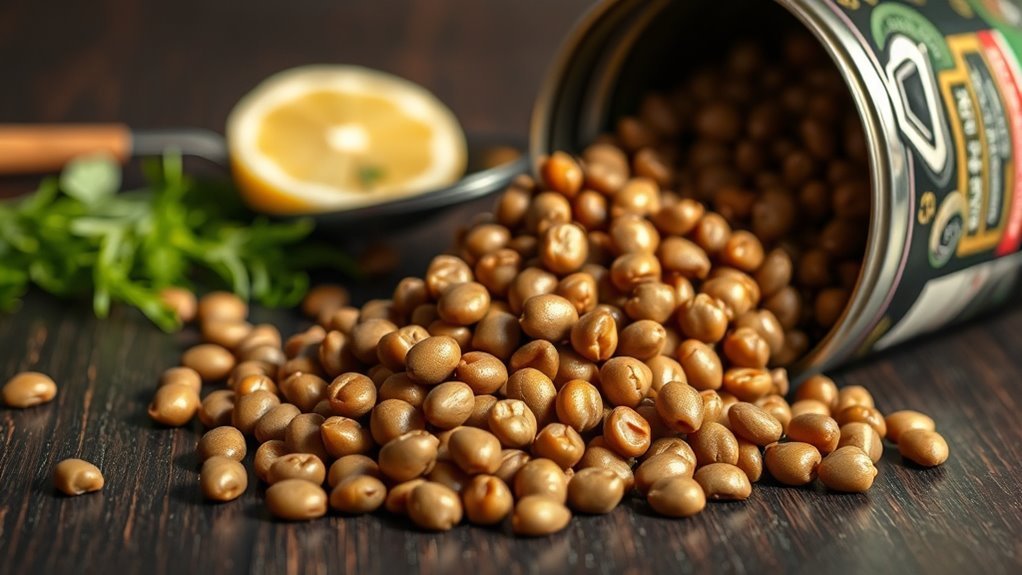
You get a quick, nutrient-packed boost with canned lentils that fuel your muscles, support digestion, and fit seamlessly into your meals. They offer a plant-based protein punch with all essential amino acids to help muscle repair and growth.
Packed with fiber, canned lentils keep your digestive system running smoothly and promote heart health.
Plus, they save you time without sacrificing nutrients.
Keep exploring, and you’ll uncover even more reasons to add them to your diet.
Why Canned Lentils Are a Convenient Nutrition Boost
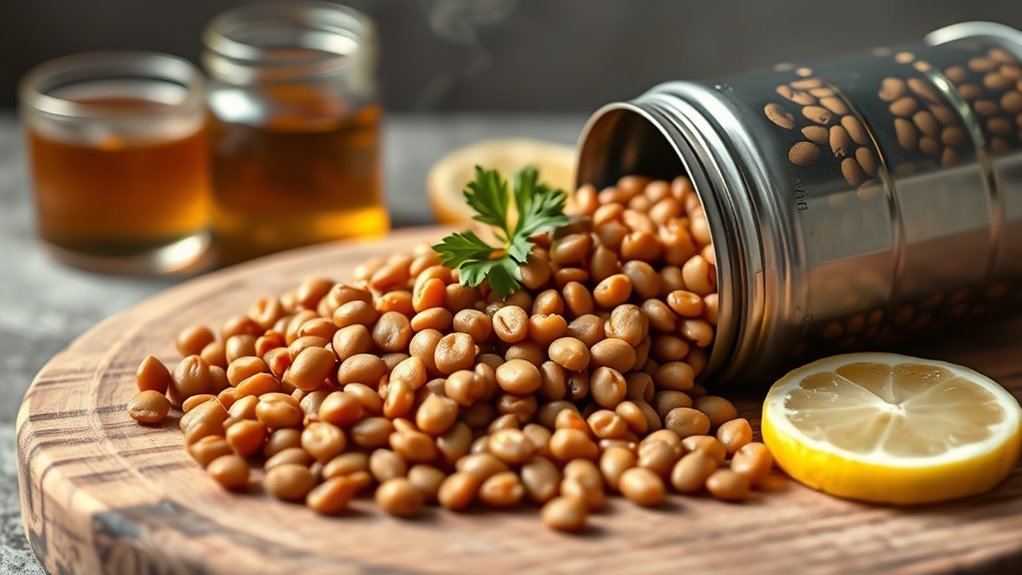
Although fresh lentils require time to cook, canned lentils offer a quick and convenient nutrition boost because they come pre-cooked and ready to eat. When you choose canned lentils, you save significant time in meal preparation, cutting cooking time from 20-30 minutes to just a few minutes.
These lentils retain most of their nutrient profile, so you still get high protein, rich fiber, and essential minerals like iron and folate. Since canned lentils are often preserved in water or salt brine, their freshness and nutritional quality stay intact.
To further enhance their health benefits, you can rinse canned lentils to reduce sodium content without losing key nutrients. This makes canned lentils an excellent option when you need a quick, convenient meal ingredient that packs a powerful nutrition boost, supporting a balanced diet without the hassle of long cooking times.
Plant-Based Protein in Canned Lentils for Muscle Health
When you include canned lentils in your diet, you get about 17.9 grams of plant-based protein per cooked cup, which supports muscle repair and growth. Canned lentils offer a complete protein, supplying all essential amino acids needed for muscle maintenance. This makes them an ideal choice for vegetarians and vegans wanting to boost muscle health without animal products. Their nutrient-rich profile also supports your overall wellness.
Here’s why canned lentils are great for your muscle health:
- High protein content helps preserve lean muscle tissue
- Complete protein source provides essential amino acids
- Convenient and quick to add to meals for consistent intake
- Suitable for vegetarian and vegan diets focused on muscle maintenance
- Rich in dietary fiber and other nutrients supporting overall nutrition
Incorporating canned lentils ensures you meet daily protein needs efficiently, making muscle repair and growth easier to achieve.
Fiber in Canned Lentils Supports Digestive Health
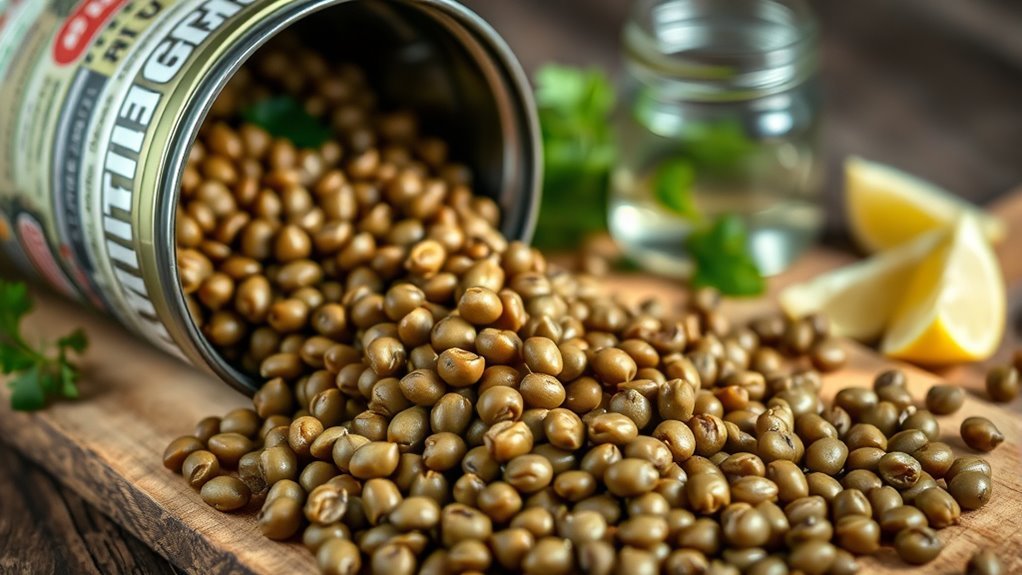
Beyond their impressive protein content, canned lentils also offer a significant amount of dietary fiber, about 15.6 grams per cooked cup. This fiber plays a key role in supporting your digestive health.
The fiber in canned lentils promotes regular bowel movements, helping to prevent constipation effectively. Plus, the soluble fiber they contain supports beneficial gut bacteria, enhancing your overall gut health.
Because canned lentils have reduced antinutrients from cooking, their fiber is more accessible, improving nutrient absorption in your digestive tract.
Here’s a quick look at how fiber in canned lentils benefits you:
| Benefit | Description |
|---|---|
| Dietary Fiber Content | 15.6 grams per cooked cup |
| Supports Regularity | Aids regular bowel movements, preventing constipation |
| Gut Bacteria Growth | Promotes beneficial gut bacteria |
| Soluble Fiber | Helps lower cholesterol, supports heart health |
| Nutrient Absorption | Enhanced due to reduced antinutrients |
Including canned lentils in your diet is a smart way to maintain digestive health.
Frequently Asked Questions
How Long Do Canned Lentils Last After Opening?
After opening canned lentils, your storage duration in the fridge is typically 3 to 5 days. To maximize the shelf life of opened cans, transfer lentils to airtight storage containers and follow ideal storage conditions.
Watch for spoilage signs like mold, off smells, or slimy texture to guarantee food safety. Refrigeration tips include rinsing lentils to reduce sodium and checking the expiration date beforehand.
Proper handling ensures shelf stability and helps prevent mold.
Are Canned Lentils Safe for People With Gluten Intolerance?
Yes, canned lentils can be safe for you if you have gluten intolerance, but you need to watch out for cross contamination risks. Look for certified gluten free brands with gluten free certification to guarantee safe processing methods.
Check gluten labeling accuracy and ingredient lists carefully to avoid gluten sensitive reactions. Rinsing lentils helps with gluten contamination prevention. Choosing plain canned lentils fits well with your gluten free diet compatibility and gluten free recipe ideas.
Do Canned Lentils Contain Added Preservatives or Sodium?
Imagine your canned lentils as a theater cast. Sometimes extras like preservatives and sodium sneak in. Yes, canned lentils often contain added preservatives like citric acid and sodium levels ranging from 300 to 600 mg per serving.
You can spot preservative types and additive presence by checking preservative labeling and ingredient transparency. Opt for salt alternatives or low-sodium options to manage sodium reduction.
Preservative safety and regulations keep these additives in check, helping you choose wisely.
Can Canned Lentils Be Used in Recipes for Children?
Yes, you can definitely use canned lentils in child friendly recipes! Try lentil puree ideas or mini lentil patties as toddler snack options. Lentil soup for kids and kid approved lentil salads make nutritious meals.
For finger foods, you can prepare lentil based finger foods or lentil finger foods like patties and dips. Easy lentil side dishes and nutritious lentil dips also help you boost your child’s nutrition with minimal effort.
How Do Canned Lentils Compare Nutritionally to Dried Lentils?
You’ll find canned lentils offer a similar nutritional comparison to dried lentils, with comparable protein content and carbohydrate levels. Fiber differences are minimal.
However, vitamin retention, especially water-soluble ones, slightly drops due to processing impact. Mineral availability and calorie count stay close, but flavor profiles and texture variations differ. Canned lentils are softer and milder. Rinsing them helps reduce sodium, making their nutrition more like dried lentils you cook yourself.
Conclusion
Choosing canned lentils is like finding a trusted friend who’s always there when you need a quick, nutritious boost. You get plant-based protein that helps build and repair muscles, plus fiber that keeps your digestion running smoothly.
They’re convenient, healthy, and perfect for your busy lifestyle. So next time you want a simple way to nourish your body, reach for canned lentils. They make eating well effortless and satisfying.