Are Nutritional Yeast and Active Dry Yeast the Same?
You might think nutritional yeast and active dry yeast are the same, but they’re not. Nutritional yeast is deactivated and adds a cheesy, nutty flavor plus nutrition; it won’t make dough rise.
Active dry yeast is alive and essential for fermentation and leavening in baking, producing fluffy bread.
Using one instead of the other changes texture and taste drastically.
Keep going, and you’ll discover how to choose the right yeast for your recipes and storage tips.
What Is Nutritional Yeast?
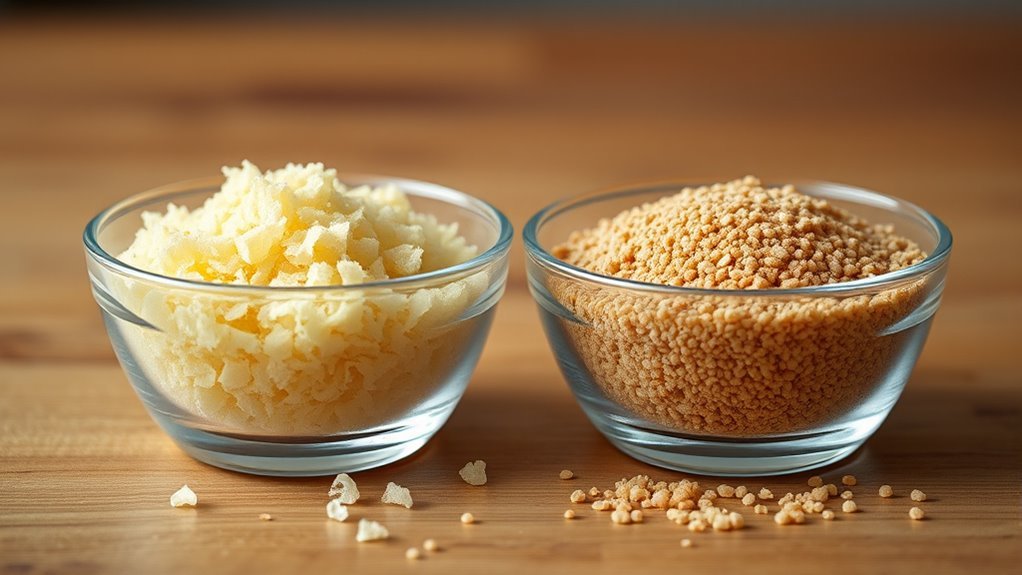
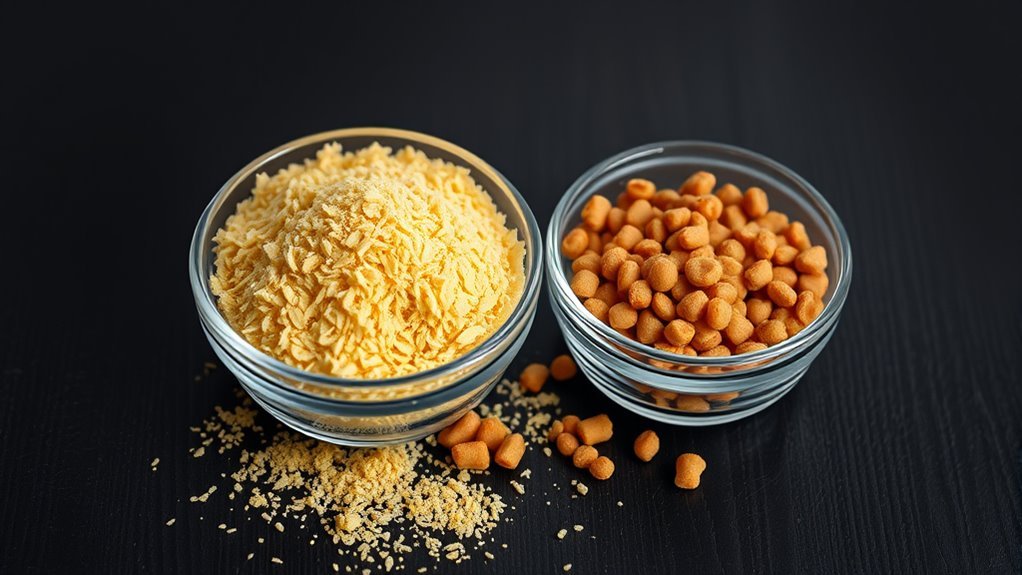
Although it shares a name with baking yeast, nutritional yeast is a completely different product. You’ll find it as flakes or powder, made from a deactivated form of *Saccharomyces cerevisiae* grown on molasses and then heat-dried to stop any activity.
This means nutritional yeast doesn’t ferment or make dough rise, so it’s not suitable for baking leavened goods. Instead, you’ll often use it as a food supplement for flavor and nutrition. It has a cheesy, nutty taste that many people love, especially in vegan dishes.
Nutritional yeast is also a powerhouse of nutrients. It usually comes fortified with vitamin B12 and contains a complete protein profile, making it a popular choice for those on plant-based diets. When you add nutritional yeast to your meals, you get a boost of vitamins and protein without activating any yeast fermentation.
It’s a versatile, nutrient-rich ingredient that’s quite different from active baking yeast.
How Active Dry Yeast Works
When you activate active dry yeast, you begin by rehydrating it in warm water with a bit of sugar. This little bit of sugar helps wake the yeast cells from their dormant state. Once the yeast is active, the cells start fermenting the sugars.
As they do this, they produce carbon dioxide, which is what makes your dough rise. And that’s the whole trick behind getting baked goods to have that light, airy texture we all love.
Yeast Activation Process
Because active dry yeast is dormant, you need to activate it by dissolving it in warm water, often with a bit of sugar. This yeast activation process rehydrates the yeast cells, waking them up and triggering fermentation.
As the yeast metabolizes the sugar, it produces carbon dioxide and alcohol, causing a foamy, bubbly surface to form within 5 to 10 minutes. This foam signals that your yeast is alive and ready to use.
Proper yeast activation guarantees the enzymatic activity necessary for your baking, helping dough rise effectively. Since active dry yeast is dehydrated for long shelf life, skipping this activation step means the yeast won’t perform as expected.
Role In Baking
Once you activate active dry yeast, it begins fermenting sugars in your dough, producing carbon dioxide that makes your bread rise and develop its light texture. This baking yeast is a living microorganism that remains dormant until you add warm water, ideally between 105-115°F, to rehydrate and wake it without killing it.
As fermentation progresses, the yeast converts sugars into alcohol and carbon dioxide, creating bubbles that give your baked goods their fluffy, airy quality. Proper proofing and kneading help the baking yeast fully develop, ensuring consistent rising and a desirable crumb structure.
Without active dry yeast, your dough wouldn’t rise properly, resulting in dense, flat bread. So, understanding how this yeast works is key to successful bread baking.
Nutritional Yeast vs. Active Dry Yeast: What’s the Difference?
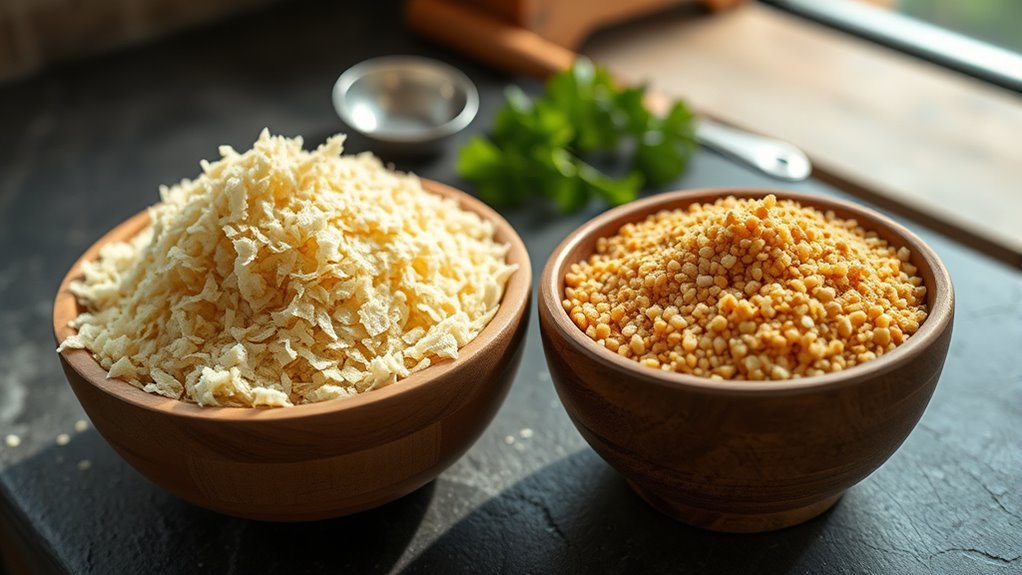
You’ll notice that nutritional yeast and active dry yeast play very different roles in the kitchen. Nutritional yeast adds flavor and nutrients, but it doesn’t make your dough rise. On the other hand, active dry yeast is what helps your dough rise through fermentation. Knowing these differences will definitely help you pick the right one for your recipe.
Functional Differences Explained
Although both nutritional yeast and active dry yeast share a name, they serve very different purposes in the kitchen. Active dry yeast is alive and works by fermenting, producing carbon dioxide that makes your dough rise and gives baked goods their fluffy texture.
Nutritional yeast, on the other hand, is deactivated, so it doesn’t ferment or cause any rising. Instead, it’s valued for adding a cheesy, nutty flavor and boosting nutrition with vitamins and protein.
You can’t swap nutritional yeast for active dry yeast when baking because it won’t provide leavening. Understanding these functional differences helps you choose the right yeast for your recipe and avoid baking mishaps.
Culinary Uses Compared
Understanding the functional differences between nutritional yeast and active dry yeast sets the stage for exploring how you use them in cooking and baking. Nutritional yeast is deactivated and adds a savory, cheesy flavor and nutritional boost, so you typically sprinkle it on dishes or mix it into sauces.
In contrast, active dry yeast is alive and essential for leavening bread and other baked goods by fermenting dough and causing it to rise. You’ll find active dry yeast stored in small sachets and needing activation before use, while nutritional yeast comes as flakes or powder ready to season.
Since they serve completely different purposes, swapping one for the other won’t work. You’ll get drastically different results whether you’re seasoning or baking.
Why Nutritional Yeast Doesn’t Rise Like Active Dry Yeast
Since nutritional yeast is deactivated, it can’t produce the carbon dioxide needed to make dough rise like active dry yeast does. This is because nutritional yeast is heat-treated, rendering it a deactivated yeast with no biological activity.
Without this activity, it can’t metabolize sugars or ferment dough, which means it won’t create the gas bubbles essential for leavening. On the other hand, active dry yeast is alive; it consumes the sugars in your dough and releases carbon dioxide, causing the dough to expand and rise.
When you use nutritional yeast in recipes, you won’t see any rising or leavening effects because it lacks fermentation capabilities. This fundamental difference explains why nutritional yeast is great for adding flavor and nutrients but isn’t suitable for baking tasks that require dough to rise, unlike active dry yeast.
Understanding this helps you choose the right yeast for your cooking needs.
Can You Substitute Nutritional Yeast for Active Yeast?
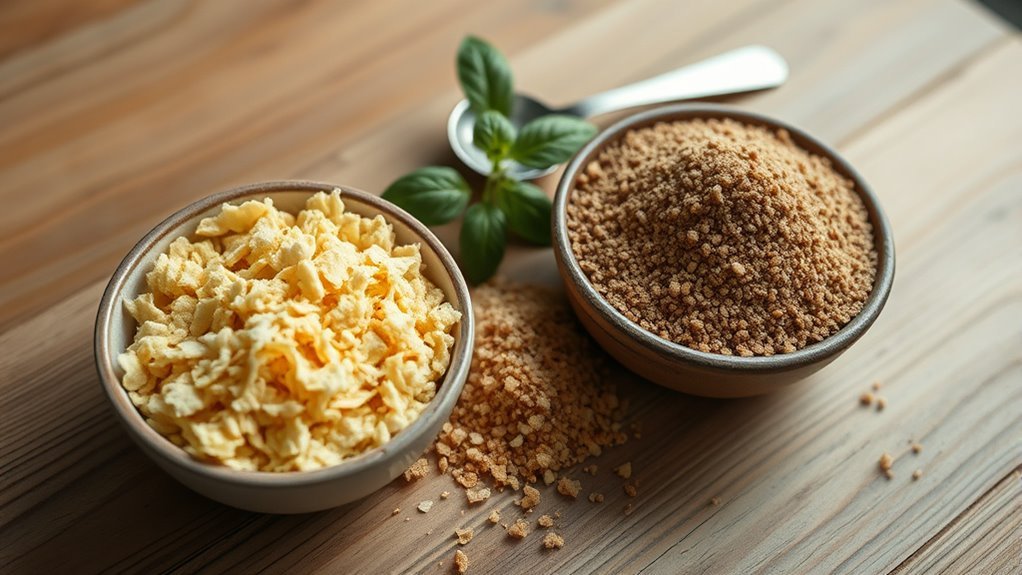
You can’t substitute nutritional yeast for active dry yeast when baking because they serve different purposes. See, active yeast helps dough rise through fermentation. On the other hand, nutritional yeast adds flavor and nutrients but doesn’t have any leavening power. So, if you try to swap them, your bread will end up dense and flat instead of light and airy.
Functional Differences Explained
Although both nutritional yeast and active dry yeast come from similar origins, you can’t swap one for the other in recipes. Active dry yeast is alive and essential for fermentation, which causes dough to rise. Nutritional yeast is deactivated and serves only as a flavor enhancer and nutritional supplement.
If you try to replace active dry yeast with nutritional yeast, your baked goods won’t rise, ending up dense and flat.
Keep these differences in mind:
- Active dry yeast requires warm water to activate fermentation.
- Nutritional yeast provides a cheesy, nutty flavor but no leavening power.
- Recipes relying on rising must use active dry yeast, not nutritional yeast.
Using nutritional yeast in place of active dry yeast won’t work functionally in baking.
Baking Impact Comparison
Understanding the distinct roles of nutritional yeast and active dry yeast helps clarify why they aren’t interchangeable in baking. Active dry yeast is alive and essential for leavening. It ferments dough, producing gas that makes bread rise and develop texture.
Nutritional yeast, on the other hand, is deactivated and lacks any leavening ability. If you try substituting nutritional yeast for active dry yeast, your baked goods will turn out dense and flat because there’s no fermentation or gas production.
While active dry yeast needs activation with warm water and time to work, nutritional yeast is simply added for flavor and nutrition without affecting dough structure. So, you can’t use nutritional yeast as a leavening agent. It won’t deliver the rise and texture active dry yeast provides.
Flavor And Nutrition
While nutritional yeast adds a savory, cheesy flavor and boosts B-vitamin content in your dishes, it can’t replace active dry yeast’s role in baking. Nutritional yeast is deactivated, so it won’t cause dough to rise or ferment like active dry yeast does.
If you substitute nutritional yeast for active yeast, your bread won’t get that essential lift or texture.
Keep these points in mind:
- Nutritional yeast enhances flavor and nutrition but doesn’t leaven dough.
- Active dry yeast is alive, responsible for fermentation and rising.
- Using nutritional yeast instead of active yeast won’t produce the necessary fermentation in baking.
Nutritional Benefits: Nutritional vs. Active Dry Yeast
Since nutritional yeast is deactivated, it offers a rich source of B-vitamins, complete protein, and minerals without causing fermentation. When you’re looking for nutritional benefits, nutritional yeast stands out because it contains over 50% protein per serving and is often fortified with vitamin B12. This makes it a powerful supplement, especially for those on plant-based diets.
It also provides dietary fiber, supporting digestion and overall health. On the other hand, active dry yeast is alive and mainly used for baking, contributing minimal nutritional value since its primary role is to ferment and leaven dough. Because active dry yeast needs to stay alive to do its job, it doesn’t offer the same rich nutritional profile.
Flavor Profiles: What Nutritional and Active Dry Yeast Add
Although both types of yeast serve distinct purposes, nutritional yeast adds a distinctive cheesy, nutty, and umami flavor that can enhance savory dishes. Active dry yeast remains flavorless, focusing solely on leavening your baked goods.
When you use nutritional yeast, you get a rich, savory boost that can mimic cheese and deepen the flavor profile of your meals without affecting texture or rise. In contrast, active dry yeast works behind the scenes to ferment and make dough rise without adding any taste, keeping your baked goods neutral and allowing other ingredients to shine.
Consider these points about their flavor contributions:
- Nutritional yeast offers a stable, savory flavor that doubles as a seasoning.
- Active dry yeast is deactivated in recipes, contributing no flavor.
- The umami taste of nutritional yeast makes it popular for vegan dishes.
Understanding these flavor differences helps you choose the right yeast for your cooking needs.
Common Uses for Nutritional and Active Dry Yeast
When you want to add a savory, cheesy flavor to your meals, nutritional yeast is your go-to ingredient. It’s perfect for sprinkling on popcorn or mixing into vegan sauces. It enhances dishes with its umami-rich taste and also boosts the nutritional value of your meals. You can easily stir it into pasta, soups, or even homemade vegan cheese for that cheesy depth without any rising effect.
On the other hand, active dry yeast serves a completely different purpose. If you’re baking bread or other baked goods, you’ll use active dry yeast to leaven the dough. You’ll need to activate it in warm water with a bit of sugar before adding it to your recipe. This yeast ferments, producing carbon dioxide that causes the dough to rise and develop texture. Remember, active dry yeast won’t add flavor like nutritional yeast, and nutritional yeast can’t replace active dry yeast in baking. Each has its unique role in your kitchen.
How to Store Nutritional and Active Dry Yeast Properly
To get the best results from nutritional and active dry yeast, proper storage plays a big role. You want to preserve the flavor, nutritional content, and effectiveness of each type. Nutritional yeast should be stored in an airtight container, kept in a cool, dark place to maintain its quality.
Active dry yeast, on the other hand, needs refrigeration or freezing to stay viable and extend its shelf life. Keep both yeasts away from heat and moisture, as these conditions can cause spoilage or reduce their performance.
Regularly check expiration dates and discard any yeast with off smells, discoloration, or clumping.
Here are key storage tips to remember:
- Store nutritional yeast in a sealed container in a dark, cool spot
- Refrigerate or freeze active dry yeast to maintain viability
- Avoid exposure to heat and moisture for both yeasts
Following these storage guidelines ensures your yeast stays fresh and works well in your recipes.
Which Yeast Should You Use?
Since nutritional yeast and active dry yeast serve very different purposes, choosing the right one depends on what you want to achieve in your recipe. If you’re baking bread or any dough-based item that needs to rise, you’ll want to use active dry yeast. This yeast is alive and ferments the dough, causing it to expand and develop texture.
On the other hand, if you’re looking to add a cheesy, nutty flavor or boost your meal’s nutritional content, nutritional yeast is the way to go. It’s deactivated and won’t help your dough rise.
Using the wrong yeast means your recipe could fail. A bread recipe with nutritional yeast won’t rise, and using active dry yeast as a seasoning won’t give you that distinctive flavor. Always check your recipe to determine whether you need yeast for leavening or flavor enhancement to make the right choice.
Choosing the Right Yeast for Your Cooking and Baking Needs
Although both nutritional yeast and active dry yeast share the name “yeast,” you’ll want to pick the right one based on your cooking or baking goals. Nutritional yeast won’t help your dough rise; it’s meant for adding flavor and nutrition. Active dry yeast, on the other hand, contains living organisms that ferment dough, making it rise and giving your baked goods that perfect texture.
Here’s how to choose the right yeast:
- Use nutritional yeast when you want a cheesy, nutty flavor boost without fermentation.
- Choose active dry yeast if your recipe requires leavening, like bread or rolls.
- Remember, nutritional yeast is ready to use as is, while active dry yeast needs activation with warm water.
Understanding these differences will help you avoid recipe mishaps and get the results you want every time. So, pick wisely and enjoy your cooking and baking adventures!
Frequently Asked Questions
Can Nutritional Yeast Cause Allergic Reactions?
Yes, nutritional yeast can cause allergic reactions, especially if you have allergy concerns related to yeast or fungi. You might experience symptoms like skin rashes, itching, swelling, or respiratory issues.
Although these reactions are rare, they can happen. If you know you’re allergic or sensitive to yeast, it’s best you avoid nutritional yeast or consult a healthcare professional before adding it to your diet to stay safe and avoid any adverse effects.
How Long Does Active Dry Yeast Last After Opening?
Active dry yeast lasts about 4 to 6 months after opening if you maintain proper storage. For best storage longevity, keep it in an airtight container in your refrigerator or freezer. This protects it from moisture, heat, and air.
To check if it’s still active, dissolve a teaspoon in warm water with sugar and watch for bubbling within 5 to 10 minutes. Proper storage guarantees your yeast stays fresh and effective for baking.
Is Nutritional Yeast Safe for People With Gluten Intolerance?
Yes, nutritional yeast is generally safe for people with gluten sensitivity. You’ll want to choose brands labeled gluten-free to avoid cross-contamination since some facilities process gluten-containing products.
Nutritional yeast is deactivated and doesn’t contain gluten proteins, so it won’t trigger your symptoms. Always check product labels carefully to verify the yeast you pick is certified gluten-free, keeping your diet safe and free from unwanted gluten exposure.
Can Active Dry Yeast Be Used in Beverages?
You might think active dry yeast fits perfectly in your homemade drinks, but its beverage compatibility is limited. Since it ferments actively, adding it to beverages can cause unwanted rising, off-flavors, or spoilage.
Unless you control fermentation carefully, it’s not ideal for casual beverages. Instead, use specific yeast strains designed for drinks like beer or kombucha. So, skip active dry yeast in most beverages to avoid unpleasant surprises.
Does Nutritional Yeast Contain Any Sugar or Carbs?
Yes, nutritional yeast contains a small amount of sugar and carbs. The sugar content is naturally occurring and quite minimal, about 6.2 grams per serving.
Most of the carbs come from complex sugars and dietary fiber, so you don’t have to worry about added sugars. Because it’s deactivated yeast, it doesn’t ferment or produce extra sugar. You can comfortably include it in low-carb or keto diets in moderation.
Conclusion
While nutritional yeast and active dry yeast might seem like distant cousins, they each bring unique talents to your kitchen. Nutritional yeast adds a cheesy, savory boost without the rise, perfect for sprinkling on dishes.
Active dry yeast, on the other hand, works its magic to make dough fluffy and light. Knowing their subtle differences helps you choose the right partner for your recipe, ensuring every meal turns out just the way you want.