
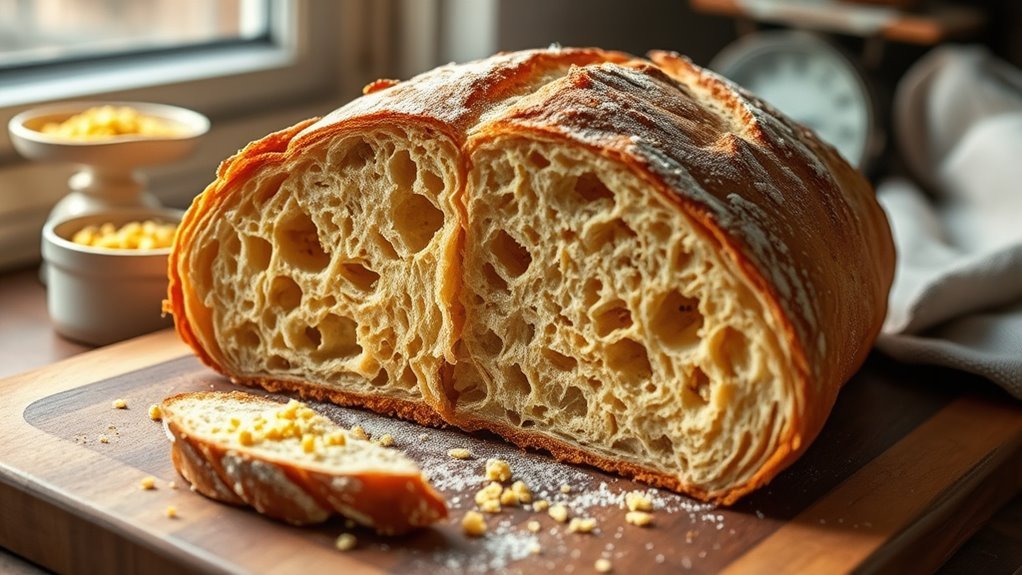
What Happens When You Use Nutritional Yeast in Bread?
When you use nutritional yeast in your bread, it won’t make it rise since it’s inactive yeast and doesn’t produce gas.
Instead, it adds a savory, cheesy flavor and boosts protein content without changing the dough’s texture or gluten development.
You’ll notice a slightly softer crumb and better moisture retention, making your bread taste richer and stay fresh longer.
If you want to explore how it interacts with other ingredients and affects your baking, there’s plenty more to discover.
What Is Nutritional Yeast and Does It Make Bread Rise?
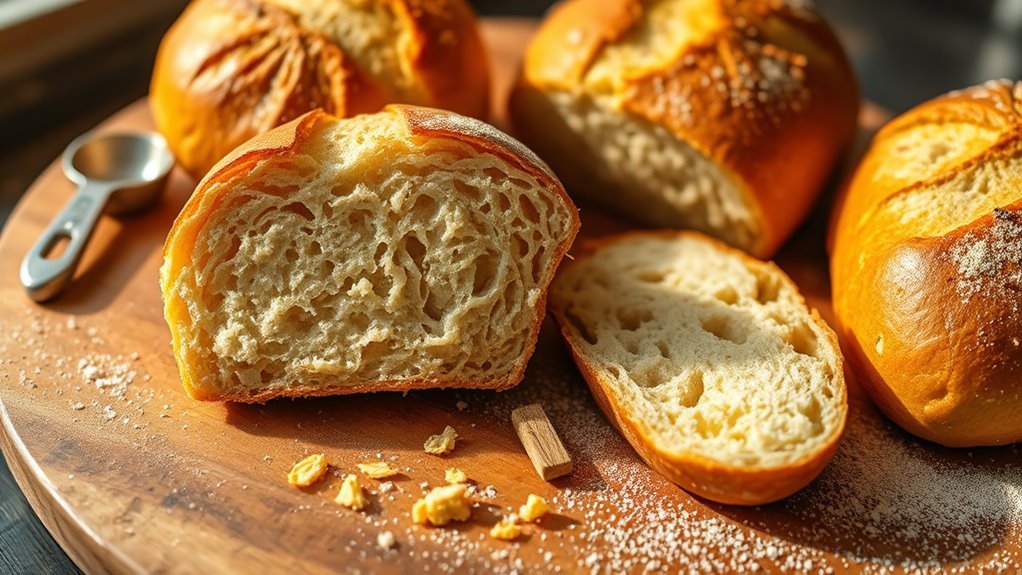
Nutritional yeast is an inactive form of Saccharomyces cerevisiae that doesn’t make bread rise because it doesn’t produce carbon dioxide. Unlike active dry or baker’s yeast, nutritional yeast won’t cause your dough to expand or develop air pockets.
If you’re hoping for a good bread rise, you’ll need to rely on active leavening agents like baker’s yeast or baking soda instead. Nutritional yeast serves a different purpose. It adds savory flavor and boosts protein content without affecting gluten development or the dough’s ability to proof.
So, when you add nutritional yeast to your bread recipe, you’re enhancing taste and nutrition, not the bread rise. Remember, nutritional yeast is strictly for flavor and nutritional benefits, not leavening.
If you want fluffy, airy bread, make sure to include active yeast or another leavening agent. Nutritional yeast alone won’t get you there.
How Nutritional Yeast Adds Flavor to Bread
Although it doesn’t affect how your bread rises, adding nutritional yeast brings a savory, cheesy flavor that enhances the overall taste. When you mix nutritional yeast into your dough, it introduces layers of umami and nutty flavor that make every bite richer and more satisfying.
Here’s how nutritional yeast adds flavor to your bread:
- It infuses the dough with a distinct savory, cheesy profile without overpowering other ingredients.
- Around 6% of the dough’s weight in nutritional yeast provides a noticeable flavor boost.
- Its flavor holds up well during baking, enriching both the crust and crumb.
- Combining nutritional yeast with ingredients like garlic intensifies the savory depth.
Nutritional Benefits of Using Nutritional Yeast in Bread
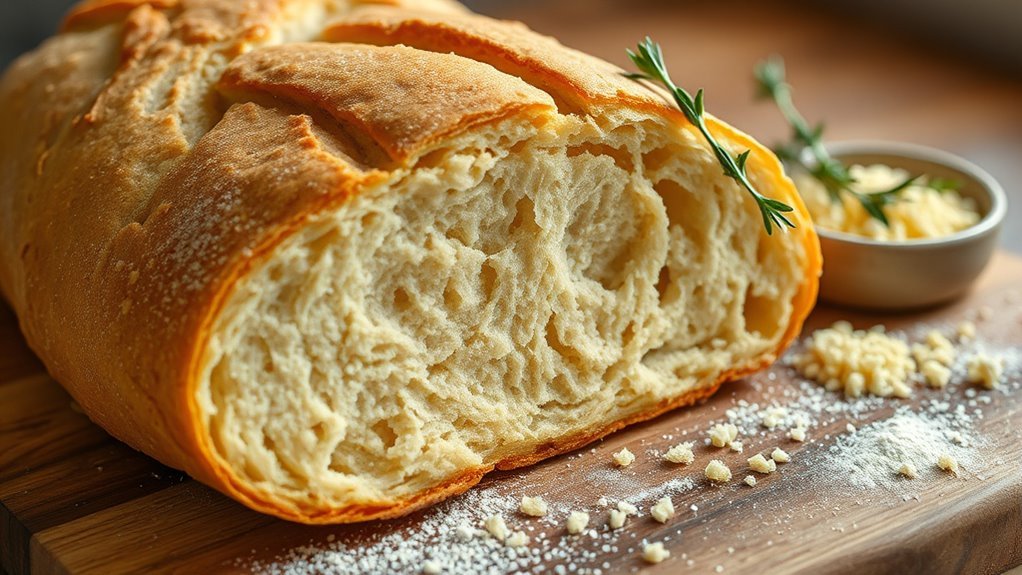
When you add nutritional yeast to your bread, you’re giving it a nice protein boost—about 8 grams per serving. Plus, it brings in a rich, savory umami flavor that naturally complements your recipe.
It’s a simple way to make your bread not just tastier, but also more nutritious, without any extra fuss.
Added Protein Content
How can you boost your bread’s protein content without changing its texture or rise? By adding nutritional yeast, you can enhance your bread’s nutritional profile effortlessly. Nutritional yeast contributes about 8 grams of complete protein per serving, making your bread more satisfying and nutritious.
Here’s what happens when you include it:
- Increases protein content with all nine essential amino acids
- Enhances the amino acid profile for a balanced nutrient boost
- Supports vegetarian and vegan diets with plant-based protein
- Maintains the bread’s texture and rise without compromise
Using nutritional yeast is a simple way to enrich your bread’s protein content, helping you meet dietary needs while keeping the bread’s quality intact. It’s a smart addition for anyone wanting a protein-packed loaf without animal products.
Enhanced Flavor Profile
Because nutritional yeast adds a savory, umami flavor, it transforms your bread’s taste without affecting its rise. When you incorporate at least 6% of the dough weight in nutritional yeast, you achieve a noticeable flavor enhancement that brings cheesy, nutty, and roasted notes to your loaf.
This complex flavor profile lets you create savory bread varieties like garlic or cheesy loaves without adding dairy. Nutritional yeast’s unique taste not only deepens the flavor but also makes your bread more interesting and satisfying.
How Nutritional Yeast Affects Bread Texture and Crust
When you add nutritional yeast to your bread dough, it subtly changes the crumb by making it a bit creamier and chewier. You probably won’t notice much difference in the crust’s color or crispiness, but the yeast does help keep some moisture in there, which makes the crust softer. So, your bread gets some nice texture perks without losing that satisfying crunch.
Impact on Crust Crispiness
Although nutritional yeast doesn’t contain gluten or leavening agents to directly impact your bread’s rise, it can still change the crust’s texture. When you add nutritional yeast, expect a noticeable boost in crust crispiness thanks to several factors:
It creates a slightly drier dough, which helps form a crisper crust during baking. Natural sugars and amino acids in the yeast enhance browning and caramelization on the crust.
Maillard reaction-promoting compounds result in a more evenly browned and slightly thicker crust. Nutritional yeast’s moisture-retaining properties indirectly improve crust texture when baked properly.
Influence on Crumb Texture
Even though nutritional yeast doesn’t contain gluten, it still influences your bread’s crumb texture by adding protein and fiber that contribute to a slightly denser, more tender crumb. Since it lacks gluten-forming proteins, it won’t affect your bread’s elasticity or rise, so the crumb stays balanced.
When you add nutritional yeast, you’ll notice a subtle change in texture. Your bread becomes softer inside without becoming too heavy. Its flaky or powder form can also affect how the dough absorbs moisture, which slightly impacts crumb softness.
Role in Moisture Retention
Since nutritional yeast contains proteins and fibers that form a protective barrier in the dough, it helps retain moisture throughout baking. This moisture retention plays a vital role in shaping the bread’s texture and crust.
When you add nutritional yeast, you’ll notice a softer crumb and improved freshness thanks to better moisture preservation. You’ll also get a more tender crust that avoids excessive drying during baking.
It promotes even hydration throughout the dough, enhancing the overall texture. Plus, it extends shelf life by keeping ideal moisture levels intact.
How Much Nutritional Yeast to Use in Bread Recipes
When you add nutritional yeast to your bread dough, aim for at least 6% of the dough’s weight to bring out a noticeable savory flavor without overwhelming the taste. In bread making, this balance is key. Too little won’t impart the umami boost, while too much (over 10%) can overpower the flavor and affect texture.
Typically, 1 to 2 tablespoons per 3-4 cups of flour works well. Since nutritional yeast doesn’t impact leavening, you can adjust its amount purely for flavor.
| Dough Weight (%) | Approximate Amount | Flavor Intensity | Texture Impact | Recommended Use |
|---|---|---|---|---|
| 0-5% | <1 tbsp | Mild | None | Subtle umami note |
| 6% | ~1 tbsp | Noticeable | Minimal | Balanced savory flavor |
| 8% | 1.5 tbsp | Strong | Slight | Pronounced cheesy flavor |
| 10%+ | 2+ tbsp | Overpowering | Possible | Use cautiously |
Adjust based on your flavor goals in bread making.
Best Bread Recipes Featuring Nutritional Yeast
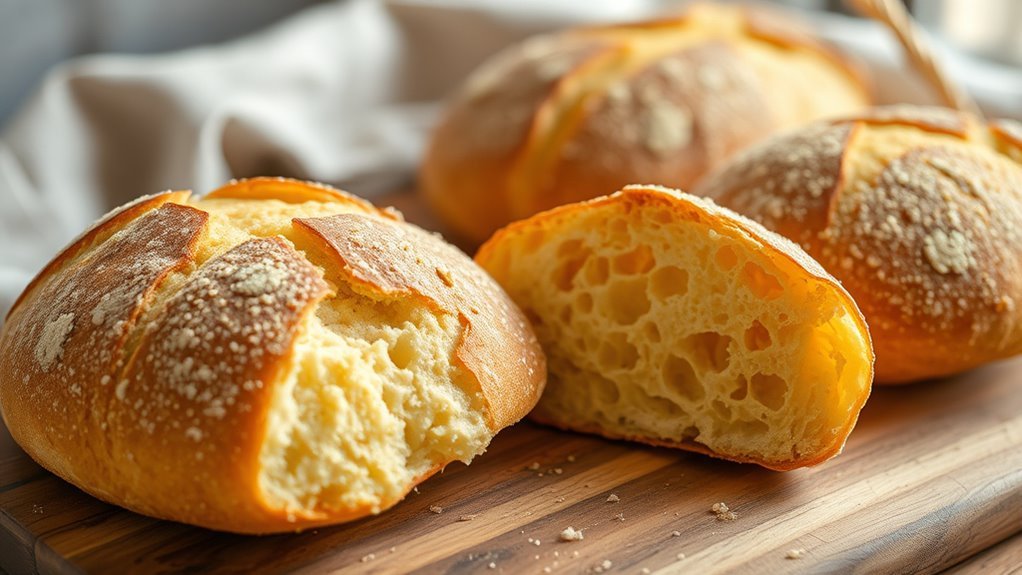
You’ll find that adding nutritional yeast to your bread recipes gives them a savory, cheesy kick without changing the texture. It’s a simple way to add a new layer of flavor that really stands out. Using about 6% of the dough weight is a solid rule to boost both flavor and protein.
Plus, you can get creative by combining nutritional yeast with garlic or herbs. This combo makes some seriously tasty, nutrient-rich loaves that are perfect for sandwiches or just enjoying on their own. Give it a try—you might be surprised how much it elevates your bread!
Flavor-Boosting Bread Recipes
Although adding nutritional yeast won’t affect your dough’s rise, it will transform your bread’s flavor by infusing it with a savory, cheesy umami punch. When you incorporate about 6% nutritional yeast by dough weight, you boost flavor without overpowering it.
These flavor-boosting bread recipes show how versatile nutritional yeast can be:
- Garlic and herb loaves enhanced with nutritional yeast for a rich, savory twist
- Whole grain breads that gain depth and complexity with nutritional yeast
- Simple white bread recipes elevated by the subtle cheesy notes of nutritional yeast
- Protein-packed breads where nutritional yeast adds both nutrition and flavor
Using nutritional yeast, you can create breads that are deliciously savory and packed with umami, making every bite more satisfying.
Nutritional Yeast Usage Tips
Since nutritional yeast adds a rich, savory flavor without affecting your bread’s rise, you can confidently include at least 6% of it by dough weight for the best results. Add nutritional yeast during the mixing stage to guarantee its flavor disperses evenly throughout your dough.
It works great in white bread and sourdough crackers, enhancing umami and cheesy notes without overpowering your bread’s natural taste. For more depth, combine nutritional yeast with garlic or herbs to boost flavor complexity.
Using small amounts also increases your bread’s protein content without altering texture or rise. By following these tips, you’ll consistently bake delicious bread with the unique benefits of nutritional yeast, creating tasty, nutritious loaves every time.
Combining Nutritional Yeast With Other Ingredients for Flavor
When you combine nutritional yeast with ingredients like garlic, herbs, or spices, you reveal a savory, cheesy umami flavor that elevates your bread. Nutritional yeast doesn’t just add depth; it acts as a flavor enhancer that pairs beautifully with other components, creating complex and enticing bread varieties.
To maximize its impact, try these combinations:
- Mix nutritional yeast with garlic powder or onion powder for a rich, layered flavor.
- Add fresh herbs like parsley or basil to introduce vibrant, herbaceous notes.
- Incorporate toasted seeds or grated cheese to boost the bread’s savory depth.
- Use a splash of citrus juice or vinegar to brighten and balance the overall flavor.
Mistakes to Avoid When Using Nutritional Yeast in Bread
If you want your bread to turn out well, don’t confuse nutritional yeast with traditional yeast. It won’t help your dough rise. Nutritional yeast doesn’t produce carbon dioxide, so it can’t replace the leavening power of yeast in your bread flour dough.
Avoid using it as a leavening agent or substituting it for yeast in your recipe. Another mistake is adding too much nutritional yeast. Keep it under 6% of the dough weight to prevent overpowering flavors without leavening benefits.
Also, be sure to mix nutritional yeast evenly into your dough to avoid uneven flavor distribution. Finally, add nutritional yeast alongside other flavorings, not as a replacement for ingredients that promote rise. Following these guidelines will help you enhance your bread’s taste and nutrition without compromising texture or structure.
Tips From Bakers for Experimenting With Nutritional Yeast
Although nutritional yeast doesn’t impact your dough’s rise, you can easily incorporate it during mixing to boost flavor and nutrition. When experimenting with nutritional yeast flakes, start with about 6% of the dough weight to enhance taste without overpowering your bread. Adjust this ratio between 3% and 10% to find your preferred intensity.
Nutritional yeast adds flavor and nutrition without affecting rise—start with 6% of dough weight and adjust as desired.
Here are some tips from bakers for experimenting effectively:
- Combine nutritional yeast with garlic or herbs in sourdough for a rich umami and cheesy flavor.
- Add flakes directly during mixing since they don’t change fermentation times.
- Use nutritional yeast to naturally boost protein content, especially in plant-based recipes.
- Gradually increase or decrease the amount to customize flavor depth without affecting texture.
Frequently Asked Questions About Nutritional Yeast in Bread
Since nutritional yeast doesn’t affect your bread’s rise, you might wonder how it truly influences flavor and nutrition. Nutritional yeast adds a cheesy, umami taste that enhances your bread’s flavor without changing its texture or leavening. You can safely include it at about 6% of your dough’s weight to boost protein and add savory depth. Unlike active dry yeast, it won’t help your bread rise, so you still need traditional yeast for that.
Many bakers use nutritional yeast in savory breads like garlic or cheesy loaves to create rich, complex flavors. If you’re concerned about texture or rise, rest assured nutritional yeast won’t compromise them. Instead, it complements your bread by enriching taste and nutritional content. So, when you add nutritional yeast to bread, you’re enhancing flavor and health benefits without affecting the essential baking processes.
Frequently Asked Questions
Can Nutritional Yeast Be Used in Gluten-Free Bread Recipes?
Yes, you can use nutritional yeast in gluten-free bread recipes. It provides excellent flavor enhancement by adding a savory, cheesy umami taste that makes your bread more delicious.
Plus, it gives a nutritional boost by increasing the protein content without adding gluten. Just use it in small amounts, around 6% of the dough weight, to improve flavor without affecting the bread’s texture or rise.
It pairs well with gluten-free flours like rice or tapioca.
Does Nutritional Yeast Affect Bread’s Shelf Life?
Nutritional yeast doesn’t substantially affect your bread’s shelf life, but it can slightly improve shelf stability due to its low moisture content, which helps prevent mold.
While it won’t act as a preservative, it does enhance flavor, giving your bread a savory, cheesy boost. So, when you add nutritional yeast, you’re mainly upgrading taste and nutrition rather than extending how long your bread stays fresh.
Is Nutritional Yeast Safe for People With Yeast Allergies?
Nutritional yeast safety for people with yeast allergies isn’t guaranteed. Even though it’s deactivated, you could still face yeast allergy implications because it contains yeast proteins from Saccharomyces cerevisiae.
If you have a yeast allergy, you should be cautious and check product labels for any added ingredients or contamination risks. It’s best to consult your healthcare professional before using nutritional yeast to avoid any allergic reactions or complications.
Can Nutritional Yeast Replace Active Yeast in Bread Dough?
No, nutritional yeast can’t replace active yeast in bread dough because it doesn’t cause the dough to rise. If you try this yeast substitution, your bread will be dense and flat, lacking the airy texture you want.
However, you can use nutritional yeast for flavor enhancement and added nutrients, but you’ll still need active yeast for proper leavening. So, don’t skip the active yeast if you want your bread to rise well.
How Does Nutritional Yeast Interact With Sourdough Starters?
Nutritional yeast doesn’t contribute to yeast activation in your sourdough starter because it’s inactive. Instead, it enhances flavor by adding a savory, umami boost without affecting fermentation or rise.
When you mix it into your starter or dough, it won’t activate wild yeast or produce carbon dioxide. You’ll get richer taste and extra nutrients, but your starter’s microbial activity remains unchanged.
Use it mainly for flavor enhancement, not leavening.
Conclusion
Using nutritional yeast in your bread won’t make it rise like traditional yeast, but it does boost flavor with a cheesy, nutty twist and adds extra nutrients.
It subtly changes the texture and enriches the crust, giving a unique touch. Just don’t overdo it. You want balance.
Experimenting carefully lets you enjoy tasty, nutritious bread without sacrificing rise or crumb. So, go ahead and try it; you might be surprised how it elevates your baking!