

3 Nutritional Facts About the Value of Mashed Potatoes
You’ll find mashed potatoes deliver more than comfort. They’re rich in vitamin C, potassium, and B6, which support your immune system and muscle health.
Keeping the skins on boosts fiber, helping slow glucose absorption and improving digestion. Cooling them increases resistant starch, lowering their glycemic index and stabilizing blood sugar for better weight management.
And there are easy ways to make your mashed potatoes even healthier if you want to explore further benefits.
Why Mashed Potatoes Are More Than Just Comfort Food
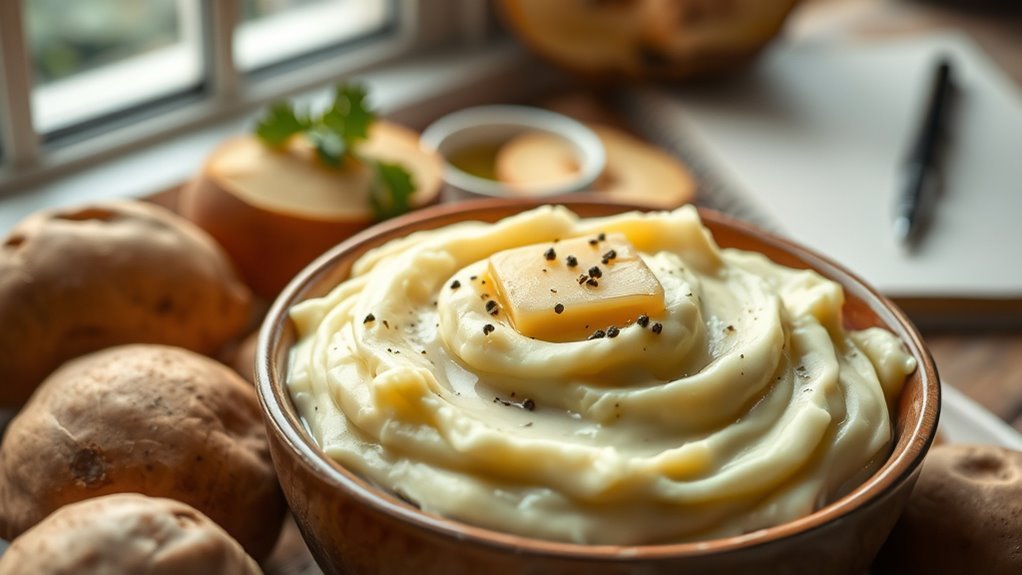
Although mashed potatoes are often seen as simply a comfort food, they offer much more than just warmth and taste. When you enjoy mashed potatoes, you’re actually fueling your body with a nutrient-rich food packed with vitamin C, potassium, and vitamin B6. These nutrients play an essential role in supporting your immune system and maintaining muscle health.
Plus, mashed potatoes have a balanced macronutrient profile, which helps keep you energized and satisfied. If you prepare them with whole milk and butter, you add essential fats and micronutrients that further boost their nutritional value.
Beyond being tasty, mashed potatoes provide antioxidants and critical minerals that contribute to your overall well-being. So next time you serve or eat mashed potatoes, remember you’re not just indulging in comfort. You’re nourishing your body with a nutrient-rich dish that supports your health in many important ways.
How Mashed Potatoes Can Help Control Blood Sugar and Manage Weight
When you cool cooked potatoes for about 30 minutes, their resistant starch content increases. This helps lower their glycemic index and keeps your blood sugar more stable. This simple step makes mashed potatoes a smarter choice for blood sugar control and weight loss.
Cooling cooked potatoes for 30 minutes boosts resistant starch, lowering glycemic index and stabilizing blood sugar.
Eating mashed potatoes with skins boosts fiber, which slows glucose absorption and improves blood sugar management. Plus, the potassium in mashed potatoes supports insulin sensitivity, helping regulate blood sugar levels.
To better manage your blood sugar and support weight loss, consider these tips:
- Cool your mashed potatoes before eating to increase resistant starch.
- Include skins in your mashed potatoes for added fiber.
- Pair mashed potatoes with lean proteins and healthy fats to reduce blood sugar spikes.
Simple Tricks: Keep the Skin and Cool Your Mashed Potatoes for More Benefits

To get the most out of your mashed potatoes for blood sugar control and weight management, focus on two simple tricks: keep the skins on and cool them before eating. Leaving the skins on boosts the fiber content by up to 50%, improving your digestion and helping you feel fuller longer. Plus, the skins hold valuable vitamins like C and B6 that heat can destroy.
Cooling your mashed potatoes for at least 30 minutes increases resistant starch by about 10-15%, which lowers their glycemic index. This means your blood sugar rises more slowly, aiding better insulin response. You can enjoy these benefits by using cooled mashed potatoes in recipes like potato salad. Cooling also preserves antioxidants, adding to the health perks. So, by simply keeping the skins and chilling your mashed potatoes, you enhance their nutritional value and support your overall well-being efficiently.
Frequently Asked Questions
Are Mashed Potatoes Gluten-Free?
Yes, mashed potatoes are naturally gluten-free if you make them from scratch using just potatoes, milk, and butter. However, you need to watch out for gluten cross contamination, especially if they’re prepared in kitchens or with utensils that also handle gluten-containing foods.
If you’re buying packaged mashed potatoes, check labels carefully for gluten additives. For safe gluten free alternatives, homemade mashed potatoes are your best bet to avoid hidden gluten.
Can Mashed Potatoes Be Part of a Low-Sodium Diet?
Yes, mashed potatoes can be part of a low-sodium diet if you focus on sodium reduction during preparation. You can avoid adding salt and instead use herbs, spices, or salt-free seasonings for flavor enhancement.
Making them at home gives you full control over sodium levels, unlike store-bought or restaurant options. Just steer clear of processed salt and consider using unsalted broth to keep sodium content low while enjoying tasty mashed potatoes.
How Many Calories Are in a Typical Serving of Mashed Potatoes?
You’ll find about 237 calories in a typical one-cup serving of mashed potatoes. Imagine Sarah, who tracks potato nutrition closely to manage her energy intake; she counts each serving’s calorie content to stay on target.
Most calories come from carbs, with some fat and protein mixed in. So, when you enjoy your mashed potatoes, you’re getting a balanced mix that fuels you without overloading your diet.
Do Mashed Potatoes Contain Any Allergens?
Yes, mashed potatoes often contain dairy ingredients like milk and butter, which can trigger allergies or lactose intolerance. You should be cautious because cross contamination risks might occur, especially with store-bought or processed versions that include soy or gluten additives.
If you have allergies, it’s best to check ingredient labels carefully or make mashed potatoes at home using dairy-free alternatives to avoid any allergic reactions or sensitivities.
What Is the Best Way to Store Leftover Mashed Potatoes?
Think of leftover mashed potatoes as treasure you want to protect. The best way to store them is by using refrigeration tips: place them in an airtight container and keep them at or below 40°F to stay fresh for 3-4 days.
For longer storage, freezing techniques work wonders. Seal them tightly in freezer bags or containers and freeze for up to 2 months. Always reheat thoroughly to keep your treasure safe and tasty.
Conclusion
Now that you know mashed potatoes are more than just comfort food, you can dig in with confidence. Keeping the skin and cooling them turns this classic side dish into a nutritional powerhouse that helps manage blood sugar and supports weight control.
So, don’t just take it at face value. There’s more than meets the eye here. With these simple tricks, you’re turning a humble favorite into a real game-changer on your plate.