
Nutritional Value of Dairy & Eggs: Every Food Compared Side by Side
Dairy covers one of nutrition science’s most concentrated food categories — yet the differences between cream cheese, cheddar, Greek yogurt, cottage cheese, and milk are rarely mapped together in one place. Each product delivers protein, calcium, fat, and micronutrients in completely different proportions. This guide compares all five core dairy products plus eggs, covering what each delivers, where they differ, and how they fit into a nutritionally complete weekly plate.
Is cream cheese nutritious?
Yes. Cream cheese delivers fat-soluble vitamins A and D, modest protein (approximately 2g per tablespoon), calcium, and phosphorus. It is primarily a fat source at approximately 35–40% fat by weight, which gives it a lower protein-to-calorie ratio than other dairy products. In appropriate portions, cream cheese contributes real micronutrients and belongs in a varied diet.
Cream cheese contains real micronutrients — understanding what it actually delivers helps you use it effectively rather than avoid it unnecessarily.
Per 2-tablespoon (28g) serving: approximately 100 calories, 2g protein, 10g fat, 3% DV calcium, 8% DV vitamin A, and a small amount of vitamin D. The fat profile is predominantly saturated (approximately 6g per serving), with some monounsaturated fat. Evidence suggests dairy saturated fat may carry different metabolic associations than saturated fat from processed foods — research on this distinction is ongoing and not fully settled.
Cream cheese’s primary nutritional role is as a delivery vehicle for fat-soluble vitamins A, D, and K2. Because it is a high-fat food, these fat-soluble nutrients are present and bioavailable. Protein content at approximately 2g per tablespoon is modest — significantly lower than cottage cheese, Greek yogurt, or milk per calorie. It is a cooking ingredient and spread, not a protein source.
The comparison table below places cream cheese alongside every major dairy product and eggs so the nutritional trade-offs are visible in one view.
Dairy & Egg Nutritional Comparison — Per Standard Serving (USDA FoodData Central)
| Product | Serving | Calories | Protein | Calcium | Fat | Best Weekly Use |
|---|---|---|---|---|---|---|
| Whole milk | 1 cup (240ml) | 150 | 8g | 30% DV | 8g (sat 5g) | Daily base, smoothies, cooking |
| Greek yogurt (plain) | 1 cup | 130 | 17–20g | 20% DV | 4g | Breakfast, snacks, sauces |
| Cottage cheese | ½ cup | 90 | 13g | 10% DV | 2g | High-protein snack, meals |
| Cheddar | 1 oz | 115 | 7g | 20% DV | 9g (sat 6g) | Cooking, salads, snacking |
| Parmesan | 1 oz | 110 | 10g | 33% DV | 7g | Cooking accent — best calcium/oz |
| Cream cheese | 2 tbsp (28g) | 100 | 2g | 3% DV | 10g (sat 6g) | Spread, baking, sauces |
| Egg (whole) | 1 large (50g) | 70 | 6g | 3% DV | 5g | Daily protein + choline + selenium |
What is the nutritional value of cheese?
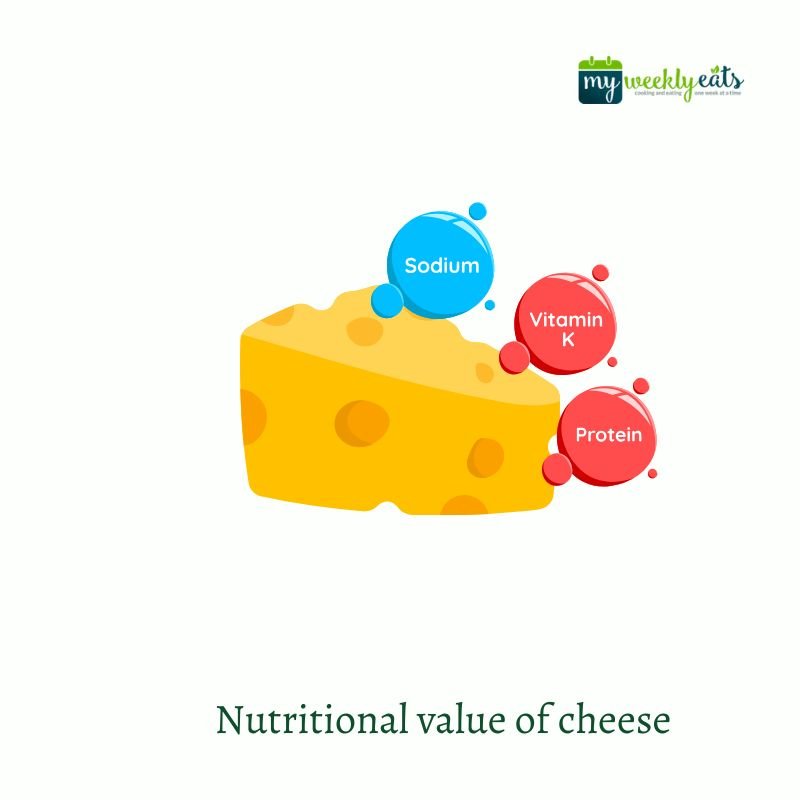
Cheese is one of the most concentrated dairy nutrition sources, delivering approximately 7g protein and 200mg calcium per ounce of hard cheese alongside fat-soluble vitamins A, D, K2, and phosphorus. Harder aged cheeses (parmesan, cheddar, gruyère) provide the highest calcium and protein per gram. Softer fresh cheeses have higher moisture content and lower nutrient density per gram.
Hard aged cheeses are the most calcium-dense everyday foods available — more concentrated per gram than a glass of milk.
Hard Aged
Parmesan leads: 10g protein and 33% DV calcium per ounce at 110 calories — the best calcium-per-calorie ratio of any standard cheese. Cheddar: 7g protein, 20% DV calcium, 9g fat per ounce.
Parmesan, cheddar, gruyère, manchego
Semi-Hard
Part-skim mozzarella: 7g protein, 183mg calcium at approximately 4.5g fat per ounce — the lower-fat cooking option that retains most of the protein and calcium profile.
Mozzarella, gouda, swiss, provolone
Soft Fresh
Higher moisture content reduces nutrient density per gram. Brie and camembert have more fat per calorie than hard cheeses with less protein. Ricotta is a notable exception with reasonable protein density.
Brie, camembert, ricotta, fresh goat
Vitamin K2 is cheese’s most underappreciated nutritional contribution. Aged hard cheeses are among the richest dietary sources of K2 (menaquinone), which evidence links to directing calcium toward bones rather than arterial walls — studies suggest an association, not definitive causation. K2 is almost entirely absent from plant-based foods, making aged dairy one of the few reliable dietary K2 sources.
Sodium context: most cheeses contain 150–300mg sodium per ounce — relevant context for anyone monitoring sodium intake. Hard cheeses used as cooking accents (parmesan shaved over salads, small amounts of cheddar in dishes) deliver the nutritional benefit with proportionally lower sodium contribution.
What is the nutritional value of milk?
One cup of whole milk delivers approximately 8g protein, 30% DV calcium, 13% DV vitamin D (fortified), vitamin B12, potassium, phosphorus, and iodine at approximately 150 calories. Milk is the most nutritionally complete single dairy product, covering protein, calcium, B12, and iodine in one serving. Low-fat variants reduce calories without meaningfully affecting protein or calcium content.
Milk is the only common dairy product that delivers protein, calcium, B12, and iodine in a single serving — making it the most nutritionally efficient dairy choice per glass.
Full nutritional profile per cup: 8g complete protein, 30% DV calcium, approximately 13% DV vitamin D (from fortification — most US milk is fortified), 18% DV vitamin B12, 8% DV potassium, and approximately 59–75mcg iodine. Iodine is where dairy milk stands distinctly apart: dairy is the primary dietary iodine source for most non-seafood eaters in the US, acquired by cattle through feed and sanitising practices.
Fat level comparison: whole milk (150 cal, 8g fat), 2% reduced-fat (120 cal, 5g fat), skim (80 cal, 0.5g fat). Protein and calcium are essentially identical across all fat levels. The difference is purely caloric.
Dairy whole milk8g protein · calcium 30% DV · iodine ~60–75mcg · vitamin D (fortified)
Soy milk (fortified)~7g protein · calcium varies · no iodine · vitamin D if fortified
Oat milk (fortified)~2–3g protein · calcium varies · no iodine · vitamin D if fortified
Almond milk (fortified)~1g protein · calcium varies · no iodine · vitamin D if fortified
Iodine is generally not added to plant-based milks. People switching fully from dairy to plant milk without other iodine sources — seafood, iodised salt, or supplementation — may develop an iodine gap over time. Soy milk most closely matches dairy in protein; no plant milk replicates dairy’s iodine content. Check your specific brand’s nutrition label — iodine fortification remains rare in plant-based alternatives.
What is the nutritional value of yogurt — and cottage cheese?
Plain Greek yogurt provides approximately 17–20g protein per cup, calcium at 20% DV, and live bacterial cultures associated with gut microbiome health. Cottage cheese delivers approximately 25g protein per cup with modest calcium. Both are among the highest-protein dairy products available and practical weekly protein sources with lower saturated fat than hard cheeses or cream.
Greek Yogurt
Plain, unstrained comparison: 8–9g · Greek strained: 17–20g
Protein (Greek)17–20g / cup
Calcium~20% DV
Calories~130 (plain, low-fat)
Fat (low-fat)4g
Live culturesLactobacillus bulgaricus + Streptococcus thermophilus
Greek yogurt’s protein-to-calorie ratio is comparable to chicken breast. Evidence from studies suggests regular consumption is associated with improved gut microbiome diversity — the mechanism is not fully established, but the direction of evidence is consistent.
Cottage Cheese
Highest protein-to-calorie ratio of any dairy product
Protein (full cup)~25g
Calcium~14% DV
Calories~200 (full-fat) / 165 (low-fat)
Fat9g full-fat / 2g low-fat
Protein per 100 cal~12.5g — best in dairy
A significant portion of cottage cheese protein is whey (fast-absorbing), making it useful post-exercise. Low-fat versions lose minimal protein relative to the calorie reduction — one of the few dairy switches where low-fat genuinely makes sense nutritionally.
Both products require no cooking, refrigerate for two weeks, and serve as the most practical daily protein sources in a dairy-based weekly plate. Cottage cheese and Greek yogurt combined cover a week’s high-protein dairy needs without requiring meat or fish at every meal.
What is the nutritional value of eggs? How do dairy and eggs fit into a weekly plate?
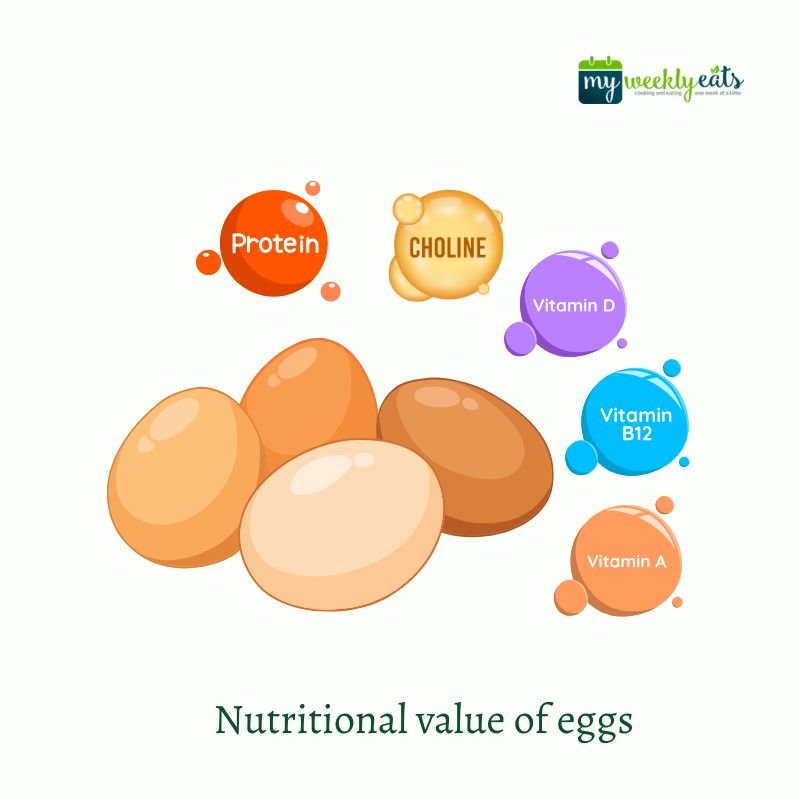
Eggs deliver approximately 6g complete protein, choline (essential for liver and brain function), vitamins D, B12, A, and selenium per egg — with nearly all nutrients in the yolk. Together, dairy’s calcium, B12, iodine, and protein, combined with eggs’ choline, selenium, and fat-soluble vitamins, address multiple nutritional limiting factors in one food pairing.
Eggs are the most nutritionally complete food in the quick-preparation category — everything except protein sits in the yolk.
6g
Complete protein
all essential amino acids
27%
DV Choline
liver + brain function
28%
DV Selenium
thyroid + antioxidant
11%
DV Vitamin B12
nerve function
6%
DV Vitamin D
calcium absorption
70
Calories per egg
exceptional density
The yolk note: egg whites provide protein only. Every micronutrient listed above — choline, selenium, vitamin D, B12, vitamin A — is in the yolk. Eating only egg whites is eating only protein. Whole eggs deliver the full nutritional profile.
Together, dairy and eggs address five of the seven common nutritional limiting factors identified in nutritional research:
Ca
Calcium → dairy milk, hard cheese, Greek yogurt
B12
Vitamin B12 → dairy and eggs both contribute meaningfully
I
Iodine → dairy milk (primary non-seafood source in the US)
Pr
Protein → dairy (Greek yogurt, cottage cheese, milk) and eggs combined
Se
Selenium → eggs (28% DV per egg — one of the most efficient food sources)
A weekly plate including milk or fortified plant milk daily, Greek yogurt or cottage cheese for protein, hard cheese in cooking, and 3–4 eggs across the week covers all five of these nutritional gaps without supplementation for most healthy adults.
Build the Weekly Plate That Covers These Gaps
Dairy and eggs mapped into a structured weekly rotation — with calcium, B12, iodine, protein, and selenium covered by ordinary foods, not supplements.Start Building Your Weekly Nutrition Plan on MyWeeklyEats.com →
The Bottom Line
Different dairy products fill completely different nutritional roles: milk for calcium, B12, and iodine in one glass; Greek yogurt and cottage cheese for the highest protein-to-calorie ratio in the dairy category; hard aged cheese for calcium density and vitamin K2; cream cheese as a fat-soluble vitamin delivery vehicle in cooking. Eggs add choline and selenium that dairy cannot provide. Together, these two food categories cover five major nutritional limiting factors from ordinary, unprocessed weekly meals.


One Comment