3 Steps to Start Your 21-Day Anti-Inflammatory Diet Meal Plan
To start your 21-day anti-inflammatory diet meal plan, first focus on including omega-3-rich foods like salmon and walnuts, colorful veggies, and spices such as turmeric and ginger while avoiding processed items and sugary treats.
Next, create balanced meals combining lean proteins, whole grains, and antioxidant-rich produce.
Finally, build lasting habits by prepping meals, tracking how your body responds, and consistently choosing whole, nutrient-dense foods.
Keep going to uncover easy strategies for lasting anti-inflammatory benefits.
Identify Anti-Inflammatory Foods to Include and Avoid
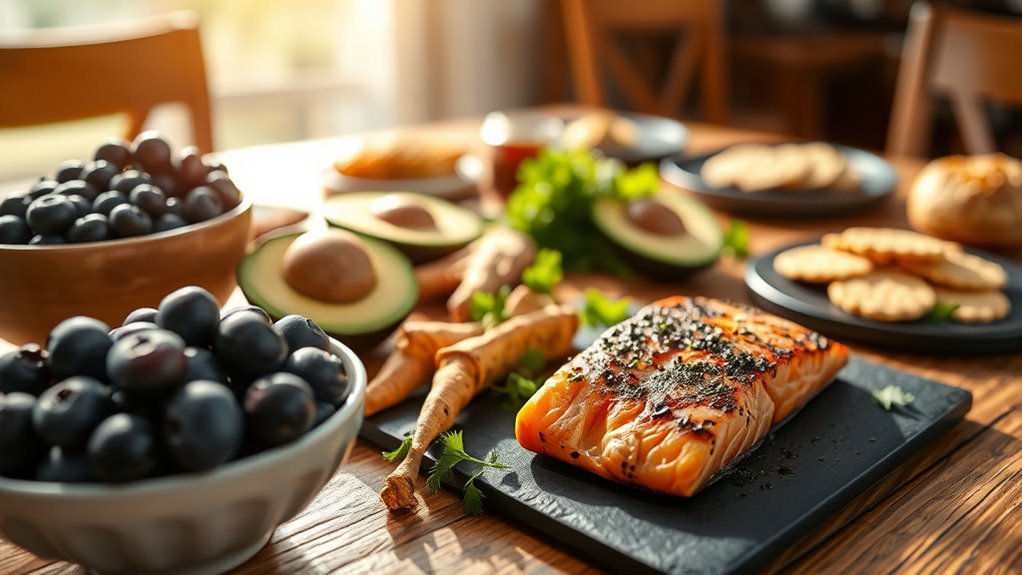
When you begin your 21-day anti-inflammatory diet, identifying which foods to include and avoid is essential for reducing inflammation effectively. Focus on anti-inflammatory foods rich in omega-3 fatty acids like salmon, walnuts, and flaxseeds. They help lower inflammatory markers such as CRP.
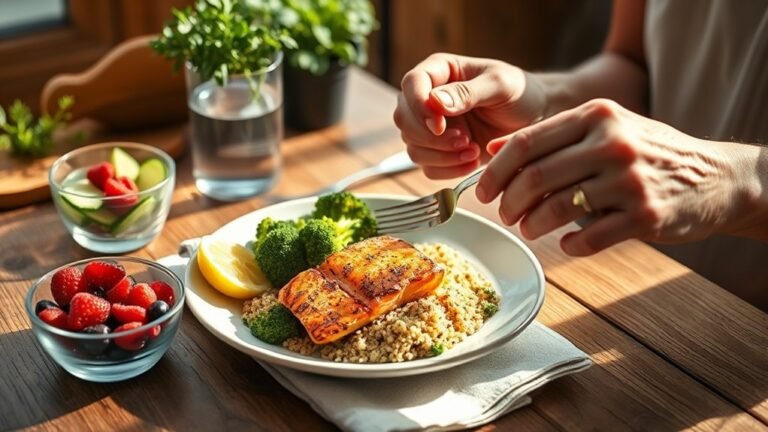
Starting your 21-day anti-inflammatory diet means focusing on omega-3-rich foods like salmon, walnuts, and flaxseeds to reduce inflammation.
Add colorful vegetables like berries, leafy greens, and cruciferous veggies to your meals to benefit from their antioxidants and phytochemicals. Incorporate herbs and spices such as turmeric, ginger, garlic, and cinnamon to boost flavor and fight inflammation naturally.
Prioritize whole foods like whole grains, legumes, lean proteins, nuts, and seeds, as they support your body’s healing process. At the same time, steer clear of processed foods, refined grains, sugary drinks, and fried items since they promote chronic inflammation.
While dark chocolate in moderation can offer antioxidants, avoid excessive sugary treats that spike inflammation. By choosing the right foods, you’ll effectively reduce inflammatory markers and support your overall health throughout the diet.
Create Balanced Anti-Inflammatory Meal Plans for 21 Days
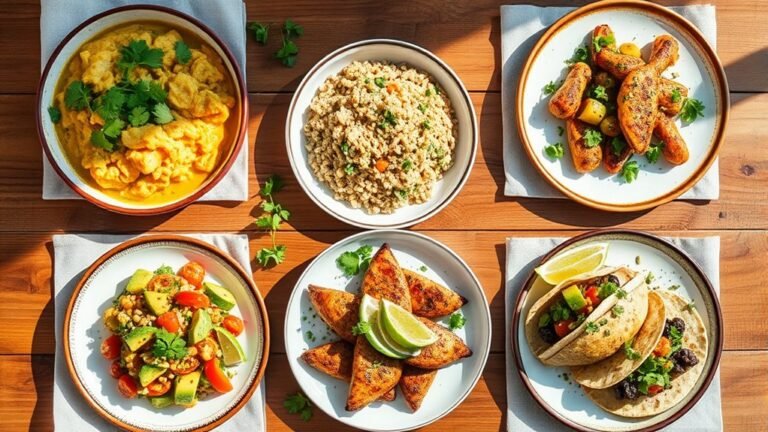
Although planning meals for 21 days might seem overwhelming, you can simplify the process by focusing on balanced combinations of colorful vegetables, lean proteins, and healthy fats. Your anti-inflammatory meal plan should include nutrient-dense whole foods, fiber-rich grains, and omega-3-rich fish to reduce inflammation effectively.
Don’t forget to add anti-inflammatory spices like turmeric, ginger, and garlic to boost flavor and health benefits. Each meal should also include antioxidants from berries or dark leafy greens, supporting a sustainable diet.
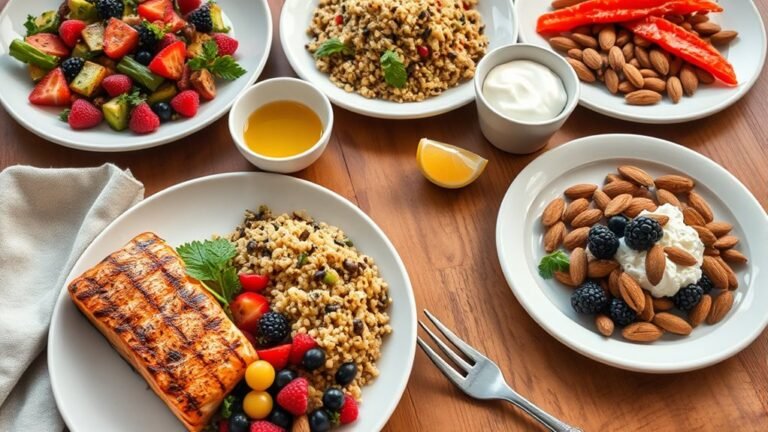
Here’s a simple template to guide your balanced meals:
| Meal | Key Ingredients | Benefits |
|---|---|---|
| Breakfast | Oats, berries, walnuts | Antioxidants, fiber, healthy fats |
| Lunch | Grilled salmon, kale, quinoa | Omega-3, antioxidants, fiber |
| Snack | Carrot sticks, hummus | Fiber, protein |
| Dinner | Turmeric chicken, spinach, brown rice | Anti-inflammatory spices, antioxidants, whole grains |
| Dessert | Dark chocolate, almonds | Antioxidants, healthy fats |
Use this framework to keep your meals balanced and anti-inflammatory.
Develop Habits to Maintain Your Anti-Inflammatory Lifestyle

To maintain your anti-inflammatory lifestyle, you’ll need to develop consistent habits that support your dietary goals. Start with meal prep using whole foods like colorful vegetables, lean proteins, and healthy fats. This habit formation makes it easier to stick to nutrient-dense choices and reinforces anti-inflammatory habits daily.
Incorporate flavorful spices such as turmeric, ginger, and garlic into your meals to boost both taste and health benefits. Track your food intake and how your body responds to identify what works best, aiding long-term adherence.
Gradually replace processed foods with whole grains, nuts, seeds, and fresh produce to build a sustainable diet. Don’t forget to stay hydrated with herbal teas or water infused with citrus and herbs. This supports inflammation reduction and promotes healthy routines.
Frequently Asked Questions
Can I Eat Out While Following the 21-Day Plan?
Yes, you can eat out while following the 21-day plan by choosing restaurant options wisely and asking for meal customization. Use healthy restaurant tips like requesting ingredient substitutions and dressing on the side.
Practice good dining etiquette by avoiding fast food alternatives high in processed ingredients. Consider alcohol’s impact and plan social eating strategies. For takeout, check menus in advance, and combine meal prep tips with mindful choices to stay on track.
How Do I Handle Cravings for Sugary Snacks?
When sugar cravings hit, imagine a flickering candle you can gently redirect instead of blowing out. Use healthy alternatives like berries or dark chocolate to satisfy your sweet tooth.
Recognize emotional triggers and practice mindful eating to strengthen craving management. Prep snacks with natural sweeteners and maintain dietary balance to build lasting habit formation.
Celebrate small wins through a reward system, turning your snack choices into empowering moments rather than moments of weakness.
Are Supplements Necessary for This Diet?
Supplements aren’t usually necessary if you get essential nutrients from whole foods rich in omega-3s and antioxidants. However, if you suspect dietary gaps or have specific vitamin requirements, herbal supplements or mineral intake might help.
Always consider supplement timing and safety, and consult a professional before starting alternative therapies. Natural remedies can support your goals, but focus on food first for the best supplement benefits and to avoid unnecessary risks.
Can I Combine This Diet With Intermittent Fasting?
You can absolutely combine this diet with intermittent fasting. Picture your eating schedule as a calm river flowing through strategic fasting windows, enhancing meal timing and dietary flexibility.
Managing hunger with nutrient-dense meals boosts energy levels and mental clarity. Thoughtful meal composition during eating windows supports metabolic effects and detox strategies.
Just listen to your body’s signals and adjust accordingly to maximize these benefits while keeping your routine sustainable and nourishing.
How Soon Will I Notice Inflammation Reduction?
You’ll likely notice inflammation signs like reduced chronic pain or better gut health within one to two weeks. As you cut dietary triggers and boost antioxidant intake, your immune response calms, improving nutrient absorption. Food sensitivity may lessen too.
Inflammation markers, like CRP, often drop after two to three weeks, so health monitoring through blood tests helps track progress. Staying consistent helps you manage inflammation effectively over time.
Conclusion
By following these 3 steps, you’re setting yourself up for lasting health benefits. Did you know chronic inflammation affects over 60% of adults worldwide? That means your choice to embrace an anti-inflammatory diet can greatly reduce your risk of many diseases.
Stick to nutrient-rich foods, plan your meals thoughtfully, and build sustainable habits. You’ll not only feel better but also protect your body for years to come. You’ve got this!