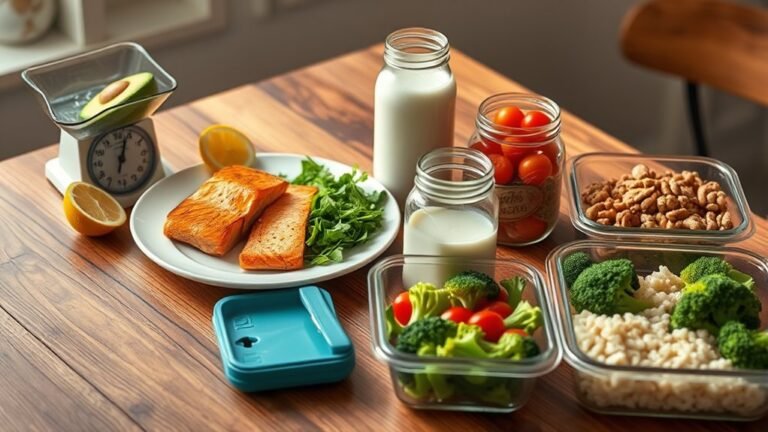

How to Use Nutritional Yeast for Good Weight Loss
You can use nutritional yeast to support weight loss by adding 1-2 tablespoons to your meals for extra protein, fiber, and B vitamins that help keep you full and boost metabolism.
Sprinkle it over salads, veggies, or pasta, or mix it into sauces and smoothies to enhance flavor without added calories.
Just start with small amounts to avoid side effects.
Keep exploring to discover the best ways to incorporate it and maximize its benefits for your goals.
What Is Nutritional Yeast? How It Supports Weight Loss
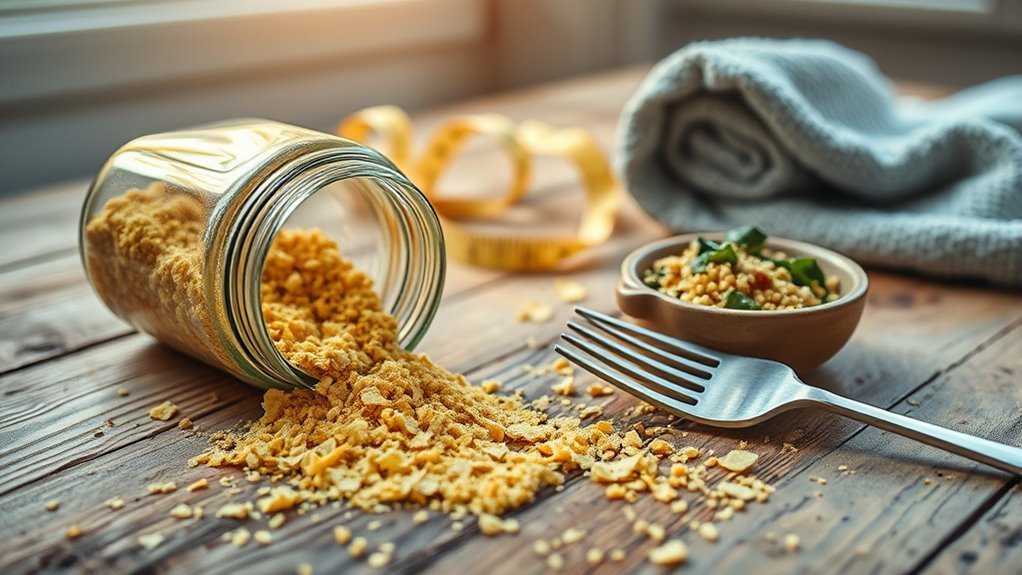
Although you might not have heard much about it before, nutritional yeast is a powerful tool for weight loss. This deactivated yeast is packed with protein, fiber, and B vitamins, all of which play key roles in supporting your weight loss journey.
Nutritional yeast helps boost satiety, meaning you’ll feel fuller longer and naturally reduce your calorie intake. Its protein content supports muscle maintenance, which is essential when you’re losing weight.
The fiber in nutritional yeast aids digestion and helps regulate blood sugar, preventing those uncontrollable cravings that can derail healthy eating habits. Plus, the B vitamins it provides, especially B12, support your energy metabolism, keeping you active and motivated.
Adding nutritional yeast to your meals enhances flavor without extra calories or fat, making your healthy eating more enjoyable and sustainable. Incorporating nutritional yeast into your diet is a smart, simple way to support weight loss while nourishing your body.
How Nutritional Yeast Helps Weight Loss With Protein and Fiber
Nutritional yeast supports your weight loss by providing a powerful combination of protein and fiber that keeps you feeling full and satisfied. With about 5 grams of complete protein per two-tablespoon serving, nutritional yeast promotes satiety, helping you reduce overall calorie intake.
The approximately 2 grams of dietary fiber per serving further aids digestion and supports appetite control by curbing hunger. This duo of protein and fiber stabilizes your blood sugar levels, which cuts down cravings and prevents overeating.
Because nutritional yeast is low in calories yet nutrient-dense, it adds bulk to your meals without contributing excess calories, making calorie reduction easier. By incorporating nutritional yeast into your diet, you enhance feelings of fullness and improve appetite regulation, both key factors for effective weight loss.
Using nutritional yeast regularly can help you manage hunger better, stay satisfied longer, and ultimately support your weight loss goals with a natural, wholesome boost.
Fortified vs. Unfortified Nutritional Yeast: Which to Choose?
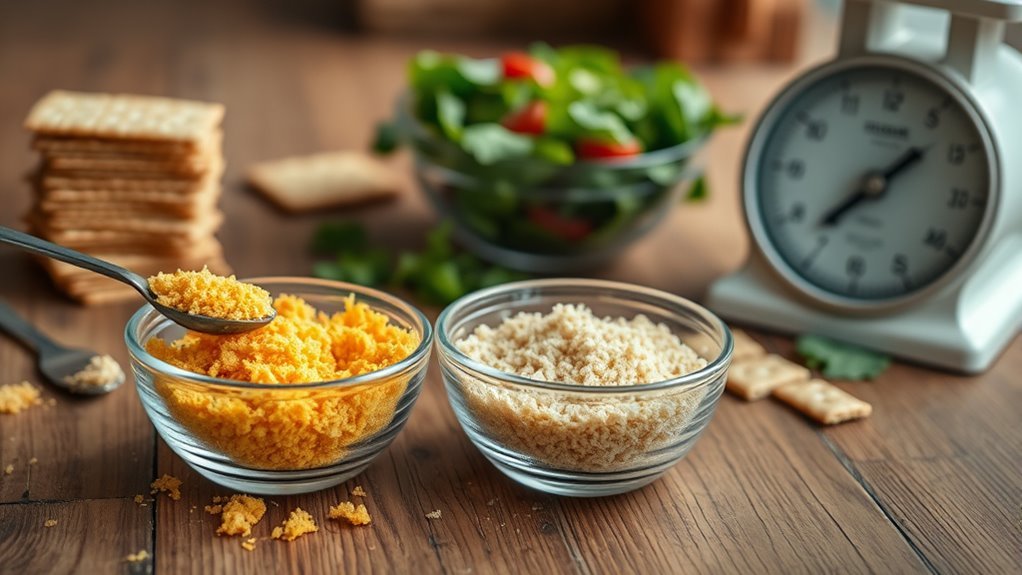
When you’re picking out nutritional yeast, it’s good to know the difference between fortified and unfortified types. Fortified yeast comes with extra vitamins, like B12, which can help give you more energy and even support weight loss. On the other hand, unfortified yeast only has the natural nutrients found in it.
Nutrient Differences Explained
Because fortified nutritional yeast contains added vitamins like B12, it often provides higher nutrient levels than unfortified versions. When choosing between fortified nutritional yeast and unfortified nutritional yeast, understanding nutrient differences matters.
Fortified yeast supplies essential nutrients, while unfortified offers only naturally occurring vitamins. Here’s what you should consider:
- Fortified nutritional yeast contains added B12 and folic acid.
- Unfortified nutritional yeast has lower B vitamin levels, relying on natural content.
- Fortified yeast supports vegetarian and vegan diets needing reliable B12 sources.
- Unfortified yeast appeals if you prefer minimal processing and fewer added nutrients.
- Nutrient content varies by brand, so label reading guarantees you get what you need.
Knowing these differences helps you pick the nutritional yeast that fits your weight loss and health goals best.
Health Benefits Comparison
Although both fortified and unfortified nutritional yeast offer protein and fiber, you’ll find that fortified varieties deliver a stronger health boost thanks to added vitamins like B12. Fortified nutritional yeast contains extra vitamins and minerals, making it ideal if you want consistent supplementation, especially for weight loss support through better energy and metabolism.
On the other hand, unfortified nutritional yeast relies on its natural content, providing fewer added nutrients but maintaining a more natural, minimally processed profile. Both types contribute valuable protein and fiber, but the key health benefits lean toward fortified yeast when you need those essential vitamins and minerals.
Choosing fortified nutritional yeast can enhance your weight loss journey by ensuring you get crucial nutrients that support overall health and vigor.
Choosing Based On Needs
Deciding between fortified and unfortified nutritional yeast depends largely on your specific dietary needs and weight loss goals. If you want extra nutrient support during weight loss, fortified yeast might be your best bet. It contains added vitamins like vitamin B12, essential for energy metabolism.
On the other hand, unfortified nutritional yeast offers a natural product with only naturally occurring nutrients, often at a lower cost. Consider these points when choosing:
- Fortified yeast provides extra vitamin B12 and folic acid
- Unfortified yeast is free from added vitamins
- Choose fortified for enhanced nutrient support during calorie restriction
- Opt for unfortified if you prefer a natural product or control vitamin intake
- Base your choice on your individual dietary goals and weight loss plan
Add Flavor Without Calories Using Nutritional Yeast
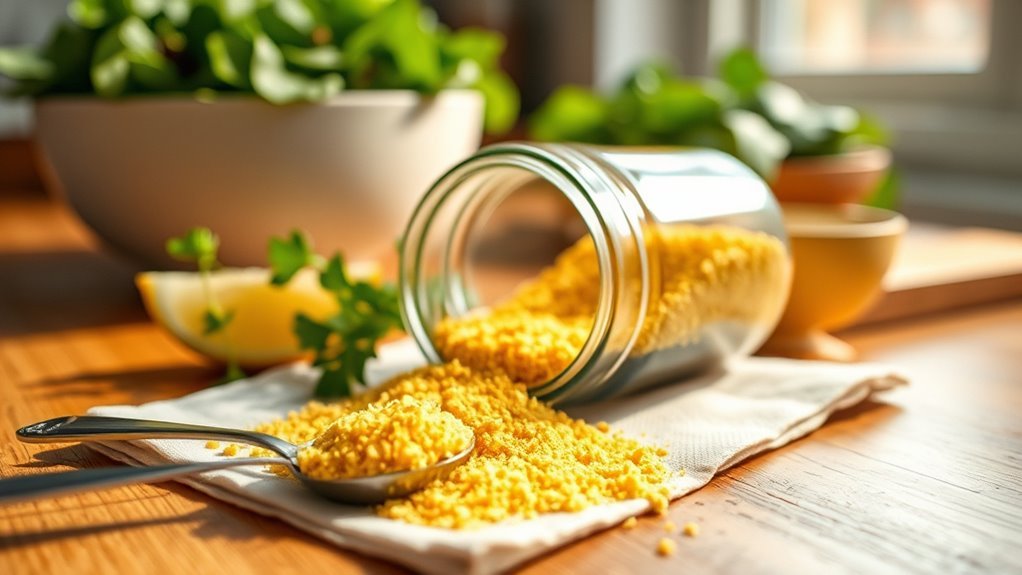
You can boost your meals with nutritional yeast, adding rich umami flavor without extra calories. It’s an easy way to enhance salads, popcorn, or veggies while keeping your calorie count low. Plus, this versatile seasoning helps you enjoy tasty dishes that support your weight loss goals. Give it a try—you might be surprised how much flavor it adds!
Zero-Calorie Flavor Booster
How can you boost the flavor of your meals without adding extra calories? Nutritional yeast is a zero-calorie flavor booster that delivers a rich umami flavor, perfect for anyone focused on weight loss.
It adds a savory taste that satisfies cravings without piling on calories, making it ideal for calorie-controlled diets.
Try these ways to use nutritional yeast effectively:
- Sprinkle on popcorn instead of butter
- Mix into soups for depth
- Stir into mashed potatoes for a cheesy note
- Use as a topping on roasted veggies
- Blend into salad dressings for extra zest
Enhancing Meals Easily
Although many seasonings add unwanted calories, nutritional yeast enhances your meals with a savory, cheesy flavor without the extra load. You can easily sprinkle nutritional yeast on salads, pasta, or roasted vegetables to boost flavor without adding fat or sugar.
This low-calorie seasoning delivers a rich umami taste, helping you cut back on high-calorie sauces or cheese in your recipes. Adding just 1-2 tablespoons of nutritional yeast not only intensifies the savory notes but also supports your weight loss goals.
You can even blend it into dips or sauces to create creamy, satisfying dishes that don’t compromise on taste. By choosing nutritional yeast, you make enhancing meals simple, flavorful, and healthy, perfect for keeping your diet both enjoyable and low calorie.
Versatile Umami Addition
Building on its ability to enhance meals effortlessly, nutritional yeast stands out as a versatile umami addition that boosts flavor without adding unwanted calories. This low-calorie, plant-based flavor enhancer delivers a rich, savory taste that supports weight loss by reducing the need for fats and salts.
You can easily replace higher-calorie cheese or creamy ingredients with nutritional yeast to keep meals satisfying yet light.
Try these ideas to enjoy its umami flavor:
- Sprinkle over popcorn for a cheesy twist
- Stir into soups and stews for depth
- Add to pasta or rice dishes as a topping
- Mix into mashed potatoes or sauces
- Blend into plant-based dressings or dips
Using nutritional yeast lets you savor flavor while staying on track with your weight loss goals.
Best Ways to Incorporate Nutritional Yeast Into Your Meals
When you want to enhance your meals with extra flavor and nutrients, sprinkling 1-2 tablespoons of nutritional yeast over salads, roasted vegetables, or pasta is an easy way to boost fiber and promote fullness. You can also blend it into smoothies or sauces to increase protein content, helping you stay satisfied longer.
Nutritional yeast works great as a vegan cheese substitute in dishes like pesto or cheese sauces, offering flavor enhancement while cutting calories. Adding it to breakfast foods like scrambled tofu or oatmeal raises nutrient density without extra calories.
For snacks, sprinkle it on popcorn or crackers to curb savory cravings and support weight management.
| Meal Type | Nutritional Yeast Use |
|---|---|
| Main Dishes | Flavor enhancement, meal substitution |
| Breakfast | Nutrient density boost |
| Snacks | Weight management, savory flavor |
How Much Nutritional Yeast to Eat Daily for Weight Management
You’ve seen how adding nutritional yeast to your meals can boost flavor and nutrients, but knowing the right amount to eat daily is key for weight management. The ideal serving size typically ranges from 1 to 2 tablespoons. This amount supports your weight goals without adding excessive calories.
Nutritional yeast helps by increasing fiber intake and providing essential B vitamins, which support metabolism and energy.
Keep these tips in mind for moderation and balance:
- Stick to 1-2 tablespoons daily for effective weight management.
- Up to 3 tablespoons can boost fiber intake, helping you feel full longer.
- Use it as a calorie replacement for higher-fat cheese or snacks.
- Avoid exceeding 4 tablespoons to prevent too much B vitamin intake, especially niacin.
- Incorporate nutritional yeast gradually to monitor your body’s response.
Who Should Be Careful With Nutritional Yeast? Potential Side Effects
Although nutritional yeast offers many health benefits, some people need to be cautious about how much they consume due to potential side effects. If you have yeast allergies or are a sensitive individual, you might experience allergic reactions like hives, swelling, or digestive issues such as bloating and gas.
Those with inflammatory bowel disease or Crohn’s disease should limit or avoid nutritional yeast, as it may worsen symptoms. Also, if you’re taking MAOIs or other medications affecting tyramine levels, be careful. Nutritional yeast contains tyramine, which can trigger hypertensive crises.
Consuming large amounts of fortified nutritional yeast can lead to excessive niacin intake, risking niacin flushing and even liver damage. To stay safe, start with small amounts and monitor how your body responds. If you notice any adverse effects, it’s best to consult your healthcare provider before continuing.
Being aware of these potential side effects helps you use nutritional yeast effectively and safely for weight loss.
Easy Nutritional Yeast Recipes and Snack Ideas for Weight Loss
Since nutritional yeast is low in calories but rich in protein and fiber, you can easily boost your meals and snacks to support weight loss. Using it as a vegan protein source and flavor enhancer helps you enjoy satisfying dishes without extra calories. Here are some simple nutritional yeast recipe ideas and snack ideas to try:
Sprinkle 1-2 tablespoons over salads, roasted veggies, or popcorn for a tasty, fiber-rich boost.
Mix it into vegan cheese sauces or dips to create low-fat, high-protein options that keep you full.
Add nutritional yeast to scrambled eggs or tofu scrambles for extra savory flavor and protein.
Blend it into smoothies or oatmeal for a nutrient-dense, filling meal that stabilizes blood sugar.
Make homemade snack bars or energy bites with nutritional yeast, nuts, and seeds for a convenient, weight loss-friendly snack.
These ideas make it easy to enjoy nutritional yeast as a versatile ingredient supporting your weight loss journey.
Frequently Asked Questions
Can Nutritional Yeast Interact With Medications?
Yes, nutritional yeast can cause drug interactions, so you should be cautious. It may interfere with enzyme functions, affecting medication absorption and prescription safety.
Because of its vitamin K and tyramine content, it could impact blood thinners and MAOIs. To guarantee supplement compatibility and avoid health risks, you need to evaluate dosage carefully and consult your healthcare provider before adding nutritional yeast to your routine if you’re taking medications.
Is Nutritional Yeast Safe During Pregnancy?
You’d think nutritional yeast is a miracle food during pregnancy, and it almost is! It supports your prenatal nutrition by providing essential B vitamins and protein, boosting your nutritional requirements safely.
Just watch for dietary restrictions or pregnancy concerns like excess niacin. Its folic acid benefits are a bonus, but always confirm safe consumption by consulting your healthcare provider.
This way, you’ll enjoy pregnancy safety without risking any complications.
How Should Nutritional Yeast Be Stored for Freshness?
You should store nutritional yeast in airtight packaging to protect it from humidity and light exposure. Use proper sealing with storage containers that keep moisture out, ensuring a cool environment away from heat sources. This helps control humidity and extends the shelf life up to two years.
Avoid refrigerators, as excess moisture can cause clumping. By managing light exposure and humidity, you keep your nutritional yeast fresh and flavorful longer.
Does Nutritional Yeast Have a Gluten Content?
Nutritional yeast is naturally gluten-free, so you don’t have to worry about gluten content itself. However, you should watch for cross contamination risks during processing, especially if you have gluten sensitivity or strict dietary restrictions.
Always read labels carefully for ingredient transparency and look for gluten free certifications to guarantee safety. Avoid fortified or flavored varieties that might include gluten-containing ingredients. Staying vigilant helps you enjoy nutritional yeast without gluten worries.
Can Nutritional Yeast Cause Allergies or Intolerances?
Of course, nutritional yeast allergies are just the life of the party if you enjoy unexpected hives or swelling! If you notice yeast intolerance symptoms like respiratory issues or digestive discomfort, don’t ignore them.
Your immune response to yeast can be tricky, so allergy testing nutrients might help pinpoint the problem. Always take allergy precautions dietary-wise, especially if you have sensitivity symptoms nutritional yeast can trigger.
Better safe than sorry with allergic reactions yeast might cause!
Conclusion
If you’re looking to lose weight and happen to enjoy savory flavors, nutritional yeast might just be your new best friend. Not only does it boost your meals with protein and fiber, but it also adds delicious cheesy notes without extra calories. It’s perfect for shedding pounds without feeling deprived.
Just remember to start slow, listen to your body, and enjoy experimenting. Sometimes, the simplest ingredients make the biggest difference in your weight loss journey!