Why Nutrition Matters: What the Evidence Actually Says
You already know you should eat better. Most people do. But knowing that doesn’t explain why your energy crashes by 2 PM, why you catch every cold that passes through the office, or why your focus feels unreliable on days when nothing is technically wrong. The answer — more often than not — is what you ate, or didn’t eat, last week.
Nutrition is not a diet. It is not a 30-day protocol or a set of foods to avoid. It is the ongoing act of giving your body the raw materials it needs to function, defend itself, and recover. Every system covered in this guide — energy, immunity, disease prevention, mental health, pregnancy, athletic performance, and healing — depends on a consistent, adequate supply of nutrients from the food you eat. This guide covers what the evidence actually says about each one, and what to do with that knowledge every week.
Why is nutrition important for your health?
Nutrition provides the essential macronutrients and micronutrients your body uses to function, repair, and protect itself. Poor nutrition raises the risk of chronic diseases including heart disease, type 2 diabetes, and obesity. Good nutrition supports sustained energy, immune strength, mental clarity, and long-term physical health.
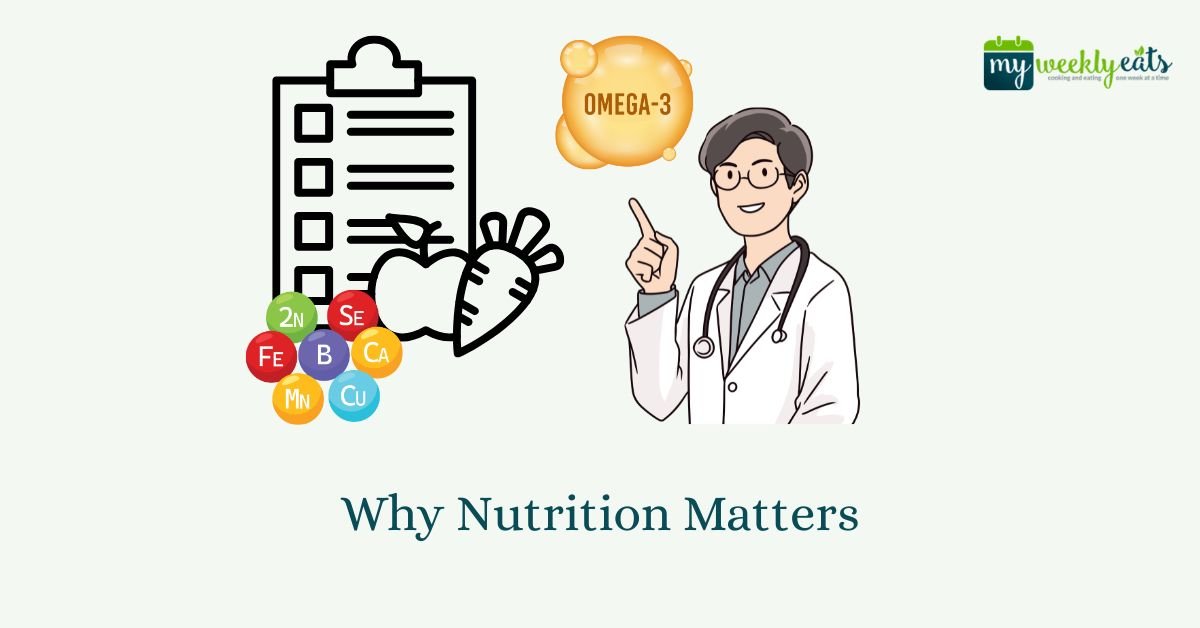
Every organ system in your body depends on a continuous, adequate supply of nutrients to operate correctly. Your heart needs potassium and magnesium to maintain its electrical rhythm. Your immune system requires vitamins C and D to activate its defenses. Your brain runs primarily on glucose — but also depends on omega-3 fatty acids for its physical structure and B vitamins for the neurotransmitter production that governs mood, focus, and sleep.
The World Health Organization identifies unhealthy diet as one of the leading global risk factors for disease burden — ahead of many genetic and environmental contributors. Research consistently links poor dietary habits to cardiovascular disease, type 2 diabetes, obesity, and certain cancers. These are not distant statistical risks. They accumulate over years, shaped by the daily sum of nutritional decisions that either protect or progressively damage biological systems.
Good nutrition does not require perfection or restriction. It means consistently supplying your body with adequate macronutrients for energy and repair, and sufficient micronutrients to keep every regulatory process functioning at capacity. The table below maps seven health areas where nutrition plays a direct, evidence-backed role.
Why Nutrition Matters — By Health Area
| Health Area | What Nutrition Does | Key Nutrients | Deficiency Risk | Covered In |
|---|---|---|---|---|
| Energy & Metabolism | Powers every cellular process, prevents fatigue | B vitamins, Iron, Carbohydrates | Fatigue, anemia, poor concentration | H2 #1, #4 |
| Immune Function | Activates immune cells, accelerates recovery | Vitamin C, D, Zinc | Frequent illness, slow healing | H2 #1, #7 |
| Mental Health & Mood | Regulates neurotransmitter production | Omega-3s, B12, Magnesium | Depression, anxiety, brain fog | H2 #4 |
| Heart Health | Reduces blood pressure and arterial inflammation | Potassium, Fiber, Omega-3s | Cardiovascular disease, hypertension | H2 #3 |
| Bone & Muscle | Maintains bone density, supports lean mass | Calcium, Vitamin D, Protein | Osteoporosis, muscle loss | H2 #2 |
| Pregnancy & Development | Enables fetal organ and brain formation | Folate, Iron, DHA, Calcium | Neural tube defects, preterm birth | H2 #5 |
| Chronic Disease Prevention | Reduces inflammation and oxidative stress | Antioxidants, Fiber, Polyphenols | Diabetes, obesity, certain cancers | H2 #3 |
Why is nutrition needed by the human body?
Your body cannot synthesize most essential nutrients independently. Nutrition supplies the six nutrient classes — carbohydrates, proteins, fats, vitamins, minerals, and water — that power every cellular process. Without adequate intake, metabolism slows, tissues degrade, immune response weakens, and critical functions like hormone production and DNA repair stall.
The human body is biochemically dependent on external food supply. Unlike plants, which generate energy from sunlight, your cells run entirely on nutrients you must consistently consume. This dependency spans six essential nutrient classes:
Carbohydrates provide the primary fuel source for the brain, muscles, and nervous system. Complex carbohydrates from whole grains and vegetables deliver energy gradually, stabilizing blood glucose and preventing the sharp crashes that follow refined sugar intake. They are not the enemy of good nutrition — they are its foundation.
Proteins supply the amino acids your body uses to build and repair every structure — from muscle fiber and skin to enzymes and antibodies. Without adequate protein intake, wound healing slows, immune function declines, and muscle mass erodes progressively over time.
Fats are not the nutritional villain they were once framed as. Healthy unsaturated fats — particularly the omega-3 fatty acids found in fatty fish, walnuts, and flaxseed — support brain structure, reduce systemic inflammation, and are required for absorbing fat-soluble vitamins A, D, E, and K. Without dietary fat, those vitamins pass through the body unused.
Vitamins and minerals function as regulatory agents — catalysts that activate enzymes, enable chemical reactions, and keep systems like bone metabolism, nerve signaling, and red blood cell production running correctly. A deficiency in a single micronutrient disrupts processes far beyond its obvious role. Vitamin C deficiency, for example, impairs collagen synthesis throughout the entire body — not just in one location.
Water is the sixth and most immediately critical nutrient. Every metabolic reaction in your body occurs in an aqueous environment. Even mild dehydration — just 1–2% of body weight — measurably impairs cognitive performance, mood, reaction time, and physical endurance before thirst is even registered.
Why is nutrition essential for disease prevention?
Nutrition is the most modifiable factor in preventing chronic disease. Dietary patterns rich in antioxidants, fiber, and anti-inflammatory compounds reduce risk of heart disease, type 2 diabetes, and certain cancers. The WHO estimates that 80% of premature cardiovascular disease and type 2 diabetes is preventable through improved diet and lifestyle.
Chronic diseases do not appear overnight. They develop over years — shaped by the cumulative effect of dietary choices that either protect or progressively damage biological systems. The three most prevalent chronic conditions in the US share a common thread: they are strongly modifiable through nutritional habits.
Heart disease remains the leading cause of death globally. Evidence consistently shows that diets high in dietary fiber, potassium, and omega-3 fatty acids reduce blood pressure, lower LDL cholesterol, and decrease arterial inflammation — the three primary mechanisms behind cardiovascular events. Diets high in sodium, saturated fat, and added sugar accelerate these same pathways in the opposite direction.
Type 2 diabetes is strongly associated with dietary pattern. Fiber from vegetables, legumes, and whole grains slows glucose absorption, reducing post-meal blood sugar spikes that stress the insulin response over time. Research consistently associates consumption of ultra-processed foods and refined carbohydrates with insulin resistance — the precursor to type 2 diabetes — independent of body weight.
Cancer risk is more complex, but nutritional science identifies clear patterns. Cruciferous vegetables — broccoli, Brussels sprouts, cabbage — contain glucosinolates, compounds that studies indicate may reduce cancer biomarker activity. Antioxidants from vegetables, fruits, and legumes neutralize free radicals that cause oxidative stress and cumulative DNA damage. The American Cancer Society identifies poor diet as one of the most significant preventable cancer risk factors.
Nutrition does not eliminate disease risk. But the evidence clearly identifies it as the most accessible, most directly modifiable variable available for long-term prevention.
What are the three main benefits of good nutrition?
Good nutrition delivers three core, evidence-backed benefits: sustained energy through consistent macronutrient balance, stronger immune defense through vitamins C, D, and zinc, and improved mental health through nutrients that regulate neurotransmitter production. These three benefits compound daily and form the foundation of long-term wellbeing.
When people ask what good nutrition actually does for them day-to-day, the answer comes down to three systems that affect how you feel, function, and recover. Each is measurably supported by evidence — and each is directly shaped by what you eat each week.
1. Sustained Energy
Energy is not simply about calories — it is about how those calories are structured. Complex carbohydrates provide slow-release glucose that powers the brain and muscles without the spikes and crashes of refined sugar. Iron carries oxygen to your cells; even mild iron deficiency causes fatigue that sleep cannot correct. B vitamins — particularly B1, B2, B3, B6, and B12 — are the metabolic co-factors that convert food into usable cellular energy. Without adequate B vitamins, the conversion chain breaks at its source, producing fatigue regardless of caloric intake.
2. Stronger Immune Defense
Your immune system is nutritionally expensive to operate. Vitamin C stimulates the production and function of white blood cells — the first-line responders to infection. Vitamin D regulates immune cell activation; evidence links deficiency to increased susceptibility to respiratory infections, including colds and influenza. Zinc enables immune cell development and acts as an anti-inflammatory regulator during illness. Studies consistently show that populations with nutrient deficiencies experience longer illness duration and significantly slower recovery — making nutrition a direct determinant of how long you stay sick when you do get ill.
3. Mental Health and Mood Stability
The connection between diet and mental health is now one of the most rapidly developing fields in nutritional science. Omega-3 fatty acids make up a significant portion of brain cell membrane structure — low intake is consistently associated with higher rates of depression and anxiety in population studies. Magnesium and B12 regulate serotonin and dopamine pathway function. Tryptophan, an amino acid found in protein-rich foods, is the direct biosynthetic precursor to serotonin. Evidence from multiple clinical studies suggests that structured dietary improvement meaningfully supports mental health outcomes alongside other established treatments.
Why is nutrition important during pregnancy?

Pregnancy creates elevated nutritional demands that directly affect fetal development outcomes. Folate reduces neural tube defect risk by up to 70%; iron supports red blood cell production for mother and fetus; DHA is essential for fetal brain and eye development. Nutritional gaps during pregnancy carry documented, measurable developmental risks.
During pregnancy, nutritional needs shift substantially — and the consequences of deficiency extend to the developing child, not only the mother. Four nutrients carry the strongest evidence for developmental outcomes:
Folate (folic acid) is the most critical nutrient in early pregnancy. Neural tube formation — the embryonic process that creates the brain and spinal cord — occurs in weeks three and four, often before a pregnancy is confirmed. The CDC recommends 400mcg of folic acid daily for women of reproductive age, increasing to 600mcg during pregnancy. Adequate folate intake is associated with up to a 70% reduction in neural tube defect risk, including spina bifida and anencephaly.
Iron requirements nearly double during pregnancy. Blood volume increases by approximately 50% to supply the placenta and developing fetus with oxygenated blood. Iron deficiency anemia during pregnancy is linked to preterm birth, low birth weight, and maternal fatigue severe enough to impair daily function in the third trimester.
DHA (docosahexaenoic acid) is an omega-3 fatty acid that concentrates in fetal brain and retinal tissue, particularly during the third trimester when neurological development accelerates. Evidence indicates that adequate maternal DHA intake supports cognitive and visual development outcomes. DHA is found primarily in fatty fish and algae-based supplements — the latter being the recommended option for those avoiding seafood.
Calcium is actively drawn from maternal bone density if dietary intake is insufficient to meet fetal skeletal development needs. This process occurs throughout all three trimesters. Low maternal calcium intake is associated with reduced bone density that can persist for years following delivery.
Important: All pregnant individuals should work with their healthcare provider to establish a personalized nutrition plan. Nutritional needs during pregnancy vary by individual health status, trimester, and pre-existing conditions. The information above is educational and does not replace medical guidance or professional prenatal care.
Why is nutrition important for athletes and physical performance?
For athletes, nutrition is performance infrastructure, not a supplement to training. Carbohydrates fuel training sessions and competition; protein repairs and rebuilds muscle tissue post-workout; electrolytes regulate hydration and nerve function. Evidence consistently shows that poor nutritional status impairs endurance, recovery speed, and injury resilience regardless of training volume.
Athletic performance does not begin in the gym. It begins in the kitchen — specifically, in the nutritional choices made in the hours before and after every training session. Three pillars determine whether a training block produces adaptation or breakdown:
Pre-workout fueling determines how much energy is available during effort. Carbohydrates are stored as glycogen in muscles and the liver. Research demonstrates that glycogen depletion during prolonged exercise correlates directly with performance decline — the phenomenon commonly experienced as “hitting a wall.” A meal or snack containing complex carbohydrates one to three hours before training maintains glycogen availability and measurably delays fatigue onset.
Post-workout recovery is where training adaptation actually occurs. Exercise creates micro-tears in muscle fiber that must be repaired to produce strength gains. Protein supplies the amino acids needed to rebuild those fibers with greater resilience. Evidence suggests that consuming 20–40g of high-quality protein within two hours post-exercise optimizes muscle protein synthesis — the biological mechanism that builds strength and lean mass over time. Without this nutritional input, training volume produces fatigue without corresponding adaptation.
Hydration and electrolytes are non-negotiable for anyone training regularly. Even a 2% loss of body water measurably impairs strength output, cardiovascular endurance, and cognitive function — before the sensation of thirst is fully registered. Sodium, potassium, and magnesium regulate nerve impulse transmission and muscle contraction. Their depletion through sweat causes cramping, premature fatigue, and significantly delayed recovery between sessions.
These principles apply equally to recreational gym-goers, weekend runners, and competitive athletes. Training consistently without supporting nutrition is structurally counterproductive — the stimulus for adaptation is present but the biological resources to complete it are not.
Why is nutrition important for recovery and healing?
Nutrition is an active therapeutic factor in recovery, not a passive background variable. Protein rebuilds damaged tissue; vitamin C catalyzes collagen synthesis; zinc regulates immune response during healing. Clinical research shows that well-nourished patients recover faster post-surgery, with fewer complications and shorter hospital stays.
When the body is injured or recovering from illness, its nutritional demands increase sharply — at the exact moment when appetite typically decreases. This mismatch makes nutritional attention during recovery more important, not less.
Protein and tissue repair are inseparable processes. Every structure the body needs to rebuild after injury — muscle, skin, ligament, tendon, organ tissue — is assembled from amino acids sourced from dietary protein. Post-surgical protein requirements can be 50–100% above normal daily intake. Inadequate protein after injury or surgery demonstrably delays healing, increases infection risk, and extends recovery timelines in clinical settings. This is not a wellness claim — it is measured in controlled hospital nutrition trials.
Vitamin C and collagen synthesis are biochemically linked. Collagen — the structural protein that holds connective tissue, skin, and vessel walls together — cannot be synthesized without vitamin C acting as a catalytic co-factor. Even subclinical vitamin C inadequacy (below optimal but not classified as clinical deficiency) measurably impairs wound closure rates in controlled clinical environments. Ensuring adequate vitamin C intake during recovery is one of the most evidence-supported nutritional interventions available.
Zinc and immune regulation operate in tandem during the recovery process. Zinc enables the proliferation of immune cells and helps modulate the inflammatory response that follows injury or infection. Without adequate zinc, inflammatory signaling persists longer than necessary — actively slowing rather than accelerating the repair process. Zinc deficiency is particularly common in patients with reduced appetite during illness or post-surgery, making it a priority nutrient for clinical monitoring.
Clinical nutrition is now a recognized medical subspecialty. Research published in clinical nutrition journals consistently links nutritional screening and targeted intervention in hospital settings to improved patient outcomes, reduced complication rates, and measurable reductions in post-surgical recovery time.
Why does proper nutrition matter for your weekly meal plan?
Understanding why nutrition matters is only useful when applied consistently. A structured weekly meal plan is where nutritional knowledge becomes real health. Planning meals around micronutrient-dense whole foods ensures your body receives the essential nutrients it needs every week — not occasionally, and not by accident.
The gap between knowing nutrition is important and actually eating well comes down to a single variable: planning. Most nutritional gaps are not caused by lack of knowledge. They are caused by not having the right food available when hunger is the one making decisions. Ultra-processed convenience foods are engineered to be immediately accessible and immediately satisfying. Whole foods require a different kind of preparation — not complicated, but intentional.
A nutritionally complete weekly meal plan does not need to be complex or time-consuming. It needs to rotate through the food groups that collectively cover your micronutrient requirements across the week:
Dark leafy greens — for iron, folate, and vitamin K. Cruciferous vegetables — for vitamin C, fiber, and glucosinolates. Root vegetables — for beta-carotene and vitamin A. Legumes — for plant-based protein, fiber, and iron. Quality protein sources — for amino acid completeness and tissue repair. Whole grains — for sustained energy, B vitamins, and resistant starch.
When you plan your week around these categories, the benefits you read about in this guide — sustained energy, stronger immunity, reduced chronic disease risk, better mood, faster recovery — are not the product of willpower or discipline. They are the product of having made the right decision on Sunday, before hunger had any say in the matter.
We built MyWeeklyEats to make that planning simple, practical, and built entirely around foods that actually matter. You now understand why they matter at a biological level. The next step is getting them on your plate, consistently, every week.
Put This Into Practice
Build a weekly meal plan around the foods that deliver the nutrition your body actually needs — starting this week.Build Your Weekly Nutrition Plan on MyWeeklyEats.com →
The Bottom Line
Nutrition matters because your body has no other source for what it needs to operate. It cannot generate B vitamins from nothing, synthesize omega-3 fatty acids from unrelated substrates, or produce the folate required for cellular division without dietary input. Every system covered in this guide — energy production, immune defense, disease prevention, mental health, pregnancy outcomes, athletic performance, and physical recovery — depends on a consistent, adequate supply of nutrients from what you eat each week.
The research is not complicated: dietary patterns built around whole, minimally processed foods consistently produce better health outcomes than patterns built around habit and convenience. The knowledge is widely available. The gap is application — and application requires planning.
Understanding why nutrition matters is the first step. Building the weekly structure that delivers it is the second. MyWeeklyEats exists for exactly that — one well-planned week at a time.