How to Master Celery Nutrition Deep Dive
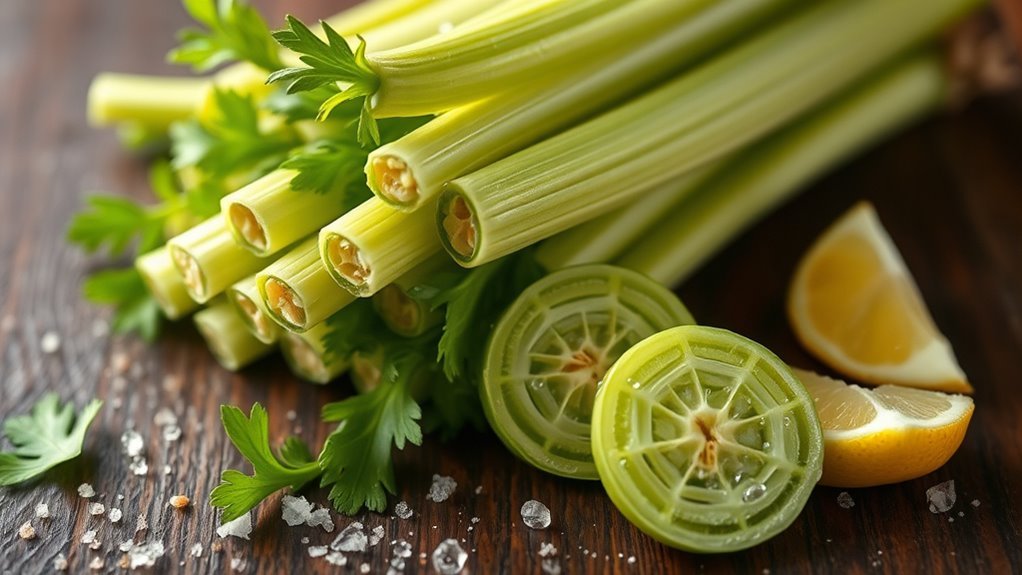
To master celery nutrition, focus on its high water content, low calories, and rich vitamins like K and potassium. These nutrients support hydration, heart health, and reduce inflammation.
Track your intake using nutrition apps and wearables to see how it impacts your energy, digestion, and biomarkers.
Incorporate celery into meals throughout the day for best results.
By optimizing your consumption and understanding its benefits, you’ll reveal practical ways to enhance your wellness and sustain long-term health goals.
Understanding Celery’s Nutritional Benefits
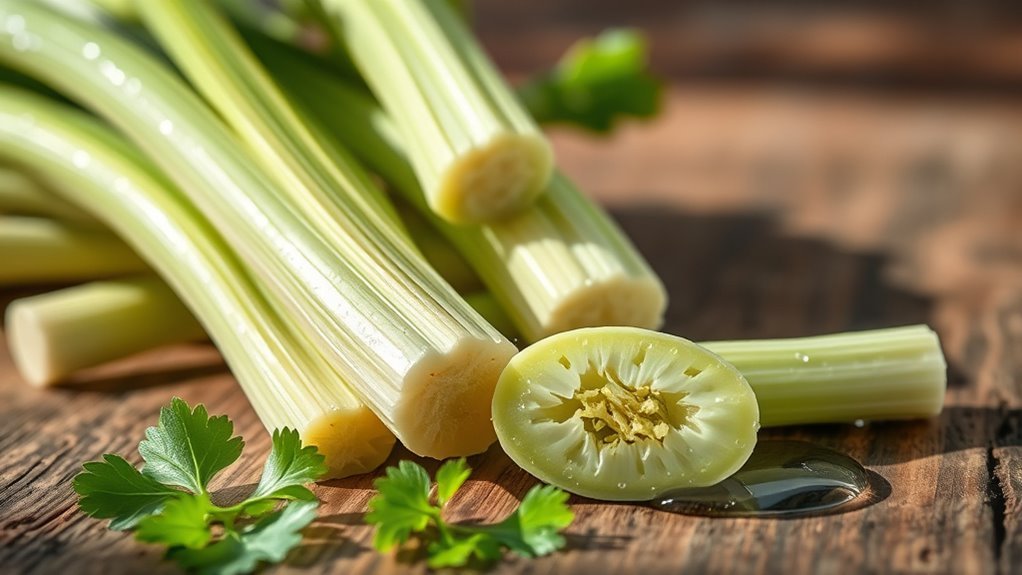
Because celery is packed with vitamins, antioxidants, and fiber, it offers impressive nutritional benefits despite its low calorie count. When you include celery in your diet, you get a rich source of vitamins like vitamin K, which supports blood clotting and bone health, as well as vitamin A and folate that contribute to overall wellness. Its extremely low calories, just about 16 per 100 grams, make it perfect if you’re watching your weight.
Celery’s high water content, around 95%, plays a key role in hydration, helping you maintain electrolyte balance and stay refreshed. Plus, the dietary fiber in celery supports healthy digestion and helps regulate your blood sugar levels, which is essential for sustained energy throughout the day. By understanding these nutritional benefits, you can appreciate why celery is more than a crunchy snack. It’s a smart, healthful choice to include regularly.
How Celery’s Nutrients Impact Your Health
While you might think celery is just a crunchy snack, its nutrients actively support your health in several ways. For starters, celery is rich in vitamin K, providing about 24% of your daily value per 100 grams. This vitamin plays an essential role in blood clotting and maintaining strong bones.
Beyond that, celery is packed with antioxidants and phytonutrients that help reduce inflammation, protecting your cells from damage and promoting overall wellness.
Celery’s high water content also aids hydration, keeping your body balanced and energized throughout the day. Plus, the potassium in celery supports heart function and helps regulate your blood pressure.
When you include celery in your diet, you’re not just enjoying a light snack. You’re actively supporting your cardiovascular health and bone strength while benefiting from powerful antioxidants. This makes celery a smart, nutrient-rich choice for maintaining your health.
How Celery Supports Hydration and Digestion
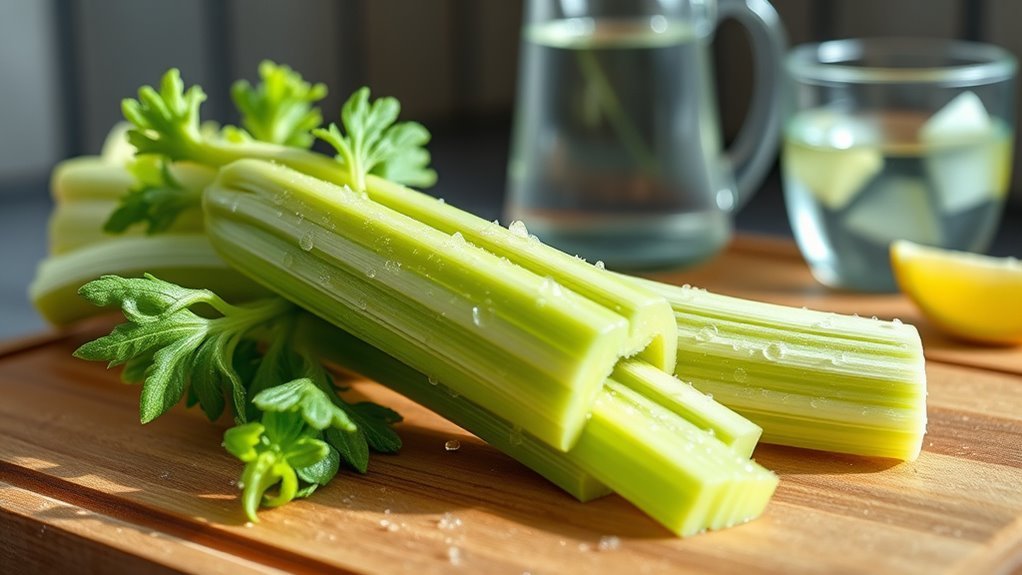
You’ll love celery’s high water content because it helps keep you hydrated, especially after exercise or on those hot days. Plus, its dietary fiber is great for your digestion—it supports regular bowel movements and keeps things running smoothly. So, all in all, celery is an easy and tasty way to boost both your hydration and digestive health.
High Water Content
How exactly does celery help keep you hydrated and support digestion? Celery’s high water content, nearly 95%, makes it a fantastic natural hydrator. When you eat celery, you’re replenishing your body’s fluids, which helps maintain proper hydration and prevents dehydration, especially during warmer days.
This high water content also plays an essential role in digestive health by adding moisture to your gastrointestinal tract. That moisture promotes smooth bowel movements and helps dissolve soluble fibers, making digestion easier and more efficient.
Dietary Fiber Benefits
Celery’s high water content works hand in hand with its dietary fiber to support your digestive system and overall hydration. With nearly 95% water and 1.6 grams of fiber per 100 grams, celery offers unique benefits for digestion and weight management. Here’s how it helps:
- Fiber promotes healthy bowel movements, preventing constipation and enhancing digestion.
- The fiber slows digestion, helping stabilize your blood sugar levels.
- Combined water and fiber boost hydration, reducing inflammation and supporting gut health.
- Fiber in celery creates a feeling of fullness, aiding weight management and appetite control.
How Celery Compares Nutritionally to Other Vegetables
Although many vegetables offer valuable nutrients, celery stands out with its exceptionally low calorie count and high water content, making it a hydrating and diet-friendly choice. With only 16 kcal per 100 grams and about 95% water content, celery nutrition supports hydration and weight management better than many vegetables like carrots, which have more than double the calories.
Celery also packs a surprising nutritional punch with vitamin K, providing about 24% of your daily value per 100 grams, more than lettuce or spinach. Its potassium content, at 260 mg per 100 grams, helps regulate blood pressure, enhancing its health benefits.
While carrots offer beta-carotene and vitamin A precursors, celery’s unique phytonutrients deliver anti-inflammatory properties, making it a valuable addition rather than a direct substitute. By understanding how celery compares nutritionally to other vegetables, you can make informed choices that boost your overall nutrient intake without extra calories.
Simple Ways to Add Celery to Your Meals and Snacks
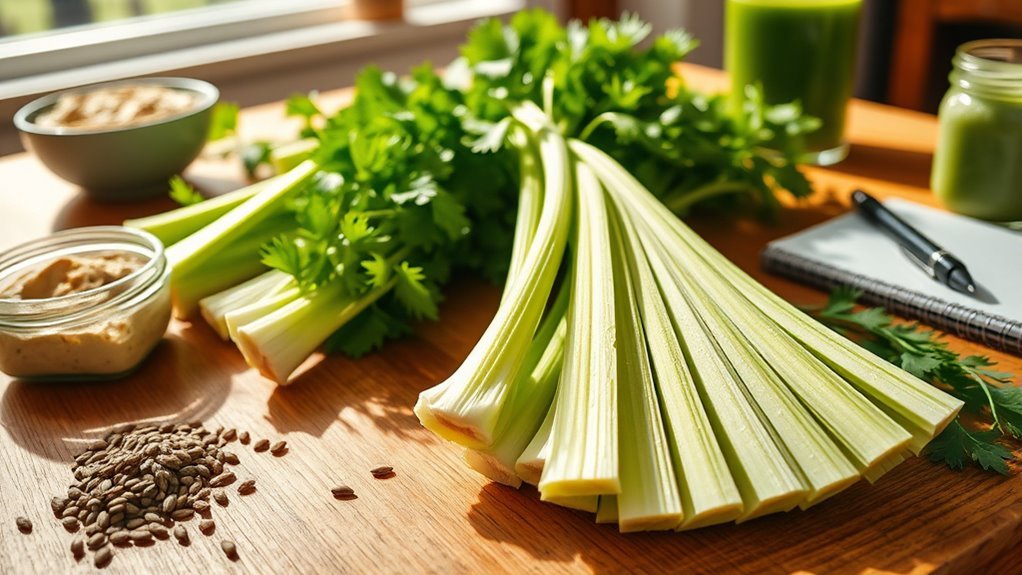
You can easily boost your meals and snacks by adding celery in simple ways. For instance, try raw celery sticks with hummus for a crunchy snack. Or toss chopped celery into salads—it adds a nice crunch and freshness.
And don’t forget about cooking it! Celery works great in soups and stir-fries, giving extra flavor and nutrients. These easy additions make it simple to enjoy celery’s benefits throughout the day.
Raw Celery Snack Ideas
Looking for a simple, invigorating snack that’s low in calories but high in hydration? Raw celery fits perfectly. Each stalk has just about 6 calories and is packed with water, keeping you refreshed.
Here are four easy ways to enjoy raw celery as a low-calorie snack:
- Snack on raw celery sticks dipped in healthy dips like hummus, peanut butter, or cream cheese for added flavor and nutrition.
- Fill celery stalks with nut butter or cream cheese for a satisfying treat that balances crunch with healthy fats.
- Use raw celery as a crunchy base for your favorite spreads, making snacks both nutritious and filling.
- Keep raw celery fresh by storing it wrapped in foil or airtight containers in your fridge for up to a week.
Try these ideas to boost your snack game!
Celery In Salads
When you add chopped celery to green salads, you not only get a satisfying crunch but also a boost of vitamins like K and potassium. Celery in salads enhances your meal’s health benefits while keeping the low calorie count intact.
You can also mix sliced celery into potato or chicken salads to increase hydration and fiber content effortlessly.
| Salad Type | Celery Form | Health Benefit |
|---|---|---|
| Green Salad | Chopped | Vitamins K & Potassium |
| Potato Salad | Sliced | Hydration & Dietary Fiber |
| Chicken Salad | Sliced | Low Calorie Count |
| Mixed Salad | Chopped | Crunch & Nutrient Boost |
| Snack Salad | Celery Sticks | Low Calorie & Filling Snack |
Incorporate celery to keep your salads nutritious and satisfying.
Cooking With Celery
Adding celery to your meals doesn’t have to stop at salads. You can easily enhance your dishes and snacks with celery stalks for added crunch and nutrition. Here are simple ways to incorporate celery into your daily routine:
- Add sliced celery to soups and stews to boost flavor, texture, and nutrients like vitamins K and A.
- Pair raw celery sticks with hummus, peanut butter, or cream cheese for a satisfying, low-calorie snack.
- Sauté or braise celery with herbs and butter for a tasty side dish or ingredient in main courses.
- Fill celery channels with cream cheese, nut butters, or dried fruits for quick, nutritious snacks.
These easy additions help you enjoy celery’s benefits while keeping your meals interesting and flavorful.
Celery Intake Tracking: What to Log and Why
Although celery might seem like a simple snack, tracking your intake carefully can reveal important insights about your diet. When you focus on celery intake, make sure to log all forms: raw stalks, cooked dishes, juices, and snacks. Record the exact quantity, whether by stalk count or grams, to monitor your daily consumption precisely.
Including celery-based ingredients in recipes like soups, salads, or stir-fries helps you understand their contribution to your nutrition. Tracking how often and in what forms you consume celery allows you to spot patterns that influence hydration, fiber intake, and nutrient absorption.
Don’t forget to document celery alongside other foods and beverages to see how it fits into your overall dietary habits and health goals. This detailed tracking not only improves your awareness but also helps you optimize celery’s nutritional benefits effectively.
Using the InsideTracker App for Celery Nutrition
To get started with the InsideTracker app, just log all your celery intake using the database search or camera scan during your 7-day tracking period. It’s pretty straightforward.
You can also connect your wearable devices to sync hydration, sleep, and activity data. This way, you get a complete picture of how celery affects your health.
Then, use the app’s insights to see how your nutrient intake impacts key biomarkers over time. It’s a great way to stay on top of your health journey.
Logging Celery Intake
Wondering how to keep an accurate record of your celery intake? The InsideTracker app makes tracking your food choices simple and precise. To log your celery intake effectively, follow these steps:
- Search the app’s database or scan the barcode to find celery or celery-based foods.
- Log all forms of celery: raw stalks, cooked meals, juices, and snacks for thorough tracking.
- Enter the exact quantity and time you consume celery to monitor its effects on your health biomarkers.
- Update your celery intake daily during the 7-day tracking period to identify reliable patterns.
Use the app’s reports and color-coded graphs to see how your celery intake influences sleep, energy, and recovery. Consistent tracking sharpens your understanding of your food choices.
Integrating Wearable Data
Tracking your celery intake with the InsideTracker app goes beyond logging food. You can also connect your wearable device like an Apple Watch or Oura Ring.
By syncing your wearable data, you get an all-encompassing view of your fitness, sleep, and recovery alongside your celery consumption. This integrated approach helps you see how your activity and rest patterns relate to your dietary habits over a 7-day DeepDive.
InsideTracker uses this info to deliver personalized recommendations that target better sleep, increased energy, and overall health improvements. Regularly syncing your wearable data ensures the app adapts to your evolving lifestyle, offering dynamic health insights.
This way, you can fine-tune your nutrition and habits to optimize biomarkers like inflammation and hormonal balance effectively.
Tracking Nutrient Impact
How does your celery intake influence key health markers? Using the InsideTracker app, you can track your celery consumption, whether raw, cooked, or juiced, and analyze its nutrient impact over seven days. This precise tracking helps you understand how celery affects hydration, inflammation, and blood pressure.
Here’s how to maximize your tracking:
- Log all celery intake in the app for accurate nutrient impact analysis.
- Sync wearable devices like Apple Watch or Oura Ring to link celery intake with sleep and recovery.
- Review color-coded graphs and reports to visualize how celery influences your biomarkers.
- Adjust celery consumption based on personalized insights and repeat tracking every 3-6 months to monitor progress.
This approach lets you optimize celery’s benefits and tailor your nutrition effectively.
Connecting Wearables to Enhance Your Celery Nutrition Tracking
Since wearable devices like the Apple Watch and Oura Ring sync seamlessly with your Nutrition DeepDive, you can gain real-time insights into how your activity, heart rate, and sleep quality interact with your celery nutrition. These devices provide real-time data that enhance the accuracy of your dietary analysis by continuously tracking your fitness and rest patterns.
Integrating this data helps you identify how celery consumption correlates with your energy levels and recovery, enabling more personalized recommendations tailored to your lifestyle. Wearables also automatically log sleep duration and quality, reducing manual tracking and sharpening your health routine assessment.
When Is the Best Time to Eat Celery for Health Benefits?
Although celery offers health benefits at any time, eating it during meals or as snacks can maximize its positive effects on digestion and hydration. The best time to eat celery depends on when you want to boost these benefits most effectively. Here’s how to enhance your celery intake:
- Morning: Kickstart hydration and supply fiber to support digestion throughout the day.
- Before or with meals: Promote satiety and aid digestion, helping with weight management.
- Throughout the day: Maintain anti-inflammatory and antioxidant support when your body needs it most.
- Fresh and raw: Consume celery shortly after preparation to ensure maximum nutrient absorption and maximize health benefits.
Understanding Your Celery Nutrition and Biomarker Results
When you include celery in your diet, you’re not just adding a low-calorie snack. You’re also impacting key health biomarkers. Celery nutrition plays an essential role in supporting your health goals by influencing blood biomarkers linked to hydration, metabolism, and cardiovascular health.
Its high water content helps maintain hydration biomarkers, while the potassium in celery supports blood pressure regulation, benefiting cardiovascular markers. Furthermore, celery’s dietary fiber aids digestion and helps stabilize blood sugar, which is fundamental for metabolic biomarker improvement.
Don’t overlook vitamin K, which promotes healthy blood clotting and bone strength, further supporting your overall health profile. Monitoring these blood biomarkers can give you insights into how well your body responds to celery nutrition and whether it aligns with your health goals.
Understanding this connection empowers you to make informed choices, ensuring celery remains a beneficial part of your dietary routine.
How to Adjust Your Diet Using Celery Nutrition Data
As you analyze your celery nutrition data, you can make targeted adjustments to your diet that enhance hydration, support weight management, and boost nutrient intake. Celery’s low calories and high water content make it perfect for healthy snack choices. Use your nutrient adjustment insights to optimize meals and snacks. Here’s how to apply what you learn:
Analyzing celery nutrition helps tailor your diet for better hydration, weight control, and nutrient-rich snacking.
- Swap high-calorie snacks for celery sticks paired with hummus or nut butter to stay full without extra calories.
- Add celery to salads, soups, or smoothies to increase vitamins K, A, and potassium intake.
- Monitor how celery affects your hydration and digestion over a week to fine-tune your food timing.
- Use celery nutrition data to adjust meals, aiming to reduce inflammation and balance hormones naturally.
Using Regular Celery Nutrition Tracking for Lasting Health Benefits
Tracking your celery intake regularly lets you clearly see how it benefits hydration, digestion, and nutrient levels. Because celery contains high water and potassium, it can help reduce blood pressure while supporting weight management with its low-calorie count.
By consistently tracking your celery consumption, you’ll discover ways to optimize its anti-inflammatory effects and improve your overall health over time.
Here’s a simple tracking table to guide you:
| Benefit | How Celery Helps |
|---|---|
| Hydration | High water content maintains balance |
| Blood Pressure | Potassium helps reduce hypertension |
| Weight Management | Low calories support calorie control |
Using this method every few months reveals lasting health benefits. You’ll also fine-tune your diet, ensuring celery plays a key role in your wellness journey.
Regular tracking isn’t just about numbers. It’s about harnessing celery’s full potential to help reduce health risks and boost your crucial vitality.
Frequently Asked Questions
What Are the Best Celery Varieties for Maximum Nutrient Content?
For maximum nutrient content, you should focus on wild or heirloom celery varieties, as they pack more antioxidants and vitamins. When practicing celery farming, prioritize organic cultivation to prevent chemicals that can degrade nutrients.
Choosing celery with darker green leaves and inner stalks helps with nutrient preservation, especially vitamin K and chlorophyll. Baby celery also retains more vitamin C, so selecting fresh, crisp, and tender stalks ensures you get the most from your celery.
How Does Celery Nutrition Change When Cooked Versus Raw?
When you cook celery, you’ll notice some nutrient loss, especially in water-soluble vitamins like vitamin C and folate, due to cooking effects. However, cooking can enhance flavor and make certain nutrients easier to digest.
If you want maximum celery juice benefits, drinking it raw preserves more antioxidants and vitamins. So, balancing raw and cooked celery helps you enjoy both nutrition and taste without sacrificing too much.
Can Celery Nutrition Help With Specific Medical Conditions?
Yes, celery nutrition can help with specific medical conditions. You’ll benefit from celery fiber’s ability to improve digestion and ease symptoms of IBS.
Its antioxidant properties fight inflammation, which may reduce arthritis pain. Plus, celery hydration effects keep you well-hydrated, supporting kidney function and overall health.
Including celery in your diet can aid blood pressure control and promote bone health, making it a smart choice for managing chronic conditions.
What Are Common Misconceptions About Celery’s Health Benefits?
Thinking celery’s health benefits are like a magic wand won’t get you far. You might believe celery fiber alone can detox your body, but it mainly aids digestion, not full detox.
People overestimate celery antioxidants, expecting them to cure diseases, which isn’t true. Don’t rely on celery to drastically lower blood pressure or act as a miracle superfood.
It’s best when combined with a balanced diet and healthy lifestyle.
How to Store Celery to Preserve Its Nutritional Value?
To preserve celery’s nutrients, wrap it tightly in aluminum foil or store it in an airtight container. These celery preservation techniques prevent moisture loss and nutrient loss.
Avoid placing celery near ethylene-producing fruits like apples, which speed spoilage. Trim and wash celery only before use to maintain freshness.
For longer storage, keep celery in a plastic bag with a paper towel to absorb moisture. Don’t store it too long to keep it crisp and nutritious.
Conclusion
You might think celery’s just a crunchy afterthought, but it’s actually a powerhouse for hydration, digestion, and vitamins you didn’t know you needed. Who knew this humble stalk could impact your health so much?
By tracking your celery intake and nutrition, you’re not just munching on a snack. You’re mastering your well-being one crisp bite at a time. So go ahead, don’t underestimate celery; your body will thank you in ways you never expected.