
5 Steps to Determine Nutrition Facts for Any Recipe
To determine nutrition facts for any recipe, start by listing all ingredients with exact quantities, including spices and toppings.
Then, find reliable nutrition data from sources like the USDA or verified labels.
Next, calculate the total calories and nutrients by multiplying amounts by their nutritional values.
After that, divide those totals by the number of servings for per-serving info.
Finally, double-check your work for errors.
Keep going, and you’ll uncover helpful tips to master accurate nutrition tracking.
Gather and List All Ingredients for Nutrition Analysis
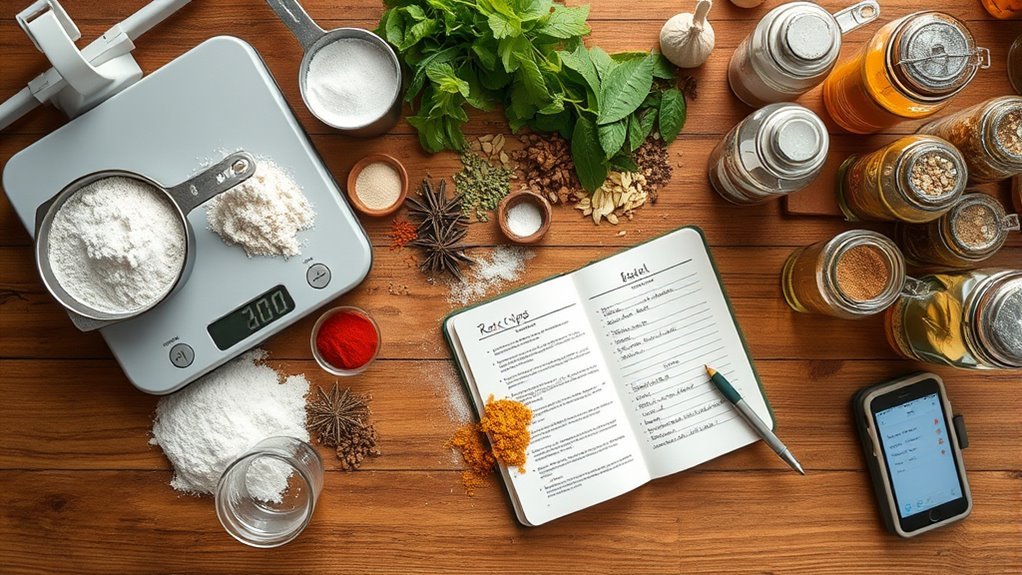
Before calculating nutrition facts, you need to gather and list every ingredient in your recipe, including spices, oils, and optional add-ins. Start by creating a detailed ingredient list that includes all components, from main ingredients to garnishes or toppings.
Be sure to specify precise quantities with consistent measurement standards, like grams, cups, or teaspoons. This consistency is vital for accurate nutrition analysis since varying units can lead to errors.
Double-check your ingredient list carefully to avoid missing any items, which could result in incomplete or misleading nutrition facts. When you compile your ingredients with exact amounts and uniform units, you set a solid foundation for reliable nutrition analysis.
This thorough preparation helps guarantee the nutrition facts you calculate truly reflect your recipe’s content, making your results trustworthy and useful.
Find Trusted Nutritional Data Sources for Your Ingredients
When you’re ready to determine the nutrition facts for your ingredients, relying on trusted data sources is essential to guarantee accuracy. Using reliable nutritional information helps you create precise nutrition facts for your recipe, avoiding guesswork and inconsistencies.
Rely on trusted nutrition data to ensure accuracy and avoid guesswork in your recipe analysis.
Here are some trusted data sources you can use:
- The USDA National Nutrient Database offers detailed, standardized nutrition data for countless foods and ingredients.
- Food manufacturers’ nutrition labels provide verified nutritional details, perfect for packaged ingredients.
- Online databases like MyFitnessPal and FatSecret compile nutrition facts from various reputable sources for easy access.
- Scientific publications and peer-reviewed studies give detailed nutrient profiles, especially for specialty or uncommon ingredients.
Make sure to use standardized serving sizes and clear ingredient descriptions to maintain consistency in your nutritional data. By relying on these trusted data sources, you’ll ensure your recipe’s nutrition analysis is accurate and dependable.
Calculate Total Nutrition Values for the Entire Recipe

Although calculating nutrition values might seem complex, you can determine the total nutrition for your entire recipe by carefully summing each ingredient’s contributions. Start by adding up the total calories from each ingredient based on their quantities.
Then, calculate the amounts of macronutrients, like protein, carbohydrates, and fats, by multiplying the nutrient content per unit by the ingredient amount and summing these across all ingredients. Don’t forget to include micronutrients by converting their densities into total values using the ingredient weights.
If your recipe involves preparation losses or waste, adjust the nutritional values accordingly to guarantee accuracy. Once you’ve aggregated these numbers, record them as the total nutritional values for the entire recipe.
This thorough data sets the foundation before you consider the serving size, which you’ll use later to break down the nutrition per portion. By following these steps, you’ll get an accurate picture of your recipe’s overall nutritional content.
Break Down Nutrients Per Serving
Since you’ve totaled the nutrition for your entire recipe, you can now break down those values per serving by dividing the overall nutrients by the number of servings. This step helps you understand the nutritional information per serving, making it easier to track your intake.
After totaling your recipe’s nutrition, divide by servings to see accurate per-serving nutrient values.
To accurately determine the nutrient in a serving, follow these tips:
- Divide the total nutritional values of the recipe by the exact number of servings.
- Confirm your serving sizes are consistent and clearly measured to maintain accuracy.
- Use trusted sources like USDA databases or nutrition labels to obtain precise nutrient data.
- Adjust calculations if you change ingredient amounts or serving sizes to reflect updated nutritional information.
Verify Results and Troubleshoot Common Issues

To guarantee your nutrition facts are accurate, always cross-check your calculations against reliable sources like USDA databases or product labels. Verify ingredient quantities and units carefully to avoid errors that impact nutrition facts.
Make sure your software or database is current to maintain accuracy. Review your recipe inputs for typos, missing items, or mismatches that could skew results.
If you encounter issues, troubleshoot by consulting technical support or guides to resolve common problems like ingredient mismatches or software bugs.
| Issue | Cause | Solution |
|---|---|---|
| Incorrect totals | Wrong ingredient quantities | Double-check measurements |
| Mismatched items | Selecting wrong database entry | Verify ingredient selection |
| Outdated data | Old database/software version | Update tools regularly |
| Missing ingredients | Typos or omissions | Review recipe inputs |
| Software bugs | Program errors | Contact technical support |
Frequently Asked Questions
How Do Cooking Methods Affect the Nutrition Facts of a Recipe?
Cooking techniques directly impact nutrient retention and the heat impact on your ingredients. When you boil or steam, you might lose water-soluble vitamins, while grilling or roasting reduces water content, concentrating calories and fats.
Frying adds fats, changing nutrition facts through ingredient modifications. So, the cooking method you choose alters how nutrients stay in your food and changes the overall nutrition facts you should expect from your recipe.
Can I Use Nutrition Facts for Pre-Packaged Meals in Recipes?
Yes, you can use nutrition facts for pre-packaged meals in recipes, but you need to watch ingredient substitution carefully. Cooking technique influence can change nutrient levels, so adjust accordingly.
Always rely on nutritional label accuracy to get precise data, and consider meal prep considerations like portion size and added ingredients. This way, your recipe’s nutrition facts stay reliable, even when combining or modifying pre-packaged components.
How Accurate Are Online Nutrition Calculators Compared to Lab Testing?
You can’t judge a book by its cover when it comes to online nutrition calculators. They give decent estimates but fall short of lab testing’s precision.
If you’re into dietary supplements, nutritional labeling, or food fortification, these calculators help with meal planning but might miss subtle nutrient details. Labs provide exact data, including bioavailability, while online tools rely on averages.
What if Some Ingredients Have Missing Nutritional Data?
If some ingredients have missing nutritional data, you can use ingredient substitutions with similar nutrient profiles to fill the gaps. Be mindful of potential nutrient loss when swapping ingredients, especially if you have dietary restrictions.
You should also consider ingredient sourcing. Check reliable databases or labels for close matches. Document your assumptions clearly to keep your analysis transparent and accurate, ensuring your recipe’s nutrition facts remain trustworthy despite incomplete data.
How Do Portion Size Variations Impact Nutritional Analysis?
You might not realize it, but serving size adjustments can drastically shift your nutritional analysis. When you tweak portion sizes, calorie density variations come into play, altering how many calories and nutrients you actually consume.
Nutrient concentration changes mean that even small portion shifts impact your daily intake. That’s why mastering portion control strategies is essential. You need to recalculate everything to keep your diet accurate and balanced.
Don’t underestimate the power of precise portions!
Conclusion
Now that you know the steps to determine nutrition facts for any recipe, you’re empowered to make healthier choices. Did you know that nearly 70% of Americans use nutrition labels to guide their eating habits?
By accurately calculating your recipe’s nutrition, you can tailor meals to your goals and avoid hidden calories or allergens. Keep practicing these steps, and you’ll gain confidence in making nutritious, delicious dishes every time.