Does Salad Have Nutritional Value and How to Assess It?
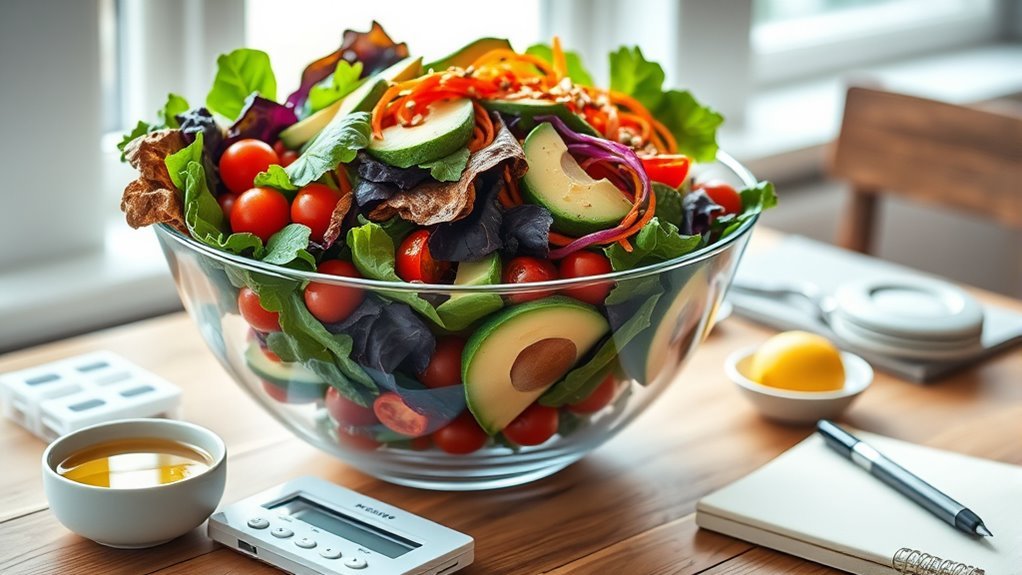
Yes, salads have great nutritional value when you choose dark leafy greens like spinach or kale. Add colorful veggies, healthy fats like avocado or olive oil, and lean proteins such as grilled chicken or salmon.
Avoid high-calorie dressings and toppings like creamy dressings, croutons, or fried proteins to keep your salad light and nourishing.
Freshness and proper storage also preserve nutrients.
Keep exploring to find out how to assess and pick the most nutrient-packed salads.
Which Nutrients Make Salads Healthy?
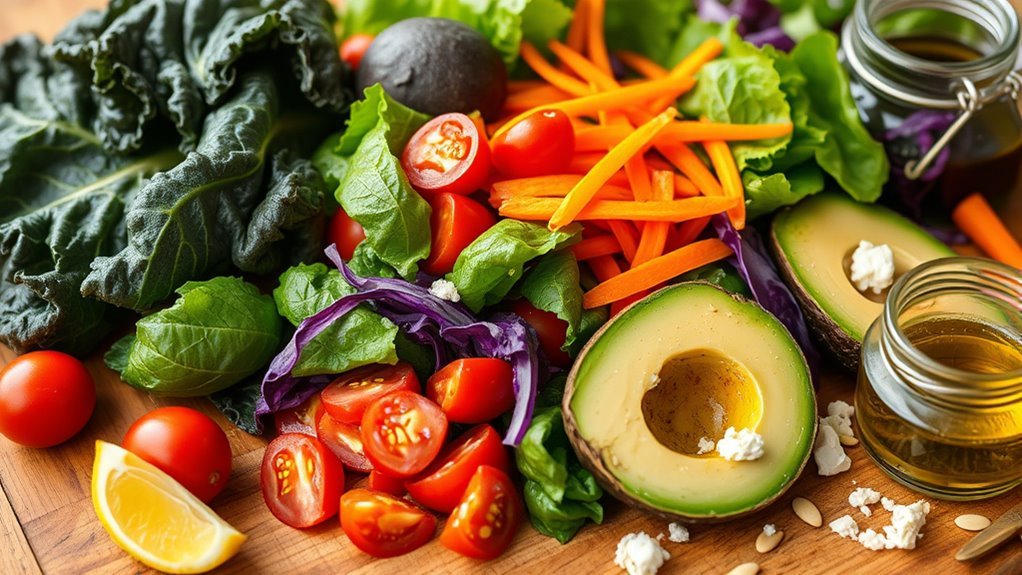
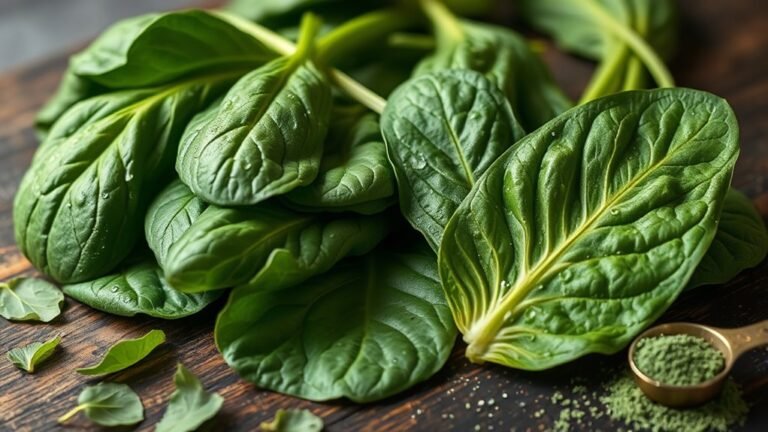
Although salads might seem simple, they pack a powerful nutritional punch when you choose the right ingredients. Start with leafy greens like spinach, kale, or arugula. They’re loaded with essential vitamins and minerals such as A, C, K, and folate that support your immune system and cell health.
Salads may seem simple, but the right greens deliver vital vitamins that boost immunity and cell health.
Adding colorful vegetables boosts antioxidants and phytonutrients, which help fight oxidative stress.
Don’t forget to include healthy fats from sources like avocado, nuts, or olive oil. These fats improve your body’s ability to absorb fat-soluble vitamins like A, D, E, and K, maximizing the benefits you get from your salad.
Including protein options such as beans, eggs, or fish further enriches your salad by aiding muscle repair and keeping you fuller longer. By combining these nutrient-dense elements, you create a balanced salad that fuels your body with essential vitamins, minerals, fiber, and healthy fats.
How Leafy Greens and Veggies Boost Salad Nutrition
You can easily boost your salad’s nutrition by picking dark leafy greens that are full of vitamins and antioxidants. Plus, tossing in some colorful veggies doesn’t just make your salad look more vibrant—it also adds fiber and important nutrients. These simple choices are great for supporting your health, all while keeping the calories low and the flavor high.
Nutrient Density of Greens
How do leafy greens and colorful vegetables boost the nutritional value of your salad? Leafy greens like kale and spinach have high nutrient density, packing over 10 times more vitamins A, C, and K than iceberg lettuce. These greens provide essential antioxidants that help protect your body from oxidative stress and support disease prevention.
Including darker greens and red leaves increases the antioxidant levels in your salad, making it even more beneficial. Despite their rich nutrient content, a 1-cup serving of greens contains only about 7 calories, so you get maximum nutrition without extra calories.
To make the most of these benefits, handle and store your greens properly to preserve their nutrients and keep them safe to eat.
Colorful Vegetables’ Benefits
Why settle for plain when you can brighten your salad with colorful vegetables? Adding vibrant tomatoes, bell peppers, and beets not only boosts your salad’s appeal but also its nutrient density. These colorful vegetables are packed with antioxidants and phytochemicals that support your overall health and immune function.
Dark leafy greens like kale and spinach already offer high levels of vitamins A and C, but pairing them with red and purple greens increases antioxidant intake even more. The bright pigmentation in these veggies signals beneficial compounds like carotenoids and anthocyanins, which help protect your cells from oxidative damage.
Fiber and Antioxidants
Adding colorful vegetables to your salad does more than please the eye. It also packs in fiber and antioxidants that work together to boost your health.
Leafy greens like spinach and kale are loaded with antioxidants such as lutein and beta-carotene. These help fight oxidative stress and may reduce chronic disease risk.
The fiber in these vegetables supports healthy digestion, keeps your blood sugar steady, and promotes fullness. This helps you manage weight and avoid overeating.
Including a variety of dark green and red leafy greens increases your intake of phytonutrients and diverse antioxidants. This enhances your salad’s nutritional value.
Why Some Salad Ingredients Reduce Salad Nutrition
Although salads are often seen as healthy meals, certain ingredients can considerably reduce their nutritional value. High-fat dressings like ranch and blue cheese add significant calories and saturated fat, which lowers the overall healthfulness of your salad.
Toppings such as cheese, croutons, and bacon bits also pack in calories and sodium, diminishing nutritional benefits. When you choose fried or breaded proteins like crispy chicken or bacon, you increase unhealthy fats and calories, further reducing the salad’s nutritional value.
Even dried fruits and candied nuts, with their added sugars and oils, raise sugar and calorie levels, making the salad less healthy. Furthermore, relying on iceberg lettuce, which has minimal nutrients compared to darker greens, decreases the nutrient density of your meal.
Why Healthy Fats Matter for Nutrient Absorption in Salads
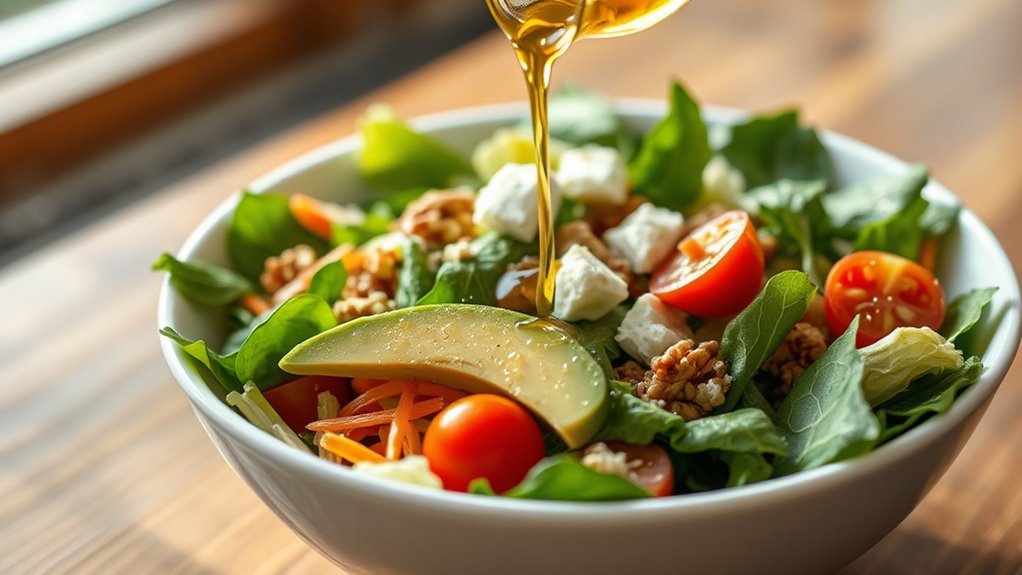
When you include healthy fats like avocado, nuts, or olive oil in your salad, you help your body absorb fat-soluble vitamins such as A, D, E, and K more effectively. These vitamins are essential for immune function, vision, and skin health. But without healthy fats, your body struggles to take full advantage of them.
Adding healthy fats to salads also boosts the nutrient absorption of antioxidants like carotenoids and phytochemicals, increasing their bioavailability. Studies show that salads with moderate amounts of healthy fats lead to higher serum levels of these vitamins compared to fat-free versions.
Importantly, you don’t need to add excessive fat. Moderate amounts improve nutrient uptake without considerably raising calories. By incorporating healthy fats in your salads, you support overall health by maximizing essential micronutrient absorption.
How to Choose Dressings That Support Your Health
Choosing the right salad dressing plays a crucial role in maintaining the health benefits of your meal. To make healthy choices, opt for homemade salad dressings using vinegar paired with olive or avocado oil. These oils are lower in saturated fat and sodium compared to many store-bought creamy dressings.
Choosing homemade salad dressings with vinegar and healthy oils enhances flavor while keeping meals nutritious and heart-friendly.
Avoid high-calorie dressings like ranch, blue cheese, or Thousand Island, as just two tablespoons can add 150 calories or more. Instead, enhance flavor with herbs, lemon juice, or balsamic vinegar, which add taste without extra sugars, fats, or sodium.
When buying dressings, choose those labeled “light” or “reduced-fat,” but always check nutrition labels for hidden sugars and sodium. Use dressings sparingly. Consider dipping veggies or serving dressings on the side to control calorie intake and keep your salad both tasty and nutritious.
Making these mindful choices helps you enjoy your salad while supporting your overall health.
Which Protein Options Enhance Salad Benefits
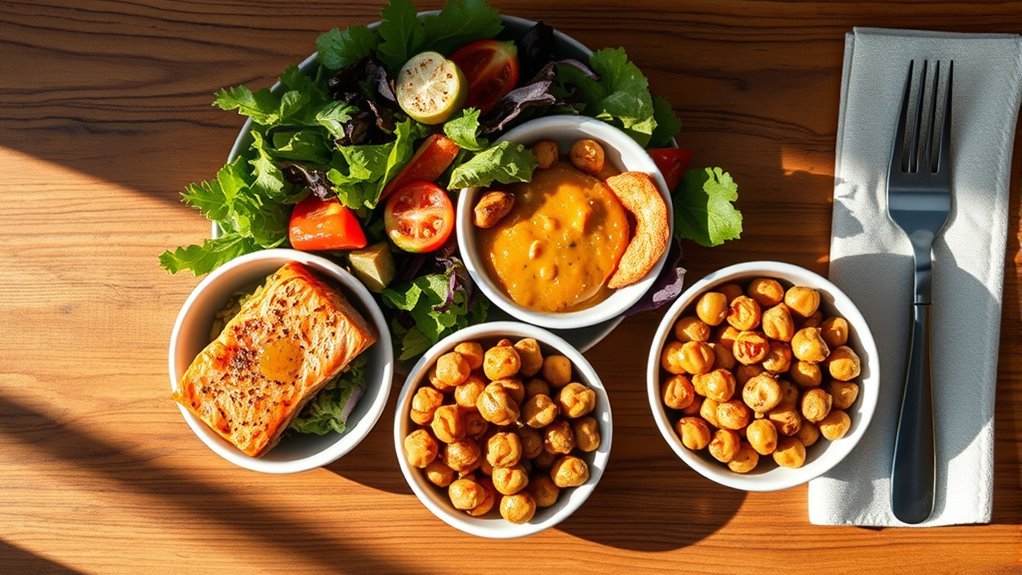
You’ll want to go for lean protein options like grilled chicken, salmon, or shrimp. They really boost your salad’s nutritional value without adding any unwanted fats. Plus, plant-based proteins like beans are a great choice too—they add extra fiber and amino acids. Just steer clear of fried toppings if you want to keep your salad healthy and calorie-conscious.
Lean Protein Choices
Adding lean proteins like grilled chicken, turkey, or fish transforms your salad into a satisfying, nutrient-rich meal that supports muscle health and keeps calories in check. Lean protein sources provide essential amino acids without adding excess saturated fat, helping you maintain a balanced nutrient content.
For instance, a 3-ounce serving of grilled chicken delivers about 26.7 grams of protein, perfect for muscle maintenance. Including fatty fish like salmon also boosts heart health thanks to omega-3 fatty acids, which reduce inflammation.
If you prefer plant-based options, beans, lentils, or tofu offer protein with less saturated fat while increasing fiber intake. By choosing these lean protein options, you enhance your salad’s nutritional value and support overall well-being without sacrificing flavor or calorie control.
Avoid Fried Additions
While fried proteins may seem tempting, they quickly add unhealthy fats and excess calories to your salad, undermining its health benefits. Fried proteins like fried chicken or breaded shrimp can boost the calorie content of your meal to over 800 calories per serving, which defeats the purpose of a light, nutritious salad.
Instead, choose lean, cooked proteins such as grilled chicken, turkey, or boiled eggs to keep unhealthy fats low while enhancing your salad’s nutritional value. Incorporating grilled salmon also adds heart-healthy omega-3 fatty acids, unlike fried options that contain harmful trans fats.
How to Spot Hidden Calories in Salad Add-Ins
Although salads seem like a healthy choice, hidden calories in dressings and toppings can quickly turn them into calorie bombs. Many salad dressings, especially creamy ones like ranch or blue cheese, pack over 150 calories per just two tablespoons. If you’re generous with the dressing, those calories add up fast.
High-fat toppings such as cheese, croutons, and bacon bits also sneak in lots of calories. One cup of croutons alone can add around 180 calories without obvious signs. Dried fruits and candied nuts might seem harmless, but their sugar and oil content dramatically boost the calorie count.
Fried proteins, like crispy chicken or breaded shrimp, add even more calories and fat compared to grilled or raw options. When you order restaurant salads, be cautious. Large portions of these high-calorie add-ins can push your meal’s calorie total well beyond 500-800 calories, often without you realizing it.
To keep your salad healthy, watch out for these hidden calories in your salad dressings and high-fat toppings.
Why Freshness and Storage Affect Salad Nutrient Levels
Because nutrients like vitamin C and folate degrade quickly after harvest, the freshness of your salad ingredients plays a crucial role in their nutritional value. When you store salad greens improperly or for too long, nutrient loss speeds up due to oxidation and exposure to air and light. Keeping your salad refrigerated at 35-40°F helps slow this process and preserves freshness.
Here’s how different storage factors affect your salad’s nutrients:
| Factor | Impact on Nutrient Levels |
|---|---|
| Freshness | Higher vitamin and folate content |
| Storage Duration | Increased nutrient degradation |
| Refrigeration (35-40°F) | Slows nutrient loss and bacteria |
| Exposure to Air/Light | Promotes oxidation and loss |
| Washing with vinegar | Reduces bacteria, slight nutrient leaching |
How to Check Salad Nutrition Online
You can easily check salad nutrition online by reading nutritional labels and using dedicated salad databases. These resources break down calories, fats, vitamins, and minerals so you can really understand what you’re eating. Plus, by comparing data from different sites, you’ll be able to find salads that fit your dietary goals perfectly.
Nutritional Labels Explained
When exploring salad options online, checking the nutritional labels is key to making healthier choices. Nutrition labels give you essential details like calories, saturated fat, sugars, sodium, fiber, protein, and important vitamins or minerals.
By examining these labels closely, you can compare salads and pick those with fewer calories and lower saturated fat, which supports better health. Look for clear ingredient lists and nutrition facts on supermarket or restaurant websites to understand what you’re really getting.
Some labels, like Nutri-Score or nutriRECIPE-Index, offer quick summaries of a salad’s overall nutritional quality. Learning to interpret these nutrition labels empowers you to make informed decisions before buying or eating, ensuring your salad choices align with your health goals.
Online Salad Databases
Although finding reliable nutrition information can be challenging, online salad databases make it easier to check the nutritional content of various salad options quickly. These platforms provide detailed nutritional information, including calories, macronutrients, vitamins, and minerals.
You can search by salad name, brand, or specific ingredients to access accurate profiles. Many salad databases even offer barcode scanning or product image uploads, letting you retrieve data for packaged salads instantly.
Comparing different salads is simple, as these tools highlight nutrient content and ingredient details side by side. To get the best results, choose reputable databases that update regularly and include extensive ingredient details.
Using these resources, you’ll confidently assess salad nutrition and make healthier choices with ease.
Tips for Choosing Nutritious Ready-to-Eat Salads
Since ready-to-eat salads vary widely in their ingredients, choosing the most nutritious options means focusing on dark leafy greens like kale or spinach. These pack far more vitamins A and C than iceberg lettuce. You want a healthy base of leaf lettuce complemented by a variety of colorful vegetables such as tomatoes, bell peppers, and carrots to boost nutrient diversity.
When it comes to dressing, avoid high-fat options like ranch or blue cheese. Instead, pick dressings made from vinegar and olive oil for healthier fats. Adding lean protein sources like grilled chicken, fish, or legumes helps make your salad more filling and balanced.
Be mindful of extras like cheese, croutons, or dried fruits, as they can quickly add calories and reduce the salad’s healthfulness. By focusing on these tips, you’ll enjoy ready-to-eat salads that are both tasty and packed with essential nutrients.
Frequently Asked Questions
Can Salads Help With Weight Loss?
Yes, salads can help with weight loss if you focus on calorie content and portion control. By choosing nutrient-dense ingredients like leafy greens, lean proteins, and healthy fats, you’ll feel fuller longer without overeating.
Avoid high-calorie dressings and large portions that can add unwanted calories. When you manage these factors, salads become a powerful, low-calorie meal option that supports your weight loss goals effectively.
Are Organic Salad Greens More Nutritious?
You might find organic salad greens slightly more nutritious because organic farming reduces pesticide residue and can boost certain antioxidants. However, the difference in nutrient density between organic and conventional greens is usually small.
Instead of focusing only on organic labels, you should prioritize freshness, variety, and soil health to get the best nutrients. Organic greens do offer benefits like fewer chemicals, but overall nutrition depends on several factors beyond farming methods.
How Do Pesticides Affect Salad Nutrition?
Imagine knights protecting their castle. Pesticide residue acts like an invader, reducing salad’s nutrient retention by breaking down vitamins like C and folate.
If you want to keep your greens’ nutritional power, choosing organic farming products helps since they usually have fewer residues. You can also wash your salad thoroughly to lower pesticides, preserving nutrients better.
Can Salad Greens Cause Allergic Reactions?
Yes, salad greens can cause allergic reactions. If you have salad green allergies, you might experience symptoms like itching, swelling, or difficulty breathing.
Common allergenic greens include spinach, lettuce, and arugula, especially if you’re sensitive to ragweed pollen due to cross-reactivity. You should watch for symptoms of salad allergies such as oral itching or throat irritation.
It’s smart to get tested if you suspect a reaction to certain greens.
What Are the Best Salad Greens for Gut Health?
You’ll find that kale, spinach, and arugula are like superheroes for your gut health! Their high fiber content feeds your gut microbiota, promoting a thriving digestive system.
Don’t forget chicory and dandelion greens. They pack prebiotic fibers that boost fermentation benefits when paired with fermented veggies like sauerkraut.
Combining these greens guarantees you get diverse nutrients that keep your gut happy and balanced, making salad your gut’s best friend.
Conclusion
Think of a salad like a puzzle. Each nutrient-rich ingredient fits together to create a healthy meal. By choosing fresh leafy greens, colorful veggies, and healthy fats, you boost your salad’s nutritional value.
Watch out for hidden calories in dressings and add-ins, and always check nutrition info if you’re buying ready-made. With these tips, you can easily assess and enjoy salads that fuel your body and satisfy your taste buds.