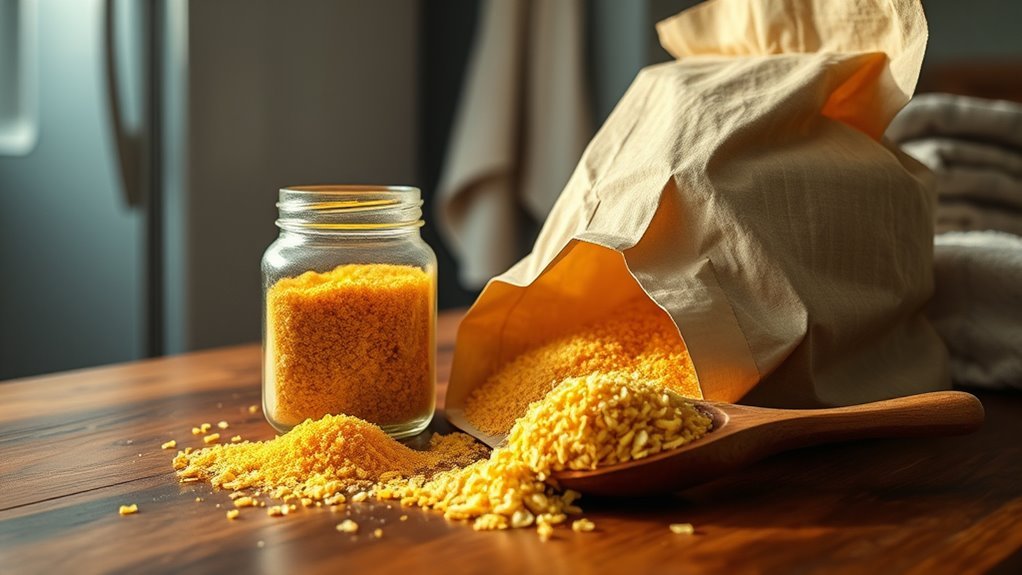
Does Nutritional Yeast Need to Be Refrigerated?
You don’t need to refrigerate nutritional yeast, but storing it in an airtight container in a cool, dark, and dry place helps keep it fresher longer.
Avoid moisture to prevent clumping and nutrient loss.
Refrigeration or freezing is optional, especially useful in humid environments to extend shelf life and preserve flavor.
Keeping it stored properly guarantees you enjoy its full nutritional benefits and savory taste.
To understand why proper storage matters and how it’s made, keep exploring.
Does Nutritional Yeast Need to Be Refrigerated?
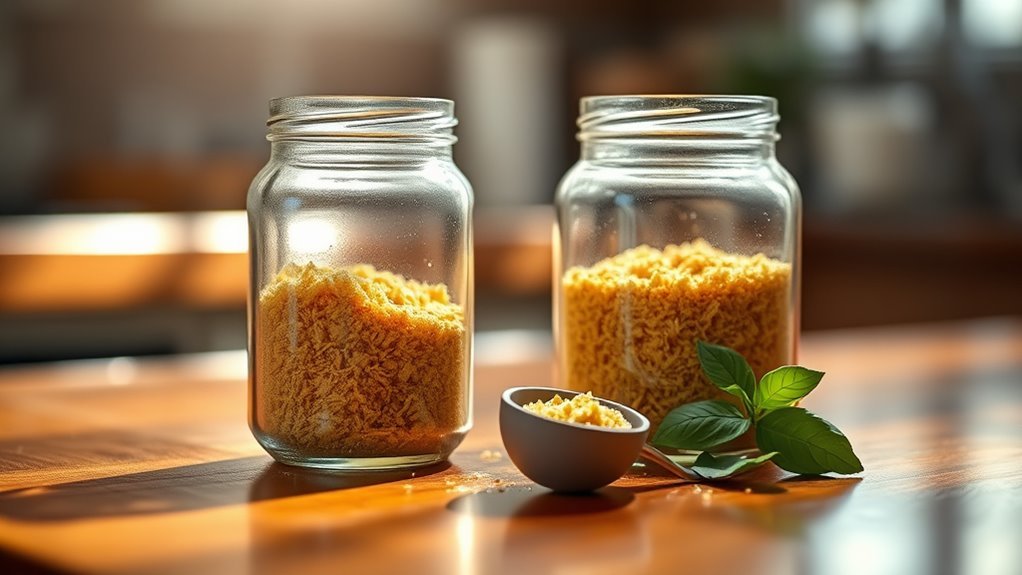
Although you don’t need to refrigerate nutritional yeast, storing it in an airtight container in a cool, dark place keeps it fresh for up to two years. For ideal nutritional yeast storage, use a dry place at room temperature to prevent moisture from causing clumping or spoilage.
Store nutritional yeast airtight in a cool, dark, dry spot at room temperature to keep it fresh up to two years.
An airtight container seals out humidity and air, which helps maintain its flavor and nutritional quality. You’ll find that keeping nutritional yeast at room temperature is perfectly fine, as it does not require refrigeration to stay safe or tasty.
This method maximizes its shelf life without hassle. Just make sure the container is tightly sealed after each use to avoid exposure to air and moisture. By doing this, you won’t have to worry about your nutritional yeast going bad quickly, and you’ll always have it ready for your favorite recipes.
Keeping it dry and well-sealed is the key to preserving its freshness.
Can Refrigeration or Freezing Extend Nutritional Yeast’s Shelf Life?
If you want to extend the shelf life of your nutritional yeast beyond the typical 12 to 24 months, refrigeration or freezing can help slow down its degradation. While refrigeration isn’t necessary, it does slow the breakdown process, keeping your nutritional yeast fresh longer.
Freezing takes it a step further, preserving flavor and nutrients for up to two years when stored in an airtight container. Both methods prevent moisture absorption, which is essential since moisture can cause clumping and reduce shelf life.
Proper storage is key; keeping your nutritional yeast sealed tightly and away from heat and light maintains its quality. In humid environments, freezing is especially helpful to avoid moisture buildup.
Ultimately, refrigeration and freezing are optional but effective options if you want to maximize freshness and extend the shelf life of your nutritional yeast.
How to Store Nutritional Yeast to Prevent Clumping and Nutrient Loss
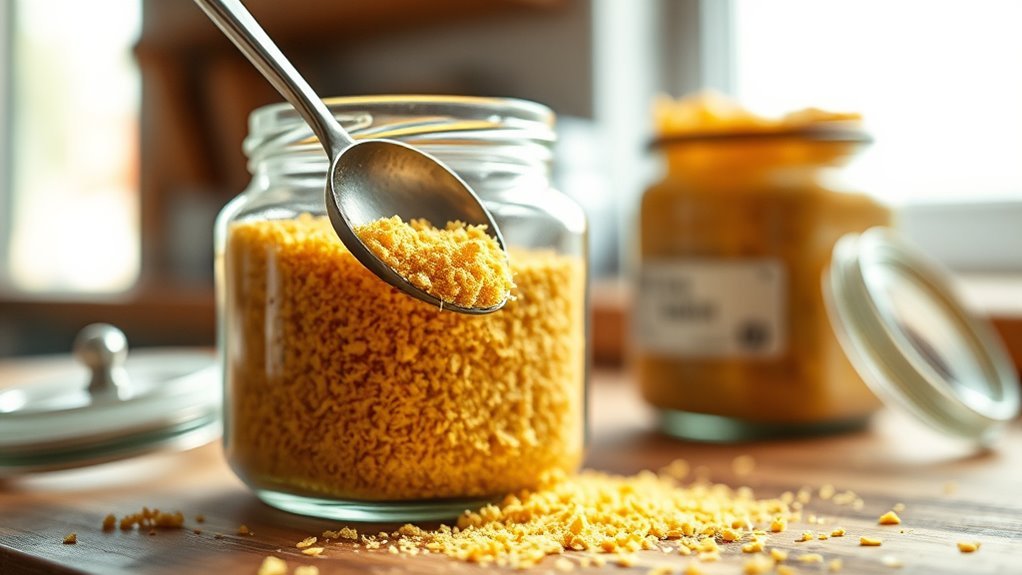
To keep your nutritional yeast from clumping and losing nutrients, focus on how you store it. Proper storage preserves its flavor and extends its shelf life. Here’s what you should do:
Store it in an airtight container to block moisture that causes clumping. Keep the container in a cool, dark place like a pantry to protect against heat and light.
Avoid exposure to humidity since it accelerates nutrient loss and clumping. Use a sealed jar to maintain maximum freshness and prevent air from degrading the yeast.
Refrigeration isn’t necessary but can help reduce clumping if you keep it sealed and cool.
Mistakes That Make Nutritional Yeast Spoil Faster
When you store nutritional yeast incorrectly, it spoils faster and loses its flavor and nutrients. One common storage mistake is not using an airtight container. Without a proper seal, moisture and humidity sneak in, causing clumping and encouraging mold growth, which speeds up spoilage.
Leaving the jar open or exposed to air lets moisture enter, further degrading your nutritional yeast. Another mistake is exposing it to direct sunlight, which breaks down valuable nutrients and affects taste. Using wet or unclean utensils to scoop the yeast introduces moisture and contaminants, accelerating spoilage as well.
To keep your nutritional yeast fresh longer, always store it in a cool, dry place inside an airtight container and avoid opening it unnecessarily. Being mindful of these factors guarantees your nutritional yeast stays flavorful and nutrient-rich, preventing common pitfalls that cause it to spoil prematurely.
How to Tell If Your Nutritional Yeast Has Gone Bad
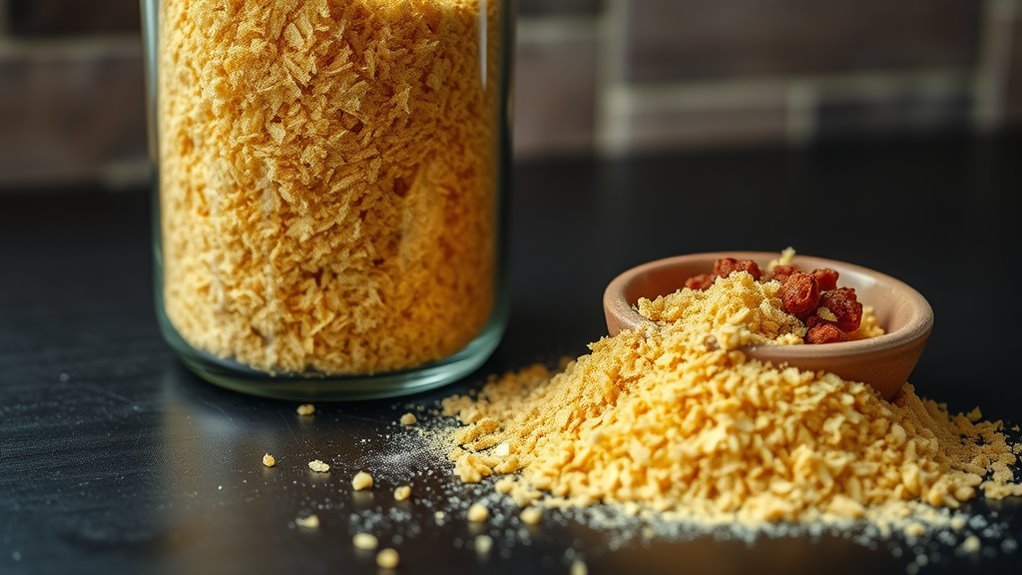
Proper storage helps keep your nutritional yeast fresh, but even with the best care, it can eventually spoil. Knowing the signs of spoiled nutritional yeast helps you avoid using it past its prime. Here’s how to tell if yours has gone bad:
Notice any off smell, such as sour, musty, or rancid odors. Look for discoloration or dark spots on the flakes. Check for clumping that won’t break apart, especially if moisture is involved.
Watch out for mold growth or any visible foreign particles. Taste a small amount; a bitter or strange flavor means it’s no longer good.
If you spot any of these signs, it’s best to discard the nutritional yeast. Using spoiled yeast can affect both the taste and safety of your meals. Keep an eye out for these indicators to ensure your nutritional yeast stays fresh and enjoyable.
Tips for Keeping Nutritional Yeast Fresh and Flavorful
Although nutritional yeast doesn’t need refrigeration, you’ll want to store it carefully to keep its flavor and nutrients intact. The best way to store nutritional yeast is in an airtight container, which protects it from moisture that can cause clumping and spoilage.
Keep it in a cool, dark place away from sunlight and heat sources to preserve its flavor and extend its shelf life. Avoid leaving the container open for long periods, as exposure to air can degrade its quality over time.
If you do decide to refrigerate or freeze it, make sure the container is airtight to prevent moisture buildup and absorption of odors. By following these simple tips, you’ll maintain your nutritional yeast’s freshness and flavor for up to two years, ensuring every sprinkle adds that cheesy, nutty taste you love without any loss in quality.
Why Proper Storage Preserves Nutritional Yeast’s Nutrients and Flavor
You’ll want to store nutritional yeast in a cool, dark, and dry spot to keep its nutrients and flavor intact. Heat, light, and moisture can quickly break down its valuable B-vitamins and cause clumping. So, it’s best to keep it away from those elements.
Using an airtight container really helps, too. It maintains the quality and extends the shelf life, making sure your nutritional yeast stays fresh and tasty for longer.
Optimal Storage Conditions
When you store nutritional yeast in a cool, dry place away from direct sunlight, you help preserve its delicate B vitamins. It also prevents moisture from causing clumps or spoilage. To maintain its quality, follow these ideal storage tips:
Use airtight containers to limit air exposure and slow nutrient degradation. Keep it away from light-sensitive areas to protect vitamin content.
Avoid humid environments to prevent moisture buildup and clumping. Store at a stable, moderate temperature to preserve flavor and nutrients.
Choose a location that’s cool, dry, and dark for the longest shelf life.
Nutrient Preservation Factors
Because nutritional yeast contains sensitive B vitamins, storing it properly plays a crucial role in preserving both its nutrients and flavor. When you keep it in an airtight container, you protect it from moisture and air, which can cause clumping and nutrient degradation.
Exposure to light accelerates the breakdown of vitamins, especially B12, so maintaining a dark storage environment is essential. Heat and humidity also contribute to flavor loss and nutrient degradation, so a cool, dry place is best.
What Is Nutritional Yeast and How Is It Made
You might be wondering what nutritional yeast actually is and how it’s made. Well, it all begins with growing a specific type of yeast on nutrient-rich molasses. After that, the yeast is heated and dried to deactivate the cells. This process results in the flaky, cheesy-tasting product you often find fortified with B vitamins and use in your meals.
Nutritional Yeast Origins
Although nutritional yeast might seem unfamiliar, it comes from a well-known yeast species called Saccharomyces cerevisiae, commonly used in baking and brewing. This yeast is carefully cultivated and then turned into a safe, edible product that doesn’t cause dough to rise. Here’s what you should know about nutritional yeast origins:
It’s a form of deactivated yeast, meaning the cells are no longer alive. The yeast is grown on a food source, often molasses, before being harvested. After harvesting, it’s heated and dried to deactivate it.
This dried yeast is then crumbled into flakes or powder for easy use. Proper storage in a cool, dry place helps preserve its valuable B vitamins.
You don’t need to refrigerate nutritional yeast, thanks to its dried, stable nature.
Production Process Overview
When nutritional yeast is made, producers cultivate Saccharomyces cerevisiae on nutrient-rich sources like molasses or sugarcane. Through fermentation, the yeast multiplies, feeding on these sugars.
Afterward, they harvest the yeast and apply heat treatment to deactivate it, turning it into deactivated yeast. This step guarantees it won’t ferment or cause dough to rise later.
Next, the yeast goes through a drying process, transforming it into flakes or powder. Often, producers fortify the yeast with vitamins, especially B12, before drying.
This careful production ensures excellent storage stability, meaning you don’t have to refrigerate it immediately after purchase. Understanding this process helps you appreciate why nutritional yeast stays shelf-stable and nutritious, making it a convenient addition to your pantry.
Frequently Asked Questions
Can Nutritional Yeast Be Used as a Substitute for Cheese?
Yes, you can definitely use nutritional yeast as a cheese substitute. It adds a rich cheese flavor that works perfectly as a dairy replacement in your recipes.
You’ll love it as a savory seasoning sprinkled on popcorn, pasta, or veggies. Plus, it’s great for making vegan cheese sauces, offering cooking versatility without the dairy.
Nutritional yeast helps you enjoy that cheesy taste while keeping your meals plant-based and nutritious.
Is Nutritional Yeast Safe for People With Gluten Allergies?
Yes, nutritional yeast can be safe for you if you have gluten allergies, but you need to choose gluten-free options carefully. Always check for certified gluten-free brands and clear gluten content labeling to avoid cross-contamination risks.
Since some products might be processed near gluten, watch for allergic reaction signs like itching or swelling. Staying vigilant helps you enjoy nutritional yeast without worry.
Does Nutritional Yeast Contain Any Allergens?
Worried nutritional yeast might contain allergens? Generally, it’s free from common allergens like dairy, gluten, soy, and nuts, so you’re usually safe. Still, always check packaging freshness and ingredient labels, especially for fortified varieties.
Proper storage conditions on your shelf keep it fresh, extending shelf life and preventing spoilage signs like clumping or off smells. If you spot these, it’s time to toss it.
How Does Nutritional Yeast Benefit Vegans Specifically?
Nutritional yeast benefits you as a vegan by providing a complete vegan protein, essential for muscle and tissue health in a plant-based diet. It gives you a B vitamin boost, especially B12, which’s often missing in vegan diets.
Plus, it supports your immune system and enhances vegan cooking with its cheesy, savory flavor. Adding it to your meals helps you meet nutritional needs while keeping your dishes tasty and satisfying.
Can Nutritional Yeast Be Used in Baking Recipes?
Imagine your baked goods dancing with a golden, cheesy glow. Yes, you can use nutritional yeast in baking recipes! It offers flavor enhancement that deepens every bite.
It also boosts baking performance by enriching dough and tweaks texture for a delightful crumb. Thanks to its cooking stability, it holds up beautifully under heat.
Plus, when stored right, it extends shelf life, keeping your creations fresh and vibrant longer.
Conclusion
You don’t have to refrigerate nutritional yeast, but doing so can extend its shelf life beyond the typical 2-year pantry span.
Did you know nutritional yeast contains up to 50% protein by weight? That’s why keeping it fresh preserves not just flavor but essential nutrients.
Store it in a cool, dry place, sealed tightly to avoid clumping and spoilage. With proper care, you’ll enjoy its cheesy, nutty goodness longer and at its best.