
What Is AI in Nutrition and How Does It Work?
AI in nutrition uses advanced algorithms to analyze your diet, health data, and lifestyle, offering personalized advice just for you. It processes food photos, biometric data, and meal descriptions using technologies like machine learning and natural language processing.
This helps identify patterns, predict nutritional needs, and create tailored meal plans that adapt over time. AI also supports dietitians and improves accuracy while addressing privacy and ethical concerns.
Keep exploring to discover how AI transforms nutrition and health management.
Understanding AI in Nutrition: What It Means and How It Works

While nutrition has always relied on understanding what you eat and how it affects your body, AI takes this to a new level by using advanced algorithms to analyze your dietary data and offer personalized recommendations.
AI leverages machine learning to process vast amounts of information, including your food intake, health metrics, and scientific research. It identifies patterns and predicts your unique nutritional needs.
AI uses machine learning to analyze diet, health data, and research, identifying patterns to predict your personalized nutrition needs.
When you use AI-powered tools for dietary assessment, such as chatbots or image recognition systems, they help estimate portion sizes and track your eating habits accurately. This personalized nutrition approach means you get tailored advice that fits your lifestyle and goals.
Over time, AI systems have evolved from simple rule-based programs to sophisticated neural networks, making their recommendations more precise and relevant. By integrating machine learning, AI continuously improves its understanding, ensuring you receive better support in managing your nutrition.
Key AI Technologies Powering Nutrition Research (NLP, ML, and More)
You’ll find that Natural Language Processing helps AI understand and respond to food-related questions clearly. Then, Machine Learning models jump in to analyze data, personalize nutrition, and spot important health trends. Meanwhile, Deep Learning takes things a step further by improving tasks like recognizing food images and estimating portion sizes with greater accuracy.
Natural Language Processing
How does AI understand your questions about diet and nutrition? It uses Natural Language Processing (NLP), a technology that helps AI interpret and generate human language. With NLP, AI systems like chatbots and voice assistants provide dietary advice by accurately answering 76-87% of culturally adapted diet-related questions.
This makes nutritional guidance more accessible and user-friendly. In nutrition research, NLP extracts valuable insights from unstructured data such as food diaries and scientific articles, speeding up analysis. By analyzing vast nutritional literature, NLP supports evidence-based and personalized recommendations tailored to your unique dietary needs.
Machine Learning Models
Because machine learning models analyze vast amounts of data, they can predict your nutritional status and tailor diet recommendations to your unique needs. By examining food intake, health metrics, and dietary patterns, machine learning identifies trends that help create personalized diet plans just for you.
These models use algorithms like clustering and collaborative filtering to categorize foods and suggest meals that match your preferences and nutritional requirements. With this approach, you get diet advice based on real data rather than generic guidelines.
Machine learning continuously improves as it processes more information, making your diet recommendations more accurate over time. So, by leveraging machine learning, you benefit from a smarter, personalized nutrition strategy that adapts to your lifestyle and health goals.
Deep Learning Applications
What makes deep learning so powerful in nutrition research? It’s the ability of neural networks to analyze complex data and improve dietary assessment with precision. By leveraging deep learning, you can discover insights that traditional methods miss.
Here’s how deep learning applications impact nutrition:
- Neural networks process vast food images and nutritional databases for accurate food classification.
- Convolutional neural networks (CNNs) estimate portion sizes from photos to enhance dietary assessment.
- Recurrent neural networks (RNNs) predict nutritional outcomes based on time-sequenced health data.
- Natural Language Processing (NLP) generates personalized dietary advice and interacts through voice or text.
These deep learning techniques help you tailor nutrition plans and predict malnutrition risks more effectively than ever before.
How AI Analyzes Dietary Data and Nutrition Profiles
You’ll find that AI gathers dietary data through food images, diaries, and sensors to track what you eat. Then, machine learning algorithms analyze this data to recognize your unique nutritional patterns. This process helps create personalized recommendations based on your specific health profile.
Data Collection Methods
While analyzing dietary data and nutrition profiles, AI relies on diverse collection methods to capture accurate and complete information. It gathers data on your food intake using several innovative techniques:
- Digital food diaries let you log meals conveniently, providing detailed intake records.
- Sensors and wearable devices track real-time biometric data and physical activity, enriching your nutrition profile.
- Food image recognition identifies meal components from photos, simplifying data entry.
- Natural Language Processing interprets your spoken or written dietary descriptions, extracting key nutrition details.
Together, these data collection methods ensure AI compiles thorough and reliable dietary information. This foundation helps AI deliver personalized nutrition insights tailored to your habits and needs.
Machine Learning Algorithms
How does AI make sense of the vast dietary data it collects? Machine learning algorithms analyze this data by identifying patterns and relationships within large datasets. They use classification techniques to categorize foods and eating habits, while regression models estimate variables like calorie intake and nutrient levels.
By training on labeled dietary records, supervised learning improves accuracy in recognizing foods and portion sizes. Unsupervised methods cluster similar dietary behaviors, revealing trends across populations.
Deep learning, a subset of machine learning, processes complex inputs like food images and text to refine dietary assessments. This approach lets AI predict nutritional status and risks, making personalized nutrition guidance more precise and effective.
You’ll see how these algorithms transform raw dietary data into actionable insights for better health management.
Nutritional Pattern Recognition
Although dietary data can be complex and varied, AI quickly identifies meaningful nutritional patterns by analyzing large datasets like food intake logs and nutrition profiles. Using machine learning, AI performs nutritional pattern recognition to reveal insights hidden in your dietary data. Here’s how it works:
- It processes unstructured data, like food diaries or recipes, using Natural Language Processing to detect consumption trends.
- Deep learning models classify foods, estimate portion sizes, and infer nutritional content from images or text.
- Pattern recognition algorithms compare your nutrition profile against dietary guidelines to spot nutrient gaps or excesses.
- AI links dietary habits to health outcomes, enabling personalized nutrition plans tailored just for you.
This approach helps you understand your diet better and supports smarter, customized nutrition choices.
Real-World AI Applications Transforming Nutrition Today
When you leverage AI in nutrition, you tap into powerful tools like image recognition and natural language processing that make dietary assessments more accurate and less reliant on memory. Artificial intelligence-driven nutrition assessment tools can analyze food photos or interpret meal descriptions, reducing recall bias and delivering precise insights.
These advances enhance health management by identifying malnutrition risks and predicting dietary patterns, enabling timely interventions across diverse populations.
AI-powered chatbots and virtual assistants help you stay on track by supporting personalized meal plans and behavior change tailored to your goals. Large language models like ChatGPT enrich nutrition databases, offering culturally relevant advice that fits your lifestyle.
Additionally, AI systems are increasingly embedded in clinical and community settings, ensuring underserved populations receive optimized nutritional care. By integrating AI, you gain access to smarter, more effective nutrition tools that transform how you manage your health daily.
Creating Personalized Nutrition Plans With AI
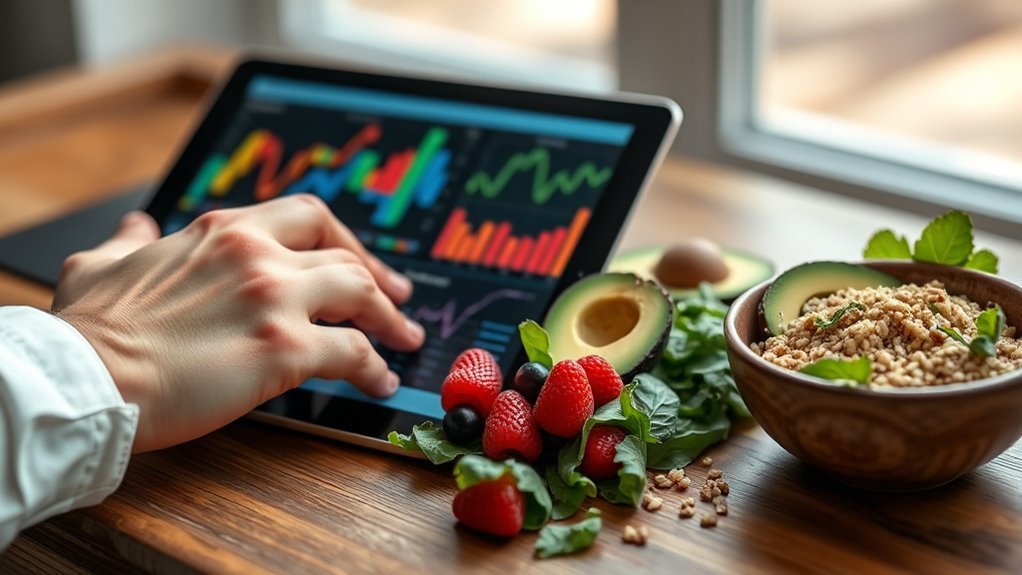
You can use AI-powered algorithms to create nutrition plans tailored just for you by analyzing your unique data and goals. These smart systems design meal plans that fit your lifestyle and preferences while adjusting as your needs change.
With AI-driven meal planning, staying on track becomes simpler and more effective. It’s like having a personal nutrition coach that learns and evolves with you. So, you get a plan that’s not only personalized but also flexible enough to keep up with your life.
Personalized Diet Algorithms
While creating a personalized nutrition plan might seem overwhelming, AI-powered diet algorithms make it easier by tailoring meal recommendations to your unique health data, preferences, and nutritional needs. These AI algorithms analyze your medical conditions, activity levels, and anthropometric measures to design a personalized diet that fits your lifestyle.
Here’s how they help:
- Use advanced AI models like variational autoencoders to generate accurate meal plans.
- Cluster similar user profiles to ensure relevant, explainable recommendations.
- Integrate large language models to diversify meal options safely.
- Align meal planning precisely with your caloric and nutrient needs.
AI-Driven Meal Planning
Building on personalized diet algorithms, AI-driven meal planning takes customization a step further by generating daily meal sequences tailored specifically to your health data and preferences. Using machine learning models like variational autoencoders and recurrent neural networks, AI in nutrition analyzes your anthropometric measurements, medical conditions, and lifestyle factors.
This guarantees your personalized nutrition plan meets exact energy and nutrient needs. The system draws from extensive food databases and tools like ChatGPT to offer diverse, culturally relevant meal options while optimizing portion sizes.
With AI-driven meal planning, you get real-time, scalable guidance that adapts as your goals change, whether for weight loss, disease management, or overall health. This makes sticking to your nutrition plan easier and more effective than ever before.
Major Benefits of AI for Diet and Health Management
Because managing diet and health can be complex, AI offers powerful tools that simplify this process and improve outcomes. It boosts dietary assessment accuracy, reducing errors in tracking your food intake and ensuring better evaluation of food quality.
AI also tailors personalized nutrition plans, helping you reach your health goals efficiently. Here are four major benefits of AI for diet and health management:
- Enhances dietary assessment accuracy with macronutrient errors below 15%, improving your nutrition tracking.
- Delivers personalized nutrition recommendations at scale, adapting to your unique needs.
- Predicts nutritional status and malnutrition risk early, enabling timely health interventions.
- Supports management of diet-related diseases like diabetes and cardiovascular conditions through tailored advice.
How AI Helps Dietitians and Nutrition Professionals

AI doesn’t just benefit individuals managing their own diets; it also empowers dietitians and nutrition professionals to provide more accurate and personalized care. With AI-powered dietary assessments, you can reduce recall bias by using image recognition and real-time food tracking. This ensures a clearer picture of your clients’ eating habits.
AI analyzes large datasets to tailor personalized nutrition plans that align with individual needs and preferences efficiently. Additionally, AI-powered chatbots and virtual assistants help you engage patients effectively, supporting behavior change through accessible and culturally relevant communication.
AI customizes nutrition plans and uses chatbots to support personalized, culturally relevant patient engagement.
These tools also predict nutritional status and malnutrition risk, allowing you to prioritize interventions and allocate resources wisely. By integrating AI into your workflow, you enhance decision-making with evidence-based recommendations, boosting the accuracy and consistency of your dietary advice.
Ultimately, AI helps you provide more precise, data-driven guidance while improving patient outcomes and streamlining your practice.
Common Challenges and Limitations of AI in Nutrition
While AI offers promising advances in nutrition, it still faces significant challenges that limit its effectiveness. You need to be aware of these limitations to use AI tools wisely.
- Bias in training datasets often comes from high-income countries, reducing AI’s generalizability across diverse populations.
- The accuracy of AI recommendations depends heavily on the completeness and correctness of your input data; inaccurate entries can lead to unreliable advice.
- AI struggles with personalized nutrition because it can’t fully grasp your personal, cultural, and emotional dietary influences, which are essential for tailored guidance.
- Privacy concerns arise when handling sensitive dietary and health data, posing risks and limiting trust in AI applications.
Understanding these challenges helps you navigate AI’s role in nutrition more effectively while recognizing its current boundaries.
What You Should Know About AI, Ethics, and Privacy in Nutrition
How can you trust technology to guide your nutrition choices without compromising your privacy or ethics? When AI offers personalized recommendations, it taps into sensitive health data, so privacy and data security become top priorities. You need to be sure your information is stored safely and used responsibly.
Trust AI nutrition advice only when your sensitive health data is protected and handled responsibly.
Ethical considerations also come into play: AI must provide evidence-based advice, avoid biases, and be transparent about how it makes decisions. Otherwise, you risk receiving misleading or unfair guidance.
The collection and storage of your data can pose risks if not properly regulated, potentially leading to breaches or misuse. By balancing technological advances with strong ethical standards and safeguarding your privacy, AI can serve you better without harm.
Always look for nutrition AI tools that prioritize data security and openly communicate their decision-making processes to build your trust and protect your rights.
Improving Nutrition for Underserved Communities With AI
What if you could access personalized nutrition guidance right from your phone, no matter where you live or what resources you have? Artificial intelligence is making this possible for underserved communities by delivering tailored, accessible nutrition support.
AI-powered tools analyze food images and self-reports to provide accurate dietary assessments. This helps overcome the lack of dietitians in low-resource areas. These systems offer personalized recommendations that respect cultural and language differences, boosting understanding and engagement.
Here’s how AI improves nutrition for underserved communities:
- Provides mobile apps and chatbots for easy access to nutrition guidance anytime, anywhere.
- Estimates nutrient intake accurately from photos and user input, reducing barriers.
- Delivers culturally relevant advice in multiple languages to connect with diverse populations.
- Supports community health programs in detecting malnutrition and managing weight effectively.
The Future of AI in Nutrition and Dietetics: Trends and Opportunities
As AI technology advances, you’ll see nutrition and dietetics transform through smarter, more personalized tools that adapt to your unique needs. Artificial intelligence is driving emerging trends like integrating with wearable devices, giving you real-time, adaptive nutrition guidance based on your health metrics and lifestyle.
Predictive analytics will play a bigger role, helping detect malnutrition early and managing chronic diseases more effectively. This could lower healthcare costs considerably. You’ll also benefit from AI systems designed to be transparent and explainable, building trust and making personalized nutrition advice easier to understand and apply.
These advances will use deep learning models and large language models to offer culturally relevant recommendations just for you. As AI tools become more validated through clinical trials and mindful of ethical concerns, they’ll become safer and more reliable.
This means you’ll have access to nutrition insights that are not only precise but also tailored to your culture and health goals.
Frequently Asked Questions
How Can AI in Nutrition Accommodate Cultural Dietary Preferences?
AI in nutrition accommodates cultural dietary preferences by analyzing your regional eating patterns and incorporating traditional cuisine into meal plans. It uses dietary diversity data and understands cultural food habits through natural language processing.
What Role Does AI Play in Managing Food Allergies?
Imagine AI as your vigilant guardian in the kitchen, crafting personalized meal plans that respect your unique needs. It uses allergy detection tools and dietary restriction analysis to spot potential hazards before they reach your plate.
Can AI Recommend Supplements Based on Nutritional Gaps?
Yes, AI can recommend supplements based on nutritional gaps by performing nutrient deficiency analysis tailored to you. It uses real-time meal tracking and dietary restriction management to create personalized diet plans that fill those gaps effectively.
How Does AI Address Emotional Eating or Behavioral Factors?
You might be surprised how AI tackles emotional eating. It detects your emotional triggers and uses behavioral insights to understand why you reach for certain foods. Then, it offers personalized mental health support through chatbots, helping you manage stress and cravings in real time.
Is AI Nutrition Advice Compatible With Vegan or Specialized Diets?
Yes, AI nutrition advice is compatible with vegan and specialized diets. It creates personalized meal plans by analyzing dietary restrictions to make sure you avoid certain foods.
The system also tracks essential nutrients like B12 and iron, so your diet stays balanced. Plus, it offers recipe customization tailored to your preferences and health goals.
This way, AI helps you maintain a nutritious, enjoyable diet while respecting your unique dietary needs.
Conclusion
Just like Prometheus brought fire to humanity, AI in nutrition offers you the power to transform your health with data-driven insights. By harnessing advanced technologies, you can discover personalized nutrition plans tailored just for you.
While challenges remain, embracing AI thoughtfully can illuminate your path to better well-being. Remember, the future of nutrition isn’t just about what you eat; it’s about how smartly you use the tools at your fingertips.