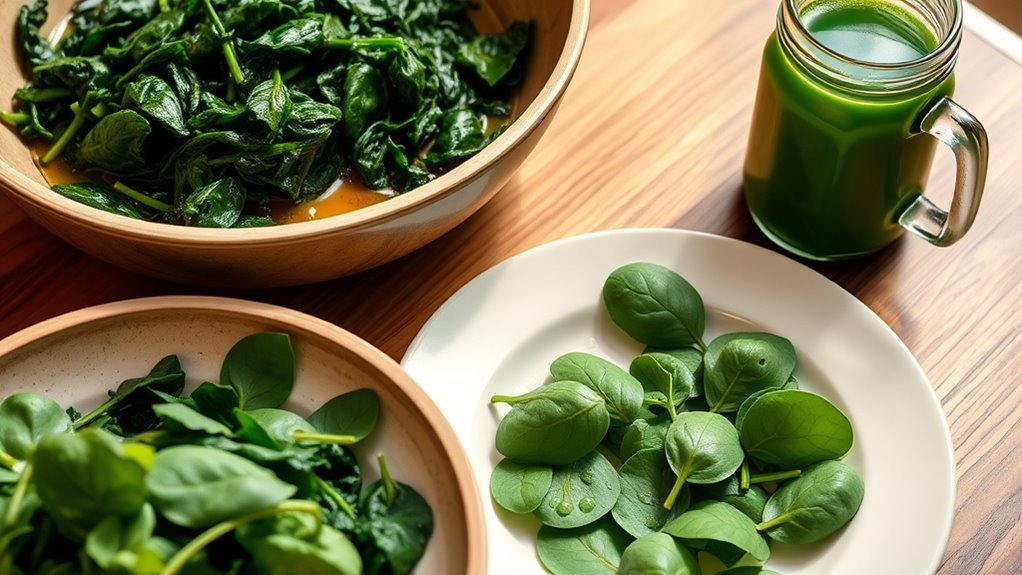
Does Cooked Spinach Lose Nutrition?
You don’t lose all nutrition when you cook spinach. Some vitamins like vitamin C and folate decrease because they’re heat-sensitive.
However, cooking actually boosts antioxidants such as beta-carotene and improves mineral absorption by reducing oxalic acid.
Using gentler cooking methods like steaming helps preserve more nutrients.
By balancing raw and cooked spinach in your diet, you can enjoy a wider range of vitamins and minerals.
Keep exploring to find the best ways to maximize spinach’s benefits.
Raw vs. Cooked Spinach: Nutrient Differences
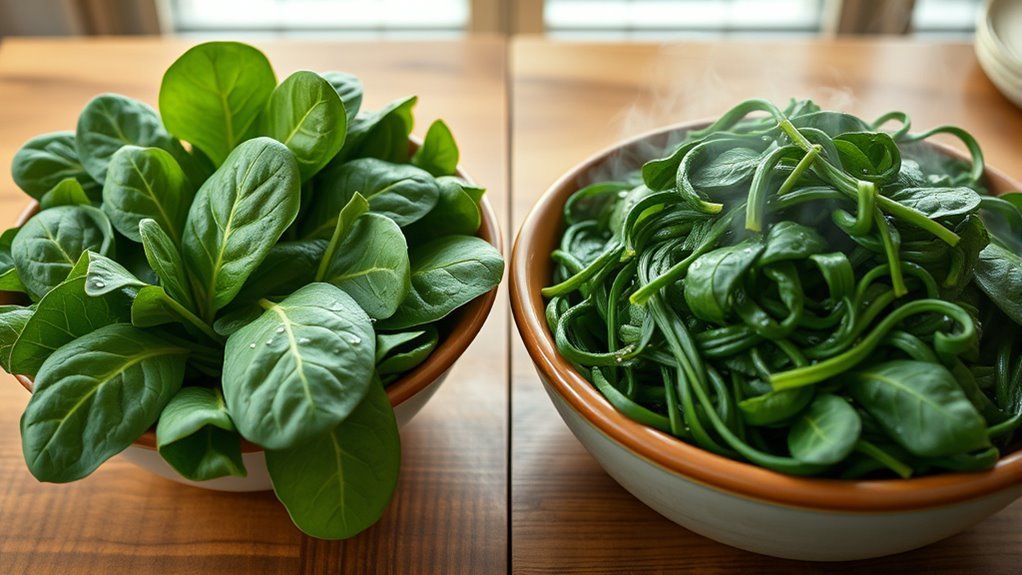
Although raw spinach offers higher levels of vitamin C and folate, cooking spinach actually boosts the availability of important nutrients like beta-carotene, lutein, and zeaxanthin. When you eat raw spinach, you get more of these heat-sensitive vitamins, but the bioavailability of certain carotenoids remains limited.
Cooking breaks down cell walls, enhancing your body’s absorption of these fat-soluble nutrients. Furthermore, cooking concentrates vitamin K levels, increasing their presence in your meal.
While raw spinach provides essential vitamins and minerals, cooking reduces oxalic acid content, which can interfere with mineral absorption. This means that even though some heat-sensitive vitamins decrease with cooking, the overall nutrition may improve because your body can better access minerals like calcium and iron.
How Does Oxalic Acid Affect Nutrient Absorption in Spinach?
Cooking spinach not only enhances the availability of certain nutrients but also reduces compounds that can hinder mineral absorption. One major culprit is oxalic acid, which naturally occurs in raw spinach and binds to minerals like calcium and iron.
This binding limits how much your body can absorb, especially if you have low mineral stores or consume high-oxalate foods regularly. Here’s how oxalic acid affects nutrient absorption:
- It forms insoluble compounds with minerals, blocking absorption in your digestive tract.
- This reduces the bioavailability of critical minerals such as calcium and iron.
- High oxalic acid intake can exacerbate mineral deficiencies if your diet lacks variety.
- People sensitive to oxalates may experience even less nutrient uptake from raw spinach.
Understanding oxalic acid’s role helps you appreciate why cooking spinach can make those essential minerals more accessible to your body.
How Does Cooking Reduce Oxalic Acid and Boost Mineral Absorption?
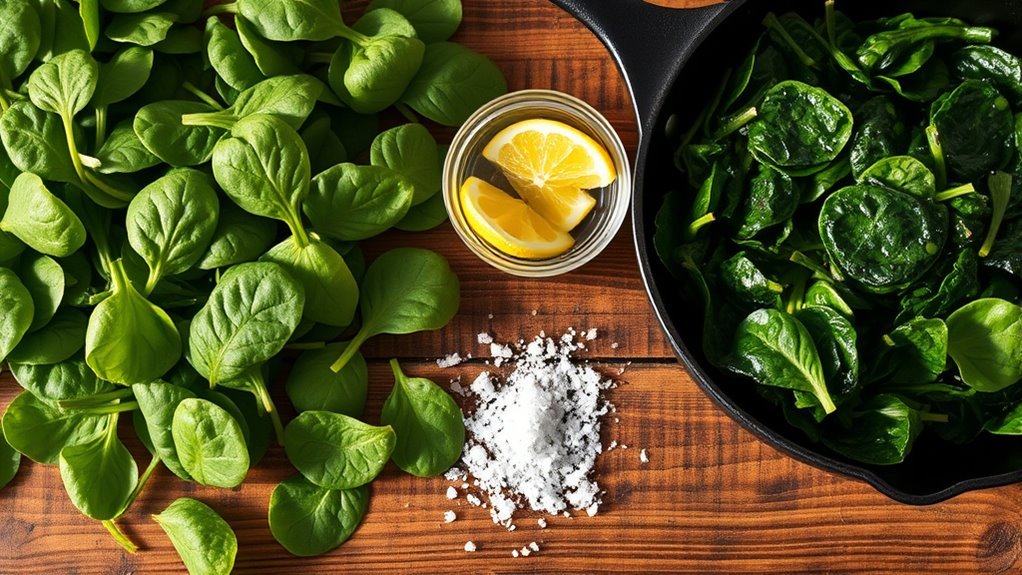
When you heat spinach, it breaks down oxalic acid, cutting its levels by up to half and making minerals like calcium and iron easier for your body to absorb. This reduction happens during common cooking methods like boiling or sautéing, which considerably lower oxalic acid content.
Because oxalic acid binds with minerals, its presence limits how much your body can take in. By reducing oxalic acid, cooking frees up these minerals, boosting their bioavailability. If you discard the cooking water, you remove even more oxalic acid, further improving mineral absorption from the spinach.
This means your body can access essential nutrients more efficiently after cooking spinach. So, by heating spinach, you’re not only enjoying a warmer dish but also optimizing the nutritional benefits, especially when it comes to essential minerals affected by oxalic acid.
How Does Cooking Affect Vitamin C and Folate in Spinach?
Since vitamin C and folate are sensitive to heat, you’ll notice their levels drop considerably when spinach is cooked. Vitamin C, in particular, can lose up to 50% or more during cooking, especially with prolonged boiling. Folate, another heat-sensitive nutrient, also decreases as its compounds break down under heat.
To help preserve these nutrients when cooking spinach, consider these tips:
- Use quick cooking methods like steaming or sautéing instead of boiling.
- Avoid overcooking; shorter heat exposure keeps more vitamin C and folate intact.
- If you boil spinach, try to consume the cooking water to retain leached nutrients.
- Remember that even with some loss, cooked spinach still offers valuable nutrition.
Which Vitamins and Antioxidants Become More Available After Cooking Spinach?
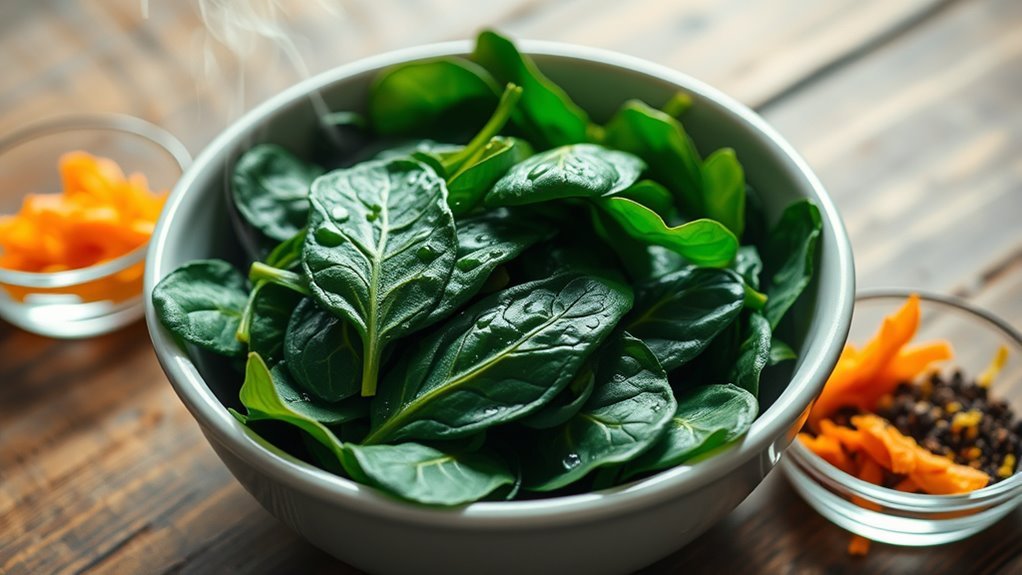
You might notice that while some nutrients like vitamin C and folate decrease with heat, others actually become easier for your body to absorb. Cooking spinach considerably boosts the availability of antioxidants such as beta-carotene, lutein, and zeaxanthin.
These carotenoids are better absorbed because heating breaks down the cell walls, releasing them more effectively. Vitamins A and E also become more accessible after cooking, enhancing their nutritional benefits.
Furthermore, cooking reduces oxalic acid, which normally inhibits mineral absorption, so you can better absorb calcium and iron. To maximize these benefits, try quick cooking methods like steaming or sautéing, which preserve most nutrients while increasing antioxidant availability.
How Stable Are Fiber and Protein When Spinach Is Cooked?
You’ll find that spinach’s fiber holds up well during cooking, so its digestive benefits stay intact. Protein levels mostly stay stable too, with cooking causing only minor changes. Let’s take a closer look at how different cooking methods can affect these important nutrients.
Fiber Content Retention
How stable are fiber and protein when spinach is cooked? You’ll be glad to know that fiber remains largely intact, preserving its digestive benefits even after heat exposure. Here’s what you can expect from cooked spinach’s fiber content:
- Insoluble fiber holds strong, supporting healthy digestion and bowel function.
- Typical cooking methods like steaming or sautéing don’t break down fiber’s structure.
- Fiber’s resilience means you won’t lose out on its benefits just because spinach is cooked.
- While some nutrients may leach out, fiber stays put, maintaining its role in your diet.
Protein Stability During Cooking
Just like fiber, the protein in spinach holds up well during cooking. You don’t lose much protein because heat causes only minimal degradation.
While cooking can slightly change the protein’s structure by denaturing some molecules, this doesn’t markedly impact their nutritional value or digestibility. The protein remains largely stable, meaning spinach continues to provide a good source of this essential nutrient even after cooking.
Similarly, the fiber content stays intact, supporting digestion as usual. So, when you cook spinach, you can still count on it to deliver both protein and fiber. This stability ensures that cooked spinach remains a nutritious choice, preserving its role in a balanced diet without worrying about major protein loss.
Effects Of Cooking Methods
Although cooking can alter some nutrients in vegetables, spinach’s fiber and protein remain remarkably stable through various methods. When you cook spinach, these key nutrients hold up well, ensuring you still get their benefits. Here’s what you should know about fiber and protein stability with different cooking methods:
- Fiber content stays largely unchanged, even if heat slightly alters its structure.
- Protein remains mostly intact, with minimal loss during boiling or sautéing.
- Steaming and sautéing preserve both fiber and protein effectively.
- These cooking methods also reduce oxalic acid, helping your body absorb more minerals.
What Cooking Methods Best Preserve Spinach Nutrients?
You’ll find that steaming spinach briefly is a great way to preserve more of its heat-sensitive nutrients, like vitamin C, compared to other cooking methods. It doesn’t take long, and it really helps keep those vitamins intact.
Sautéing quickly with just a little oil is another good option. This method also keeps most of the vitamins and minerals intact while adding a bit of flavor. So, when you’re deciding how to cook your spinach, choosing between steaming and quick sautéing can help you enjoy your greens without losing too many nutrients.
Steaming Versus Sautéing
How do steaming and sautéing compare when it comes to preserving spinach’s nutrients? Steaming generally wins because it preserves heat-sensitive vitamins like vitamin C and folate better. Here’s why you might choose steaming over sautéing:
- Steaming uses less direct heat, protecting fragile vitamins.
- It involves shorter cooking times, limiting nutrient loss.
- Both methods boost carotenoid availability, but steaming retains water-soluble vitamins better.
- Sautéing often involves higher heat and longer cooking, risking more vitamin C loss.
That said, sautéing adds flavor and can preserve nutrients if you use minimal oil and keep cooking times short. Ultimately, if your goal is to maximize vitamin retention, steaming is your best bet, but sautéing offers delicious variety with some nutrient compromise.
Minimizing Nutrient Loss
Choosing the right cooking method can make a big difference in preserving spinach’s nutrients. To prevent nutrient loss, you should steam spinach briefly or sauté it quickly with minimal oil.
Steaming helps retain heat-sensitive vitamins like vitamin C and folate while reducing oxalic acid, which can hinder mineral absorption. Sautéing preserves vitamins A and E better than boiling.
If you do boil spinach, discard the cooking water to avoid losing water-soluble nutrients. Avoid prolonged boiling or high-heat frying since they cause more nutrient loss.
Cooking spinach at lower temperatures for shorter times ensures you keep most of its key vitamins and minerals. By using gentle methods like steaming or quick sautéing, you’ll get the most nutrition from your spinach.
How Much Spinach Should You Eat Daily for Health?
Because spinach is packed with essential vitamins and minerals, eating 1 to 2 cups daily can boost your health considerably. Whether you enjoy raw spinach or cooked, this leafy green supplies indispensable nutrients like iron, calcium, and vitamin K that your body needs every day. Including spinach regularly can help you meet your daily nutrient goals effortlessly.
Here’s why you should aim for this amount:
- A half-cup serving of cooked spinach offers about 3.5 mg of iron, supporting healthy blood and energy levels.
- Spinach provides calcium that’s essential for strong bones and teeth.
- Vitamin K in spinach plays a key role in blood clotting and bone metabolism.
- Consuming spinach several times a week improves your absorption of these nutrients, especially when balanced with other greens.
How to Enjoy Both Raw and Cooked Spinach for Maximum Nutrition
You can really boost your nutrient intake by enjoying spinach both raw and cooked. Eating it raw gives you plenty of vitamin C and folate, which are great for your immune system and overall health.
But here’s the cool part—cooking spinach actually helps your body absorb more vitamins A and E, as well as calcium and iron. That’s because cooking reduces oxalic acid, a compound that can block these nutrients from being absorbed.
Benefits Of Raw Spinach
How can you get the most nutrition from spinach? Start by including raw spinach in your diet. Raw spinach preserves higher levels of vitamin C and folate, which cooking tends to reduce.
To maximize your benefits, try these tips:
- Toss raw spinach into fresh salads for a vitamin-packed crunch.
- Blend it into smoothies to retain folate and antioxidants.
- Snack on raw spinach leaves with hummus for a nutrient boost.
- Use raw spinach as a topping on sandwiches or wraps to add freshness.
Advantages Of Cooked Spinach
While raw spinach offers a fresh nutrient boost, cooking spinach releases unique advantages by reducing oxalic acid and enhancing the absorption of calcium, iron, and fat-soluble vitamins like A and E. When you eat cooked spinach, you benefit from improved bioavailability of these key minerals and vitamins, which are otherwise limited by oxalates in raw leaves.
Heat also boosts carotenoid levels like beta-carotene, lutein, and zeaxanthin, increasing antioxidant intake. To make the most of cooked spinach, try gentle methods like steaming or sautéing, which preserve nutrients while enhancing absorption.
Incorporating both raw and cooked spinach into your diet ensures you enjoy a wide range of nutritional benefits, giving your body the best of both worlds.
Combining Both Forms
Cooking spinach releases valuable nutrients like vitamin A and iron, but pairing it with raw spinach can further enhance your nutrient intake. By combining both raw and cooked spinach, you tap into a broader spectrum of vitamins and minerals.
Here’s how to enjoy the best of both forms:
- Add raw spinach to salads or smoothies for a boost of vitamin C and folate.
- Lightly steam or sauté cooked spinach to increase absorption of carotenoids and minerals.
- Rotate between raw and cooked spinach throughout the week to maximize nutrient diversity.
- Remember, cooking reduces oxalic acid, allowing your body to better absorb calcium and iron.
Tips for Including Spinach in Your Balanced Diet
Because spinach offers a range of nutrients best absorbed in different ways, you should include it both raw and cooked in your meals. For instance, toss raw spinach into salads with citrus dressings to boost iron absorption thanks to vitamin C. You can also blend raw spinach into smoothies with berries and citrus, maximizing vitamin C content and nutrient uptake.
When it comes to cooked spinach, sauté it with garlic and olive oil to retain nutrients while adding flavor. Adding cooked spinach to pasta, soups, or casseroles is an easy way to increase your intake of bioavailable calcium and iron.
Frequently Asked Questions
Can Cooking Spinach Affect Its Taste and Texture?
Yes, cooking spinach definitely affects its taste and texture. You’ll notice the taste becomes milder and less bitter, which many people prefer. The texture softens as the leaves wilt and shrink, making spinach easier to chew and more tender.
However, if you overcook it, the texture can turn mushy and soggy, which might not be as enjoyable. So, cooking changes both taste and texture, and how you cook it really matters.
Does Freezing Cooked Spinach Impact Its Nutritional Value?
Freezing cooked spinach is like putting a nutrient treasure chest on ice. It helps you lock in most vitamins and minerals, minimizing nutritional loss. While some vitamin C takes a hit during freezing, the overall impact is small if you freeze it quickly and store it in airtight containers.
When you thaw and reheat it right, you keep spinach’s nutritional value strong. This way, you can enjoy its benefits without much compromise.
Are There Any Risks of Overcooking Spinach?
Yes, you risk nutrient degradation if you overcook spinach. Excessive heat breaks down sensitive vitamins like vitamin C and folate, and water-soluble nutrients can leach into the cooking water.
Overcooking also affects the texture and flavor, making it mushy and less enjoyable. Plus, too much heat might increase oxalate levels, which can interfere with mineral absorption.
How Does Cooking Time Influence Spinach Nutrient Retention?
Cooking time directly affects nutrient preservation in spinach. The longer you cook it, the more heat-sensitive vitamins like vitamin C and folate break down.
Short cooking times, like steaming for just a minute, help you keep most nutrients intact while reducing harmful oxalic acid. So, if you want to maximize nutrient preservation, keep your cooking brief and use quick methods.
That way, you enjoy spinach’s benefits without losing its nutritional value.
Can Spinach Be Combined With Other Foods to Enhance Nutrient Absorption?
Yes, you can definitely combine spinach with other foods to boost nutrient absorption through nutrient synergy. For example, pairing spinach with vitamin C-rich foods like citrus fruits helps your body absorb more iron by neutralizing oxalic acid.
Adding healthy fats like olive oil enhances the uptake of fat-soluble vitamins A, E, and K. So, by mixing spinach with the right ingredients, you maximize its nutritional benefits efficiently.
Conclusion
You might be surprised to learn that cooking spinach can actually boost your mineral absorption by reducing oxalic acid, which blocks nutrients like iron and calcium. While some vitamin C and folate are lost during cooking, antioxidants like beta-carotene become more available.
To get the most from spinach, mix raw and cooked forms in your diet. Just one cup of cooked spinach gives you over 20% of your daily iron, pretty powerful for such a simple leafy green!