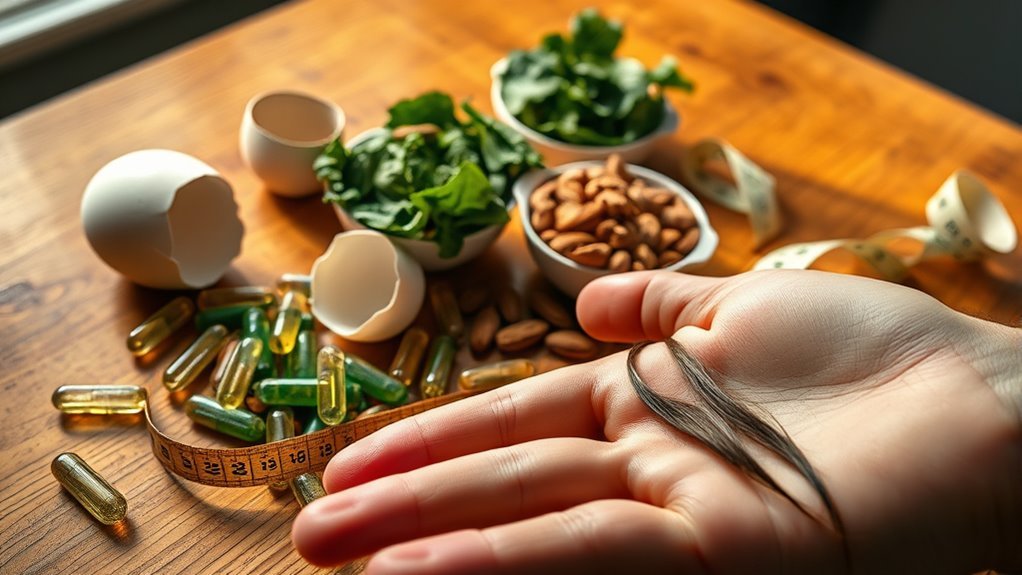
Top 10 Nutritional Deficiencies That Cause Hair Loss
You’re likely losing hair because your body lacks key nutrients like iron, biotin, zinc, vitamin D, and B vitamins that support hair growth and scalp health.
Deficiencies in vitamins A, C, and E also lead to dryness, breakage, and shedding.
Essential fatty acids help keep your scalp hydrated and reduce inflammation.
Addressing these through diet, supplements, and testing can restore strength and growth.
Keep exploring to uncover how these nutrients impact your hair health.
Understanding Nutritional Deficiencies and Hair Loss
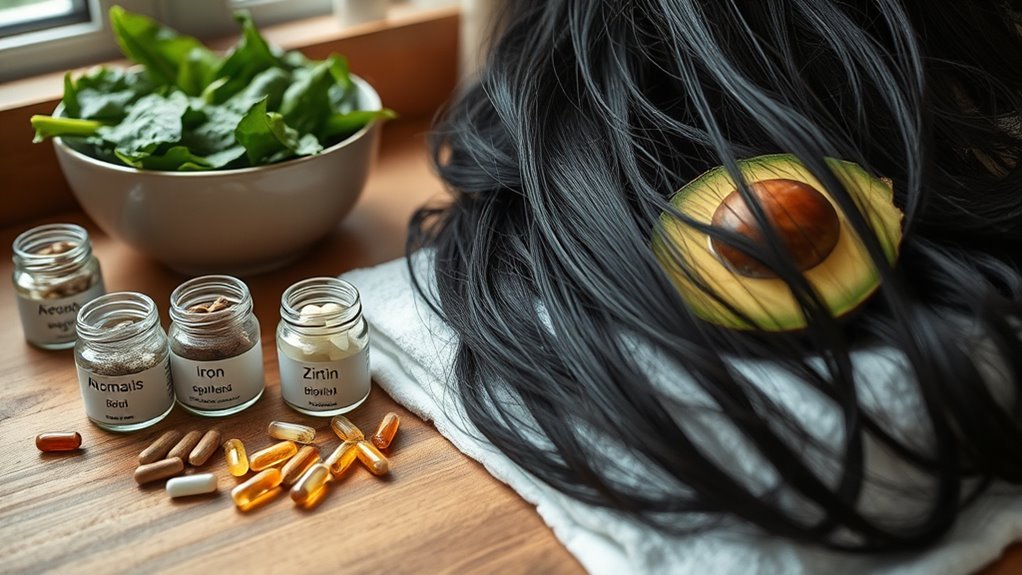
Although hair loss can result from many factors, nutritional deficiencies play an essential role in weakening hair growth and strength. When your body lacks key nutrients like iron, biotin, and zinc, hair thinning becomes more likely.
Low iron levels reduce oxygen delivery to hair follicles, causing increased shedding, especially in women. A vitamin deficiency in biotin also disrupts hair health, leading to brittle strands and slower regrowth.
Zinc deficiency interferes with tissue repair and hormone balance, contributing to scalp irritation and hair loss. While vitamin D is vital, its role will be discussed separately, but it’s important to recognize that multiple nutritional deficiencies often act together, compounding hair thinning.
If you notice sudden or persistent hair loss, checking for these deficiencies can help you address the root cause. By maintaining balanced nutrition rich in these vitamins and minerals, you support stronger hair growth and reduce the risk of thinning caused by nutrient gaps.
Vitamin D Deficiency and Hair Loss
When your body doesn’t get enough vitamin D, it can disrupt the creation of new hair follicles and throw off your hair growth cycle. This deficiency often leads to hair thinning, increased shedding, and even scalp inflammation.
Low vitamin D levels are linked to conditions like alopecia areata, where hair loss becomes more noticeable and persistent. To combat this, you can boost your vitamin D through regular sunlight exposure, eating fatty fish, fortified dairy products, or taking supplements.
Addressing vitamin D deficiency not only supports the hair growth cycle but also helps reduce hair loss and improve scalp health. If you notice unexplained hair thinning or patchy hair loss, consider checking your vitamin D levels.
Vitamin A Deficiency and Hair Thinning
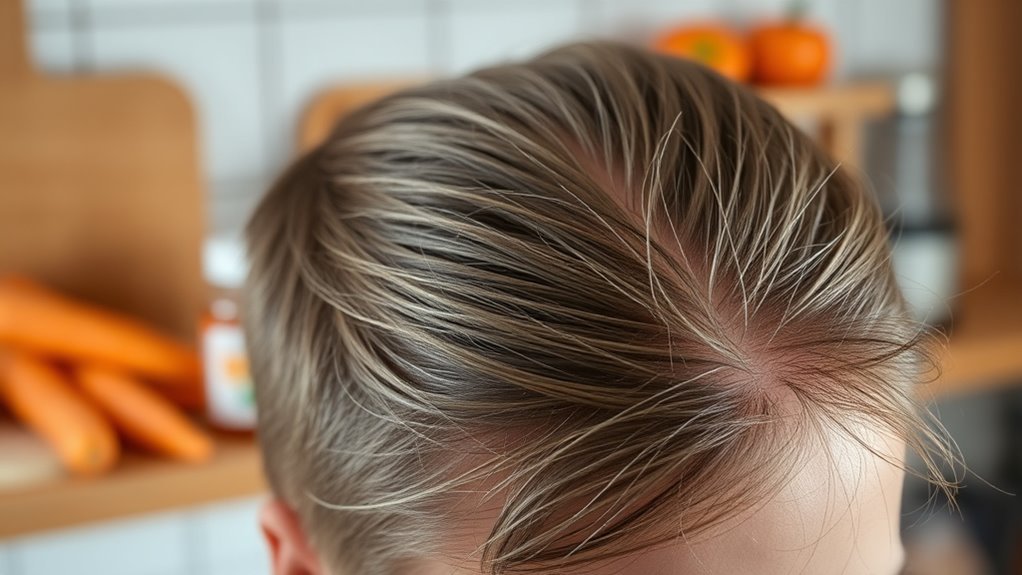
How does a lack of vitamin A affect your hair? When you don’t get enough vitamin A, you may notice hair thinning and increased hair loss. This deficiency slows down your hair regrowth cycle, making it harder for your hair to recover.
Vitamin A is essential for sebum production, which keeps your scalp moisturized and supports scalp health. Without enough sebum, your scalp can become dry and flaky, leading to brittle hair that breaks easily.
Vitamin A supports sebum production, preventing dryness and brittleness for healthier, stronger hair.
Here’s what vitamin A deficiency can cause:
- Reduced sebum production, resulting in dry scalp and hair
- Brittle hair that’s prone to breakage
- Slower hair regrowth and prolonged shedding phases
- Visible scalp flakes and poor scalp health
To combat hair thinning linked to vitamin A deficiency, incorporate foods rich in vitamin A like orange and yellow vegetables, liver, eggs, and fish oils. Restoring vitamin A levels can help revive healthy hair regrowth and improve overall scalp health.
Vitamin E Deficiency and Hair Shedding
Why does your hair shed more and feel brittle when you lack vitamin E? It’s because vitamin E plays a vital role in protecting your hair follicles from oxidative stress, which damages cells and weakens strands.
When you have a vitamin E deficiency, your hair becomes dry, brittle, and prone to breakage, leading to increased hair shedding and hair loss. This antioxidant supports scalp circulation, ensuring that hair follicles receive the nutrients they need for healthy growth.
To combat deficiency, consider vitamin E supplements and incorporate foods rich in vitamin E, like nuts, seeds, and leafy greens, into your diet. You can also apply natural oils high in vitamin E, such as olive or rosehip oil, directly to your scalp to boost hair health and reduce shedding.
Maintaining adequate vitamin E levels is essential to prevent oxidative damage and keep your hair strong and resilient.
Vitamin C Deficiency and Hair Breakage
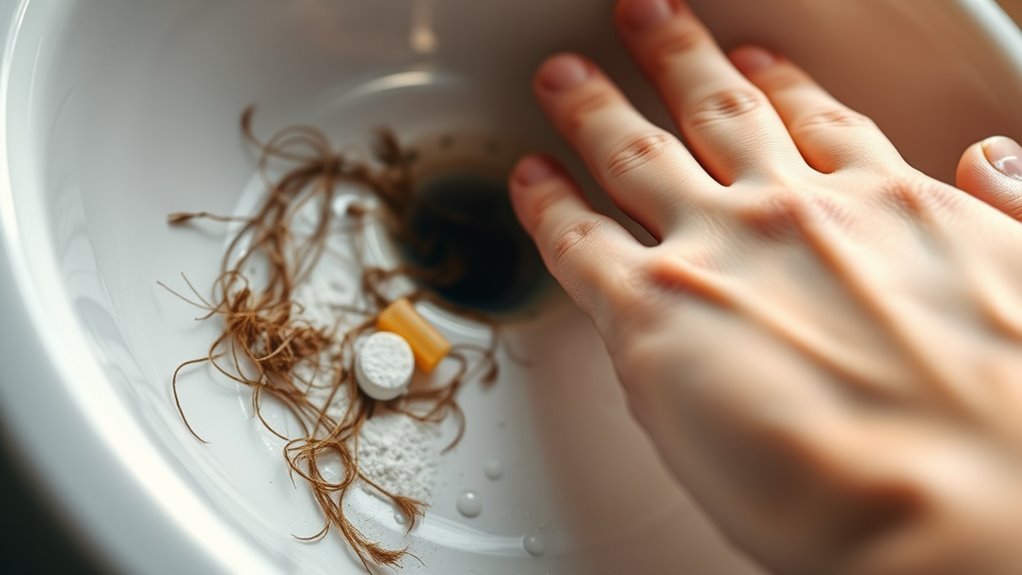
You need vitamin C to produce collagen, which keeps your hair strands strong and your scalp healthy. Without enough vitamin C, your hair becomes weak and is more likely to break. Plus, vitamin C helps your body absorb iron, so if you don’t get enough, hair loss can get worse too.
Role In Collagen
Because vitamin C plays an essential role in collagen synthesis, lacking it can considerably weaken the structural support around your hair follicles and scalp. Collagen forms the foundation for healthy scalp tissue and hair follicles, so when vitamin C is low, collagen production drops.
This leads to brittle hair that lacks strength and elasticity, making hair breakage more common. Without enough collagen, damaged hair follicles struggle to repair, slowing hair growth and increasing fragility.
Consider these effects of vitamin C deficiency on hair health:
- Reduced collagen weakens scalp tissue and hair follicles.
- Brittle hair results from impaired collagen structure.
- Hair breakage and split ends increase due to lack of hair strength.
- Poor follicle repair limits healthy hair growth.
Boosting vitamin C intake supports collagen, improving hair strength and reducing breakage.
Enhancing Iron Absorption
How does vitamin C impact your hair beyond collagen production? Vitamin C plays an essential role in enhancing iron absorption by converting dietary iron into a form your intestines can easily absorb.
If you have a vitamin C deficiency, your body struggles to absorb iron properly, which can lead to iron deficiency, a common cause of hair loss and hair breakage. Even if your dietary intake of iron is adequate, without enough vitamin C, hair health may still suffer.
To prevent this, include vitamin C-rich foods like citrus fruits and bell peppers in your diet. For those facing hair loss linked to iron deficiency, supplementation combining vitamin C and iron can optimize absorption and help restore your hair’s strength and robustness.
B Vitamin Deficiencies and Hair Health (Folic Acid, B6, B12, Biotin)
You need B vitamins like folic acid, B6, B12, and biotin to keep your hair strong and growing. If you don’t get enough of them, your hair might become thin, brittle, or even start falling out. The good news is, eating the right foods or taking supplements can help prevent these issues and keep your hair healthy. So, making sure you get enough of these vitamins is definitely worth it for your hair’s health!
Role In Hair Growth
When your body lacks essential B vitamins like folic acid, B6, B12, or biotin, your hair growth can suffer markedly. These vitamins play critical roles in maintaining healthy hair follicles and supporting the production of keratin, the protein that forms your hair strands. Without them, deficiencies can lead to weaker hair, increased shedding, and slower regrowth.
Folic acid aids DNA synthesis and cell division in hair follicles, fueling hair growth. Vitamin B6 supports amino acid metabolism and protein synthesis, strengthening hair strands. Vitamin B12 ensures proper oxygen transport to hair follicles, preventing thinning and shedding. Biotin reinforces keratin infrastructure, enhancing hair’s strength and resilience.
Deficiency Symptoms Overview
Why do deficiencies in B vitamins like folic acid, B6, B12, and biotin cause hair problems? When you lack these essential nutrients, you may notice hair thinning, increased shedding, and brittle strands.
Folic acid deficiency slows hair regrowth by impairing cell growth in hair follicles. Vitamin B12 deficiency reduces oxygen delivery to follicles, weakening hair and triggering hair loss.
Biotin deficiency breaks down keratin, leading to fragile hair that breaks easily. These nutritional symptoms often show up as dull, dry hair and noticeable hair loss.
While iron levels also impact hair health, vitamin deficiencies alone can cause significant hair issues. Recognizing these signs early can help you address the root cause and support healthier hair growth before damage worsens.
Dietary Sources And Supplements
Although maintaining adequate levels of B vitamins can seem challenging, incorporating nutrient-rich foods into your diet makes it easier to support healthy hair growth. Vitamin B9, or folic acid, promotes cell division in hair follicles, while vitamin B6 aids keratin production, which is essential for strong hair.
Vitamin B12 ensures proper oxygen delivery to scalp tissues, and biotin reinforces keratin structure to prevent brittle hair. You can get these crucial nutrients from various nutritional sources or supplements for hair loss prevention.
Leafy greens provide vitamin B9 (folic acid) and vitamin B6. Eggs and nuts are rich in biotin. Fortified cereals offer vitamin B12 and B6. Supplements can fill nutritional gaps when necessary.
Zinc Deficiency and Hair Shedding
How does zinc deficiency affect your hair health? Zinc deficiency disrupts enzyme functions essential for hair follicle growth. This causes increased hair shedding and slower hair regrowth. You might notice scalp irritation, dryness, dandruff, and brittle hair that breaks easily.
Since zinc supports tissue repair and oil gland function around follicles, its lack can lead to scalp inflammation and hair loss. Understanding zinc’s role helps address these nutrient deficiencies effectively.
Here’s a quick overview:
| Factor | Impact |
|---|---|
| Zinc deficiency | Impairs hair follicle enzyme activity |
| Symptoms | Scalp irritation, brittle hair |
| Causes | Poor diet, malabsorption, pregnancy |
| Effects | Hair shedding, slowed regrowth |
| Dietary sources | Oysters, beef, pumpkin seeds, supplements |
Iron Deficiency and Hair Thinning
Iron deficiency affects millions and can directly cause noticeable hair thinning by reducing the oxygen supply to your hair follicles. When your follicles don’t get enough oxygen, hair shedding increases, and the strands you do have become brittle and weak.
Iron deficiency starves hair follicles of oxygen, leading to increased shedding and weaker, brittle strands.
This type of hair loss is especially common if you have low ferritin levels, with serum ferritin below 30 ng/mL often signaling iron deficiency-related hair thinning. Women with heavy menstrual bleeding, vegetarians, and vegans are particularly at risk due to lower iron intake.
To combat this, you can restore iron through diet and supplements, which supports hair regrowth and improves hair strength.
Key points to consider:
- Iron deficiency reduces oxygen delivery to hair follicles, causing hair shedding.
- Low ferritin levels indicate iron deficiency affecting hair health.
- Nutrient deficiencies impact hair quality and growth cycles.
- Iron supplements and iron-rich foods promote hair regrowth and reduce thinning.
Addressing iron deficiency is essential to reversing hair thinning and preventing further hair loss.
Essential Fatty Acids and Scalp Health
You need omega-3 fatty acids to keep your scalp hydrated and reduce inflammation. This helps prevent dryness and dandruff. If you notice brittle or split hair, it might be a sign that you’re not getting enough of these essential fats. Eating foods like salmon, walnuts, and flaxseeds—or taking fish oil supplements—can help restore your scalp’s health and strengthen your hair.
Omega-3 Benefits
Although many focus on vitamins for hair health, omega-3 fatty acids play an essential role in maintaining a well-moisturized scalp and preventing dryness. If you experience hair loss, it might be linked to omega-3 deficiencies that cause scalp inflammation and brittle hair.
These fatty acids support scalp health by supplying essential oils that reduce dryness and promote hair follicle function. Supplementation with omega-3s can boost hair density and improve overall hair quality.
To enhance your hair care routine, consider these omega-3 benefits:
- Reduces scalp inflammation that contributes to hair shedding
- Maintains moisture balance for healthier hair strands
- Supports prostaglandin production to promote follicle health
- Improves hair density and strength through consistent supplementation
Incorporating omega-3-rich foods or supplements can be a game-changer for preventing hair loss.
Deficiency Symptoms
When your body lacks enough omega-3 fatty acids, your scalp quickly shows the signs. You might notice scalp dryness and inflammation, which are common hair loss symptoms linked to this vitamin deficiency.
Essential fatty acids play a vital role in keeping your scalp lubricated. So when they’re low, your scalp becomes flaky, itchy, and prone to dandruff. This lack of lubrication leads to brittle hair and hair shaft weakening, making your strands more fragile and susceptible to breakage.
Over time, these issues contribute to thinning hair as weakened follicles struggle to support healthy growth. By recognizing these deficiency symptoms early, you can address essential fatty acid shortages before they cause more significant hair loss and scalp damage.
Dietary Sources
Where can you find the essential fatty acids that keep your scalp hydrated and your hair strong? Omega-3s play a pivotal role in maintaining scalp health and promoting hair strength by preventing dryness and reducing inflammation.
To boost your intake of these vital nutrients, focus on these dietary sources:
- Fatty fish like salmon, mackerel, and sardines provide rich omega-3s that support scalp hydration.
- Flaxseeds offer a plant-based omega-3 option to improve scalp moisture.
- Chia seeds help reduce scalp irritation and dandruff.
- Walnuts contribute essential fatty acids that strengthen hair and prevent breakage.
Including these foods in your diet guarantees you get enough essential fatty acids to maintain a healthy scalp environment and promote resilient hair growth.
Diet and Supplements to Reverse Nutritional Hair Loss
Three key nutrients, iron, vitamin D, and B12, play a major role in maintaining healthy hair growth. Correcting their deficiencies can often reverse hair loss. To effectively address hair loss caused by nutritional gaps, start by getting blood tests to identify specific deficiencies.
This step guarantees your supplements target the root cause without risking toxicity. Incorporate iron-rich foods like lean meats and leafy greens, along with vitamin D sources such as fortified products and safe sun exposure, into your nutrition plan. When supplements are necessary, choose those backed by your test results for safe restoration.
Alongside iron, vitamin D, and B12, consider zinc to support hair health. Early intervention with proper nutrition and supplements can prevent long-term damage and promote healthy regrowth. By combining targeted supplementation with a balanced diet, you give your hair the nutrients it needs to recover and thrive, reversing hair loss linked to nutritional deficiencies.
Frequently Asked Questions
Can Stress Worsen Hair Loss Caused by Nutritional Deficiencies?
Yes, stress can worsen hair loss caused by nutritional deficiencies. The stress impact triggers hormonal imbalance and elevates cortisol levels, which disrupt your hair growth cycle.
Anxiety effects and mental stress harm your emotional health, making it harder for your body to absorb nutrients. Psychological factors like chronic stress amplify these problems.
You’ll benefit from stress management techniques to balance hormones, reduce cortisol, and support healthier hair regrowth despite deficiencies.
How Long Does It Take to See Hair Regrowth After Correcting Deficiencies?
Think of your hair follicles as sleeping seeds waiting for the right rain, your diet recovery. Once nutrients start absorbing and supplements take effect, your hair growth timeline usually kicks in between 3 to 6 months.
How fast you see new sprouts depends on deficiency severity, age impact, and hair follicle health. Keep monitoring regrowth consistently because, just like a garden, patience and care help your hair flourish again.
Are There Specific Hair Care Products That Help With Nutrient-Related Hair Loss?
Yes, you can use vitamin-enriched shampoos and keratin conditioners to strengthen your hair. Natural remedies like herbal extracts and essential oils support scalp health, while scalp treatments combined with scalp massages boost circulation.
Don’t forget dietary supplements to address deficiencies from within. These products work best together, helping you tackle nutrient-related hair loss more effectively and promoting healthier, thicker hair over time.
Can Genetic Factors Influence Hair Loss Despite Good Nutrition?
Yes, genetic factors can influence hair loss despite good nutrition. Your genetic predisposition, including hereditary traits and familial patterns, plays a major role in hair thinning.
Inherited conditions, gene mutations, and specific genetic markers in your DNA influence how your hair follicles respond to hormones. Even with a healthy diet, familial baldness can progress due to these DNA influences, making hair loss largely unavoidable when genetic factors are at play.
Is Hair Loss From Nutritional Deficiencies Reversible in All Age Groups?
About 70% of people see hair regrowth after correcting deficiencies. You can reverse hair loss by starting a thorough nutritional assessment and making dietary modifications or taking supplements.
Age-related factors affect absorption efficiency and micronutrient impact, so younger folks often respond faster. Still, lifestyle changes and medical interventions can help all ages.
Early action maximizes benefits, but prolonged deficiencies might cause permanent follicle damage, limiting full recovery in older adults.
Conclusion
Think of your hair as a garden. It needs the right nutrients to bloom and thrive. Without vitamins like D, A, E, and C, or minerals like zinc and iron, your hair’s vibrant life can fade like wilting petals.
By nourishing your body with a balanced diet and supplements, you’re watering that garden. This helps each strand grow strong and full again. Take care of your roots, and watch your hair flourish like a blossoming flower.