
How to Read Pasta Nutrition: Cooked vs Uncooked
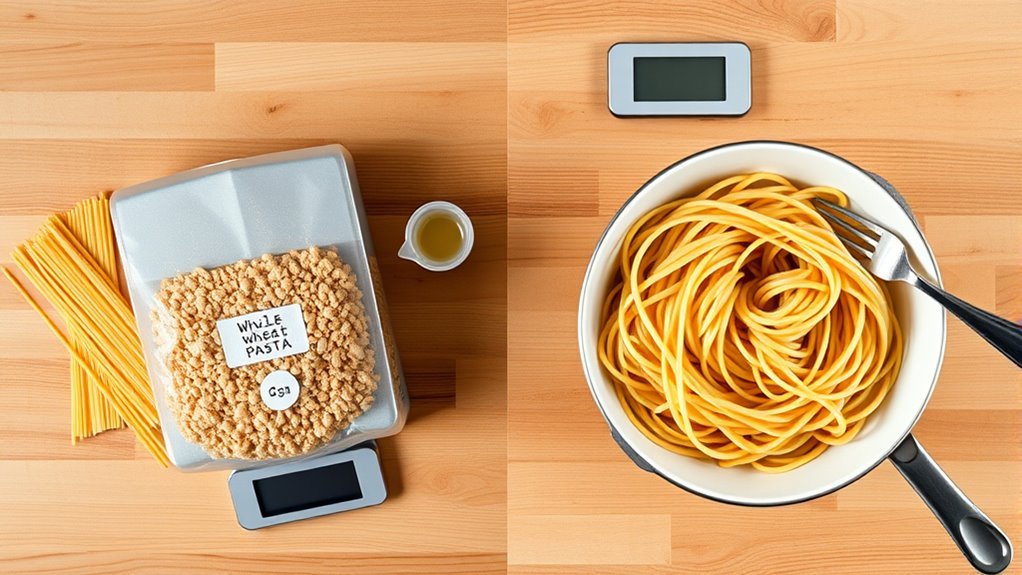
You should weigh dry pasta to track calories accurately because cooking changes its weight by adding water but not calories.
Dry pasta has about 357 calories per 100 grams, but once cooked, its weight can double or triple, lowering calorie density to around 126 calories per 100 grams.
Since labels list calories for dry pasta, measuring cooked pasta without conversion can mislead your counts.
Keep these basics in mind, and you’ll find it easier to manage portions and calorie tracking precisely.
Why Dry and Cooked Pasta Differ in Weight and Calories
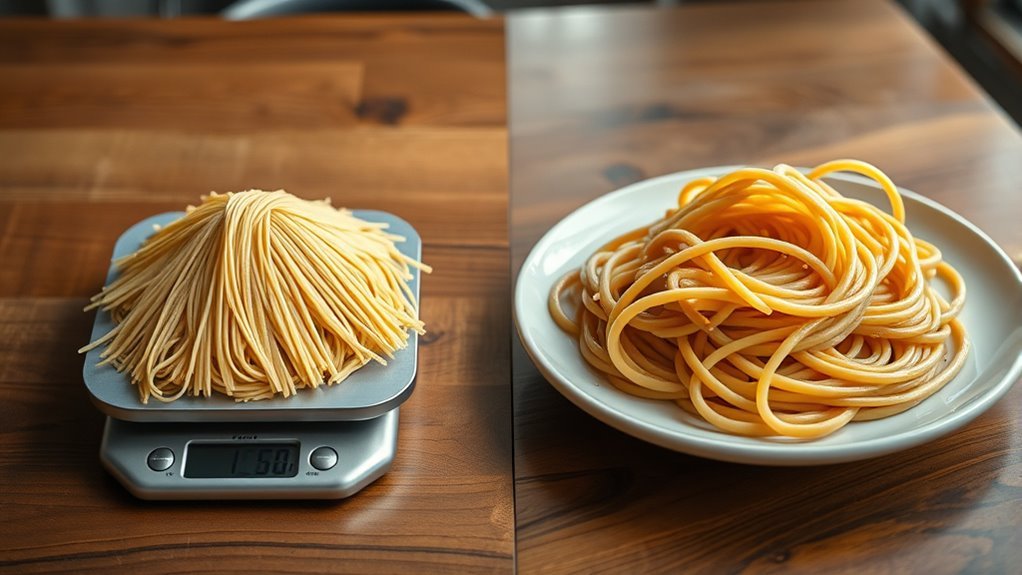
Although cooked pasta weighs more because it absorbs water, it actually contains fewer calories per 100 grams than dry pasta. When you cook pasta, it can triple in weight as it soaks up water. This added water increases the total weight but doesn’t add calories. So, if you compare the calorie content based on serving size by weight, cooked pasta appears to have fewer calories simply because it’s diluted with water.
Most nutrition labels base calorie counts on dry pasta, which has a concentrated calorie density, around 357 calories per 100 grams. That means when you measure your serving size, relying on cooked pasta weight can be misleading if you want an accurate calorie count. Understanding this difference helps you track your intake better, especially if you’re counting calories precisely or managing portions. Always remember, dry pasta’s weight and calories give you the true nutritional picture before cooking.
Should You Weigh Dry or Cooked Pasta for Accurate Calories?
When you want to track calories accurately, you should weigh pasta before cooking because nutrition labels are based on dry weight. This method gives you a consistent baseline, as the standard serving size, about 56 grams of dry pasta, directly correlates with calorie counts.
Cooking methods and cultural variations affect pasta flavor and texture, but they don’t change its calorie content. Weighing cooked pasta can be tricky since water absorption increases its weight without adding calories. This can cause you to underestimate intake if you don’t adjust.
If you prefer weighing cooked pasta, divide the total dry-calorie content by the cooked weight to calculate calories accurately. This approach respects the diverse pasta flavors and cooking styles worldwide while keeping your calorie tracking precise.
Ultimately, weighing dry pasta is simpler and aligns with nutrition labels, making it the preferred choice for anyone serious about monitoring their calorie consumption.
How Water Absorption Changes Pasta Weight (But Not Calories)
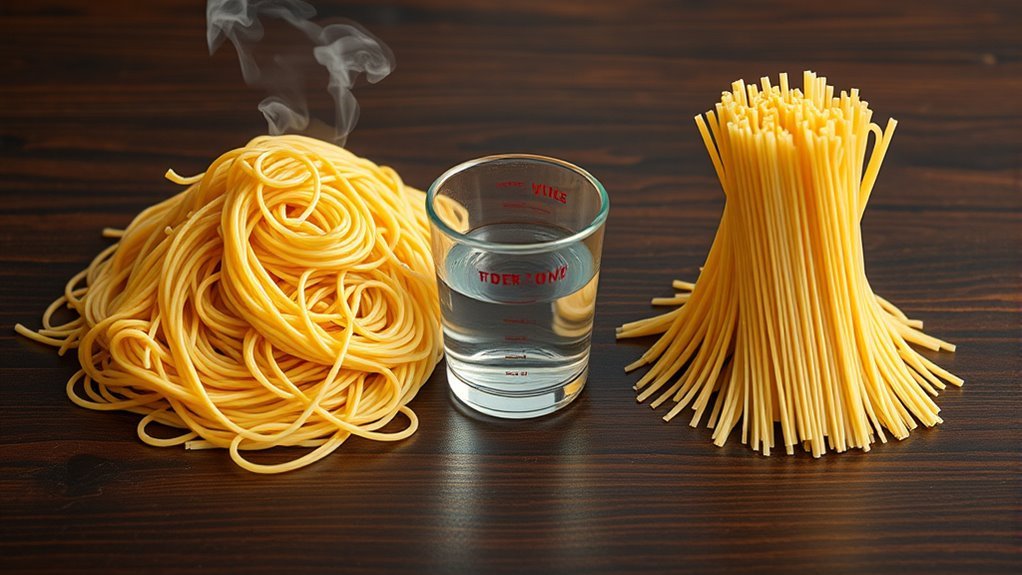
Because pasta absorbs water during cooking, its weight can increase two to three times without adding any calories. This means 100g of dry pasta, roughly 357 calories, can weigh 300-400g once cooked, but the calorie content remains unchanged.
The water absorption lowers calorie density per gram, which is why cooked pasta feels lighter calorie-wise even though the total calories are constant. When you experiment with different cooking techniques, like al dente versus fully cooked, the degree of water absorption can vary slightly, affecting the texture and flavor infusion.
Ingredient variations, such as whole wheat or gluten-free pasta, may also absorb water differently, influencing both weight and taste. Understanding this helps you track calories accurately. Always weigh before cooking or adjust based on total calories after cooking.
Serving Sizes Explained: Dry Weight vs Cooked Weight
Understanding serving sizes means recognizing the difference between dry and cooked pasta weights. Dry pasta servings are usually based on uncooked weight, around 56g per person. When you cook pasta, it absorbs water and can double or triple in weight depending on the cooking methods and pasta type.
This means the portion you plate using your serving utensils will weigh more, but the calorie count still ties back to the original dry weight. If you add pasta seasoning or sauces after cooking, remember that these won’t affect the pasta’s weight but will add calories.
To track your intake accurately, measure either the dry pasta before cooking or the cooked pasta after draining. Using consistent serving utensils helps maintain portion control, especially since cooked measurements can vary widely. So, whether you’re weighing dry or cooked pasta, understanding these differences lets you manage nutrition and enjoy your meal smarter.
How to Convert Cooked Pasta Weight Back to Dry Weight
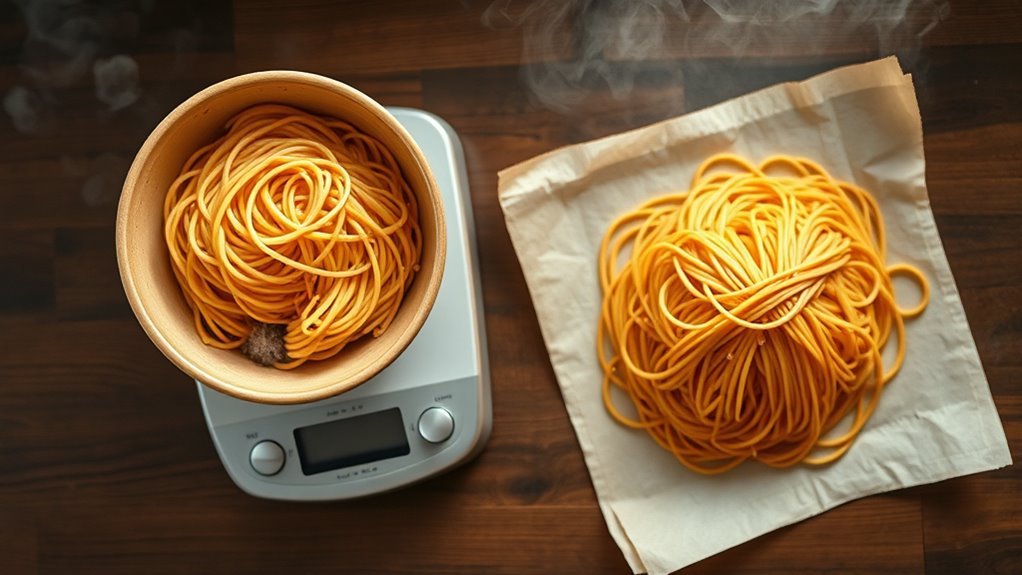
To convert cooked pasta weight back to dry weight, you first need to know how much water the pasta absorbs while cooking. Typically, pasta absorbs about two to two and a half times its dry weight in water. So, if you take the cooked weight and divide it by an absorption factor—usually between 2 and 2.5—you can get a good estimate of the original dry weight.
This is super helpful when you’re trying to track calories or portion sizes accurately because dry and cooked pasta can weigh quite differently. Once you have that dry weight, you can use it to measure or compare recipes more precisely.
Understanding Water Absorption
How much does cooked pasta’s weight change compared to its dry form? When pasta cooks, it absorbs water, causing its weight to increase by 2 to 3 times. This change depends on pasta texture, cooking methods, and regional varieties, which influence how much water the pasta soaks up.
For example, firmer pasta cooked al dente absorbs less water than softer, overcooked pasta.
Understanding this water absorption is key when you’re estimating dry weight from cooked pasta. Since calorie counts are based on dry pasta, knowing how to convert weights helps you track nutrition accurately.
Keep in mind, absorption rates vary, so while dividing cooked weight by about 2 to 2.5 offers a good estimate, slight differences can occur depending on the pasta type and cooking time.
Calculating Dry Weight
Wondering how to figure out the dry weight of your cooked pasta? You can calculate it by dividing the cooked pasta’s weight by its typical water absorption factor, which usually ranges between 2 and 3. This factor reflects the dry to cooked ratio and varies based on pasta type and cooking time.
For example, if your cooked pasta weighs 300 grams and the absorption factor is 2.5, the dry weight is 300 ÷ 2.5, or 120 grams. Knowing this conversion is essential for accurate nutritional calculation, as it lets you reverse-engineer the original dry weight from the cooked weight.
Keep in mind, longer cooking times increase pasta absorption, so adjust the ratio accordingly for precise calorie tracking.
Using Weight Ratios
Since cooked pasta absorbs water and swells, you can convert its weight back to dry weight by dividing the cooked weight by the water absorption ratio, which usually ranges from 2 to 2.5. For example, if your cooked pasta weighs 200 grams and the ratio is 2.5, the dry weight is about 80 grams (200 ÷ 2.5).
Keep in mind pasta texture and cooking techniques affect water absorption, so ratios vary by pasta type and ingredient variations. To improve accuracy, weigh your cooked pasta and apply the appropriate ratio based on the specific pasta style or brand you’re using.
Consistently applying this method helps you track portions and nutrition precisely, bridging the gap between cooked and uncooked pasta measurements.
Reading Pasta Nutrition Labels: What the Calories Really Mean
Although pasta nutrition labels can seem straightforward, they often cause confusion because calories are usually listed based on dry weight unless otherwise specified. When you read these labels, you’ll notice calories are typically given per 100 grams of dry pasta, around 357 calories.
Pasta calories are usually listed per 100 grams of dry weight, often around 357 calories.
However, after cooking, pasta absorbs water, changing its texture and weight but not the calorie content. Different cooking methods and flavor variations don’t usually alter this basic calorie count, but they can affect pasta texture and moisture, influencing portion size perceptions.
To accurately track calories, always check if the serving size refers to dry or cooked pasta. Understanding this helps you gauge the real energy intake, especially since cooked pasta weighs more but contains the same calories distributed over a larger mass.
This clarity guarantees your nutrition tracking matches your actual consumption, regardless of how you prepare or season your pasta.
Why Calories Per 100g Vary Between Dry and Cooked Pasta
When you compare calories per 100 grams between dry and cooked pasta, you’ll notice a big difference. Dry pasta typically has around 357 calories per 100g, while cooked pasta contains roughly 126 calories per 100g. This variation happens because cooking methods cause pasta to absorb water, changing its texture and increasing its weight.
The extra water dilutes calorie density, so even though you’re eating the same amount of pasta by dry weight, the cooked portion weighs more and has fewer calories per 100 grams.
Nutritional labels usually list calories based on dry pasta, which can confuse you if you weigh your pasta after cooking. When labels show cooked pasta calories, they reflect the added water weight, making the calorie count per serving appear lower.
Understanding this difference helps you interpret nutritional labels accurately and manage your calorie intake based on the pasta texture and how it’s prepared.
Fresh vs Dried Pasta: Nutrition and Calorie Differences
When you compare fresh and dried pasta, you’ll see that fresh pasta has fewer calories per 100 grams. That’s mainly because it contains more moisture. This difference changes the calorie density, so it can make figuring out serving sizes a bit tricky. Knowing how the water content affects the weight can really help you keep track of what you’re eating more accurately.
Calorie Density Comparison
Because fresh pasta contains more water, it has fewer calories per 100 grams, about 156 kcal, compared to dried pasta, which packs around 357 kcal per 100 grams. This difference affects pasta flavor and cooking methods since dried pasta’s calorie density reflects its cultural variations and traditional dehydration process.
| Pasta Type | Calories (per 100g) | Water Content (%) |
|---|---|---|
| Fresh Pasta | 156 kcal | High |
| Dried Pasta | 357 kcal | Low |
| Cooked Dried | ~130 kcal | Increased (weight gain from water) |
When you cook dried pasta, it absorbs water, decreasing calorie density per serving. Understanding this helps you accurately gauge nutrition without confusion over raw versus cooked measurements.
Moisture Content Impact
How does moisture content shape the nutritional profile of fresh versus dried pasta? Moisture variation plays a crucial role here. Fresh pasta contains about 30-35% water, which lowers its calorie density per gram compared to dried pasta, which is almost completely dry. This difference impacts your calorie count and portion expectations.
Consider these points:
- Fresh pasta’s higher water content means fewer calories per gram, as hydrated pasta is lighter.
- Dried pasta absorbs water during cooking, increasing hydration levels and tripling its weight, but calorie content remains concentrated in the dry matter.
- Cooking fresh pasta doesn’t change weight much, so calorie density stays consistent, unlike dried pasta.
Understanding water content helps you better interpret nutrition labels and make informed choices between fresh and dried pasta.
Serving Size Variability
Although dried and fresh pasta may look similar on your plate, their serving sizes and calorie content can differ considerably. Dried pasta is calorie-dense due to low moisture, while fresh pasta’s higher water content lowers calories per 100 grams.
Cooking methods also affect weight. Dried pasta absorbs water, tripling in weight but not calories. Since pasta storage impacts moisture, you’ll notice cultural varieties often prefer fresh or dried forms, influencing portion sizes.
Always check if nutrition labels refer to cooked or uncooked pasta to avoid confusion.
| Pasta Type | Calories per 100g | Moisture Content | Typical Serving Weight (Cooked) | Notes on Cooking Methods |
|---|---|---|---|---|
| Dried | 357 | Low | 180-200g | Absorbs water, triples weight |
| Fresh | ~130-150 | High | 220-250g | Less water absorption |
| Cooked Dry | ~120 (varies) | High | Larger volume due to water | Weight includes absorbed water |
| Cooked Fresh | ~90-110 (varies) | Very High | Larger volume, less calorie-dense | Softer texture, shorter cooking |
| Storage | Long shelf life | Refrigerated | N/A | Impacts moisture and texture |
Using a Food Scale to Weigh Pasta for Precise Calorie Counting
When you want to track your pasta calories accurately, using a food scale to weigh your portions is crucial. It brings kitchen precision to your meal planning and helps maintain consistent portion control. Here’s how to use your scale effectively:
- Weigh dry pasta before cooking, usually around 56g per serving, to calculate calories directly from the nutritional label.
- If you prefer, weigh cooked pasta and divide the total calories by the cooked weight to find per-gram calorie content.
- Always note whether you’re measuring dry or cooked pasta, as their weights and calorie densities differ markedly.
Regularly weighing your pasta ensures consistency in portion control and calorie tracking. This simple kitchen habit sharpens your meal planning, making it easier to manage your intake and stick to your nutrition goals. Using a food scale turns uncertain estimates into precise measurements, giving you full control over your pasta servings and calorie counting.
How Cooking Time Affects Pasta Weight and Calorie Density
Because cooking pasta causes it to absorb water, its weight increases markedly, often by 1.5 to 2.5 times the dry weight depending on the type and cooking time. As you cook pasta longer, it absorbs more cooking water, leading to greater pasta expansion and a heavier final portion.
This means a serving that starts as 56 grams dry might weigh 120 to 140 grams cooked. While the total calories stay the same, the calorie density per gram decreases because of calorie dilution from all that absorbed water.
So, if you’re tracking calories by cooked weight, keep in mind that longer cooking times reduce calories per gram, even though the total energy hasn’t changed. Understanding this helps you interpret pasta nutrition labels accurately and avoid overestimating calories when measuring cooked pasta.
Always consider how cooking water absorption and pasta expansion influence your portion’s weight and calorie density.
Common Pasta Label Confusions and How to Avoid Mistakes
Since pasta nutrition labels can vary widely, it’s crucial to check whether the calorie counts are based on dry or cooked pasta. Misunderstanding this can lead to inaccurate calorie tracking, especially when adding pasta sauce or considering gluten content for dietary needs.
To avoid common label confusions, keep these tips in mind:
- Verify if serving sizes refer to dry or cooked pasta. Labels often omit this, causing mix-ups.
- Remember that cooking methods affect pasta weight through water absorption, but calories stay the same. Weigh pasta dry or adjust cooked weight accordingly.
- Be cautious with pasta sauce calories and gluten content, which might not be included in the pasta label but impact your total intake.
Tips for Logging Pasta Calories Correctly in Food Trackers
Understanding how to read pasta labels sets the stage for accurately tracking your calorie intake in food apps. Since pasta cooking techniques affect weight through water absorption, always weigh dry pasta first for precise calorie counts.
If you weigh cooked pasta, use alternative measurement methods by dividing calories according to the cooked weight. Remember, water adds weight but no calories, so base your logging on dry weight or adjust cooked measurements accordingly.
Some food trackers let you specify dry or cooked pasta, so stick to one method for accuracy. Also, keep cultural pasta varieties in mind, as shapes and density can influence cooking and weight changes.
| Tip | Explanation |
|---|---|
| Weigh dry pasta | Nutrition labels reflect dry weight |
| Adjust cooked pasta calories | Divide total calories by cooked weight |
| Use a food scale | Ensures precise and consistent measurement |
| Choose logging method | Dry or cooked, be consistent |
| Consider pasta variety | Different types absorb water differently |
Frequently Asked Questions
Does Pasta Type Affect How Much Water It Absorbs During Cooking?
Yes, pasta type definitely affects how much pasta water it absorbs during cooking. Different pasta shapes and ingredients have varying absorption rates. For example, thicker pasta or whole wheat absorbs more water, while thinner pasta absorbs less.
Cooking time also plays a role. Longer cooking usually increases water absorption. So, when you cook pasta, consider both the type and cooking time to understand how much water it’ll soak up.
Can Sauces and Toppings Change Pasta’s Nutritional Value?
Yes, sauces and toppings can definitely change pasta’s nutritional value. The sauce impact varies. Cream-based sauces add more calories and fat than tomato-based ones.
Topping nutrition also matters. Meats and cheeses boost protein and fat, while oils add calories. These additions enhance flavor but can notably increase the dish’s overall calorie, fat, and sodium content.
How Does Pasta Storage Affect Its Nutritional Content?
Pasta storage directly impacts nutritional preservation. When you store pasta in airtight containers, you prevent moisture and air exposure that can degrade nutrients.
Using proper storage methods, like keeping pasta in a cool, dark place, helps maintain its quality and shelf life. Avoid humidity and heat, or your pasta might become stale or moldy, reducing its nutritional value.
Are Gluten-Free Pastas Nutritionally Different From Regular Pasta?
Gluten-free pastas and regular pasta look similar but differ in gluten content and ingredients, which affects their nutritional comparison. While you won’t find gluten in gluten-free options, their carb and fiber levels can be higher or lower depending on rice, corn, or other bases.
You’ll want to check labels carefully to see if they’re fortified with vitamins. This way, you can choose what suits your diet suitability best without missing key nutrients.
Does Freezing Cooked Pasta Alter Its Calorie Content?
Freezing cooked pasta doesn’t change its calorie content, so you’ll experience full calorie retention. The freezing impact mainly affects texture and moisture, not the nutritional stability.
When you freeze and reheat pasta, its macronutrient composition stays the same, meaning the calories remain stable. To track calories accurately, just measure the pasta before freezing since freezing won’t add or remove calories from your meal.
Conclusion
You might weigh cooked pasta, thinking calories change but they don’t. Dry pasta is dense, heavy in calories; cooked pasta is lighter, soaked in water.
Weighing dry gives accuracy, while cooked can mislead. Cooking time swells weight, not calories, causing confusion.
So, use a scale, track dry weight, and avoid common label pitfalls. Balancing these differences helps you nail your calorie count every time. Simple, precise, and smart.

One Comment