5 Steps to Create a Meal Plan for Weight Loss
To create a weight loss meal plan, start by understanding the basics, focusing on healthy, portion-controlled meals that keep you in a calorie deficit.
Calculate your daily calories by estimating your BMR and adjusting for activity.
Build balanced meals with lean proteins, veggies, and whole grains.
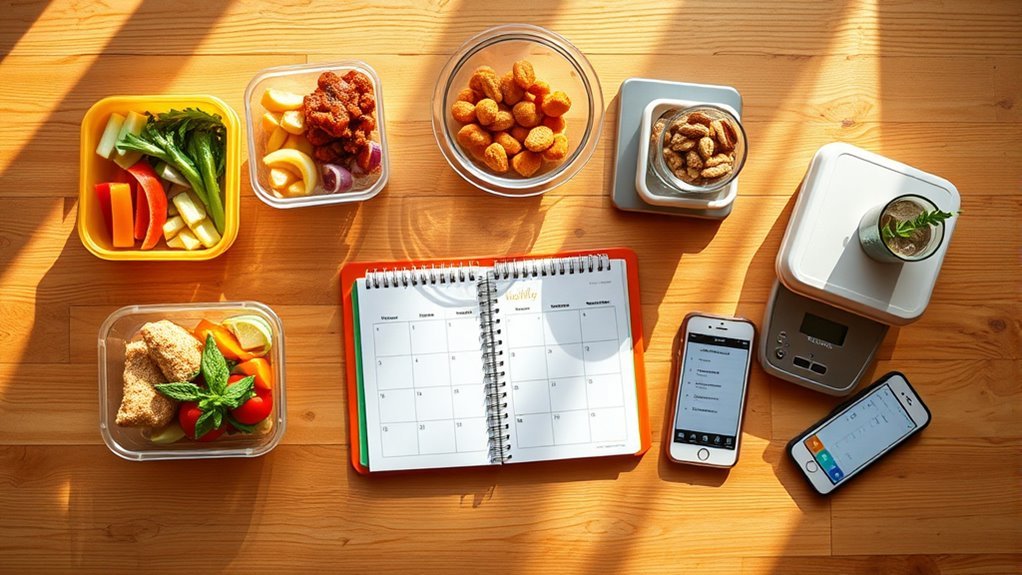
Plan and prep your meals weekly to save time and reduce stress.
Finally, track your progress and adjust portions or meals as needed to stay on track.
Here’s how to perfect each step for lasting results.
Understand the Basics of Meal Planning for Weight Loss
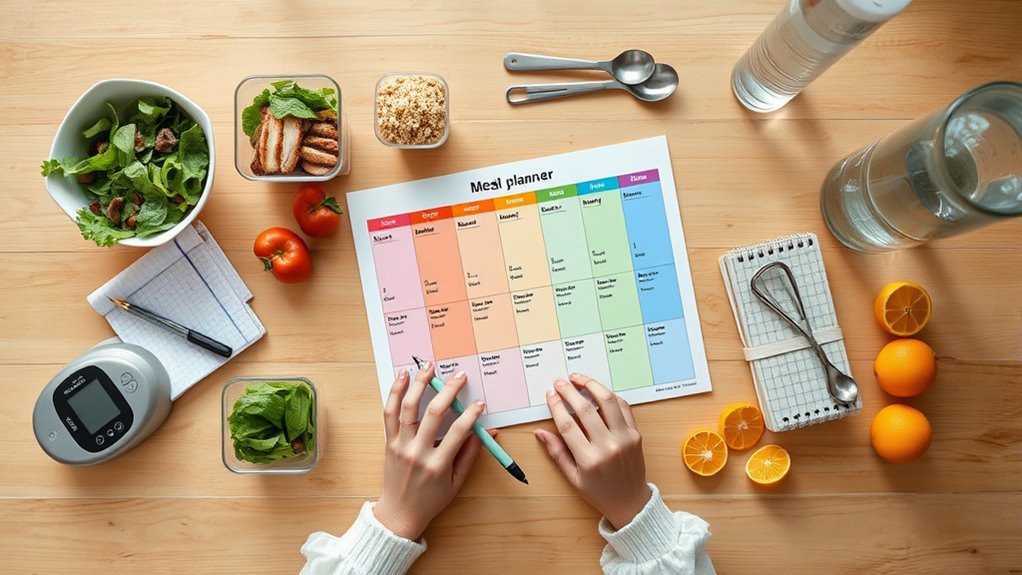
Although meal planning might seem time-consuming at first, it’s a powerful strategy to help you eat healthier and lose weight. By organizing your meals ahead, you create balanced meals that promote healthy eating and support weight management.
Meal planning guarantees you maintain a calorie deficit while still enjoying nutritious foods like lean proteins, whole grains, and a variety of fruits and vegetables. Paying attention to portion sizes helps prevent overeating and keeps your calorie intake in check.
Meal planning ensures a calorie deficit with nutritious foods and portion control to support healthy weight loss.
When you commit to meal prep, you reduce the temptation of impulsive snacking or relying on processed foods, making it easier to stick to your goals. Crafting a weekly menu filled with nutrient-dense options keeps your diet enjoyable and varied, which is essential for sustainable weight loss.
With consistent meal planning, you build habits that support long-term, sustainable weight management rather than quick fixes.
Calculate Your Daily Calories to Guide Your Meal Plan
Before you start planning your meals, you need to calculate your daily calorie needs to guarantee your plan supports weight loss. Begin by estimating your Basal Metabolic Rate (BMR) using formulas like Harris-Benedict or Mifflin-St Jeor, which factor in your age, sex, weight, and height.
Then adjust this number for your activity level to find your Total Daily Energy Expenditure (TDEE), the calories required to maintain your current weight. To promote a healthy weight loss, create a calorie deficit of 500 to 750 calories per day from your TDEE. This helps you lose about 1 to 1.5 pounds weekly.
Use reliable online calculators or consult a dietitian to estimate your personalized caloric needs accurately. As you progress, monitor your daily intake and adjust your calories to stay on track. Calculating and tracking your calories is essential to build a meal plan that effectively supports your weight loss goals.
Build Balanced Meals With Protein, Veggies, and Whole Grains
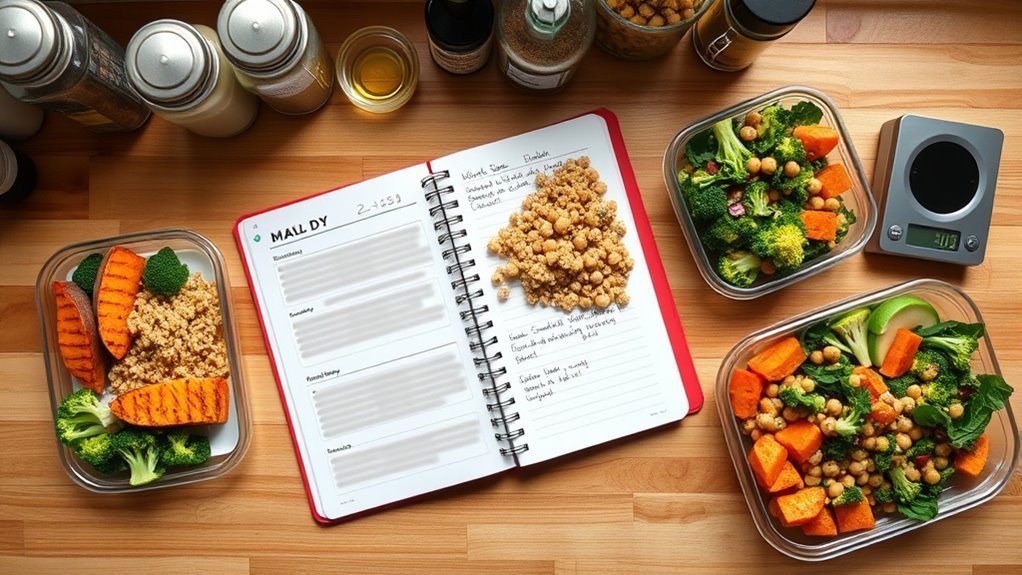
When you build your meals around lean protein, vegetables, and whole grains, you create a balanced plate that keeps you full and nourished. Start by incorporating a source of protein like chicken, fish, or beans. This supports muscle maintenance and promotes fullness.
Building meals with lean protein, vegetables, and whole grains nourishes your body and keeps you satisfied.
Fill half your plate with non-starchy vegetables such as spinach, broccoli, or peppers to boost fiber and nutrient intake without adding many calories. Include whole grains like brown rice, quinoa, or whole wheat bread to provide sustained energy and aid digestion with their fiber content.
Practice portion control and mindful plating by allocating about one-quarter to one-third of your plate to protein, half to vegetables, and the rest to whole grains. This approach helps you create nutrient-dense, balanced meals that curb hunger and prevent overeating.
Incorporating these elements into your meal planning encourages healthy eating habits that support your weight loss goals effectively.
Plan and Prep Your Weekly Meal Plan to Save Time
Now that you know how to build balanced meals, the next step is to plan and prep your meals for the week. Start by setting aside time. Friday evening works well for meal planning and creating a detailed grocery list.
Check your weekly schedule to spot busy days. Then plan simpler or leftover-based meals accordingly. Use meal prep tips like batch-cooking grains and chopping vegetables in advance to save time during the week.
Portion control is easier when you prepare ingredients ahead, helping you stay on track with healthy meals. Store prepped food in airtight containers and label them with dates to maintain freshness.
Taking these steps streamlines cooking, reduces stress, and supports consistent meal planning. Consider using meal planning apps to generate customized plans and automated grocery lists tailored to your preferences.
Adjust Your Weight Loss Meal Plan as You Progress
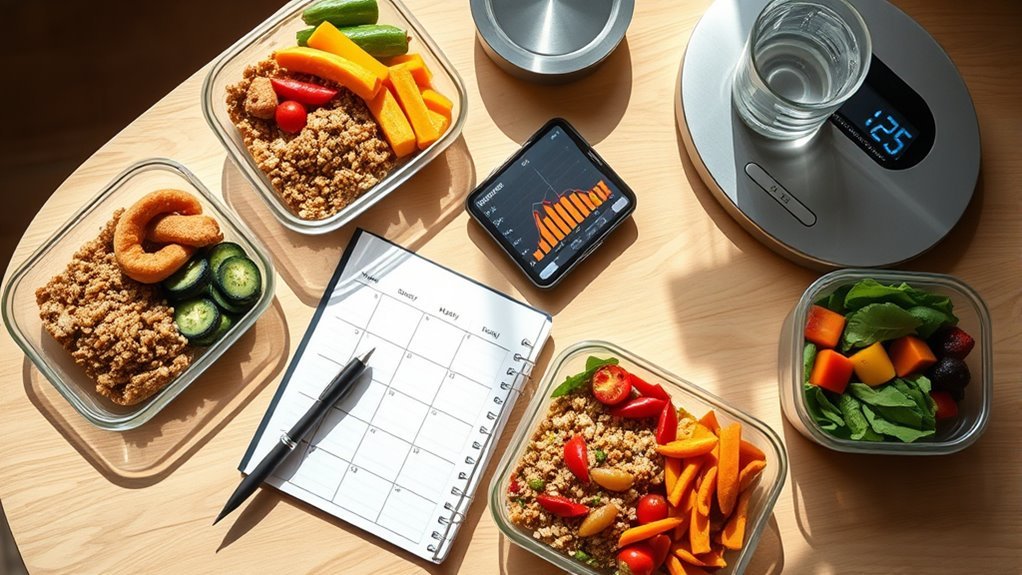
As you make progress toward your weight loss goals, you’ll need to regularly review and adapt your meal plan to stay on track. Tracking your results with apps or food diaries helps you monitor progress and recognize when to update your calorie intake or portion sizes. Aim to reassess every 2-4 weeks or when you hit key milestones.
Flexibility is key. Modify your meal plan based on changes in activity levels to ensure you’re getting enough calories and protein. Rotate meal options and recipes to maintain nutritional balance and prevent plateaus.
Be open to incorporating new healthy foods and adapting your plan to fit lifestyle changes, making weight loss sustainable long-term. By consistently adjusting your meal plan, you’ll keep your weight loss journey effective and aligned with your evolving needs.
Frequently Asked Questions
Can I Follow a Weight Loss Meal Plan if I Have Dietary Restrictions?
You can definitely follow a weight loss meal plan with dietary restrictions by choosing gluten free options, vegetarian substitutions, or dairy free meals tailored to your needs. Look for low carb choices, vegan recipes, or allergy friendly snacks that fit your lifestyle.
Whether you follow halal diets, kosher meal plans, pescatarian ideas, or paleo adaptations, customizing your plan keeps it effective and enjoyable. Working with a dietitian helps guarantee balanced nutrition while meeting your goals.
How Do I Handle Cravings While Sticking to My Meal Plan?
You can handle cravings by practicing mindful eating and recognizing craving timing. This helps you differentiate true hunger from sugar cravings.
Stay hydrated to reduce false hunger signals. Use craving substitution with healthy snacks and try craving distractions like walking or deep breathing to manage emotional triggers and stress.
Track cravings with craving journaling to spot hormonal influence patterns. Then, implement stress management techniques to stay on track and avoid slipping up.
What Are Some Healthy Snack Ideas for Weight Loss?
Oh, sure, you could reach for that candy bar, but why not try healthy snack options instead? Low calorie snacks like fruit and veggie combos keep you full without the guilt.
Protein rich snacks such as Greek yogurt or hard-boiled eggs stabilize your energy. Nut and seed snacks provide healthy fats, while dairy based snacks like cottage cheese satisfy cravings.
Whole grain snacks and sugar free snacks make portable snack ideas that are filling snack choices you’ll actually enjoy.
How Important Is Hydration in a Weight Loss Meal Plan?
Hydration is essential for your weight loss success because it boosts metabolism and helps you distinguish thirst vs hunger, preventing overeating. Proper water intake supports digestion, electrolyte balance, and reduces fluid retention.
Pay attention to dehydration signs and practice hydration timing by drinking water before meals. Choose healthy beverage choices like water over sugary drinks.
Follow hydration tips like carrying a water bottle to stay consistently hydrated and maximize hydration benefits throughout your day.
Can Meal Planning Help With Emotional or Stress Eating?
Yes, meal planning can be a game-changer for emotional or stress eating. When you plan ahead, you build mindful eating habits that increase emotional awareness and help identify emotional triggers.
This supports stress management by promoting portion control and mood regulation. You’ll develop coping strategies that prevent binges and break unhealthy behavioral patterns. Plus, meal planning encourages self-compassion, making it easier to stick with healthier choices and reduce emotional eating for good.
Conclusion
Now that you know the essential steps to create a meal plan for weight loss, the real question is, are you ready to take control of your health? It’s not just about counting calories or prepping meals; it’s about discovering what works best for you and sticking with it.
The journey might have surprises along the way, but that’s where the real transformation happens. So, what’s your next move?