How to Create a Meal Plan for Weight Loss and Muscle Gain
To create a meal plan for weight loss and muscle gain, first calculate your calorie needs for a slight deficit or surplus based on your goals.
Focus on eating enough protein to build muscle and keep you full.
Pair complex carbs with healthy fats for lasting energy, and prep meals in advance to stay consistent.
Stay hydrated and time your carbs around workouts to boost performance and recovery.
Keep going to uncover more tips to fine-tune your nutrition and boost results.
Calculate Your Calorie Needs to Lose Fat and Gain Muscle
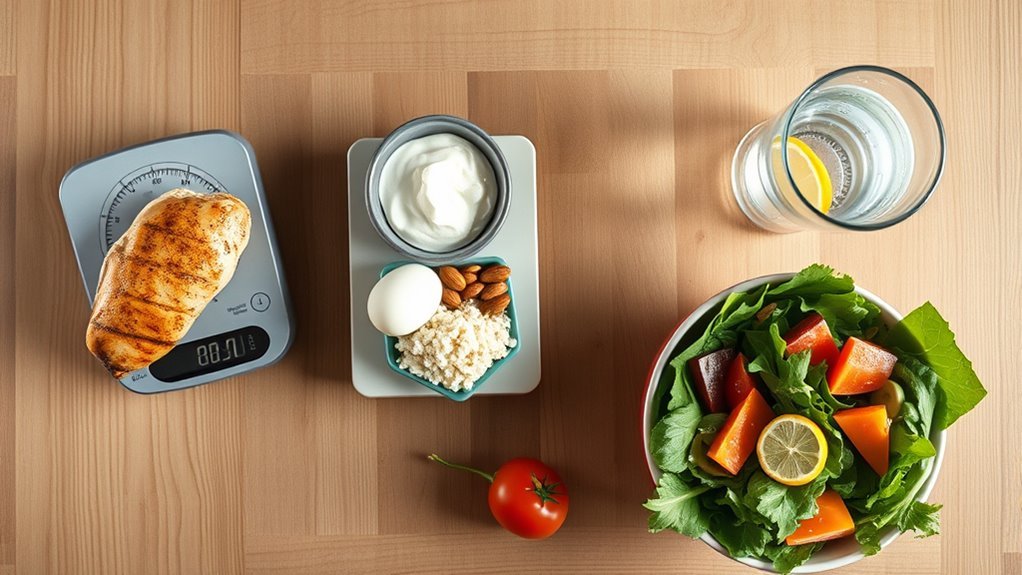
Before you start adjusting your diet, you need to calculate your calorie needs accurately. Begin by determining your Basal Metabolic Rate (BMR) using formulas like Harris-Benedict or Mifflin-St Jeor, which consider your age, sex, weight, and height.
Next, factor in your activity level to estimate your Total Daily Energy Expenditure (TDEE) by multiplying your BMR by an activity factor: sedentary, lightly active, moderately active, or very active. This gives you the total calories you burn daily.
For weight loss, create a calorie deficit of about 500 calories per day to lose 1-2 pounds weekly. If muscle gain is your goal, increase your intake by 10-15% above maintenance calories.
Keep in mind, your energy expenditure changes as your weight and activity level shift, so reassess your calorie needs every 4-6 weeks. This way, you’ll stay on track for both fat loss and muscle gain effectively.
Why Protein Is Key for Muscle Growth and Fat Loss
Because protein provides the essential amino acids your body needs to repair and build muscle, it plays an indispensable role in both muscle growth and fat loss. When you consume about 20-30 grams of protein per meal, you optimize muscle synthesis, especially when paired with strength training.
Protein delivers essential amino acids that fuel muscle repair, growth, and fat loss, especially with strength training.
Protein supports muscle repair and helps preserve lean muscle during calorie deficits, ensuring your weight loss comes from fat instead of muscle. Furthermore, protein increases satiety, which helps you reduce overall calorie intake without feeling hungry.
Its higher thermic effect means your body burns more calories digesting protein than carbs or fats, aiding fat loss. Prioritizing protein in your meal plan ensures you fuel muscle growth effectively while promoting fat loss, making it a cornerstone nutrient for your goals.
Focusing on adequate protein intake will support muscle repair, boost muscle synthesis, and keep you feeling full, all while managing your calorie intake for lasting results.
How to Balance Carbs and Fats for Lasting Energy
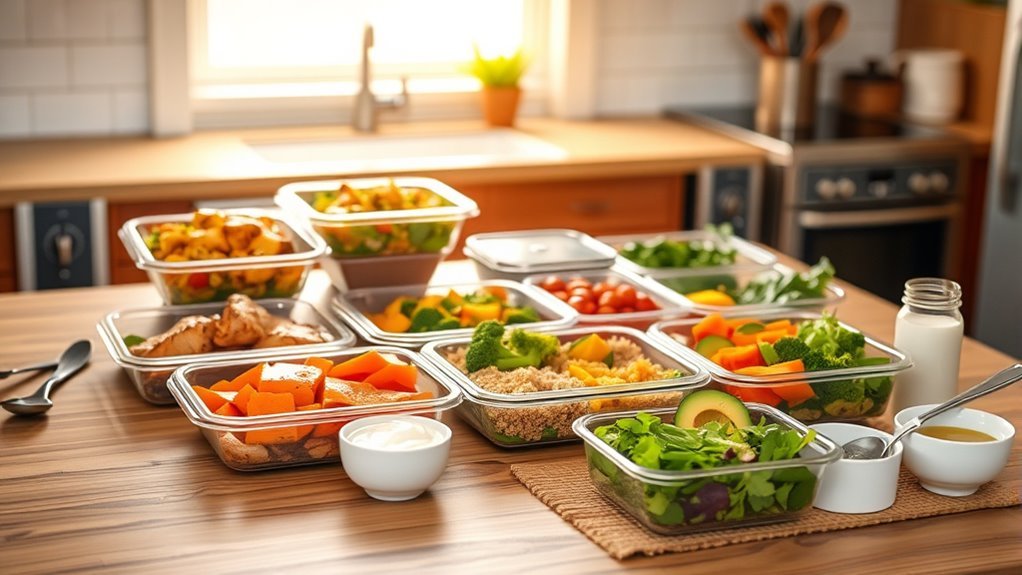
Protein sets the foundation for muscle growth and fat loss, but balancing your intake of carbohydrates and fats keeps your energy steady throughout the day. Aim for balanced macros by allocating about 55-60% of your daily calories to complex carbohydrates like oats, sweet potatoes, and quinoa. These slow-digesting carbs provide fiber that stabilizes blood sugar and supports sustained energy.
Incorporate healthy fats such as avocados, nuts, seeds, and oily fish, making up 15-20% of your intake. These fats aid hormone production and improve your energy endurance. Pay attention to nutrient timing by pairing carbs with fiber and protein to slow digestion and maintain stable energy levels.
Avoid refined sugars and trans fats, which can cause energy crashes and disrupt your progress. By mastering this balance, you’ll fuel your workouts and daily activities effectively, promoting both fat loss and muscle gain with lasting energy.
Meal Prep Tips for Muscle Gain and Fat Loss Success
When you batch-cook proteins like chicken, turkey, or tofu and portion them into containers, you save time and guarantee you consistently hit your intake goals. Effective meal prep is vital for muscle gain and fat loss, helping you stick to a nutrient-dense meal plan without stress.
Here are three tips to optimize your prep:
- Chop and store vegetables ahead to speed up meal assembly and make certain you get plenty of fiber and vitamins.
- Use meal prep containers to divide meals with the right balance of protein, healthy carbs, and fats, supporting muscle repair and fat loss.
- Plan meals around your macros, focusing on portion control to avoid overeating while fueling your workouts and recovery.
Best Breakfast Ideas to Fuel Muscle Building and Fat Loss
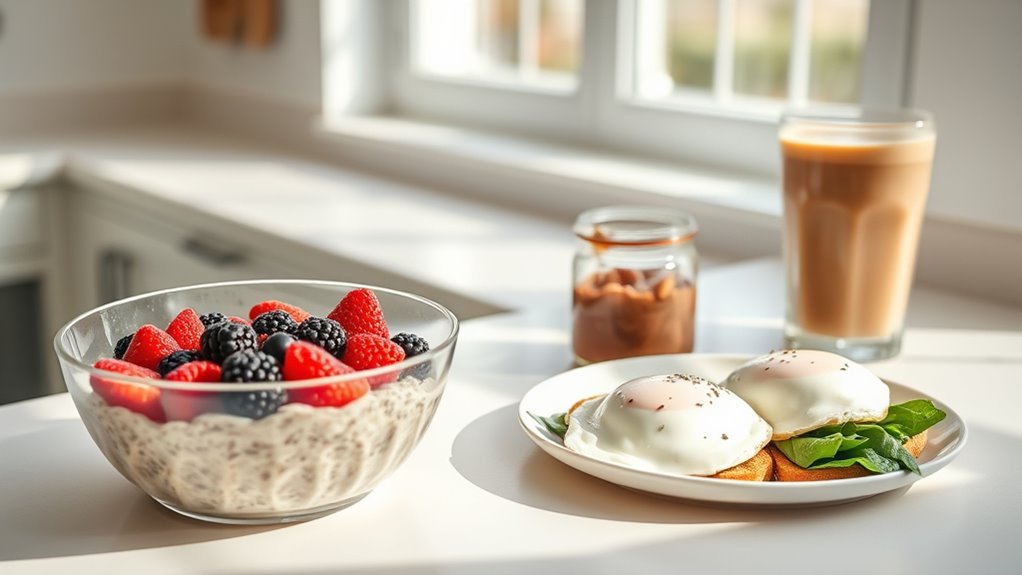
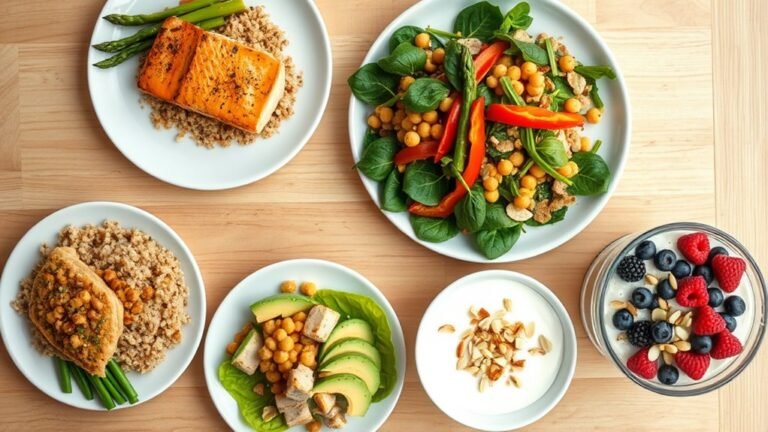
To jumpstart your muscle-building and fat-loss goals, choose breakfasts that blend high-quality protein, complex carbs, and healthy fats. A high-protein breakfast like Greek yogurt with nuts and berries gives you essential amino acids, supporting muscle repair and promoting fat loss through increased satiety.
Incorporate complex carbs such as oatmeal or sweet potatoes to fuel your workouts and keep blood sugar levels steady. Adding healthy fats from avocado or seeds helps regulate hormones critical for muscle gain and recovery.
Combining protein, fiber, and healthy fats in your breakfast boosts metabolism and curbs cravings later in the day, making healthy eating easier. To stay consistent, use meal prep strategies like egg muffins or overnight oats, which deliver nutrient-dense, muscle-supportive nutrition even when mornings get hectic.
Prioritizing these balanced breakfast options sets a strong foundation for both fat loss and muscle gain, helping you meet your fitness goals efficiently.
High-Protein Lunches That Keep You Full and Energized
Although midday meals often get overlooked, choosing high-protein lunches packed with lean meats, tofu, or Greek yogurt can keep you full and energized well into the afternoon. Including 20-30 grams of protein from quality protein sources supports muscle gain, boosts metabolism, and enhances fullness, which helps prevent overeating. This is key for weight loss.
Pairing these proteins with fiber-rich veggies and whole grains sustains your energy levels and adds valuable nutrition.
Here are three high-protein lunch ideas to include in your meal plan:
- Grilled chicken breast salad with mixed greens, quinoa, and avocado
- Tofu stir-fry with broccoli, bell peppers, and brown rice
- Greek yogurt bowl topped with nuts, seeds, and fresh berries
These meals balance lean proteins, healthy fats, and fiber to keep you satisfied and energized, making it easier to stick to your weight loss and muscle gain goals throughout the day.
Dinner Meals to Support Muscle Repair and Fat Loss
For dinner, try to focus on lean protein options like chicken, fish, or tofu. These help your muscles repair while you sleep. Then, pair them with nutrient-packed veggies like broccoli or spinach. This combo not only supports fat loss but also keeps your body fueled for recovery. It’s a simple way to nourish yourself and stay on track with your goals.
Lean Protein Choices
When you choose lean protein sources like chicken breast, salmon, or tofu for dinner, you give your muscles the nutrients they need to repair and grow while supporting fat loss. Incorporating 20-30 grams of high-quality protein per meal optimizes muscle repair and helps maintain a calorie deficit for better body composition.
For effective meal planning, focus on these dinner options:
- Grilled chicken breast with steamed vegetables
- Baked salmon paired with quinoa
- Stir-fried tofu with mixed greens
These lean protein choices provide essential amino acids and minimize added fats and calories, aiding fat loss. Prioritizing lean protein in your meals ensures you fuel your body efficiently, promoting muscle gain without excess fat.
Nutrient-Dense Vegetables
Since nutrient-dense vegetables like spinach, broccoli, kale, and bell peppers pack essential vitamins, minerals, and fiber, including them in your dinner supports muscle repair and fat loss. These low-calorie vegetables help you stay full while creating a calorie deficit, which is vital for fat loss.
Dark leafy greens such as spinach and kale are rich in magnesium, which aids muscle function and energy production, speeding muscle recovery. The antioxidants in these vegetables reduce inflammation and promote faster muscle repair after workouts.
To maximize benefits, roast, steam, or sauté your vegetables. This preserves their nutrients and enhances flavor. By consistently adding nutrient-dense vegetables to your evening meals, you’ll support muscle recovery, manage inflammation, and keep your body fueled with the fiber and micronutrients it needs to burn fat and build lean muscle effectively.
Foods to Limit for Better Muscle Gain and Fat Loss
Although it’s tempting to indulge in sugary treats and fried snacks, limiting these foods is essential if you want to build muscle and lose fat effectively. Processed foods loaded with added sugars and trans fats can spike your insulin and promote fat storage, which hinders your progress.
Fried foods and processed snacks not only add empty calories but also increase inflammation, making fat loss tougher. Alcohol is another culprit, offering empty calories and slowing muscle recovery.
Focus on reducing:
- Sugary drinks, candies, and pastries high in added sugars that cause fat gain.
- Fried foods like french fries and fried chicken that promote unhealthy fat accumulation.
- Processed snacks rich in trans fats and refined grains that lead to blood sugar spikes.
Why Staying Hydrated and Eating Healthy Fats Matter
Because your body relies on proper hydration and healthy fats to function ideally, paying attention to these elements can considerably boost your muscle gain and fat loss efforts. Hydration plays a key role in optimizing digestion and nutrient absorption, which directly supports muscle recovery and fat loss.
Without enough water, your body can’t efficiently process the nutrients it needs. Meanwhile, healthy fats like those in avocados, nuts, and oily fish are essential for hormone production, including testosterone and estrogen, which are vital for muscle building.
These fats also help your body absorb fat-soluble vitamins and minerals such as A, D, E, and K, important for overall health and muscle function. Plus, healthy fats enhance satiety, helping you manage calorie intake more effectively.
How to Combine Nutrition With Exercise for Optimal Results
You’ll get the best results when you pair a balanced diet with the right workout routine. Make sure to eat enough protein—it’s key for building and repairing muscles. Also, try to time your carbs around your exercise sessions to give your body the fuel it needs and help speed up recovery.
Tracking your macros can really make a difference. When you adjust your meals to fit your training schedule, you’ll find it easier to lose fat and build muscle effectively. It’s all about finding the right balance that works for you.
Balanced Diet Essentials
When you combine a balanced diet with regular exercise, you set the foundation for effective muscle growth and fat loss. Focus on meals that include protein, complex carbohydrates, and healthy fats to fuel your body and support muscle synthesis.
Prioritize nutrient-dense foods like lean meats, vegetables, whole grains, and nuts to boost your energy levels and recovery.
Here’s how to nail your balanced diet essentials:
- Aim for roughly 40% protein, 30% complex carbs, and 30% healthy fats in your daily calories.
- Time your meals, especially consuming protein-rich foods within 30 minutes post-workout to maximize muscle synthesis.
- Stay hydrated and avoid processed foods to keep your metabolism efficient and support fat loss.
This approach optimizes nutrition and exercise synergy for the best results.
Effective Workout Pairing
How can you maximize your workout results through nutrition? Effective workout pairing means aligning your nutrition with resistance training to boost muscle gain and fat loss. Prioritize protein intake during and after exercise to enhance muscle synthesis.
Carbohydrate timing is vital. Eat complex carbs before workouts for energy and simple carbs post-workout for glycogen replenishment. Maintain calorie balance based on your goals: a slight surplus for bulking, a deficit for cutting.
Don’t forget healthy fats to support hormone production and recovery nutrition to speed repair.
| Timing | Nutrition Focus |
|---|---|
| Pre-workout | Complex carbs, protein |
| During workout | Hydration, minimal carbs |
| Post-workout | Protein, simple carbs |
| Daily intake | Balanced macros, fats |
Frequently Asked Questions
How Often Should I Weigh Myself During My Weight Loss and Muscle Gain Journey?
You should weigh yourself once a week to evaluate progress accurately. This helps avoid daily fluctuations caused by hydration or digestion.
Alongside weighing, compare body measurements and record workout impact to assess strength improvements. Monitoring calorie intake and noting energy levels allow you to adjust portion sizes effectively.
Tracking weight weekly gives a clear view of your journey while helping you stay on track with your goals.
Can Supplements Replace Whole Foods in My Meal Plan?
Sure, you could try living on supplements alone because who needs taste, variety, or proper nutrient absorption, right? But seriously, supplements versus whole foods isn’t a fair fight.
Whole foods win on taste, variety, and long-term health impacts. Supplements might be convenient and help with dietary restrictions, but they can’t replicate nutrient complexity and often cost more.
Plus, supplement regulation is loose, so don’t bank on them replacing real food anytime soon.
How Do I Adjust My Meal Plan on Rest Days Versus Workout Days?
On rest days, focus on recovery by lowering calories, especially carbs. Use carb cycling to match your energy needs. Keep protein intake high to support muscle repair.
For workout day nutrition, prioritize carbs and protein to fuel performance and recovery. Adjust calorie intake accordingly and maintain hydration strategies every day.
Use meal prep tips to plan your meals and consider rest day fasting if it suits you. This balance helps optimize fat loss and muscle gain.
What Are the Best Snacks for Muscle Gain Without Adding Fat?
Did you know protein intake boosts muscle synthesis by up to 50% post-snack? For muscle gain without fat, choose low-calorie snacks rich in protein sources like Greek yogurt or turkey jerky.
Incorporate healthy fats from nuts and seeds to support nutrient density and hunger management. Practice portion control and focus on carb timing. Snacking after workouts maximizes gains.
Prepping snacks ahead guarantees you stay on track with your goals effortlessly.
How Important Is Meal Timing for Muscle Growth and Fat Loss?
Meal timing plays a vital role in muscle growth and fat loss because it influences your insulin response and nutrient timing. You’ll want to focus on the anabolic window by consuming protein and carbs post-workout to maximize muscle repair.
Carb cycling and managing fasting windows can help control fat storage. Eating frequent meals supports steady digestion speed and nutrient absorption, optimizing hormone levels. Skipping meals disrupts this balance, so meal frequency is key for your goals.
Conclusion
You might worry that meal planning for weight loss and muscle gain feels too complicated or restrictive, but it doesn’t have to be. By knowing your calorie needs, prioritizing protein, and balancing carbs and fats, you’ll fuel your body right without giving up the foods you enjoy.
Plus, simple meal prep tips make it manageable. Stick with it, stay hydrated, and combine good nutrition with exercise. You’ll see progress without feeling deprived.