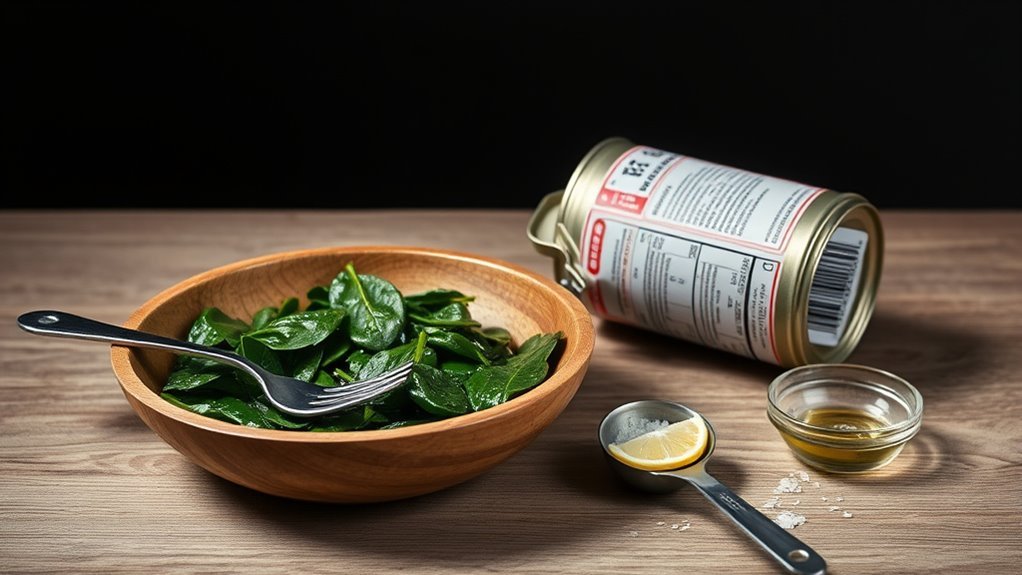
How to Understand Canned Spinach Nutrition
When you look at canned spinach nutrition, know it’s rich in vitamins like A, K, iron, and calcium.
Though heat processing lowers some vitamin C, it typically has more sodium and calories due to added salt.
Rinsing can cut sodium by about 30%.
Using herbs, garlic, or lemon can improve flavor.
Choosing canned, fresh, or frozen depends on your needs and recipes.
If you want to get the most from it, there are simple ways to optimize nutrition and taste.
What Nutrients Make Canned Spinach Healthy
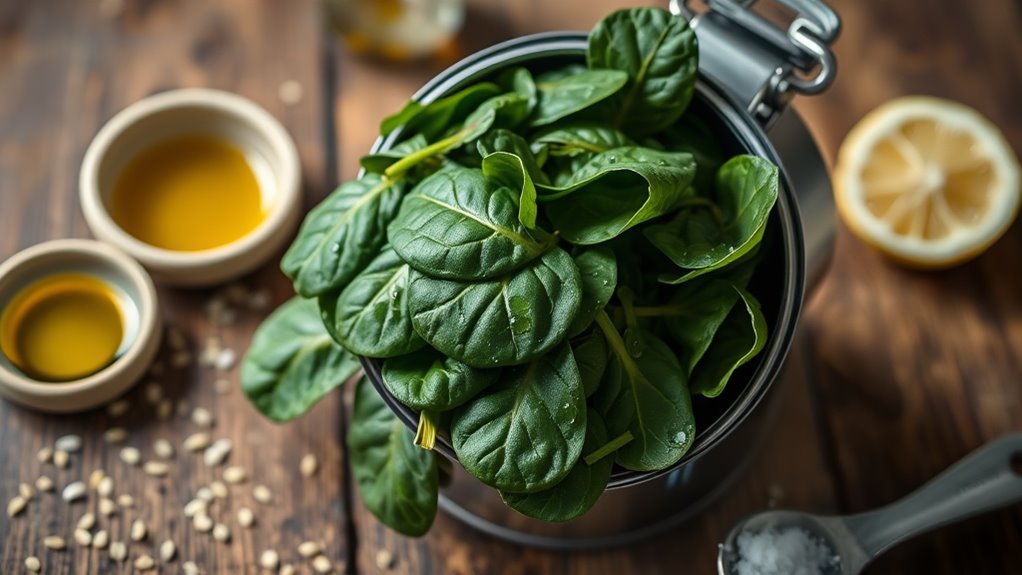
Although canned spinach may not seem as fresh as its raw counterpart, it still packs a powerful nutritional punch. You’ll find it loaded with essential vitamins and minerals that support your overall health. For instance, canned spinach provides vitamins K, A, and C, which help maintain strong bones, boost your immune system, and promote healthy skin.
It also offers valuable minerals like iron and calcium, vital for blood health and maintaining bone strength. Beyond vitamins and minerals, canned spinach contains dietary fiber that aids your digestion and supports a healthy gut.
Keep in mind, though, canned spinach can be high in sodium. But rinsing it reduces the salt content by at least 30%, making it a healthier choice. Thanks to the canning process, the nutritional content remains preserved, giving you a convenient and nutrient-rich way to enjoy leafy greens without compromising on health benefits.
How Does Canned Spinach Compare to Fresh Spinach Nutrition?
When you compare canned spinach to fresh, you’ll find they share many of the same essential nutrients, especially after cooking. Both provide key vitamins A and K, as well as minerals like iron and calcium.
Canned and fresh spinach both offer essential nutrients like vitamins A, K, iron, and calcium, especially when cooked.
While fresh spinach usually offers more vitamin C, canned spinach retains most of its vitamins and minerals during processing. Cooking canned spinach actually enhances the bioavailability of nutrients like iron and calcium, making them easier for your body to absorb, similar to what happens with cooked fresh spinach.
Keep in mind, canned spinach tends to have higher calories per serving due to added salt and the canning process. Still, it stands as a convenient and nutritious choice when fresh spinach isn’t available.
Understanding these differences helps you make informed choices without sacrificing essential nutrients in your diet.
Why Is Canned Spinach Higher in Sodium and Calories?
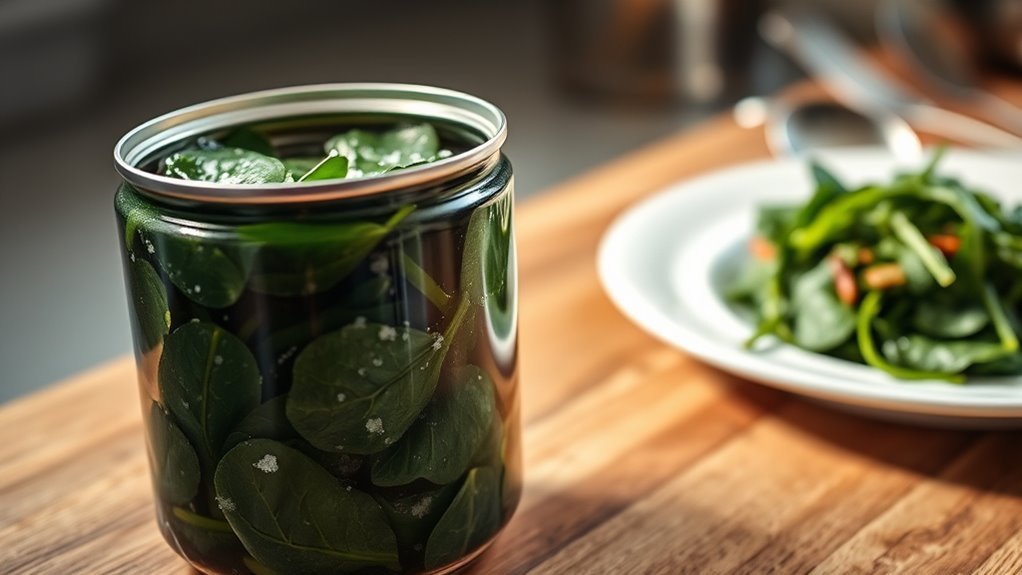
Why does canned spinach have more sodium and calories than fresh? It mainly comes down to the preservation process. Canned spinach is packed with added sea salt to enhance flavor and extend shelf life, which bumps up the sodium levels significantly.
Plus, the cooking involved in canning reduces water content but concentrates the calories, resulting in about 50 calories per cup—higher than fresh spinach’s naturally low calorie count. The water loss during cooking also means the nutrients get diluted, but the salt and calorie content become more concentrated.
This makes canned spinach denser in calories compared to fresh spinach. However, you can cut down on the sodium by rinsing canned spinach thoroughly before using it, which removes around 30% of the added salt. Understanding these factors helps you make smarter choices when incorporating canned spinach into your meals.
Reading Canned Spinach Nutrition Labels
Since canned spinach can vary widely in nutritional content, reading the nutrition labels carefully helps you make informed choices. These labels typically list serving size, calories, total fat, sodium, carbohydrates, fiber, sugars, and protein.
Pay close attention to the percentage daily values (%DV) to see how much each nutrient contributes to your daily diet based on a 2,000-calorie intake. Sodium is especially important, as canned spinach often contains high salt levels. You can reduce sodium by rinsing the spinach, which cuts about 30% of it.
Comparing nutrition labels across brands lets you pick options with lower sodium and better nutrient profiles. While ingredients won’t be covered here, many labels include basic components like spinach, water, and sea salt, giving you a quick overview of added salts or preservatives.
Ingredients in Canned Spinach and Their Impact
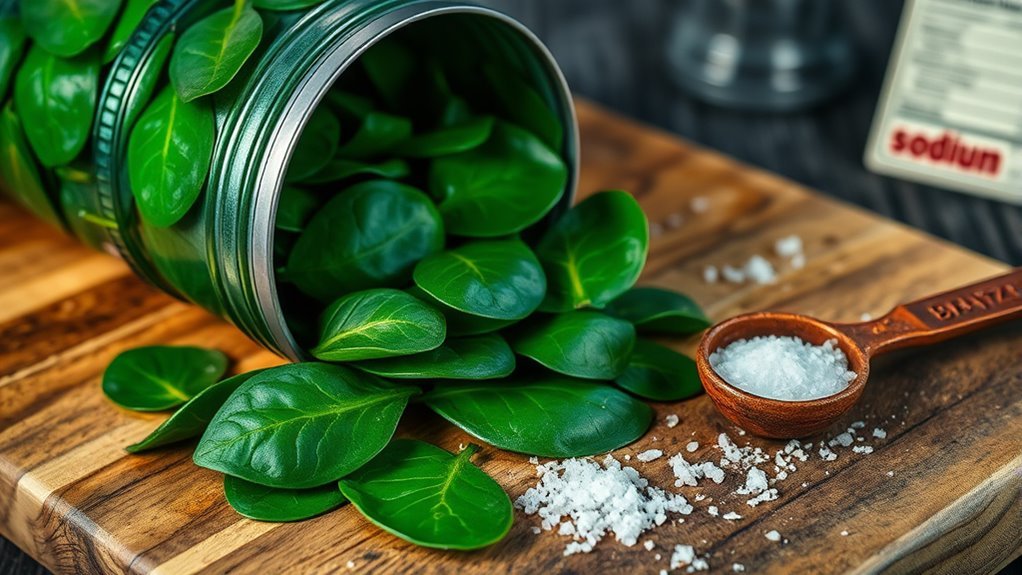
Understanding the ingredients in canned spinach gives you a clearer picture of what you’re actually consuming beyond the numbers on the nutrition label. Typically, canned spinach contains spinach, water, and sea salt. The sea salt boosts sodium levels, which can impact your blood pressure if you eat too much.
Knowing canned spinach ingredients reveals more than just nutrition facts, especially the impact of added sea salt.
To manage this, rinsing canned spinach under water for about 30 seconds can cut the sodium content by at least 30%. Water helps preserve the spinach and adds some calories, especially if the spinach is cooked inside the can.
Some brands might include preservatives or other additives, so it’s important to check the label carefully. By knowing exactly what’s in your canned spinach, you can make smarter choices about how much to use and prepare it in ways that fit your dietary needs.
This awareness helps you enjoy canned spinach without unintended nutritional surprises.
How Canning Changes Spinach’s Nutrition
When you go for canned spinach, just remember that the cooking process actually changes its nutrient levels. Some vitamins get preserved, but others, like vitamin C, take a hit and reduce. Also, keep an eye on the added sodium—it tends to go up during canning. Knowing these changes can help you make smarter choices about including canned spinach in your diet.
Nutrient Retention Differences
Although canning spinach involves heat processing that reduces some heat-sensitive vitamins like vitamin C, it helps preserve most minerals such as iron, calcium, and magnesium. These minerals remain stable during canning, so canned spinach still offers good nutritional value.
Interestingly, nutrients like lutein and beta-carotene become more bioavailable because the canning softens the plant’s cell walls. This makes it easier for your body to absorb them. However, water-soluble vitamins, particularly vitamin C and some B vitamins, degrade under the high heat used in canning.
Impact of Cooking Process
Canning spinach doesn’t just preserve nutrients, it also changes its texture and nutritional makeup through cooking and added salt. When you choose canned spinach, you’ll notice it’s softer and contains more water compared to fresh or frozen varieties.
The heating process during canning slightly reduces vitamin C but boosts the bioavailability of antioxidants like lutein and beta-carotene, making them easier for your body to absorb. While some water-soluble vitamins break down, most minerals, including iron and calcium, remain intact.
Keep in mind that the cooking involved in canned spinach increases calorie and sodium content slightly, but overall, it retains a nutrient profile comparable to fresh spinach. So, canned spinach offers a convenient option that balances preservation and nutritional value.
Sodium Content Considerations
How much sodium you consume from canned spinach depends largely on the added salt used during processing. The canning process itself doesn’t increase sodium, but manufacturers add salt to preserve freshness and flavor.
Some brands pack as much as 300mg of sodium per half-cup serving, which can add up quickly if you’re watching your salt intake. To manage sodium, you can rinse canned spinach under cold water for about 30 seconds; this simple step can reduce sodium content by at least 30%.
Another smart move is choosing low-sodium or no-salt-added versions, which offer the same convenience with less sodium. Being mindful of these options helps you enjoy canned spinach without consuming too much sodium.
Tips to Reduce Sodium and Improve Canned Spinach Taste
You can easily cut down the sodium in canned spinach by giving it a good rinse before you use it. Just rinse it thoroughly under cold water to wash away some of that extra salt.
Then, to make it taste better, try adding flavor boosters like garlic, fresh herbs, or a squeeze of lemon juice. These ingredients can really brighten up the flavor without needing to add any more salt.
Cooking the spinach with these additions not only enhances the taste but also helps improve the texture, making your canned spinach much more enjoyable to eat.
Rinsing Techniques For Sodium
Although canned spinach offers convenience, its sodium content can be surprisingly high, but rinsing it properly can help you cut that down considerably. Start by draining the spinach in a colander or fine mesh strainer to remove excess liquid. Then, rinse it under cold running water for about 30 seconds.
This simple rinsing step can reduce sodium by at least 30%, while also washing away the tinny flavor. For even better results, soak the spinach in water for a few minutes before rinsing. Afterward, always taste your spinach and adjust your recipe’s seasoning accordingly, since rinsing lowers salt levels.
Flavor Enhancers And Additions
Rinsing canned spinach reduces sodium considerably, but you can take flavor a step further by adding simple ingredients that boost taste without extra salt. Since canned spinach often lacks the fresh, vibrant taste of fresh spinach, try these easy additions to elevate your dish:
Toss in fresh herbs like dill or basil to brighten the flavor naturally. Sauté spinach with garlic and finish with a splash of lemon juice or vinegar to mask any tinny notes. Use salt substitutes or a pinch of pepper to enhance taste while keeping sodium low.
These tricks help you enjoy canned spinach’s convenience without sacrificing flavor or nutrition. Embracing these flavor enhancers makes your spinach dishes both healthier and more delicious.
Cooking Methods To Improve
When aiming to reduce sodium and boost the flavor of canned spinach, employing the right cooking techniques makes all the difference. Start the cooking process by rinsing the spinach under cold water for 30 seconds to cut sodium by at least 30%. Then, drain it thoroughly to remove excess liquid and any tinny taste.
During cooking, use minimal salt or opt for salt substitutes to keep sodium low. Sauté the spinach with garlic and olive oil to enhance its flavor and mask any metallic notes. Finally, add a splash of lemon juice or vinegar after cooking; the acidity brightens the taste and lessens saltiness perception.
When to Choose Canned Spinach vs. Fresh or Frozen Spinach
You’ll want to choose canned spinach if convenience and a long shelf life matter most, since it comes pre-cooked and stores for years with minimal prep. It’s perfect for quick, cooked recipes where you don’t need to worry about washing or chopping. However, fresh and frozen spinach have their strengths depending on your needs.
Consider these points when deciding between canned spinach, fresh, or frozen:
Consider these key differences when choosing canned, fresh, or frozen spinach for your recipes and nutrition needs.
- Canned spinach is best for ready-to-use, cooked dishes and long storage.
- Fresh spinach suits salads or recipes needing crisp texture and higher vitamin C.
- Frozen spinach offers a balance of nutrition and convenience, retaining more nutrients than canned.
Your choice depends on your recipe, storage options, and whether you prioritize nutrient retention or ease. By understanding these differences, you can pick the spinach type that fits your meal plan perfectly.
How to Store and Use Canned Spinach for Best Nutrition
Although canned spinach offers convenience, proper storage and preparation are key to preserving its nutrition and flavor. Store your canned spinach in a cool, dry place away from direct sunlight to keep it fresh and prevent spoilage.
After opening, transfer the spinach to a covered container and refrigerate it. Use it within 3 to 4 days to maintain its nutrients and taste.
Before cooking or adding canned spinach to recipes, rinse it thoroughly under cold water for at least 30 seconds. This helps reduce sodium content and removes any residual tin flavor. Be sure to drain excess liquid to improve texture and flavor.
For the best nutritional benefits, incorporate canned spinach into cooked dishes like sautés or soups, as heating enhances nutrient bioavailability. Following these tips will help you enjoy canned spinach at its healthiest and most flavorful.
Frequently Asked Questions
Can Canned Spinach Cause Allergic Reactions?
Yes, canned spinach can cause allergic reactions due to allergy risks from proteins or additives used in processing. If you’re sensitive, you might experience itching, swelling, or even difficulty breathing.
Since canned spinach sometimes contains preservatives, you should check ingredient labels carefully. If you’ve had allergies to related vegetables like beets or chard, be extra cautious. Always consult a healthcare professional if you notice any allergy symptoms after eating canned spinach.
Is Canned Spinach Safe for Pregnant Women?
Yes, canned spinach can be safe for you during pregnancy, especially if you rinse it for 30 seconds to cut sodium by at least 30%. Its pregnancy safety lies in providing essential nutrients like iron and folate, which support fetal development.
Just avoid varieties with added salt or preservatives. If you’ve had kidney stones, check with your doctor before eating large amounts because of its oxalate content.
How Does Canned Spinach Affect Digestion?
Canned spinach supports your digestion with its digestive benefits, mainly due to its high fiber content. The canning process breaks down cell walls, making fiber easier for your body to process. This helps promote regular bowel movements and prevents constipation.
However, if you eat too much, you might experience bloating or gas. To reduce salt while keeping fiber, rinse the spinach before eating. Overall, it’s a great choice for digestive health.
Can Canned Spinach Be Used in Baby Food?
Yes, you can use canned spinach in baby food, but you’ll want to rinse it well to reduce sodium for better baby nutrition. It’s a convenient option since it’s soft and easy to mash, making it great for homemade purees. Just choose low-sodium or no-salt-added varieties to keep sodium levels safe.
Canned spinach offers essential nutrients like iron and vitamins A and K, supporting your baby’s healthy growth and development.
What Environmental Impact Does Canned Spinach Production Have?
You might be surprised that canned spinach production contributes substantially to the environmental footprint, especially through energy-heavy processes like sterilization. The mining and processing of metals for cans also strain land and water resources.
Plus, the added salt can cause environmental issues via runoff. However, you can reduce this footprint by recycling cans and supporting producers who cut energy use during manufacturing, helping balance convenience with sustainability.
Conclusion
Understanding canned spinach nutrition helps you make smarter choices. It’s not just about convenience but about balance.
While canned spinach packs essential nutrients, it often carries extra sodium and calories. Reading labels, knowing ingredients, and using simple tips can turn it from just “okay” to a healthy hero in your kitchen.
So, whether you choose fresh, frozen, or canned, remember: it’s all about how you use it to fuel your body right.