
How to Make a Balanced Meal Plan in 5 Easy Steps
To make a balanced meal plan in five easy steps, start by setting clear goals and organizing your weekly schedule, including special events.
Next, take inventory of your current ingredients to avoid waste.
Then, choose simple, nutritious recipes with proteins, veggies, and whole grains.
Create a detailed grocery list, matching what you need with what you have.
Finally, shop smart and prep meals ahead to save time.
Keep going to discover tips that make the process even smoother.
Set Your Meal Planning Goals and Weekly Schedule
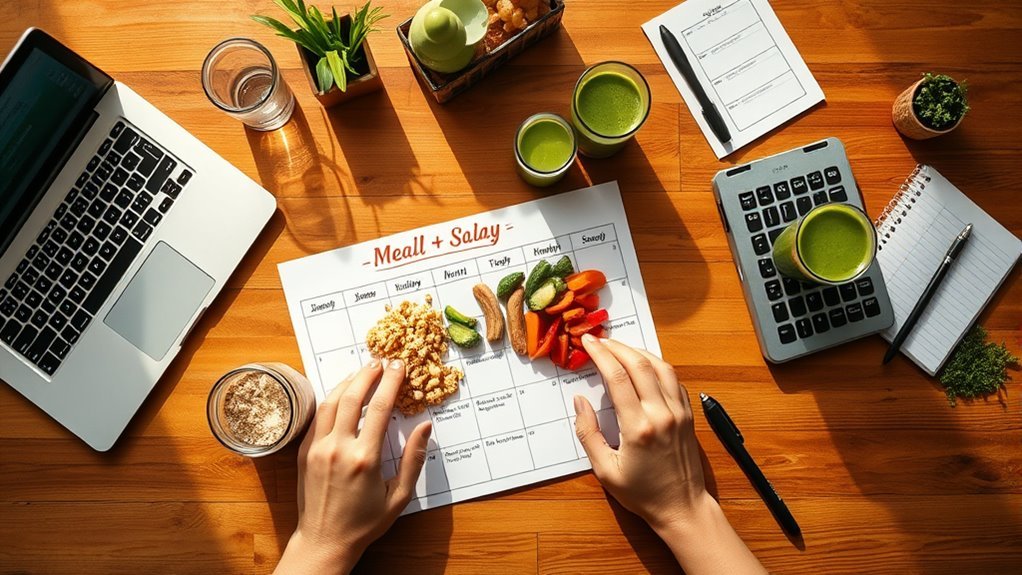
Before you immerse yourself in planning your meals, start by setting clear goals and organizing your weekly schedule. Decide whether your main goal for meal planning is improving nutrition, saving money, or cutting down cooking time. This clarity helps you stay focused and motivated.
Next, create a weekly schedule that reflects your family routines and busy days. Make sure to include special events or nights when you might want to eat out or cook something simple.
Involve everyone in your household to accommodate different dietary needs and preferences, ensuring your meal plan is balanced and enjoyable for all. Determine how many days you want to plan ahead and which days you’ll leave open for spontaneous meals.
Finally, set specific days for grocery shopping and meal prep to keep your routine consistent and efficient. This structured approach to meal planning and weekly scheduling will save you time, reduce stress, and make healthy eating easier.
Take Inventory of Ingredients You Already Have
While planning your meals, start by taking inventory of what you already have in your refrigerator, freezer, and pantry. This step helps you avoid buying unnecessary ingredients and reduces food waste.
Check for perishable items like fresh produce, dairy, and meats first so you can prioritize using them before they spoil. Organize your inventory by grouping similar ingredients together, such as canned goods, grains, and spices. This simplifies your meal planning process.
Make sure to record the quantities of staple ingredients to determine what you have enough of and what needs replenishing. Using your current ingredients as a foundation allows you to tailor your meal plan around what’s available, saving time and money.
Keeping an organized inventory not only streamlines meal planning but also helps maintain a well-stocked pantry and fridge. That way, you’re always ready to prepare balanced, nutritious meals.
Choose Simple, Balanced Recipes for Your Meal Plan
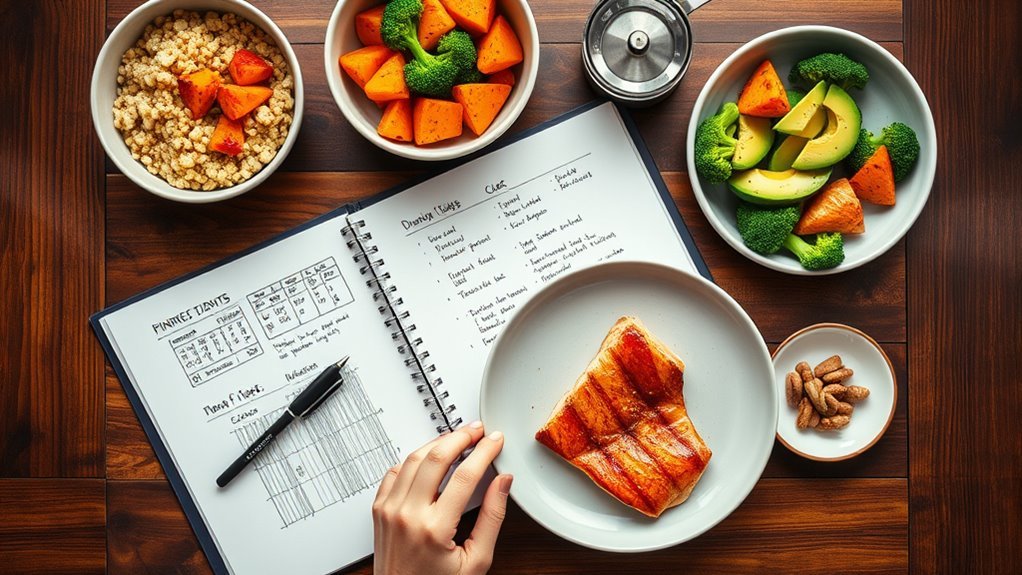
Since choosing recipes that are simple and balanced makes meal planning easier, focus on dishes that include all essential food groups like proteins, vegetables, grains, and healthy fats. Pick simple recipes that use healthy ingredients and minimal ingredients to keep preparation quick and manageable.
Quick-to-prepare meals like stir-fries, salads, or sheet pan dinners save time and reduce stress during busy days. Choose adaptable dishes so you can swap ingredients based on what you have in your pantry or your personal tastes. This flexibility helps you stay consistent without feeling restricted.
When you select straightforward recipes with clear instructions, meal planning becomes more efficient and enjoyable. Prioritizing balanced meals ensures you get the nutrition you need without complicated steps. By embracing these easy, adaptable, and nutrient-rich recipes, you’ll maintain a healthy eating routine that fits your lifestyle seamlessly.
Create a Grocery List for Your Meal Plan
How do you guarantee you have everything you need for your meals without making extra trips to the store? Start by reviewing your meal plan and listing all the ingredients required for each recipe. This helps you create an all-encompassing grocery list that covers every dish.
Next, check your pantry, refrigerator, and freezer to see what you already have. This prevents buying duplicates and saves money. Organize your shopping list by grocery store sections like produce, dairy, grains, and meats.
Doing this streamlines your trip and helps you avoid forgetting anything. Be sure to include specific quantities for each ingredient so you buy just the right amount. Also, prioritize seasonal produce and items on sale to get the freshest ingredients without overspending.
Shop for Ingredients and Prep Meals for the Week
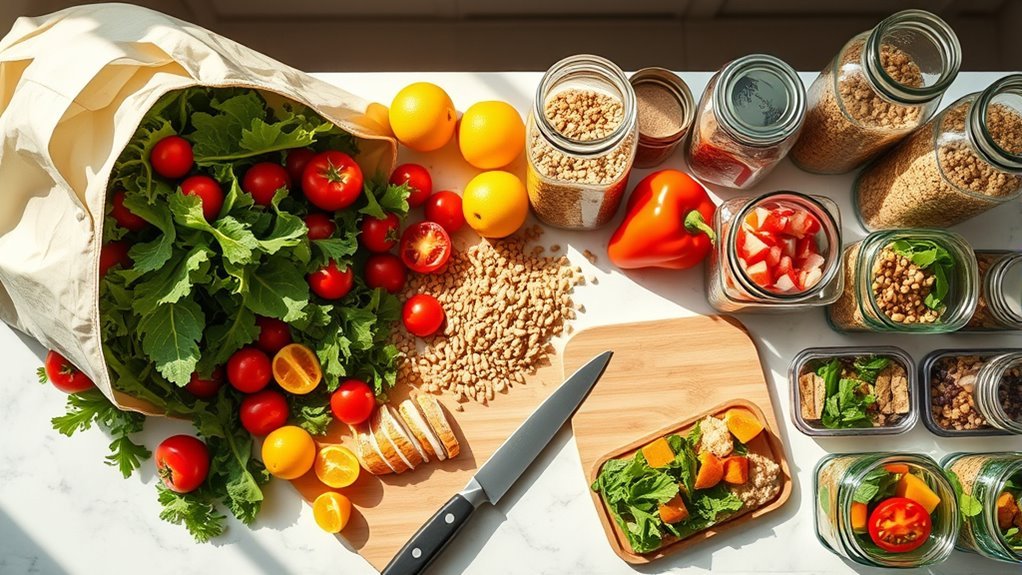
With your grocery list in hand, it’s time to head to the store and gather all the ingredients you need. Effective meal planning means focusing on fresh produce, lean proteins, whole grains, and healthy fats. Prioritize seasonal and sale items to save money while ensuring quality. Use an organized shopping approach by navigating the store in sections to save time and reduce stress.
Head to the store with your list, prioritizing fresh, seasonal, and quality ingredients while shopping smartly by sections.
Once home, begin meal prep by washing, chopping, and portioning ingredients. Store them in airtight storage containers for quick access. Cooking and storing meal components separately helps keep your meals fresh and flexible throughout the week. Label containers with dates to track freshness.
Here’s a quick guide to streamline your grocery shopping and meal prep:
- Shop for fresh produce and quality ingredients based on your meal plan.
- Organize your grocery trip by store sections.
- Prep ingredients in advance and portion into storage containers.
- Cook, store, and label meal components to maintain freshness.
Frequently Asked Questions
How Do I Adjust Meal Plans for Specific Dietary Restrictions?
You adjust meal plans for specific dietary restrictions by swapping ingredients with gluten free options, vegan substitutions, or low carb alternatives depending on needs. For dairy free adjustments, use plant-based milks or cheeses.
Nut free recipes avoid all nuts and seeds, while paleo modifications focus on whole, unprocessed foods. Keto friendly choices emphasize healthy fats and limit carbs. Always read labels carefully and tweak recipes to keep flavor and nutrition intact.
What Are the Best Protein Sources for a Balanced Diet?
Picture your plate as a colorful puzzle where protein pieces fit perfectly from various sources. You’ll want to include lean meats and poultry selections for muscle-building power.
Don’t forget seafood choices like salmon for omega-3s. Plant-based proteins and legume varieties offer fiber and essential nutrients, while dairy options provide calcium and complete proteins.
Vegetarian sources like tofu and eggs round out your balanced diet, ensuring you get all crucial amino acids every day.
How Can I Incorporate More Vegetables Into Meals Easily?
You can easily incorporate more vegetables by focusing on simple vegetable prep like washing and chopping in advance. Use cooking methods like roasting or steaming to enhance natural flavors.
Try seasonal choices for freshness and variety. Sneak hidden veggies into sauces or smoothies for extra nutrients. Keep veggie snacks handy for quick bites.
Explore quick recipes that highlight veggies, and experiment with flavor enhancements like herbs or spices to make veggies more appealing every day.
What Are Tips for Storing Prepped Meals Safely?
Did you know 48 million people get sick from foodborne illnesses each year? For food safety, use airtight meal prep containers to prevent contamination and moisture.
Follow refrigeration tips by keeping cooked foods at 40°F or below and monitor temperatures regularly. Practice portion control by freezing leftovers in single servings and label containers with prep dates.
Respect storage durations: 3-4 days refrigerated, 2-3 months frozen to keep your meals safe and fresh.
How Often Should I Reassess and Update My Meal Plan?
You should reassess and update your meal plan every 1 to 3 months to keep meal frequency balanced and maintain dietary flexibility. Regular updates help improve meal variety, adjust portion control, and incorporate seasonal adjustments for fresher ingredients.
Don’t forget to refine snack planning and flavor enhancement to keep meals exciting. If your lifestyle or health changes, do it sooner to stay on track and enjoy meals that suit your needs perfectly.
Conclusion
By following these five simple steps, you’ll turn meal planning from a chore into a breeze. Imagine the time you’ll save and the stress you’ll dodge when your meals are balanced and ready to go.
Don’t wait for the perfect moment. Start now and watch how effortless healthy eating becomes. After all, a well-planned meal is the secret ingredient to a happier, healthier you.
Ready to take the first bite?