
How to Find Nutrition Facts for Restaurants Step by Step
To find nutrition facts for restaurants, start by checking if the restaurant has 20 or more U.S. locations, as they’re required to display calorie info.
Next, gather ingredient lists and portion sizes. Use FDA guidelines to determine serving sizes.
Input this data into nutrition analysis tools for accurate results.
If info isn’t available, politely ask staff or check online resources.
Keep copies of any info provided.
Continue exploring to understand how to guarantee accuracy and compliance with these details.
Why Nutrition Facts Matter for Restaurants and Customers

Although dining out offers convenience and variety, knowing the nutrition facts behind your meal can make a big difference. When you check the nutrition facts on a restaurant’s menu, you gain important insight into what you’re eating.
Since over one-third of Americans’ calories come from foods prepared away from home, these meals often contain higher fat, sodium, and calorie content than you might expect. Access to nutrition facts helps you make informed choices, encouraging healthier eating habits and supporting weight management.
Menus that include calorie labeling have been shown to reduce calorie consumption per meal, helping you stay on track with your health goals. Plus, transparency in nutrition facts builds trust between you and the restaurant, showing they care about your well-being.
Identify Restaurants Required to Provide Nutrition Facts
Knowing why nutrition facts matter is only part of the picture. You also need to understand which restaurants must provide this information. Restaurants with 20 or more U.S. locations are required by law to display calorie information on menus and menu boards.
These large chains, including fast-food and sit-down spots, must offer written nutrition details upon request for their standard menu items. This guarantees compliant nutrition information is readily accessible to customers.
Large chains must provide written nutrition details on request, ensuring accessible and compliant information for customers.
On the other hand, smaller, independent restaurants aren’t legally bound to disclose nutrition facts but can choose to do so voluntarily. It’s also important to note that restaurants participating in the USDA’s National School Lunch Program are exempt from these labeling rules.
When you look for nutrition facts, focus on menus and menu boards from these larger chains. They’re the ones mandated to provide accurate, compliant nutrition data, making it easier for you to make informed choices.
Gather Ingredient Lists and Portion Sizes for Menu Items

To accurately determine nutrition facts, you’ll need to gather detailed ingredient lists and portion sizes for each menu item. Start by collecting ingredient lists that include every component and preparation method. Make sure to verify any variations in quantities or techniques that could impact nutritional content.
Keep ingredient lists current by checking for recent recipe changes or seasonal updates. Alongside this, record the standard portion sizes the restaurant uses, whether in grams, ounces, or specific serving counts. Accurate portion sizes are essential because they directly affect the calculation of calories and nutrients.
Also, pay attention to common allergens and dietary considerations found in the ingredient lists, as these details support a more precise nutrition analysis. By thoroughly compiling ingredient lists and portion sizes, you’ll create a solid foundation for finding reliable nutrition facts that truly reflect each menu item’s content. This step ensures your nutrition information remains accurate and helpful for consumers.
Determine Serving Sizes According to FDA Guidelines
When you determine serving sizes for restaurant menu items, you’ll want to follow the FDA’s Reference Amounts Customarily Consumed (RACC) guidelines. These guidelines provide standard serving sizes based on typical household measures for various food categories. This helps you align your portions with what people usually eat.
Your serving size should be rounded to practical measures like cups, tablespoons, or grams to reflect common portion sizes accurately.
Using FDA guidelines guarantees your serving sizes are consistent and compliant with regulations, which is vital for proper nutrition labeling. For packaged foods, the serving size often comes from dividing the net contents by the number of servings.
How to Use Nutrition Tools to Calculate Nutrient Content
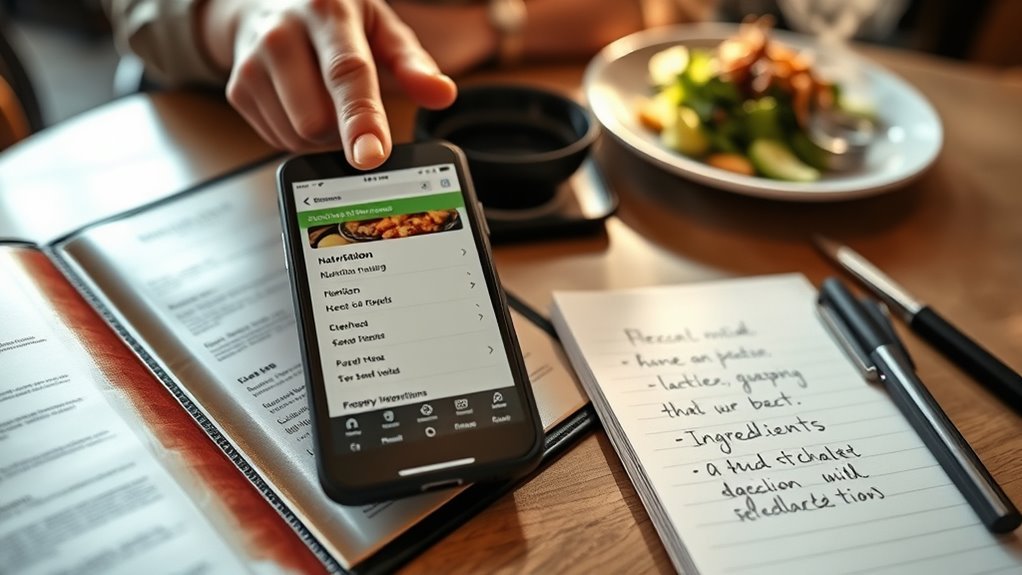
After setting accurate serving sizes, you can use nutrition tools to calculate the nutrient content of your menu items. These tools simplify nutrition analysis by providing detailed nutrient profiles, including calories, fats, proteins, vitamins, and minerals.
To get precise results, follow these key steps:
Use online restaurant nutrition calculators or verified databases to input your menu items. Utilize recipe analysis tools to enter ingredients and quantities for custom or homemade dishes.
Measure or estimate portions carefully to match typical serving sizes. Cross-reference nutrition data from restaurant websites or labels to ensure correctness.
Apply dietary flags and allergen detection features to identify potential dietary restrictions.
Compile Data Into a Compliant Nutrition Facts Panel
Although gathering accurate nutrition data is essential, your next step is to compile this information into a compliant Nutrition Facts panel. Start by using the FDA’s Reference Amounts Customarily Consumed (RACC) to determine the proper serving size, guaranteeing it matches your product’s package details.
Begin by using the FDA’s RACC to set serving sizes that align with your product packaging.
Then calculate the nutrient content per serving, covering calories, macronutrients, vitamins, and minerals, based on your collected nutrition data from recipes, lab tests, or reliable food databases.
Choose the appropriate label format: standard, tabular, or linear, depending on your packaging space and regulatory requirements. Make certain your Nutrition Facts panel clearly presents all required elements, including serving size and nutrient amounts in the correct layout.
This careful compilation guarantees your label complies with FDA standards and provides consumers with accurate, easy-to-read nutrition information. By following these steps, you’ll create a precise and compliant Nutrition Facts panel that meets all regulatory demands.
Verify Accuracy and Compliance of Nutrition Information
To guarantee your nutrition information meets regulatory standards, you must verify its accuracy and compliance thoroughly. This verification process ensures that the nutrition facts you provide are both reliable and meet legal requirements. It protects your credibility and customers.
Focus on these key steps for effective verification and compliance:
- Cross-reference nutrition data with verified sources or directly with the restaurant.
- Confirm that calorie counts and nutrients follow rounding guidelines set by regulators.
- Regularly update facts to reflect any recipe or portion size changes.
- Use standardized laboratory testing when precise nutrient data is necessary.
- Assure all nutrition info aligns with FDA or relevant regulatory standards.
Explore Online Resources and Apps for Restaurant Nutrition Facts
Ensuring nutrition information is accurate is just one part of managing your dietary choices when eating out. To make this easier, you can explore online resources and apps designed to provide detailed nutrition information for many restaurant chains.
Many restaurants post their nutrition facts on their websites or digital menus, but apps like MyMenu Concierge compile verified data from multiple sources. This helps you filter options based on your dietary preferences.
These online resources often let you customize meals and see real-time updates on calories and nutrients, making healthier ordering simpler. While some databases gather information from various places, it’s best to rely on verified sources to ensure accuracy.
How to Request Nutrition Information When It’s Not Publicly Available
When nutrition facts aren’t publicly available, you can still get the information you need by directly asking the restaurant. Many smaller or independent restaurants aren’t required to display nutrition facts, so making a request is your best option. You can ask staff or managers for written nutrition information, which they might provide if you explain your dietary needs.
Here’s how to approach it effectively:
- Call ahead or visit the restaurant’s website to see if info is available.
- Politely request written nutrition information in person or by phone.
- Explain why the information is important to you, like allergies or health goals.
- Use restaurant-specific apps or verified databases as backups.
- Be patient and respectful; your request may encourage them to share more details.
Frequently Asked Questions
How Often Should Restaurants Update Their Nutrition Facts Information?
You should update your nutrition facts information at least once a year or whenever you change recipes, ingredients, or portion sizes. Regular updates help with accurate calorie tracking and menu customization, ensuring your customers get the right information.
If you offer frequent menu changes or customization options, consider updating even more often, like quarterly, to stay compliant and build trust. Staying current prevents errors and supports your customers’ dietary needs effectively.
Can Nutrition Facts Vary Between Different Locations of the Same Restaurant?
Yes, nutrition facts can vary between locations of the same restaurant. In fact, up to 20% of menu items can differ nutritionally due to menu customization and ingredient sourcing.
When one location swaps suppliers or adjusts recipes for local tastes, calorie and nutrient counts shift. You should always check the specific nutrition info for your location since even slight changes in preparation or ingredients can impact your meal’s nutritional profile considerably.
Are Homemade or Seasonal Menu Items Required to Have Nutrition Facts?
No, seasonal menu items and homemade dishes usually aren’t required to have nutrition facts. If you’re ordering from a large chain with 20 or more locations, they must display calories for their standard menu, but this often excludes seasonal or homemade specials.
Smaller or independent restaurants don’t have to provide this info unless local laws say otherwise. So, don’t expect nutrition details for every homemade or seasonal dish you try.
How Do Allergens Factor Into Nutrition Fact Labeling for Restaurants?
Did you know that 32 million Americans have food allergies? Allergen transparency is essential when you check nutrition facts at restaurants. Labels must be accurate to help you avoid life-threatening reactions.
Chain restaurants with 20 or more locations are required to disclose major allergens clearly, ensuring label accuracy. Smaller spots might not, so you should always ask.
This way, you can confidently manage your dietary needs without risking your health.
What Penalties Do Restaurants Face for Inaccurate Nutrition Labeling?
If you provide inaccurate nutrition labeling, you risk serious penalties that impact your restaurant’s reputation and operations. Regulatory agencies enforce menu transparency and demand label accuracy, so you could face fines, warnings, or even product recalls.
Persistent violations might lead to lawsuits or loss of your business license. To avoid these consequences, you must guarantee your nutrition facts are accurate and transparent, protecting both your customers and your restaurant legally.
Conclusion
So, now you’re basically a nutrition detective, armed with ingredient lists and FDA guidelines, ready to uncover what’s really in that “healthy” salad. Sure, it might feel like decoding ancient hieroglyphics, but hey, knowing what you’re eating beats blindly trusting a fancy menu description.
Just remember: if the info’s nowhere to be found, don’t hesitate to ask because who doesn’t love playing 20 Questions with their burger? Your body (and sanity) will thank you!