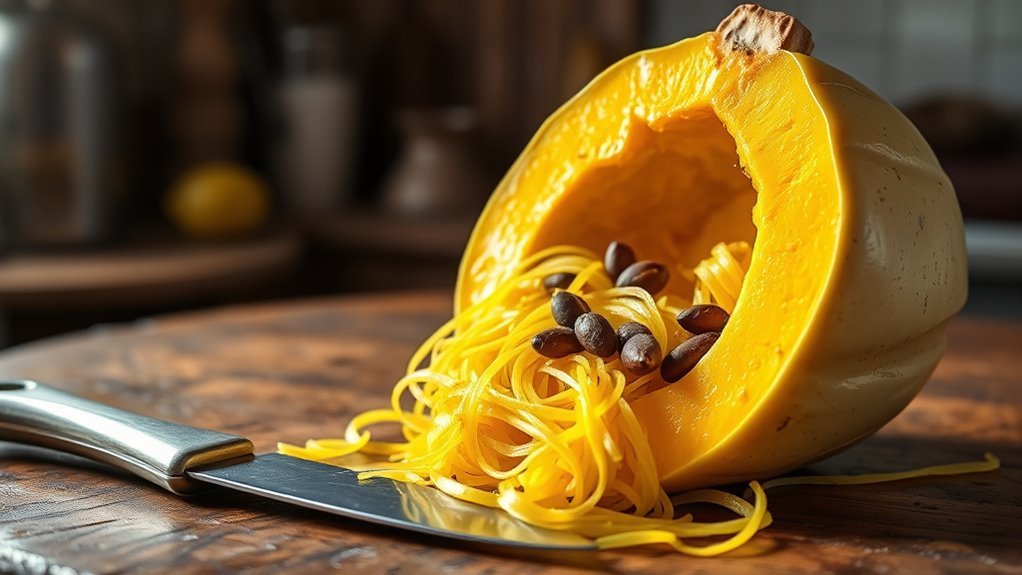
Understanding the Nutritional Value of Spaghetti Squash
You’ll find spaghetti squash is a low-calorie, nutrient-rich alternative to pasta, offering about 42 calories and 10 grams of carbs per cup. It’s packed with fiber that supports digestion and helps you feel full longer.
Plus, it provides essential vitamins like A, C, and B6, along with antioxidants that protect your cells and promote immune health.
Its unique texture adds versatility to meals.
Keep exploring to uncover how it benefits your overall health and diet.
What Makes Spaghetti Squash Unique Among Winter Squashes
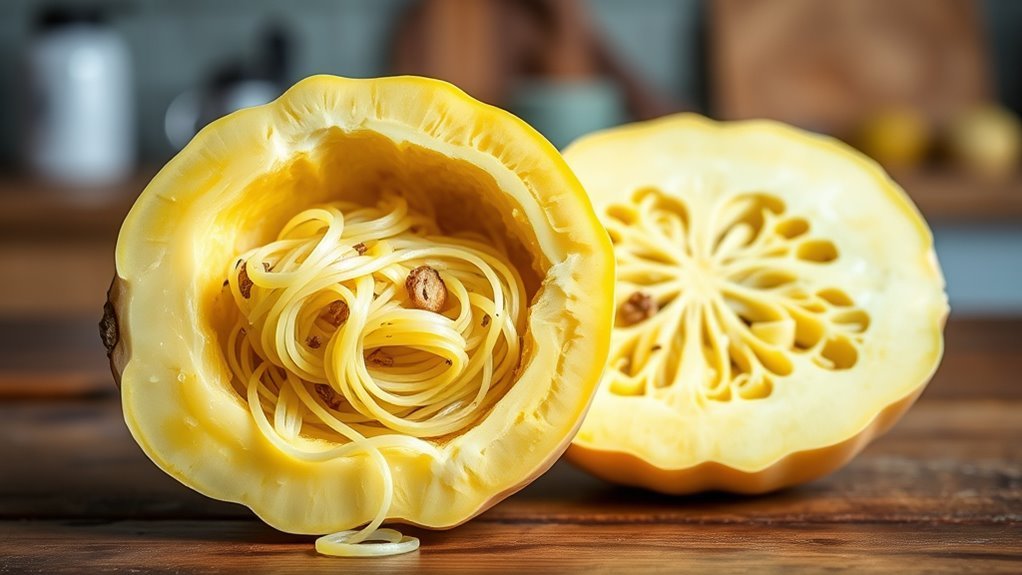
While many winter squashes share similar textures and flavors, spaghetti squash stands out because its flesh naturally separates into spaghetti-like strands when cooked. This unique characteristic makes spaghetti squash a versatile, low-calorie substitute for pasta and rice, perfect if you’re looking to lighten up your meals.
Compared to other winter squashes, spaghetti squash offers notable nutritional value, especially with its higher dietary fiber content that supports your digestive health. Its bright yellow flesh signals abundant beta-carotene, an antioxidant that helps protect your cells.
You’ll also notice the hard, thick rind of spaghetti squash, which isn’t common among summer squash varieties, giving it a longer shelf life so you can store it with ease. When you choose spaghetti squash, you’re picking a winter squash that not only tastes mild and adaptable but also provides specific health benefits and practical advantages that set it apart from the rest.
Essential Vitamins and Minerals in Spaghetti Squash
Spaghetti squash doesn’t just impress with its unique texture and fiber content; it also delivers a variety of important vitamins and minerals that support your overall health. Each cup provides about 6% of your daily vitamin C needs, which acts as a powerful antioxidant and strengthens your immune system.
You’ll also get roughly 8% of the daily value for vitamin B6, essential for brain development and proper function. Beyond vitamins, spaghetti squash offers several crucial minerals. It supplies manganese, covering around 7% of your daily requirement, and includes potassium, magnesium, calcium, and iron in smaller but meaningful amounts.
These minerals help maintain bone health, support muscle function, and regulate blood pressure. Furthermore, its vitamin A content, particularly beta carotene, safeguards your cells and promotes healthy vision and skin. By including spaghetti squash in your diet, you’re adding a nutritious boost of essential vitamins and minerals that contribute to your overall well-being.
How Spaghetti Squash Supports Weight Management
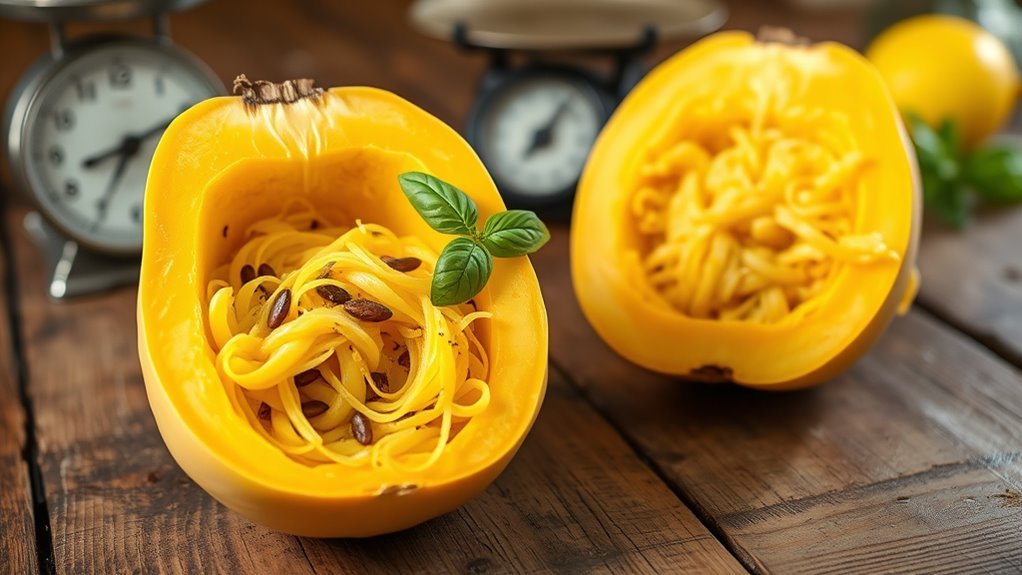
Because it’s low in calories and rich in fiber, spaghetti squash makes an excellent choice if you want to manage your weight effectively. With only about 42 calories per cup, you can enjoy generous portions without worrying about excess calorie intake. The fiber content, about 2.2 grams per serving, helps you feel full longer, so you’re less likely to snack between meals or overeat at dinner.
Swapping traditional high-calorie pasta with spaghetti squash can notably cut your daily calorie consumption, supporting your weight management goals. Its naturally low carbohydrate content aligns well with low-carb diets, which many find effective for controlling appetite and shedding pounds. The fiber also helps stabilize blood sugar levels, preventing hunger spikes that can sabotage your efforts.
Incorporating spaghetti squash into your meals offers a satisfying, low-calorie option that keeps you full and supports your weight management journey without sacrificing taste.
Fiber in Spaghetti Squash and Digestive Health
You’ll find that spaghetti squash packs over 2 grams of fiber per serving, which actually supports your digestion better than traditional pasta. This fiber is great because it helps keep your bowel movements regular. Plus, it feeds the good bacteria in your gut. So, including spaghetti squash in your meals can really give your overall digestive health a boost and improve how your body absorbs nutrients.
Fiber Content Overview
While many traditional pasta options fall short in fiber content, one cup of cooked spaghetti squash delivers about 2.2 grams of dietary fiber, giving you a nutritious boost. This fiber amount supports your gut health by adding bulk to your stool and encouraging regular bowel movements.
Including spaghetti squash in your diet helps foster a healthy balance of gut bacteria, which is essential for maintaining overall digestive wellness. The dietary fiber it provides also aids in stabilizing blood sugar and can promote feelings of fullness, helping you manage your weight.
Benefits For Digestion
How does spaghetti squash support your digestive health? Its high fiber content, over 2 grams per serving, plays a key role. Fiber adds bulk to your stool, which helps prevent constipation and eases symptoms like hemorrhoids.
By promoting regular bowel movements, spaghetti squash keeps your digestive system running smoothly. Including this vegetable in your meals helps meet daily fiber recommendations, supporting long-term digestive health.
Additionally, fiber supports colon health and can reduce the risk of conditions such as diverticulitis. Beyond digestion, the fiber in spaghetti squash also helps stabilize blood sugar levels, benefiting those with insulin sensitivity.
Supporting Gut Health
Why does fiber matter so much for your gut health? Fiber in spaghetti squash plays a vital role in supporting digestive health by adding bulk to your stool, which promotes regular bowel movements. This helps prevent constipation and eases symptoms of digestive issues like diverticulitis and hemorrhoids. Plus, the fiber feeds beneficial gut bacteria, enhancing overall gut health.
Including spaghetti squash in your diet can help you meet your daily fiber needs, which range from 21 to 38 grams. Here’s how it supports your gut:
- Adds bulk to stool for smoother digestion
- Prevents constipation naturally
- Reduces risk of digestive disorders
- Encourages growth of beneficial gut bacteria
- Supports consistent, healthy bowel function
Eating spaghetti squash is a simple way to boost your fiber intake and maintain a healthy digestive system.
Antioxidants in Spaghetti Squash and Their Benefits
You’ll find plenty of beta-carotene in spaghetti squash. This nutrient helps protect your cells and might even lower your risk of chronic diseases. Then there’s vitamin C, which is another key antioxidant. It supports your immune system and helps reduce oxidative stress. When you combine these antioxidants, they give your body some powerful tools to fight off cellular damage and keep you feeling healthy.
Beta Carotene Benefits
Although often overlooked, beta carotene in spaghetti squash offers significant health benefits that you shouldn’t miss. This powerful antioxidant not only gives the squash its vibrant yellow color but also plays a crucial role in protecting your cells from oxidative damage.
When you consume beta carotene, your body converts it into vitamin A, which is essential for maintaining healthy vision and a strong immune system. Including spaghetti squash in your diet regularly can improve your overall cellular health.
Here’s why beta carotene matters:
- Acts as a potent antioxidant to combat free radicals
- Supports healthy skin and may slow aging signs
- Helps reduce the risk of chronic diseases like cancer and heart disease
- Converts to vitamin A for vision and immune health
- Contributes to maintaining overall cellular health and disease prevention
Vitamin C Antioxidant Role
Because spaghetti squash contains vitamin C, it offers powerful antioxidant benefits that help protect your cells from damage caused by free radicals. This antioxidant role supports your body by reducing inflammation and lowering the risk of chronic diseases like heart disease and cancer.
The vitamin C in spaghetti squash also boosts your immune system, helping you fight off infections more effectively. Furthermore, vitamin C is essential for collagen synthesis, which promotes healthy skin, gums, and connective tissues.
Comparing Spaghetti Squash Carbs and Calories to Pasta
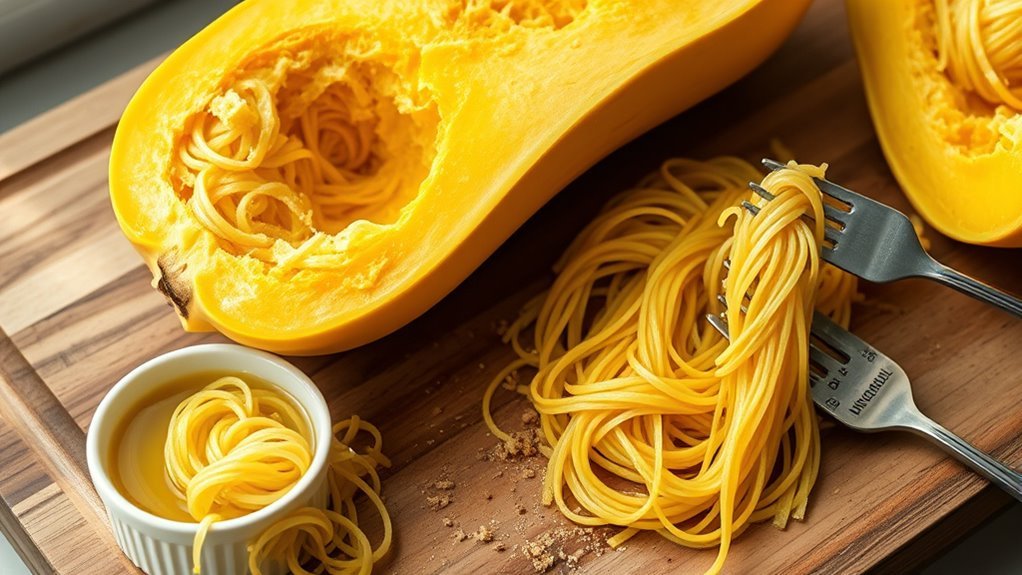
When you compare spaghetti squash to traditional pasta, the difference in calories and carbohydrates is striking. Spaghetti squash is a fantastic low-carb alternative that helps you cut down on calories without compromising portion size.
One cup of cooked spaghetti squash contains just 42 calories and 10 grams of carbohydrates, while pasta typically has about 200 calories and 40 grams of carbs per cup. This makes spaghetti squash especially appealing if you’re watching your carb intake or aiming for weight management.
Consider these key points:
- Spaghetti squash has roughly 80% fewer carbohydrates than pasta
- It contains markedly fewer calories per serving
- You get a noodle-like volume with far fewer calories
- Pasta provides more protein, but spaghetti squash suits low-carb diets better
- Choosing spaghetti squash supports calorie control and carb reduction effortlessly
Switching to spaghetti squash lets you enjoy big, satisfying meals with fewer carbs and calories.
Selecting and Storing Spaghetti Squash for Best Nutrition
To make the most of spaghetti squash’s nutritional benefits, you need to start with the right selection and proper storage. When choosing your winter squash, pick one that feels heavy for its size and has a deep yellow, smooth, and hard rind. Avoid any squash with bruises, soft spots, or black, shriveled stems, as these signs indicate poor quality or spoilage.
For storage, keep uncut spaghetti squash in a cool, dry place between 55-60°F. This environment can help your squash stay fresh for up to three months, preserving its nutrients and flavor. Once you’ve cut or cooked the squash, store it in an airtight container in the refrigerator and consume it within 3-5 days.
Proper selection and storage are key to maintaining the texture and nutritional value of your spaghetti squash, ensuring you enjoy it at its best every time.
Easy Ways to Cook and Preserve Nutrients in Spaghetti Squash
If you want to keep most of the nutrients in your spaghetti squash, roasting it at 400°F for about 40 to 50 minutes is a great way to go. Another quick method is steaming it, which helps minimize nutrient loss. Once it’s cooked, let the squash cool down before shredding—that way, you protect its antioxidants. And don’t forget, storing any leftovers in airtight containers will keep them fresh for longer. Following these simple steps means you’ll get to enjoy the best flavor and nutrition from your squash every time.
Roasting Techniques
Although roasting spaghetti squash requires a bit of patience, it’s one of the best ways to preserve its nutrients while enhancing its natural sweetness. Roasting at 400°F for 40-50 minutes locks in vitamins and develops a rich, caramelized flavor.
To get perfect results, try these tips:
- Cut the squash in half and roast with the cut side down for even cooking.
- Use minimal oil or seasoning to keep natural antioxidants intact.
- Rest the squash a few minutes after roasting to distribute heat evenly.
- Avoid boiling or steaming to prevent nutrient loss.
- Monitor cooking time carefully to avoid overcooking, which can degrade nutrients.
Steaming Benefits
How can you cook spaghetti squash to retain most of its nutrients while keeping its delicate texture? Steaming is an excellent method. By placing the squash in a steamer basket over boiling water, you cook it gently without direct water contact, preserving vitamins like C and B6. This approach reduces nutrient leaching compared to boiling or roasting.
Steaming also helps maintain the squash’s natural flavor and tender strands, making it perfect for various dishes. Because it uses less water and lower temperatures, it minimizes the loss of antioxidants such as beta carotene, enhancing the vegetable’s health benefits.
Typically, steaming takes 20-30 minutes depending on size, offering you an efficient, nutrient-preserving way to enjoy spaghetti squash.
Storage Tips
Where should you store spaghetti squash to keep it fresh and nutritious for as long as possible? Store raw squash in a cool, dry, and well-ventilated space between 55-60°F to maintain freshness for up to three months. Avoid refrigeration before cooking, as it speeds up spoilage.
After cooking, refrigerate the squash in an airtight container and eat within 3-5 days to preserve nutrients. Use gentle cooking methods like baking or microwaving to keep vitamins and antioxidants intact.
Here are some key storage tips:
- Keep raw squash in a cool, ventilated area, not the fridge
- Store cooked squash in airtight containers in the refrigerator
- Avoid refrigerating raw squash before cooking
- Poke holes before baking to prevent moisture loss
- Use slow cookers or microwaves for nutrient preservation
These practices help your spaghetti squash stay fresh and nutritious longer.
Creative Recipes and Meal Ideas With Spaghetti Squash
When you want a nutritious twist on classic pasta dishes, spaghetti squash offers a low-carb, flavorful alternative that can easily absorb marinara, curry, or ragu sauces. You can create healthy recipes by pairing spaghetti squash with vegetables, lean proteins, and healthy fats for balanced meals.
Try stuffing the squash with a mix of sautéed veggies and lean meat, or make crispy squash fritters for a satisfying snack. Roasted spaghetti squash strands work great in casseroles, hash browns, or stir-fries, adding a nutritious vegetable boost.
To enhance flavor without sacrificing health benefits, top your dish with lemon garlic cream or tomato-based sauces. Using spaghetti squash as your meal base supports weight management and digestive health, thanks to its high fiber and antioxidants.
Allergy Risks and Precautions With Spaghetti Squash
Although spaghetti squash is generally safe for most people, those with pumpkin allergies should exercise caution because of possible cross-reactivity. You might experience allergic reactions such as hives, swelling, or digestive issues if you’re sensitive. Since spaghetti squash contains compounds that could trigger food allergies, it’s wise to test for allergies before making it a regular part of your diet.
Here are key precautions to keep in mind:
- Consult an allergist if you have known food allergies
- Watch for symptoms like itching or skin irritation
- Be aware that severe reactions like anaphylaxis, though rare, can occur
- Handle and prepare spaghetti squash carefully to avoid cross-contamination
- Introduce it slowly to monitor any adverse responses
Pairing Spaghetti Squash With Other Healthy Foods
To maximize the health benefits of spaghetti squash, you’ll want to pair it with nutrient-dense foods that complement its mild flavor and texture. Combining spaghetti squash with lean proteins like chicken or turkey creates a balanced, low-calorie meal rich in essential amino acids.
Adding fiber-rich vegetables such as spinach or broccoli boosts overall fiber content, supporting digestion. Drizzling it with healthy fats like olive oil or avocado helps your body absorb fat-soluble vitamins A and K more efficiently.
You can also incorporate whole grains like quinoa or brown rice to add complex carbohydrates and extra fiber for sustained energy. Using tomato-based sauces or pesto not only enhances flavor but also provides antioxidants like lycopene and heart-healthy monounsaturated fats.
Nutrients in Spaghetti Squash That Support Dental and Immune Health
Pairing spaghetti squash with nutrient-rich foods enhances its benefits, but the squash itself offers valuable nutrients that support your dental and immune health. It’s rich in vitamins and antioxidants that play a vital role in maintaining strong gums and a resilient immune system. Here’s how it helps:
Vitamins A and C maintain healthy gums and oral tissues, keeping your mouth in top shape. Vitamin C boosts collagen production, strengthening gums and lowering gum disease risk.
High vitamin A content supports salivary gland health, preventing dryness and brittleness. Antioxidants combat oxidative stress and inflammation, protecting your oral health.
Its low-calorie, nutrient-dense profile makes it a tooth-friendly alternative to sugary snacks, reducing tooth decay risk.
Frequently Asked Questions
Can Spaghetti Squash Be Grown at Home Easily?
Yes, you can easily grow spaghetti squash at home if you follow some growing tips. Plant seeds after the last frost when the soil warms to 70°F or higher. Keep the soil well-drained and water regularly.
Watch for pests and manage them quickly to protect your plants. Harvest timing is key. Pick the squash when its skin turns deep yellow or orange and detaches easily from the vine for the best results.
How Long Does Spaghetti Squash Typically Last After Cooking?
Think of cooked spaghetti squash as a delicate treasure map. Its shelf life usually lasts 3 to 5 days in your fridge. To keep your treasure from spoiling, store it in an airtight container and enjoy it within three days for peak freshness preservation.
If you want to keep it longer, freeze it, extending storage life up to a year. Always check for off smells or mold before digging in to protect your culinary bounty.
Is Spaghetti Squash Safe for Pets to Eat?
Yes, spaghetti squash is safe for pets to eat when you focus on pet safety and dietary considerations. It’s non-toxic and can be a healthy, low-calorie treat. Just remove the seeds and tough skin to avoid choking hazards.
Always introduce it gradually and watch for any allergic reactions or digestive upset. If you’re unsure, consult your vet to address any toxicity concerns or underlying health issues before adding it to your pet’s diet.
What Is the Environmental Impact of Spaghetti Squash Farming?
You’ll find spaghetti squash farming has a low environmental impact because it relies on sustainable farming methods that reduce pesticide use and promote water conservation. Growing it requires less water and energy compared to many other crops, and its long shelf life helps cut down on food waste during storage and transport.
Plus, practices like crop rotation help maintain soil health, making spaghetti squash a smart, eco-friendly choice for your diet.
Can Spaghetti Squash Be Used in Desserts?
Yes, you can definitely use spaghetti squash in dessert recipes. Its sweet flavor makes it a great sugar substitute, especially in puddings, pies, and custards. When cooked and pureed, it adds natural sweetness and moisture without extra calories.
You’ll love how it blends smoothly with spices like cinnamon and nutmeg, enhancing your treats while keeping them healthier. It’s a clever way to enjoy desserts with added fiber and nutrients!
Conclusion
Spaghetti squash isn’t just a tasty alternative; it’s a nutritional powerhouse that supports your health in more ways than one. With its rich vitamins, fiber, and antioxidants, it fuels your body while aiding digestion and immunity.
So, why settle for ordinary when you can savor the extraordinary? Embrace spaghetti squash in your meals, and watch how this humble squash transforms your wellness journey, one delicious bite at a time.