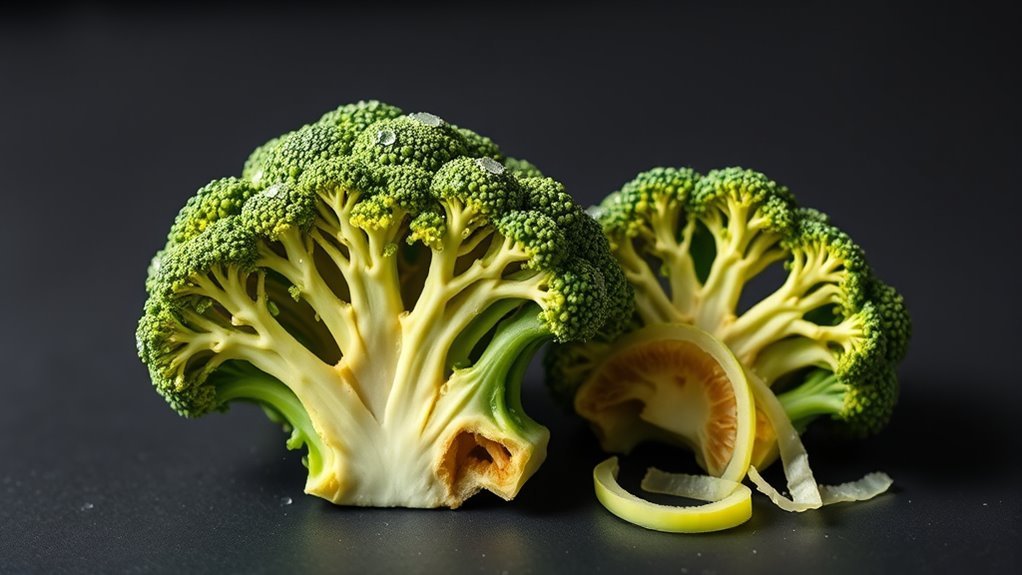
Which Part of Broccoli Has the Most Nutrition?
You get the most vitamins and cancer-fighting compounds from broccoli florets, which are rich in glucoraphanin, vitamins C and K, and antioxidants.
The stems, however, offer more fiber, minerals like calcium and iron, and prebiotics that support digestion.
Both parts bring unique benefits, so including them together boosts overall nutrition and health.
To find out how to get the most from each part and cooking methods that preserve nutrients, keep exploring these details.
Florets vs. Stems: Which Part of Broccoli Is Healthier?
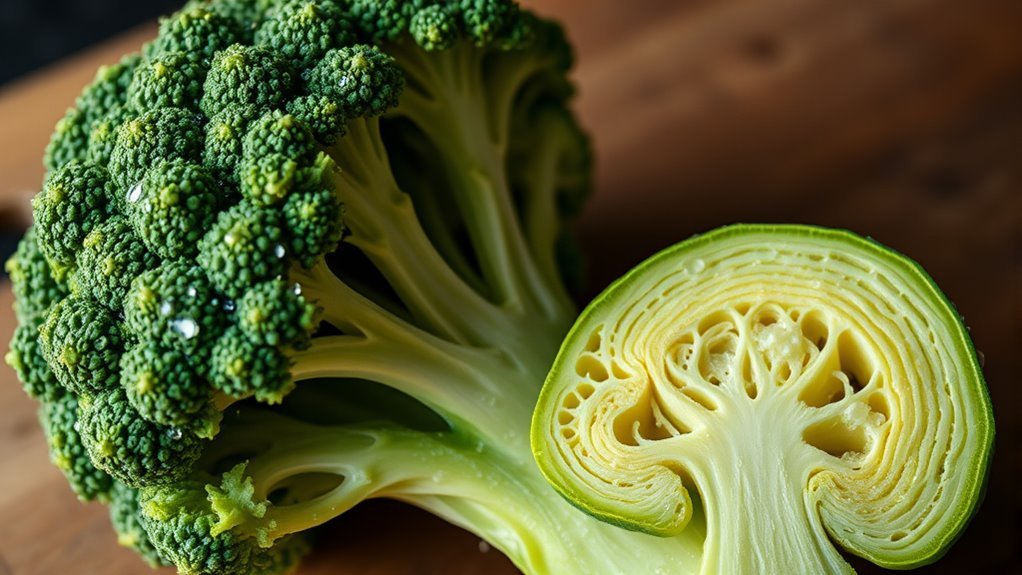
Although both florets and stems offer valuable nutrients, florets pack a stronger punch with higher levels of cancer-fighting compounds like glucoraphanin, which boosts sulforaphane production. When you choose broccoli florets, you’re getting more of these powerful phytochemicals along with higher amounts of vitamins C and K. These nutrients support your immune system and bone health while fighting oxidative stress.
On the other hand, broccoli stems aren’t to be overlooked. They’re rich in fiber, prebiotics, and antioxidants such as phenolic compounds, which help your gut health and overall antioxidant intake. While stems may lag behind florets in some vitamins, they often provide more minerals like calcium and iron.
Both broccoli florets and stems offer unique combinations of nutrients and antioxidants. So, including the entire broccoli plant in your diet ensures you benefit from a wider variety of health-promoting phytochemicals.
Nutrient Density of Broccoli Florets Explained
While both florets and stems contribute valuable nutrients, broccoli florets stand out for their remarkable nutrient density. They’re packed with glucosinolates, especially glucoraphanin, which your body converts into sulforaphane, a powerful cancer-fighting compound.
Florets also boast higher levels of essential vitamins like C, K, and folate compared to other parts. Plus, they contain more amino acids and phytochemicals, boosting their overall nutrient density.
To get the most from broccoli florets, try steaming or quick stir-frying, which preserves these sensitive compounds. Here’s a quick glance at what makes florets so nutritious:
| Nutrient Category | Broccoli Florets | Benefit |
|---|---|---|
| Glucosinolates | High | Cancer prevention |
| Sulforaphane | High | Antioxidant & anti-inflammatory |
| Vitamins (C, K, Folate) | Rich | Immune support & bone health |
| Phytochemicals | Elevated | Overall wellness |
Choosing florets means you’re maximizing the powerful nutrition broccoli offers.
Nutritional Value and Uses of Broccoli Stems
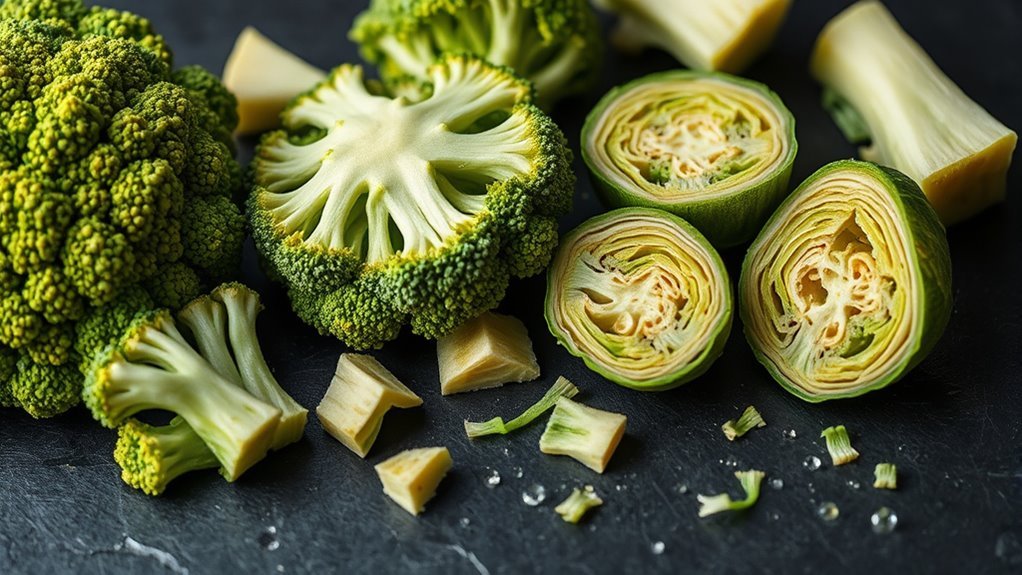
Since broccoli stems often get overlooked, you might miss out on their impressive nutritional benefits. Broccoli stems pack a punch with fiber, phenolic compounds, and antioxidants that support your gut health and overall well-being. In fact, they often contain higher levels of vitamin C and calcium than the florets.
Their natural sweetness, thanks to sugars like fructose and glucose, makes them a tasty addition to your stir-fries, smoothies, and soups.
To get the most from broccoli stems, peel and slice them before cooking; this improves texture and helps your body absorb more nutrients. By incorporating stems into your meals, you not only maximize the nutritional value of broccoli but also reduce food waste.
Vitamin and Mineral Differences Between Stems and Florets
How do the vitamin and mineral contents of broccoli stems and florets compare? When you look at the nutrient differences, broccoli florets generally pack more vitamins, especially vitamin C and K, making them more vitamin-dense.
On the other hand, broccoli stems have a unique nutrient profile that includes comparable or even higher amounts of certain minerals like calcium, iron, and potassium. You’ll find that stems also contain significant magnesium and vitamin C, sometimes surpassing florets in these minerals.
Broccoli stems offer unique nutrients with comparable or higher minerals like calcium, iron, potassium, magnesium, and vitamin C.
Both parts provide essential nutrients, but florets lean more toward vitamins, while stems offer valuable minerals. So, when choosing between broccoli stems and florets, consider that florets are your go-to for vitamins, especially C and K, but don’t overlook stems. They contribute important minerals that support your overall nutrition.
This balance makes both parts worthwhile for a well-rounded intake of vitamins and minerals.
Fiber and Antioxidant Content in Broccoli Stems
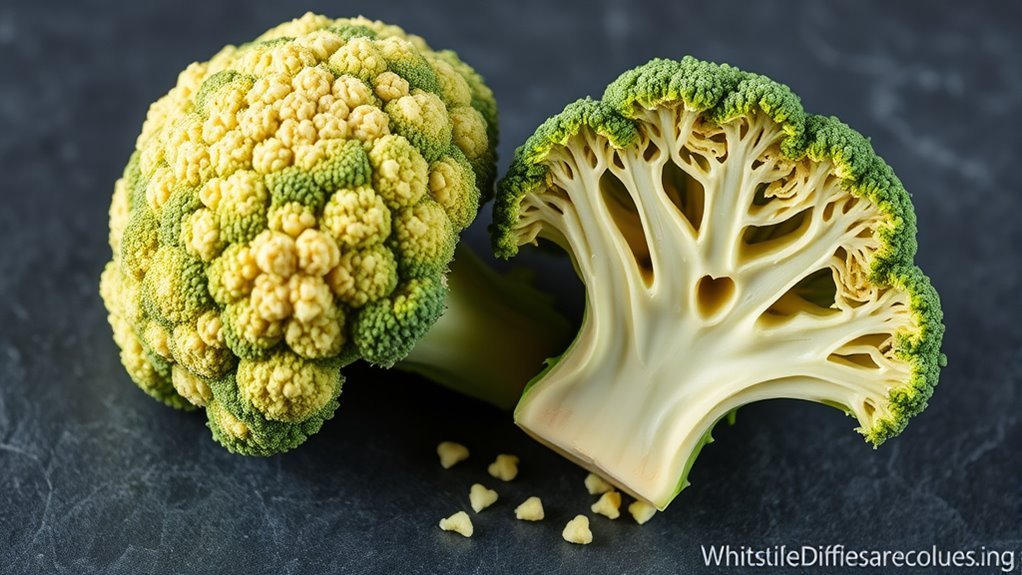
You’ll find that broccoli stems actually have more insoluble fiber than the florets. This kind of fiber is great because it helps keep your digestive system running smoothly. Plus, the stems are packed with antioxidant compounds like polyphenols, which help fight inflammation and oxidative stress. So, when you include broccoli stems in your meals, you’re not just adding crunch—you’re giving your gut a boost and loading up on powerful nutrients.
Fiber Benefits Explained
What makes broccoli stems a nutritional powerhouse? They contain higher amounts of insoluble fiber compared to florets, providing about 2.3 grams of dietary fiber per 100 grams. This fiber is essential for maintaining gut health by promoting regularity and supporting a balanced digestive system.
Beyond fiber, broccoli stems are rich in polyphenols and pectins, compounds that help nurture your gut microbiota. These substances encourage the production of beneficial short-chain fatty acids, which play a key role in digestive wellness.
Antioxidant Compounds Present
Although broccoli florets often get the spotlight, the stems pack a powerful antioxidant punch you shouldn’t overlook. The stems are rich in phenolic compounds, giving them strong antioxidant activity that rivals or even surpasses florets in some cases.
When you eat broccoli stems, you benefit from higher levels of polyphenols, key antioxidants that protect your cells. They also contain significant amounts of chlorogenic acid, a potent phytochemical fighting oxidative stress.
You’ll find a variety of flavonoids in the stems too, which contribute to overall antioxidant effects. Plus, the fiber in stems supports antioxidant functions by enhancing prebiotic effects.
Including stems in your meals means you’re tapping into a concentrated source of antioxidants and phytochemicals that boost your health beyond what florets alone can offer.
Gut Health Support
Because broccoli stems are rich in insoluble fiber and antioxidants, they play a key role in supporting your gut health. The fiber in broccoli stems promotes gut motility, helping maintain smooth digestive health.
These stems also contain high levels of polyphenols, powerful antioxidants that reduce gut inflammation and protect gut cells from oxidative stress. Compared to florets, broccoli stems have a higher concentration of phenolic compounds that strengthen your gut barrier function.
Plus, the prebiotic fiber nourishes your gut microbiota, encouraging the growth of beneficial bacteria and boosting short-chain fatty acid production. Including broccoli stems in your diet supports a balanced gut environment and overall gastrointestinal well-being, making them an excellent choice for maintaining digestive health naturally.
How Sulforaphane and Glucosinolates Boost Broccoli’s Health Benefits
You’ll find glucosinolates in broccoli, especially in the florets. When you chop or chew them, these glucosinolates convert into sulforaphane. This sulforaphane is pretty important because it helps fight cancer and reduce inflammation. So, it’s worth taking a closer look at how these compounds differ in various parts of the broccoli—and why that actually matters for your health.
Glucosinolates Role Explained
When you eat broccoli, the glucosinolates it contains play a crucial role in boosting its health benefits. These sulfur-containing phytochemicals are especially concentrated in broccoli parts like the florets, which have the highest glucoraphanin levels.
When you chop or chew broccoli, the enzyme myrosinase activates and converts glucosinolates into sulforaphane, a powerful compound that enhances antioxidant and anti-inflammatory effects. Here’s how glucosinolates work in your favor:
- Glucosinolates serve as precursors to sulforaphane, amplifying broccoli’s health benefits.
- Florets contain more glucosinolates compared to stems or leaves.
- Enzyme myrosinase catalyzes the conversion process during digestion.
- Sulforaphane supports your body’s detoxifying and protective mechanisms.
Choosing broccoli parts rich in glucosinolates maximizes these health benefits.
Sulforaphane’s Anticancer Effects
Although sulforaphane forms from glucoraphanin found in all parts of broccoli, the florets deliver the highest concentration, making them your best choice for cancer-preventive benefits. Glucoraphanin in broccoli florets converts to sulforaphane efficiently, especially when raw or lightly cooked, thanks to the enzyme myrosinase.
Sulforaphane’s powerful antioxidant properties help detoxify carcinogens and reduce inflammation, key factors in cancer prevention. These plant compounds work by inhibiting cancer cell growth and supporting your body’s natural defenses.
While broccoli stems contain some glucoraphanin, their levels are lower, so they provide fewer anticancer benefits. To maximize sulforaphane intake and harness broccoli’s full health potential, focus on including fresh broccoli florets in your diet regularly.
Tissue Differences in Compounds
Understanding the variation in nutrient content across different parts of broccoli helps you get the most health benefits from this vegetable. Different tissues offer unique phytonutrients and antioxidants, so knowing where glucosinolates concentrate matters.
Broccoli florets contain the highest glucosinolate levels, especially glucoraphanin, which boosts sulforaphane production. Stems have lower glucosinolates but are rich in fiber, phenolic compounds, and antioxidants.
Leaves offer carotenoids and chlorophylls but less glucosinolates compared to florets. The nutritional content varies greatly: florets can have up to 34.66 μmol/g DW of glucosinolates, while stems have about 7.45 μmol/g DW.
Broccoli Parts That Best Support Cancer Prevention
Because broccoli florets contain the highest levels of glucoraphanin, they offer the most powerful cancer-fighting benefits. These dark green, tree-like florets pack the most glucosinolates, essential plant nutrients that help activate anticancer pathways.
When you eat broccoli florets, you get a potent dose of sulforaphane, a compound known for its ability to inhibit cancer cell growth. Compared to stems and leaves, florets have considerably more antioxidant compounds that support cancer prevention.
| Broccoli Part | Glucoraphanin Level | Sulforaphane Potential | Antioxidant Compounds | Cancer Prevention Effectiveness |
|---|---|---|---|---|
| Florets | Highest | Highest | Highest | Most Effective |
| Stems | Moderate | Moderate | Moderate | Less Effective |
| Leaves | Low | Low | Low | Least Effective |
| Floret Tips | Very High | Very High | Very High | Highly Effective |
| Floret Base | High | High | High | Effective |
Focus on broccoli florets to maximize cancer prevention benefits.
Maximizing Health Benefits by Combining Stems and Florets
When you combine broccoli stems and florets, you open a wider array of nutrients that work together to boost your health. This mix enhances nutrient diversity and maximizes the health benefits you get from broccoli’s bioactive compounds. Here’s why including both parts matters:
- Florets are packed with glucosinolates and sulforaphane precursors, known for their potent anticancer effects.
- Broccoli stems provide dietary fiber and antioxidants like phenolics, supporting digestion and reducing inflammation.
- Together, stems and florets increase your intake of vitamins C and K, essential for immune function and bone health.
- The combination optimizes the synergistic effects of broccoli’s compounds, making the nutrients more bioavailable and effective.
How Cooking Affects Nutrients in Broccoli Stems and Florets
You’ll want to pick cooking methods that help keep broccoli’s nutrients, especially in both the stems and florets. Steaming or microwaving with just a little water is a great way to hold on to vitamins and those helpful compounds.
Try to avoid boiling, though, because it can cause a lot of the nutrients to leach out and break down. So, sticking with gentler cooking methods really makes a difference!
Nutrient Retention by Cooking
Although cooking broccoli enhances its flavor and texture, it can also impact the nutrient content in both stems and florets. When focusing on nutrient retention during cooking broccoli, consider these facts:
Raw broccoli has the highest vitamin C, glucosinolates, and other heat-sensitive nutrients. Steaming preserves more glucosinolates and sulforaphane than boiling, which causes significant losses.
Microwaving with minimal water retains flavonoids and antioxidants better than boiling or long cooking. Cooking stems reduces vitamin C by up to 50%, but peeling and slicing before cooking helps keep more nutrients.
Choosing the right cooking methods can maximize the health benefits of broccoli while maintaining its delicious taste.
Best Methods for Broccoli
Choosing the right cooking method makes a big difference in preserving the nutrients in both broccoli stems and florets. Steaming broccoli for 3-4 minutes is one of the best cooking methods to maximize nutrient retention, especially for vitamins and minerals like vitamin C and antioxidants such as sulforaphane.
You should peel and slice broccoli stems before cooking to enhance stem nutrition and improve texture. Quick stir-frying broccoli florets at high heat with minimal oil helps retain glucosinolates and antioxidants better than prolonged cooking.
Microwaving with a small amount of water also preserves heat-sensitive nutrients effectively. Avoid boiling or overcooking, as these can leach or degrade essential phytochemicals. By choosing these methods, you guarantee you get the most health benefits from every part of your broccoli.
Easy Ways to Prepare Broccoli Stems Without Waste
When preparing broccoli stems, peeling and slicing them first improves their texture and makes them easier to use in your meals. Using a vegetable peeler removes the tough outer layer, revealing tender, nutrient-rich inner tissue.
To maximize the nutritional value of broccoli stems without waste, try these easy methods:
- Cut stems into thin disks or matchsticks for even cooking in stir-fries or soups.
- Steam or stir-fry stems for 3-4 minutes to preserve antioxidants and vitamin C.
- Incorporate chopped stems into smoothies or purees for added fiber and prebiotics.
- Use peeled and sliced stems to make veggie chips by baking them until crisp.
Choosing Broccoli Stems or Florets Based on Your Health Goals
Using both broccoli stems and florets in your meals lets you tap into a wider range of nutrients tailored to your health goals. If cancer prevention and antioxidant benefits top your list, focus on broccoli florets. They contain higher levels of glucoraphanin and sulforaphane precursors, along with vitamins C and K, which support cellular health and combat oxidative stress.
On the other hand, if improving gut health and boosting fiber intake matter most, broccoli stems are your best choice. They’re richer in fiber, prebiotics, and phenolic compounds, promoting digestion and overall antioxidant intake.
Choosing between broccoli florets and stems depends on your targeted health outcomes, but combining both maximizes nutrient diversity and health benefits. Whether you want more fiber for digestive wellness or powerful antioxidants for disease prevention, including both parts in your diet ensures you meet multiple health goals efficiently. Don’t overlook broccoli stems; they’re as valuable as florets for your well-rounded nutrition.
Frequently Asked Questions
How Should Broccoli Florets Be Stored to Preserve Their Nutrients?
To preserve broccoli florets’ nutrients, use proper storage techniques like lightly wrapping them in a damp paper towel before placing them in a perforated plastic bag. Refrigerate them in the crisper drawer at about 32°F with high humidity to boost nutrient retention.
Avoid storing near ethylene-producing fruits to prevent spoilage. Watch for freshness indicators like firmness and color to consume within 3 to 5 days, ensuring you get the most from your broccoli.
Are Frozen Broccoli Florets as Nutritious as Fresh Ones?
Yes, frozen broccoli florets are just as nutritious as fresh ones when you consider nutrient retention. Freezing impact is minimal because flash-freezing preserves the floret quality and key vitamins.
Preservation methods like blanching before freezing cause slight nutrient loss, but overall, nutrient comparison shows frozen broccoli holds up well. To maximize nutrition, follow proper storage tips. Keep them at consistent low temperatures and cook using gentle methods like steaming to maintain their health benefits.
Can Broccoli Florets Cause Allergies or Adverse Reactions?
Ever wondered if broccoli could cause unexpected allergic symptoms? Yes, broccoli florets can trigger a broccoli allergy, especially if you have food sensitivities to cruciferous veggies.
You might experience adverse reactions like itching, swelling, or even gastrointestinal discomfort. Allergic responses can be serious, so reaction management is key. Cooking florets thoroughly often helps reduce these risks.
Stay cautious if you have pollen allergies, as cross-reactivity can increase your chances of a reaction.
What Is the Best Way to Wash Broccoli Florets Before Cooking?
The best way to wash broccoli florets is to use cold water for rinsing, avoiding warm water which can damage nutrients. Start by gently scrubbing with a soft brush to remove dirt lodged in crevices.
Then soak them in cold water mixed with a bit of vinegar for about 2-3 minutes to eliminate pesticides. After soaking, rinse thoroughly under cold running water.
Finally, dry the florets using a clean towel or salad spinner to prevent excess moisture before cooking.
Do Organic Broccoli Florets Have More Nutrients Than Conventionally Grown Ones?
Ever wonder if organic benefits really make a difference in your broccoli? Yes, organic broccoli florets often have slightly higher nutrient levels due to better farming practices, healthier soil, and lower pesticide levels. Organic certification guarantees these standards.
While the nutrient comparison shows only small differences, you’re getting more antioxidants and vitamins with organic. Choosing organic means supporting farming that promotes soil health and reduces synthetic chemical use, so you get cleaner, more nutrient-rich broccoli.
Conclusion
You might think the florets steal the show, but don’t overlook the stems. They pack surprising nutrition too. Both parts offer unique vitamins, fiber, and antioxidants that boost your health in different ways.
So before you toss those stems aside, consider how combining them with florets can maximize your benefits. Ready to discover which part truly wins? The answer lies in how you prepare and enjoy your broccoli every day.