What Is a Good Balanced Meal for Health?
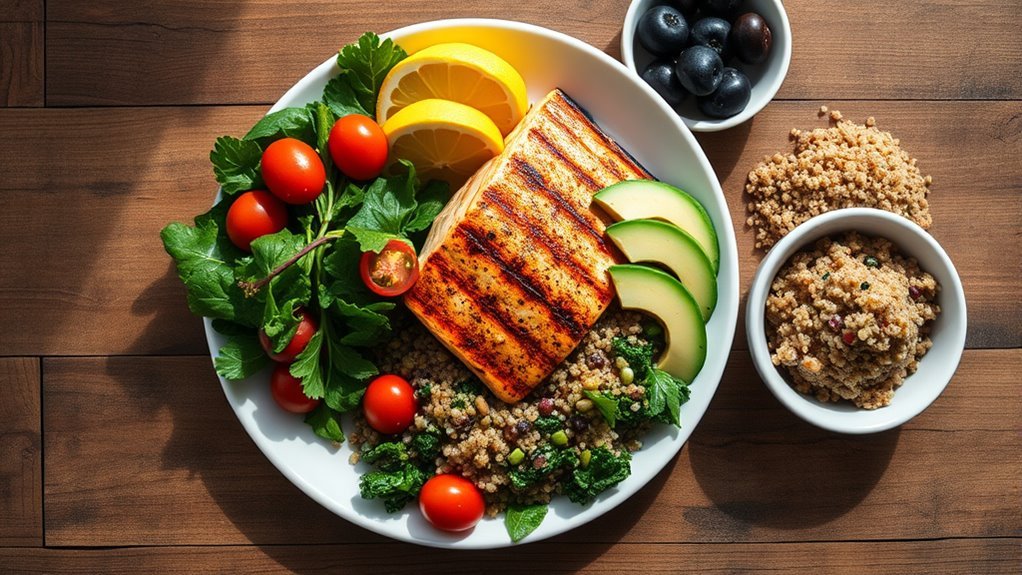
A good balanced meal fills half your plate with colorful fruits and vegetables. A quarter of your plate should be filled with whole grains like brown rice or oats. The remaining quarter should consist of lean proteins such as beans, fish, or poultry.
Including healthy fats like olive oil and dairy or fortified alternatives completes the mix.
This approach supports digestion, immunity, and energy while lowering health risks. Following these simple steps helps you build satisfying meals that nourish your body and promote long-term wellness.
What Food Groups Should Be on Your Plate?
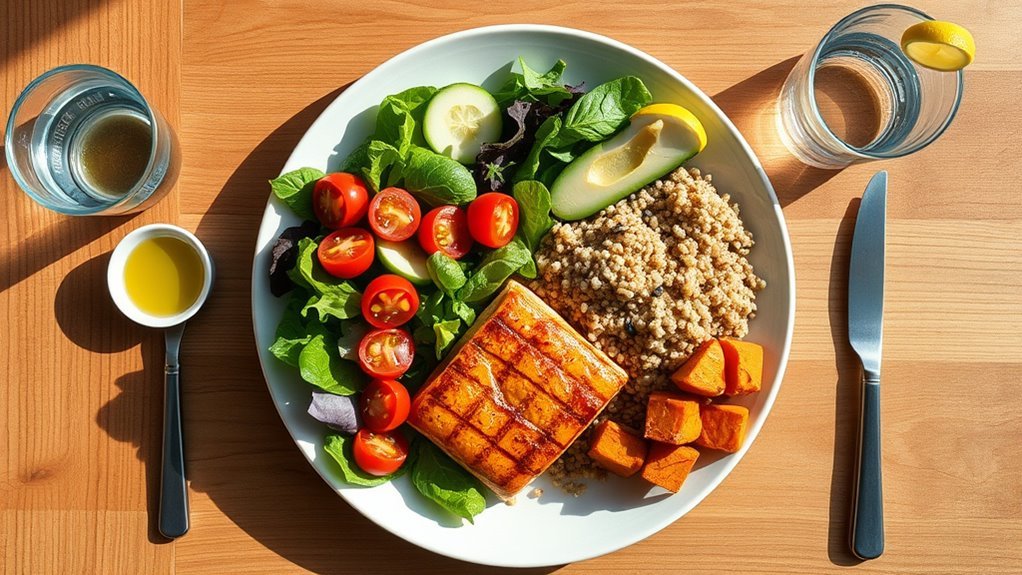
When you build a balanced meal, aim to fill half your plate with fruits and vegetables. They deliver essential vitamins, minerals, and antioxidants. These food groups form the foundation of healthy eating, supporting your immune system and overall wellbeing.
Next, dedicate about a quarter of your plate to whole grains like brown rice, whole wheat bread, or oats. They provide dietary fiber and sustained energy. The remaining quarter should consist of protein sources such as beans, fish, eggs, or lean meats to help maintain muscle and tissue health.
Don’t forget to include dairy or fortified alternatives for calcium and extra protein to promote strong bones. Finally, add small amounts of unsaturated oils and spreads to supply healthy fats, vital for brain function and hormone production. Understanding and combining these food groups on your plate guarantees you enjoy a balanced meal that meets your nutritional needs every day.
How Much Fruit and Vegetables Should You Eat Daily?
Fruits and vegetables play a major role in building a balanced meal, but knowing how much to eat each day is just as important. Aim for at least 5 portions of fruit and vegetables daily to help lower your risk of heart disease, stroke, and some cancers. One portion is about 80 grams, whether fresh, canned, or frozen.
Remember, fruit and vegetables should make up just over a third of your total daily food intake.
Including a variety of colorful fruit and vegetables in your meals and snacks ensures you get a wide range of nutrients. While dried fruit counts as one portion, limit it to mealtimes because of its high sugar content.
Keeping track of your portions helps you meet your health goals and maintain a balanced diet. So, fill your plate with plenty of fruit and vegetables every day to support your overall well-being.
Why Do Whole Grains Matter for Balanced Nutrition?
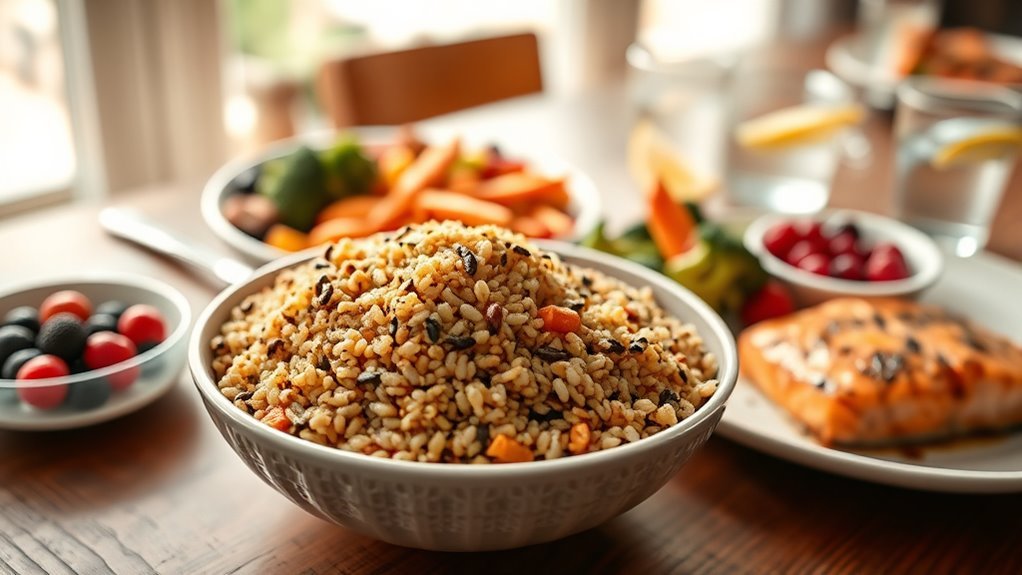
You’ll want to include whole grains in your meals because they pack essential nutrients like B vitamins, iron, and magnesium that refined grains often lose. Plus, the fiber in whole grains supports healthy digestion and keeps you feeling full longer. So, by choosing whole grains, you’re not just adding flavor—you’re boosting your meal’s nutrient density and supporting your overall health.
Nutrient Density Benefits
Because whole grains pack more vitamins, minerals, and fiber into each serving, they play an essential role in balanced nutrition. Their high nutrient density means you get more health benefits per calorie compared to refined grains.
Including whole grains in your balanced diet supports energy production and reduces risks of heart disease, type 2 diabetes, and certain cancers. They also help control appetite, making it easier to manage weight.
| Benefit | Impact on You |
|---|---|
| Rich in B vitamins | Boosts energy and metabolism |
| High in minerals | Supports heart and immune health |
| Nutrient density | Maximizes nutrition per calorie |
Choosing whole grains isn’t just smart, it’s a powerful way to nourish your body efficiently.
Fiber and Digestion
When you choose whole grains, you naturally boost your fiber intake, which plays an essential role in keeping your digestion smooth and regular. The fiber in whole grains adds bulk to your stool, helping to prevent constipation and promote healthy digestion.
It also slows carbohydrate absorption, which helps regulate blood sugar levels and supports balanced energy throughout the day. By replacing refined grains with whole grains, you not only improve digestion but also reduce your risk of gastrointestinal diseases like diverticulitis and colorectal cancer.
Whole grains provide essential nutrients and antioxidants that boost gut health and immune function. Including whole grains in your meals is a simple way to enhance fiber intake and support overall digestive wellness.
Picking the Best Proteins for Your Meals
Choosing the right proteins for your meals plays a vital role in maintaining your health and meeting your body’s needs. Protein supports muscle maintenance, bone health, and overall bodily functions, making it a cornerstone of a balanced diet. To pick the best proteins, focus on options that promote heart health and provide essential nutrients without excess saturated fat.
Choosing proteins that support heart health and essential nutrients is key to a balanced, healthy diet.
Consider these tips when choosing proteins:
- Opt for lean proteins like chicken, turkey, fish, and eggs to get essential amino acids with lower saturated fat.
- Include plant-based proteins such as beans, pulses, and lentils to boost fiber intake and heart health.
- Eat at least two portions of fish weekly, including oily fish like salmon or mackerel, for omega-3 fatty acids.
- Limit red and processed meats to three portions per week to reduce risks of heart disease and certain cancers.
- Prioritize high-quality protein sources to support your overall balanced diet and wellbeing.
How to Choose and Use Healthy Oils and Spreads
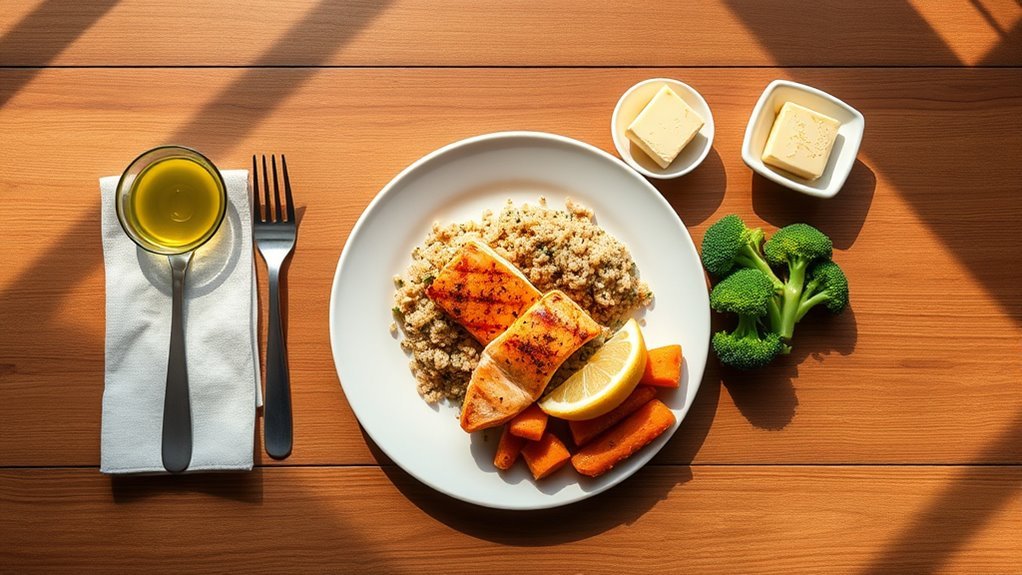
How do you pick the healthiest oils and spreads to enhance your meals? Start by choosing unsaturated oils like olive, canola, or sunflower oil. These healthy fats are linked to a lower risk of heart disease and help improve your blood cholesterol profile.
Opt for oils rich in monounsaturated and polyunsaturated fats, and make sure they’re minimally processed and labeled high in unsaturated oils to get the most health benefits. When it comes to spreads, go for those based on healthy oils and use them in small amounts to add flavor without increasing saturated fat intake.
Avoid butter and steer clear of trans fats found in partially hydrogenated oils, as they raise bad cholesterol levels. By focusing on healthy fats from unsaturated oils and healthy spreads, you’ll enhance your meals’ taste and nutrition while supporting your heart health.
What to Limit and How to Make Healthier Food Choices
To make healthier food choices, it’s a good idea to limit saturated fats and cut back on added sugars in your diet. Instead of reaching for refined grains, try picking whole grains—they’re packed with more nutrients. Making these small changes can really support your overall health and well-being.
Limit Saturated Fats
A balanced meal limits saturated fats by focusing on healthier alternatives and portion control. To enjoy a healthy dinner, you should limit saturated fats by cutting back on red and processed meats and choosing low-fat dairy products instead.
Swapping butter for unsaturated oils and incorporating more plant-based proteins can make a big difference. Here’s how you can make smarter choices:
- Limit red and processed meats to no more than three portions weekly (350-500g).
- Use olive or canola oil for cooking and spreads instead of butter.
- Choose low-fat dairy like semi-skimmed milk and reduced-fat cheese.
- Avoid fried foods and baked goods high in trans fats.
- Add more beans, pulses, and fish to your meals for healthier protein options.
These steps help you limit saturated fats while enjoying tasty, nutritious food.
Reduce Added Sugars
Cutting back on saturated fats is just one part of creating a healthy meal. Reducing added sugars plays a big role, too. To keep your balanced meals healthy, limit foods and drinks high in added sugar, like candies, sugary cereals, and sweetened beverages.
Opt for unsweetened or lightly sweetened options, such as plain yogurt or beverages, to avoid unnecessary sugar. While dried fruit counts as a portion, enjoy it in moderation, especially outside mealtimes, due to its high sugar content.
Replace sugary snacks with fresh fruits or nuts to satisfy your sweet cravings while boosting nutrition. By cutting back on added sugar, you lower your risk of obesity, heart disease, and type 2 diabetes, making your meals truly balanced and good for your health.
Choose Whole Grains
While many people enjoy refined grains for their convenience and taste, choosing whole grains can considerably boost your meal’s nutritional value. Whole grains like brown rice, wholewheat bread, and oats offer more fiber, vitamins, minerals, and antioxidants compared to refined grains. These nutrients help support digestion and reduce risks of heart disease and certain cancers.
To make healthier choices, limit refined grains such as white bread, white rice, and sugary cereals, which cause rapid blood sugar spikes. Gradually replace refined grains with whole grains to improve your fiber intake and overall health. Here are some tips to help you choose whole grains:
Opt for products labeled “100% whole grain” or “whole wheat.”
Swap white rice for brown rice.
Choose wholewheat bread over white bread.
Add oats to your breakfast.
Introduce whole grains gradually to your diet.
How Portion Sizes Affect a Balanced Meal
Because portion sizes directly influence the balance of food groups on your plate, they play a crucial role in determining nutrient intake and how full you feel after eating. When you control portion sizes, you guarantee your balanced meal includes the right amounts of fruits, vegetables, protein, and whole grains without overeating.
Overly large portions, especially of calorie-dense foods, can disrupt this balance and lead to excess calorie intake.
Use visual guides to help you portion foods effectively. For example, filling half your plate with fruits and vegetables, a quarter with protein, and a quarter with whole grains supports ideal nutrient intake and satiety.
| Food Group | Portion Size Example | Plate Proportion |
|---|---|---|
| Fruits & Vegetables | 80g per serving | Half the plate |
| Protein | 80-100g | One quarter |
| Whole Grains | 80g | One quarter |
Proper portion sizes help maintain nutrient balance and support your overall health.
Easy Strategies to Build Balanced Meals Quickly
When you want to build balanced meals quickly, relying on simple visual guides can save you time and effort. Start by filling half your plate with fruits and vegetables, one-quarter with lean proteins, and one-quarter with whole grains. Using pantry staples and prepping versatile ingredients ahead of time helps you put together meals fast without sacrificing nutrition.
Try these quick strategies with balanced ingredients to enjoy easy meal prep:
- Keep canned beans, frozen veggies, and pre-cooked grains on hand for instant meal bases.
- Cook chicken or roast vegetables in advance for speedy assembly.
- Combine simple foods like a veggie quesadilla and a side salad.
- Use whole-grain pasta with canned tomato sauce and added vegetables for a quick, balanced dish.
- Aim to include at least three food groups, vegetables, protein, and grains, in every meal.
With these approaches, you’ll build balanced meals effortlessly, even on your busiest days.
How Healthy, Balanced Meals Support Long-Term Wellness
When you choose nutrient-rich foods like fruits, vegetables, whole grains, and lean proteins, you’re giving your body the essential tools it needs to stay healthy. These balanced meals don’t just satisfy your hunger—they actually help lower your risk of chronic diseases such as heart disease and stroke.
Nutrient-Rich Food Choices
Although choosing the right foods can seem overwhelming, focusing on nutrient-rich options makes it easier to build balanced meals that support your long-term health. Including a variety of food groups like whole grains, dairy foods, and fruits guarantees you get essential vitamins, minerals, and antioxidants. These nutrients help improve digestion, boost immunity, and maintain brain and heart health.
To create nutrient-rich meals, try to:
- Choose whole grains for fiber and sustained energy
- Add dairy foods for calcium and protein
- Incorporate a colorful variety of fruits for antioxidants
- Include lean proteins and healthy fats like nuts and seeds
- Balance your plate with vegetables for extra vitamins and minerals
Chronic Disease Prevention
Eating nutrient-rich foods not only fuels your body but also plays a key role in preventing chronic diseases. By choosing a balanced diet that includes fruits, vegetables, whole grains, lean proteins, and healthy fats, you markedly lower your risk of heart disease, stroke, and diabetes.
Nutrient-dense foods like fish and plant-based proteins help reduce inflammation and oxidative stress, supporting healthy aging. Sticking to healthy eating patterns can cut your risk of major chronic diseases by up to 20% in men and 11% in women.
Plus, regular intake of balanced meals can decrease overall mortality by 25% and heart disease deaths by 42%. Embracing a balanced diet isn’t just about daily health; it’s a powerful tool for long-term chronic disease prevention.
Customizing Balanced Meals to Fit Your Lifestyle and Culture
Adapting balanced meals to fit your lifestyle and culture means embracing the foods and traditions you enjoy while keeping nutrition in mind. You can customize your meals by adjusting portion sizes and incorporating cultural foods that reflect your preferences and available ingredients. Meal customization lets you maintain nutritional balance without giving up flavors or familiar dishes.
Embrace your cultural foods and traditions while customizing portions for balanced, flavorful nutrition.
Whether you prefer rice-based meals, family-style sharing plates, or plant-based proteins, flexibility helps you eat healthfully in a way that suits you.
Here’s how to tailor balanced meals effectively:
Use the plate model to visualize portion sizes for different food groups. Include cultural foods that you love and know well. Swap animal proteins for plant-based options if that fits your diet.
Adapt recipes with local, seasonal ingredients. Share meals family-style to enjoy tradition and balanced nutrition.
Frequently Asked Questions About Balanced Meals
Customizing your meals to fit your lifestyle and culture often raises questions about what exactly makes a balanced meal. You might wonder how to properly portion your plate or how much variety you need daily.
Balanced meals include a variety of food groups such as fruits, vegetables, proteins, whole grains, and dairy to guarantee you get essential nutrients. A simple visual guide suggests filling half your plate with produce, a quarter with protein and dairy, and the remaining quarter with whole grains.
Frequently Asked Questions
Can Balanced Meals Help Improve Mental Health?
Yes, balanced meals can help improve your mental health. By focusing on meal planning, you guarantee nutrient diversity, which supports brain function and mood stability.
Portion control keeps your blood sugar steady, preventing mood swings and boosting mental clarity. When you consistently eat well-rounded meals, you build resilience against stress and promote better sleep.
How Do Meal Timings Affect Balanced Nutrition?
You might be surprised how much meal timing impacts your balanced nutrition. When you eat at consistent times, your body optimizes nutrient absorption and boosts digestion efficiency.
Skipping meals or eating erratically can throw off this rhythm, making it harder for your body to process nutrients properly. By aligning your meals with your body’s natural clock, you make certain of better energy levels, improved metabolism, and overall health.
Timing truly matters more than you think!
Are Supplements Necessary if I Eat Balanced Meals?
Supplements aren’t usually necessary if you eat balanced meals rich in nutrient density and dietary fiber. When you focus on meal portioning with whole foods, you naturally get most essential vitamins and minerals.
However, if you have specific health conditions or dietary restrictions, supplements might help fill gaps. Always check with a healthcare professional before adding them, so you don’t miss out on the benefits of real food’s complex nutrients.
How to Maintain Balanced Meals on a Tight Budget?
You can maintain balanced meals on a tight budget by focusing on affordable ingredients like canned beans, lentils, eggs, and seasonal vegetables. Use meal prep strategies to cook in bulk, saving time and money while reducing waste.
Incorporate budget-friendly snacks such as nuts or fruit to keep energy levels up between meals. Planning versatile meals around these staples helps you eat healthily without overspending or sacrificing nutrition.
What Role Does Hydration Play in a Balanced Diet?
Hydration plays a vital role in a balanced diet by maintaining electrolyte balance, which helps your muscles and nerves function properly. You shouldn’t wait for thirst cues to drink water, as they come late and signal dehydration.
Instead, practice good hydration timing by sipping fluids regularly throughout the day. Staying well-hydrated supports digestion, nutrient absorption, and overall energy, making it easier for you to stick to your healthy eating goals.
Conclusion
You’ve got this! Crafting a balanced meal isn’t rocket science. It’s about filling your plate with colorful fruits and veggies, whole grains, lean proteins, and healthy oils.
These simple choices fuel your body like a powerhouse, boosting your energy and well-being every day. Remember, balance is key, and tailoring meals to your lifestyle makes healthy eating a breeze.
Stick with it, and you’ll feel unstoppable on your wellness journey!