
How to Use a Food Processor in 7 Easy Steps
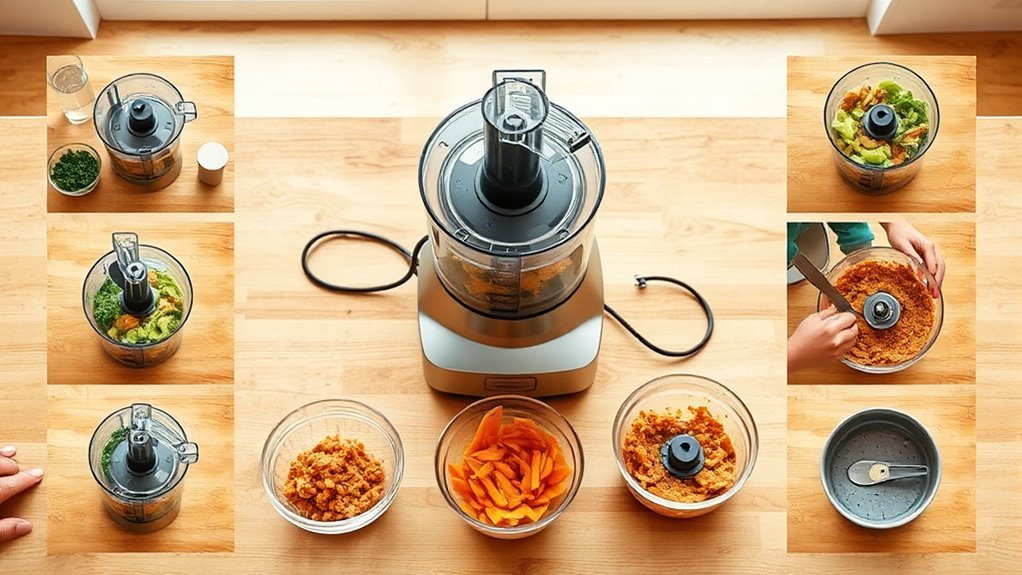
Start by choosing the right bowl size and blade for your task, then prep ingredients safely, cutting large pieces into chunks. Lock the bowl and lid securely until they click, ensuring safety before starting.
Begin on low speed or use pulse for control, gradually increasing as needed. Stop to scrape the mixture for even results and prevent clumping.
When finished, unplug and clean all parts thoroughly. Keep going to uncover expert tips for perfect processing every time.
Choose the Right Bowl and Blade for Your Food Processor
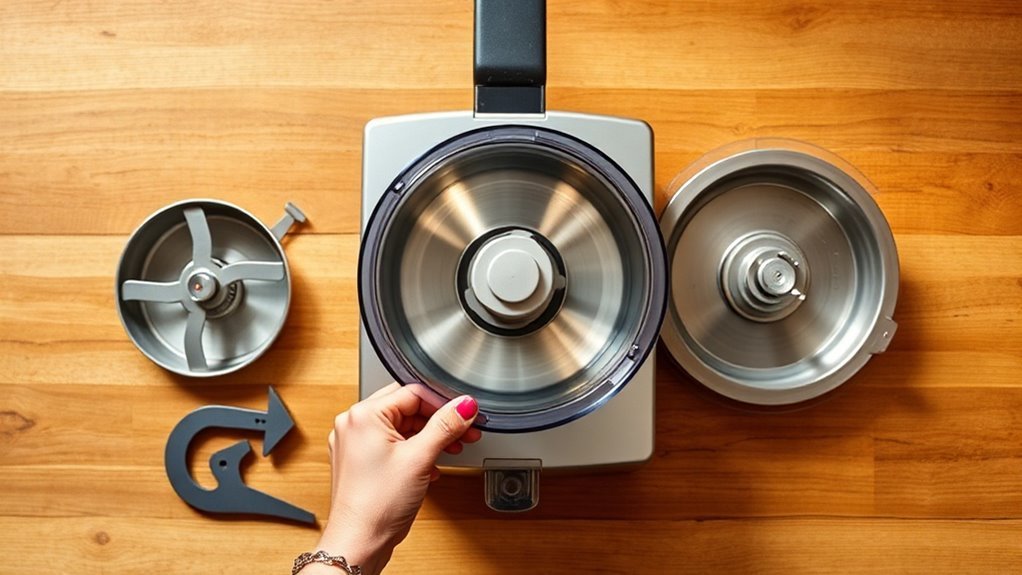
Start by selecting the right bowl size for your recipe. Small bowls (1–3 cups) work best for dressings and small tasks. Medium bowls (4–8 cups) suit chopping and purees, while large bowls (9–14+ cups) handle shredding, slicing, or dough.
Using the correct bowl in your food processor guarantees efficient processing and prevents overheating. Next, fit the appropriate attachment. Use the multipurpose S‑blade for chopping, pureeing, and mincing. Switch to a slicing disc for uniform slices or a shredding/grating disc for cheese and vegetables.
Always lock the chosen bowl onto the motor base until you hear a click. Then, secure the lid before attaching the blade or disc to the center shaft. For dough or heavy mixing, use the designated dough/kneading tool with the larger bowl to maintain smooth operation.
Pulse the S‑blade for coarse chops or run it continuously for smooth purees. Select finer or coarser discs depending on your desired texture. This careful selection maximizes your food processor’s performance and results.
Prep and Add Ingredients Safely
Be sure to pick the right bowl size and lock both the bowl and lid securely before you start adding ingredients. It’s important to use the pusher tool to guide food safely through the chute—never use your fingers or utensils. Doing this helps prevent accidents and keeps your processor running smoothly.
Choose Proper Bowl Size
You’ll want to choose a bowl size that fits the task. Small bowls (0.5–1.5 L) work best for dips and small batches, while larger bowls (3–5 L) handle shredding, slicing, or big-batch chopping without straining the motor.
Using a bowl too small for big jobs can overload the motor, while a large bowl may be cumbersome for smaller batches. Always leave at least one-third of the bowl empty to allow ingredients room to move and process evenly.
For best results, process in smaller batches when you have a lot to do. This prevents jamming and secures consistent texture.
Picking the right bowl size helps your food processor work efficiently and extends its lifespan, making your prep smoother and safer.
Secure Lid And Bowl
Secure the work bowl firmly onto the base by twisting it until you hear or feel a click. This assures the food processor won’t run unless properly assembled. Before adding ingredients, fit the appropriate blade or disc securely onto the centre shaft.
Always secure lid and bowl fully, checking that engaged safety interlocks are in place. Avoid overfilling; leave at least one-third free for proper movement. Start on low speed to prevent motor strain and gradually increase as needed.
| Step | Action | Tip |
|---|---|---|
| Lock work bowl | Twist until twisting click | Assures safe processor uses |
| Fit blade/disc | Attach securely on centre shaft | Prevents wobble or damage |
| Secure lid and bowl | Check safety interlocks engaged | Avoid overfilling; one-third free |
Use Pusher Tool Safely
After ensuring the lid and bowl are properly locked and safety interlocks are engaged, focus on using the pusher tool to guide ingredients safely through the feed chute. Always fit the correct lid and feed-chute attachment, and never use your fingers. Use only the supplied pusher tool to push food down while the processor runs.
Cut large items into 2–3 cm chunks so they slide easily and can be pushed without forcing. Pack the chute snugly but don’t overfill; leave room for the pusher to move freely. This helps ensure consistent processing and prevents jams.
Apply steady, gentle pressure. Don’t slam food through, as this can cause motor strain or blade dislodgement. If you need to clear a jam, stop and unplug the machine before removing the lid. Never reach into the chute while it’s powered.
Lock the Bowl and Lid for Safe Use
Before you start the food processor, make sure the bowl is properly aligned and locked into the base with a twist until you hear a click. This guarantees the bowl is securely fixed and ready for use.
Next, fit the chosen blade or disc onto the center shaft inside the bowl so it sits firmly without wobbling. Then, place the lid on the bowl and rotate or snap it into place until it locks. Most food processors won’t run unless both the bowl and lid are fully locked, thanks to built-in safety interlocks.
To double-check, give the lid a gentle tug. If it moves or lifts, it’s not locked properly, and the processor won’t start. Never try to operate the machine without these parts securely locked, and always unplug before releasing the lid to remove contents or change attachments. Following these steps keeps you safe and guarantees your food processor works efficiently every time.
Start Your Food Processor on Low Speed and Increase Gradually
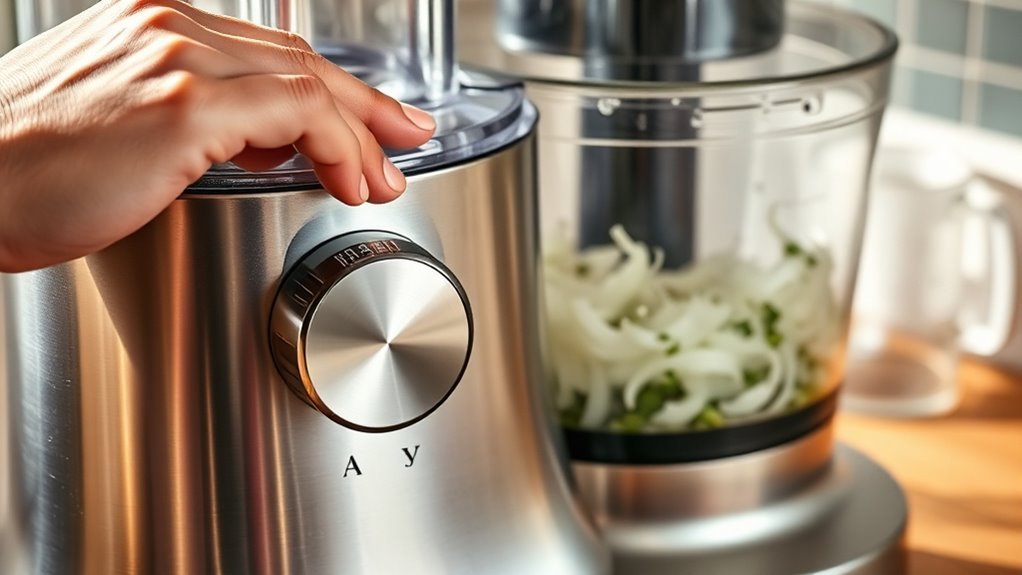
Once the bowl and lid are locked, you can start the food processor on the lowest speed or pulse setting. This helps you gauge how the ingredients are breaking down while avoiding sudden splatters or motor strain. Let it run briefly at low speed, checking the texture every 5 to 10 seconds.
If the mixture is uneven, use the pulse button for short bursts to achieve coarse chopping. When the consistency improves, switch to continuous low speed and only increase gradually to medium or high if needed.
Be mindful of the motor’s sound and the bowl’s temperature. If the motor strains or heats up, stop and let it rest for a minute before resuming at a lower speed. For thick mixtures, add small amounts of liquid, processing slowly to blend without thinning the mixture too much.
Control Texture With Pulse and Speed Settings
Mastering your food processor’s pulse and speed settings lets you control the texture of your ingredients with ease. Use the pulse button in short 1–2 second bursts to get a coarse, evenly chopped texture without overprocessing delicate items.
Using short pulses on your food processor ensures even chopping without overprocessing delicate ingredients.
Start processing on the lowest speed, increasing gradually. Low speed delivers chunky results, medium for finer chops, and high speed creates silky purées. For chunky salsas or salads, pulse and check every 5–10 pulses to avoid overdoing it.
For smooth hummus or purées, run the processor continuously for 20–40 seconds. Combine pulses with brief continuous runs to fine-tune consistency and prevent the motor from overheating. Try 6–8 pulses followed by a 5–10 second run.
If your mixture looks too thick or isn’t blending evenly, add a tablespoon or two of liquid like water, stock, or oil. Then finish on low speed for a smoother texture. This approach gives you full control over your food processor’s output.
Scrape Mixture for Even Results
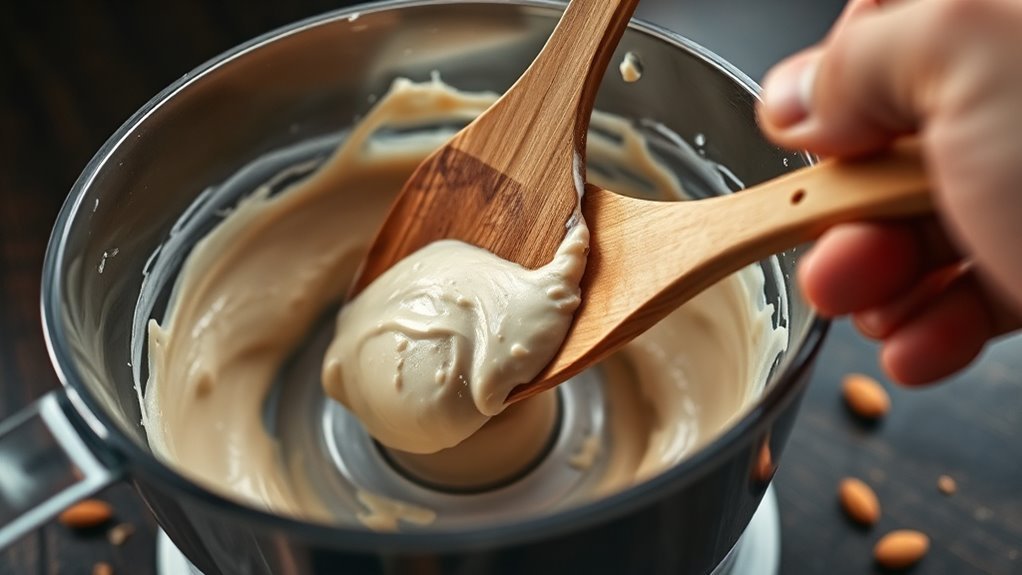
To get even results, make sure to stop the processor regularly. Then, use a rubber spatula to scrape the sides and bottom of the bowl. This simple step prevents clumping and ensures that all the ingredients mix thoroughly.
Using the scraper tool like this helps you keep a consistent texture throughout your mixture. It’s a small trick that really makes a difference!
Prevent Mixture Clumping
Stop the processor every 10 to 20 seconds and scrape down the bowl sides and under the blade to prevent dry pockets and uneven clumps. This simple step helps make certain your food processes evenly and avoids clumping. When working with thick mixtures like doughs or nut butters, pause regularly to redistribute ingredients toward the center.
To prevent mixture clumping, keep these tips in mind:
- Add a tablespoon of liquid (water, oil, or stock) if the mixture sticks to the bowl, then scrape again to loosen it.
- For sticky or dense food, chill briefly or dust with flour before pulsing.
- Use short pulses after scraping to monitor texture and avoid overprocessing.
Following these steps guarantees smooth, well-blended results every time.
Use Scraper Tool
Keeping the mixture moving evenly inside the food processor bowl is key to avoiding clumps and dry pockets. To do this, stop the processor every 10 to 15 seconds and use the scraper tool to push the mixture from the bowl sides back toward the blades.
This simple step helps save time and makes sure all ingredients blend smoothly, whether you’re preparing pizza dough or chopping vegetables with the slicing disc. When choosing the right technique, scrape once or twice during short pulses for chunky salsas, or 2 to 3 times during longer purees to incorporate everything fully.
You can even add a splash of liquid for easier mixing. Don’t forget to lift sticky dough or thick batter with the flexible scraper, so nothing sticks to the shaft or bowl sides. This makes your meal prep easier and more efficient.
Ensure Even Texture
Although blending ingredients quickly might be tempting, you’ll get the best results when you pause every 15 to 30 seconds to scrape down the bowl sides and around the blade. This helps assure an even texture by moving all ingredients through the cutting zone.
Follow these steps for consistent results:
- Use a spatula to scrape the sides, around the blade, and slightly tilt the blade assembly to dislodge trapped pieces.
- For smooth recipes like hummus, scrape and rotate the mixture between processing intervals until uniform.
- When handling thick mixtures, add small amounts of liquid and scrape frequently to prevent dry pockets and binding.
Scraping during processing guarantees your mixture is evenly blended and avoids uneven piles or chunks.
Unplug and Clean Your Food Processor After Use
Always unplug your food processor before you start taking it apart to prevent accidental starts and electric shocks. This step is vital on your safety checklist every time you finish using the appliance. Carefully remove blades and discs by holding their non-cutting edges or using the tool provided.
Wash these parts in warm soapy water or place them on the dishwasher’s top rack if allowed by the manufacturer.
Never immerse the motor base in water. Instead, wipe it with a damp cloth and mild detergent. Make sure to clear any food particles from vents to avoid motor damage.
After washing, dry all components thoroughly, especially the center shaft and blade hubs, to prevent rust and mold growth. Store blades and sharp attachments safely in their original covers or a designated container to protect your hands and maintain blade sharpness.
Following this cleaning routine keeps your food processor safe, efficient, and ready for your next culinary task.
Frequently Asked Questions
Can I Process Hot Ingredients in the Food Processor?
You shouldn’t process very hot ingredients in a standard food processor because of heat safety concerns. Hot food can warp plastic bowls, stress seals, or create steam pressure that might blow off the lid.
Let cooked foods cool below 60°C (140°F) before processing. If you must handle warm mixtures, work in small batches, use oven mitts, and keep the lid slightly ajar to vent steam safely.
Always check your model’s manual for specific heat tolerance.
How Do I Prevent the Food Processor From Overheating?
Imagine you’re making a big batch of pesto and notice your food processor’s motor heating up quickly. To prevent overheating, you should pause after 1 to 2 minutes of continuous use. Let the motor cool for 1 to 3 minutes before starting again.
Avoid overloading the bowl and pulse in short bursts, starting at a low speed. These steps keep the motor from straining and guarantee your food processor runs smoothly without damage.
What Should I Do if the Food Processor Leaks?
If your food processor leaks, immediately stop and unplug it. Do a thorough seal check by inspecting the bowl and lid seals for cracks, warping, or misplaced gaskets. Make sure the seals are seated correctly and the locking ring is secure.
Avoid overfilling the bowl, and clean the drive coupling and rim to remove trapped food. If leaks persist after these steps, contact the manufacturer or a service center for repairs.
Can I Use the Food Processor to Knead Dough?
Absolutely, you can use your food processor to knead dough. But there’s a secret to success. Pay close attention to dough hydration; it’s essential to follow your recipe exactly.
Start by pulsing ingredients to combine, then run the processor on low until you get a smooth, elastic dough ball. Don’t overfill or overwork it, or you risk overheating the motor.
With proper care, your processor becomes a dough-kneading powerhouse.
How Do I Store the Food Processor Safely?
To store your food processor safely, follow these storage tips: always unplug it first. Then clean and dry all removable parts thoroughly.
Store sharp blades in their protective cases or wrapped in a towel to avoid accidents. Keep the motor base in a cool, dry spot with the cord loosely coiled, not tightly wrapped.
Nest smaller parts inside the bowl and place the lid on top or in a designated box to prevent losing pieces and protect your appliance.
Conclusion
Now that you’ve mastered these steps, your food processor becomes your kitchen’s magic wand, turning ingredients into culinary wonders with ease. Like a skilled conductor, you control the rhythm and texture, creating symphonies of flavor.
Remember to handle it safely and clean it well, so it’s always ready for your next masterpiece. With your new skills, cooking feels less like a chore and more like a delicious adventure waiting to unfold.