Pregnancy Nutrition Guide With 5 Essential Nutrients You Need
You need five essential nutrients: folate, iron, calcium, vitamin D, and protein with omega-3s to support your baby’s healthy growth and your well-being throughout pregnancy.
Folate helps prevent birth defects. Iron boosts oxygen delivery. And calcium strengthens bones.
Vitamin D aids immunity and calcium absorption. While protein and omega-3s promote brain and muscle development.
Getting these right sets a strong foundation for your pregnancy journey, with plenty more benefits to discover ahead.
Why Folate Is Essential Before and During Pregnancy
Because folate plays an essential role in preventing neural tube defects, you should make certain you get enough before and during pregnancy. Folate supports proper brain and spinal cord development by aiding DNA production and cell growth, which are indispensable for fetal development.
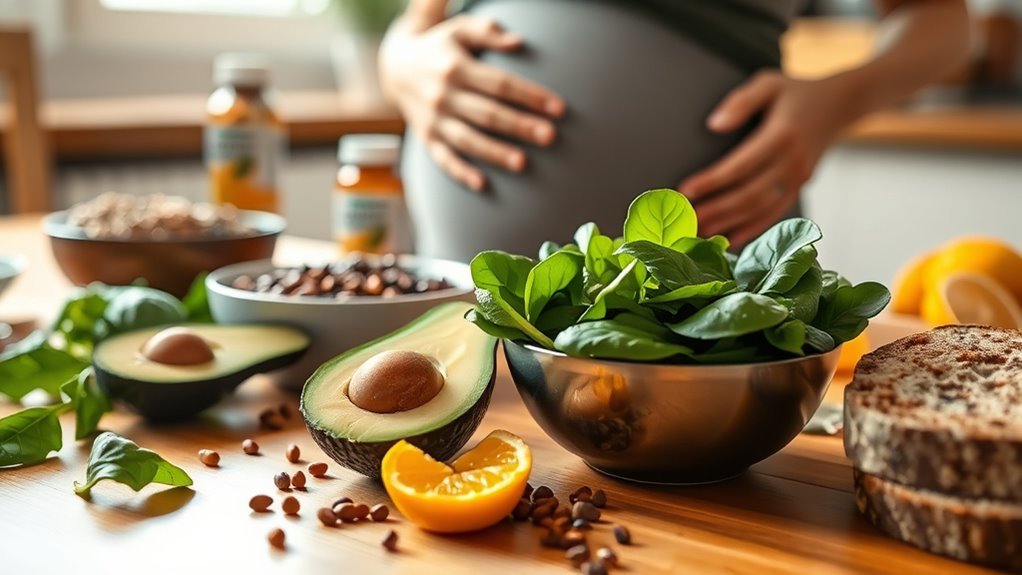
Taking 400 mcg of folate daily before pregnancy and increasing to 600-1,000 mcg during pregnancy helps reduce the risk of birth defects markedly. You can find natural folate in dark leafy greens, citrus fruits, beans, and lentils, but since it’s hard to get enough through diet alone, folic acid supplements are highly recommended.
Starting these supplements at least three months before conception is key to protecting your baby from neural tube defects. Including adequate folate in your prenatal nutrition ensures your baby’s brain and spinal cord develop properly, giving them the best start in life. Don’t overlook this essential nutrient during this critical time.
How Iron Supports Your Baby’s Growth and Prevents Anemia
While your body supports your growing baby, it needs extra iron to produce hemoglobin, the protein that carries oxygen from you to your little one. During pregnancy, your blood volume nearly doubles, increasing the demand for iron to around 27 mg daily. This boost in iron is vital for fetal growth and development, as it guarantees your baby receives enough oxygen to thrive.
If you don’t get enough iron, you risk iron deficiency anemia, which can cause fatigue and complicate pregnancy. To prevent this, focus on iron-rich foods like lean red meats, canned tuna, spinach, and kale. Pairing these with vitamin C-rich foods enhances iron absorption, helping your body make the most of the iron you consume.
Meeting your iron needs supports healthy blood volume and hemoglobin levels, safeguarding both your health and your baby’s development throughout pregnancy.
The Role of Calcium in Pregnancy for Strong Bones
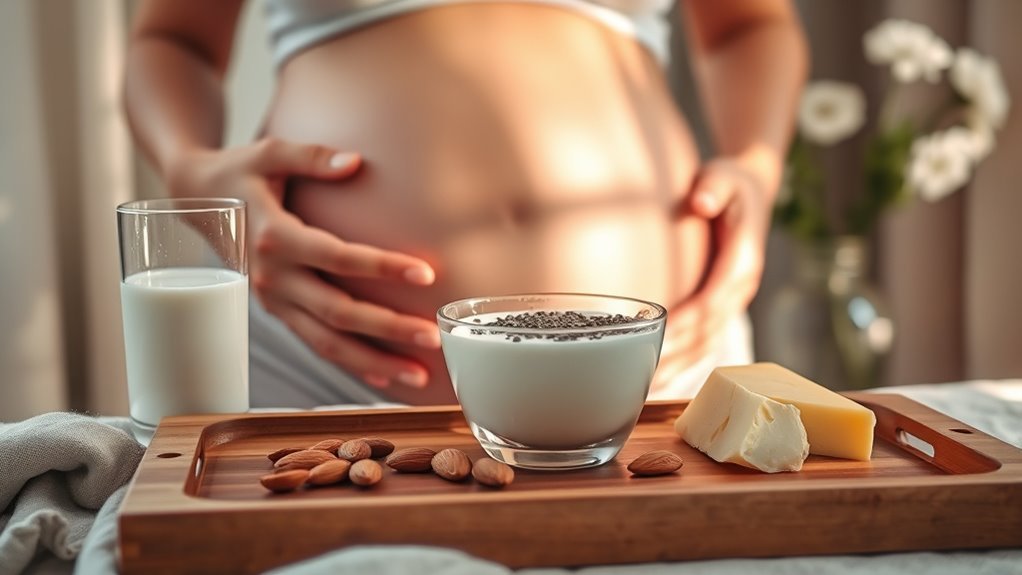
As your baby’s bones and teeth develop, your body needs extra calcium to build them strong and healthy. During pregnancy, calcium plays an essential role in fetal development, especially in the third trimester when calcium transfer to your baby peaks. To support bone health for both of you, aim for about 1,000 mg of calcium daily, or 1,300 mg if you’re a teenager.
Incorporate calcium-rich foods into your prenatal nutrition to guarantee adequate intake. Your body prioritizes delivering calcium to your baby’s bones and teeth, so maintaining sufficient levels helps reduce risks like preeclampsia and hypertension. Imagine this:
- A bowl of creamy yogurt topped with nuts
- A vibrant salad loaded with leafy greens
- A glass of fortified orange juice in the morning
Focusing on calcium during pregnancy strengthens your baby’s bones and teeth while supporting your own bone health through this essential time.
How Vitamin D Helps Your Baby’s Bones and Immunity
Since vitamin D works hand in hand with calcium, getting enough of it during pregnancy helps your baby develop strong bones and teeth. Vitamin D plays a vital role in fetal bone growth by aiding calcium absorption, which directly supports your baby’s bones.
Beyond bone health, vitamin D also boosts your baby’s immune system, providing essential immune support to protect against infections. During pregnancy, you should aim for 600 IU of vitamin D daily to meet these needs.
You can find vitamin D in fatty fish like salmon and fortified foods such as milk and orange juice, making it easier to include in your prenatal nutrition. Maintaining adequate vitamin D levels during pregnancy can also lower the risk of complications like preeclampsia.
Protein and Omega-3s: Keys to Baby’s Growth
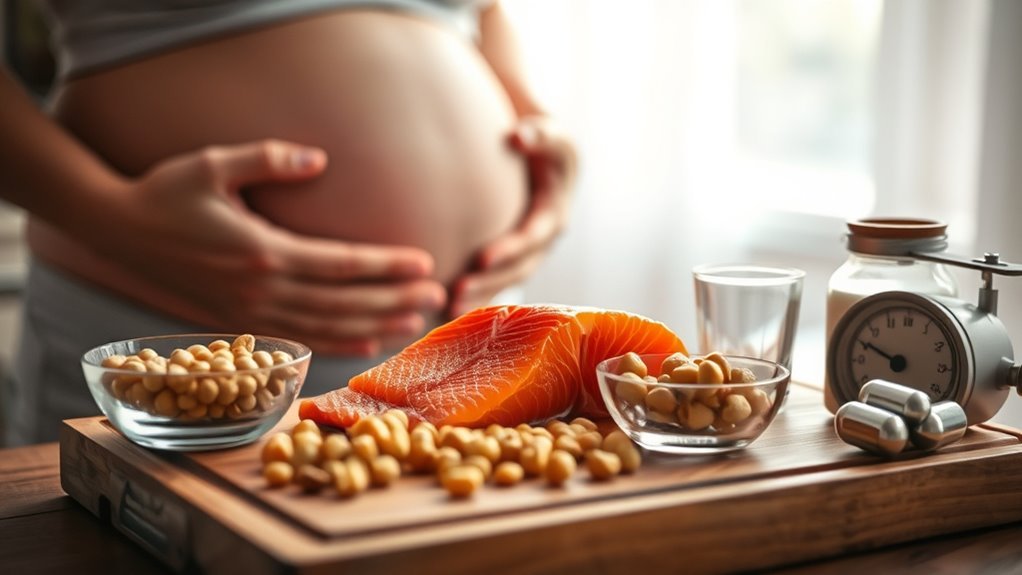
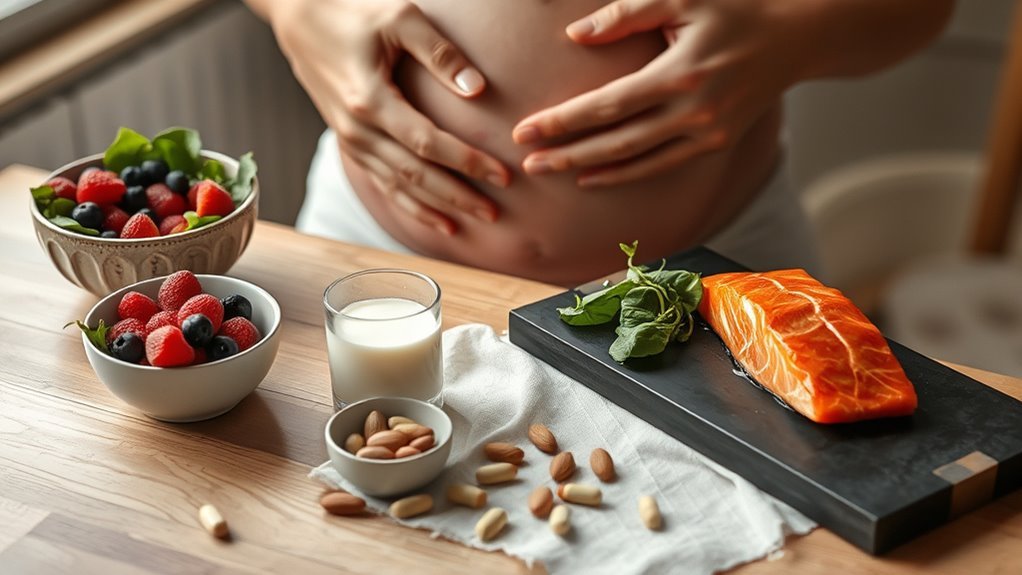
Getting enough protein and omega-3 fatty acids during pregnancy plays an essential role in your baby’s growth and development. Protein supports fetal growth by helping build tissues, organs, and muscles, with a daily need of about 71 grams. Omega-3 fatty acids, especially DHA, are critical for brain development and eye health.
Including these nutrients in your prenatal nutrition guarantees a healthy pregnancy and meets your increased nutritional needs.
To support your baby’s development, focus on:
- Lean meats, poultry, eggs, beans, nuts, seeds, and soy products for quality protein
- Fatty fish like salmon and mackerel, which provide essential omega-3 fatty acids
- Plant sources such as walnuts and flaxseed to boost DHA intake
Eating two to three servings of seafood weekly helps promote healthy fetal growth, reduces preterm birth risk, and supports postpartum mental health. Protein and omega-3s are keys to a thriving pregnancy.
Frequently Asked Questions
When Should I Start Taking Prenatal Vitamins?
You should start taking prenatal vitamins at least three months before conception to optimize your prenatal supplement timing. Establish a vitamin intake schedule early to guarantee your body absorbs key nutrients like folic acid, which is vital during early pregnancy and the first trimester.
Watch for vitamin deficiency signs and supplement side effects. Stick to consistent prenatal pill routines, and explore trusted prenatal vitamin brands to support your health from the start.
Can I Get All Essential Nutrients From a Vegetarian Diet?
Sure, you can totally get all essential nutrients from a vegetarian diet if you enjoy a little detective work! By focusing on plant-based proteins, iron-rich foods paired with vitamin C for better nutrient absorption, calcium sources like dairy alternatives, and omega 3 intake from flaxseed or algae, you’ll cover the bases.
Don’t forget vitamin B12 supplements and folate-rich vegetables. With smart vegetarian meal planning, you’ll maintain a balanced diet that supports your pregnancy perfectly.
How Do I Manage Morning Sickness While Maintaining Nutrition?
To manage morning sickness, try small meal tips like eating frequent, bland snacks such as crackers or bananas to avoid nausea triggers. Incorporate ginger benefits by sipping ginger tea or using ginger candies, which soothe your stomach.
Adjust your diet with easy-to-digest foods and herbal teas to stay hydrated. Pay attention to vitamin intake timing; taking prenatal vitamins with food or before bed can help. Keep snack ideas handy to handle food aversions and maintain nutrition.
Are There Foods I Should Avoid During Pregnancy?
You should definitely watch out for certain foods to avoid during pregnancy. Unsafe seafood like high mercury fish, unpasteurized dairy, and raw eggs can harm your baby.
Processed meats and unwashed produce also pose risks. Keep caffeine limits in mind and steer clear of alcohol consumption. Even some herbal teas aren’t safe.
How Much Water Should I Drink Daily While Pregnant?
You should aim for 8-12 cups of water daily while pregnant to maintain proper hydration. Pay attention to pregnancy thirst and dehydration signs like dark urine.
Drinking frequency matters. Sip water regularly, especially during exercise or hot weather. Include other fluid sources like herbal teas or milk, but prioritize water quality concerns.
Staying hydrated supports water balance and digestion. It’s even more essential if you’re expecting twins, so adjust your intake accordingly.
Conclusion
Picture your baby growing strong and healthy, nourished by the vibrant power of folate, iron, calcium, vitamin D, protein, and omega-3s.
By embracing these essential nutrients, you’re building a foundation as solid as a sturdy oak tree, supporting every tiny step of your little one’s journey.
Trust in your body’s incredible ability to nurture life, and let these nutrients paint a bright, thriving future for both of you.