7 Best Features of the Mediterranean Diet Hub
The Mediterranean Diet Hub offers you nutrient-rich, whole foods paired with expert-backed nutrition advice to boost your health. You’ll find clear food lists and simple meal plans that make sticking to the diet easy.
It’s flexible for vegetarian and gluten-free needs, and offers practical tips for social or budget challenges.
Plus, community support keeps you motivated long term.
Explore how these features help you enjoy a sustainable, vibrant lifestyle.
What Is the Mediterranean Diet and Why It Matters

Although you might have heard of many popular diets, the Mediterranean diet stands out because it focuses on whole, nutrient-dense foods inspired by traditional eating patterns from countries around the Mediterranean Sea. When you follow this plan, you emphasize plant-based foods, whole grains, and healthy fats, especially olive oil, as your main fat source.
This approach supports healthy eating by prioritizing minimally processed foods rich in nutrients. By choosing these foods, you not only enjoy vibrant meals but also boost your heart health.
The Mediterranean diet has been linked to a reduced risk of cardiovascular disease, helping you protect your heart over time. Unlike strict diets, it encourages flexible, long-term weight management through sustainable habits rather than quick fixes.
Mediterranean Diet Nutrition Advice From Experts
When you follow the Mediterranean diet, you tap into expert-backed nutrition advice that emphasizes plant-based foods, healthy fats, and whole grains to support your heart health. Experts recommend focusing on extra virgin olive oil as your primary fat source, alongside omega-3 fatty acids from fish and nuts. Research links these to lower cholesterol and reduced inflammation.
Nutrition advice from organizations like the American Heart Association highlights how this diet helps reduce blood pressure and improve lipid profiles. To maximize benefits, expert recommendations urge you to limit red meat, processed foods, and added sugars, which can harm cardiovascular health.
Mediterranean Diet Food Lists for Simple Planning

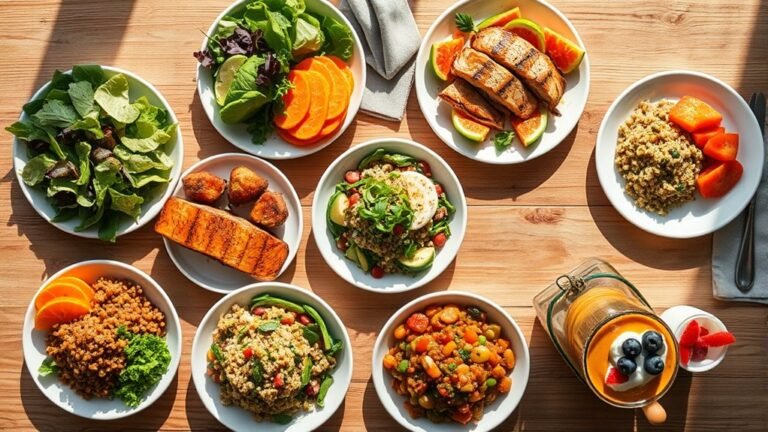
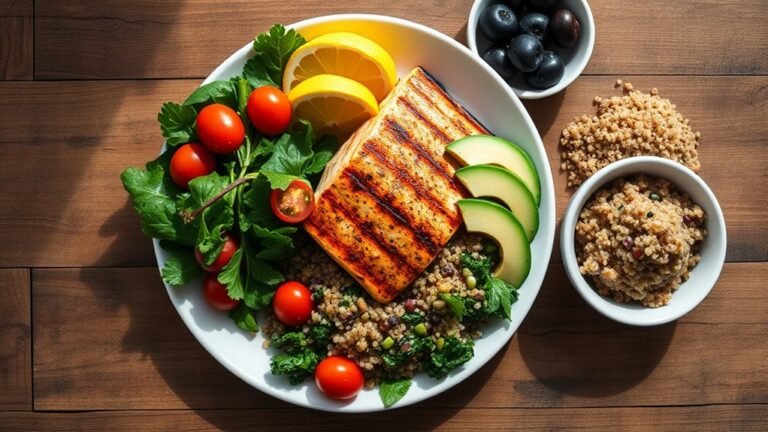
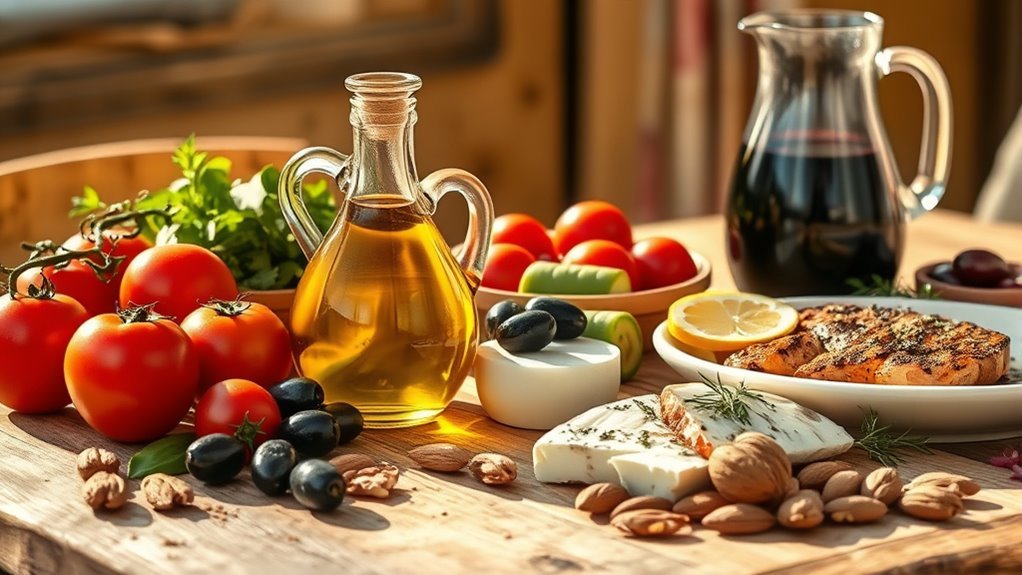
Building on expert nutrition advice, the Mediterranean diet offers straightforward food lists to help you plan meals effortlessly. By focusing on healthy foods like fresh ingredients, whole grains, vegetables, nuts, fish, and olive oil, you can enjoy flavorful, nutritious meals without stress.
These food lists simplify meal planning, ensuring you include a variety of nutrient-rich options.
Here’s a quick guide to essential Mediterranean diet food lists:
| Category | Examples |
|---|---|
| Vegetables | Tomatoes, spinach, bell peppers |
| Whole Grains | Brown rice, quinoa, whole wheat |
| Nuts & Legumes | Almonds, chickpeas, walnuts |
| Fish & Healthy Fats | Salmon, sardines, olive oil |
Using these food lists, you’ll focus on fresh, wholesome ingredients that support your health and keep meal prep simple. Try to incorporate fish at least twice a week and use olive oil as your primary fat source for authentic Mediterranean diet benefits.
Step-by-Step Mediterranean Meal Plans
You’ll find step-by-step Mediterranean meal plans that guide you through balanced daily meals, giving you plenty of flexibility in your food choices. These plans include sample menus packed with wholesome ingredients like lean proteins, whole grains, and fresh vegetables.
Plus, with clear portion sizes and simple recipes, sticking to healthy eating becomes easy and enjoyable—without feeling restricted at all.
Balanced Daily Meal Structure
Three balanced meals and two snacks make up a typical Mediterranean daily meal plan that keeps your energy steady and nutrients well-distributed. This meal structure centers on nutrient balance by emphasizing plant-based foods like vegetables, whole grains, and legumes, complemented by healthy fats from olive oil and nuts. Portion control guarantees you get enough fuel without overeating.
Here’s how you can structure your day:
- Breakfast: Combine whole grains, fresh fruit, and nuts for a nutrient-rich start.
- Lunch: Focus on vegetables, lean protein such as fish or poultry, and whole grains.
- Dinner: Prioritize fish, vegetables, and a drizzle of olive oil for healthy fats.
Snacks like nuts or fresh fruit help maintain energy between meals, supporting your balanced meals approach.
Flexible Food Choices
Maintaining a balanced meal structure sets the stage for flexibility in your food choices throughout the day. The Mediterranean meal plans promote flexible eating by offering a variety of foods like vegetables, whole grains, and healthy fats, ensuring meal flexibility without sacrificing nutrition.
You can enjoy adaptable meals such as oats with berries for breakfast or grilled chicken with roasted veggies for dinner, fitting your lifestyle seamlessly. This approach supports a personalized diet, accommodating dietary restrictions like vegetarian or gluten-free needs.
Sample Menu Ideas
A well-structured Mediterranean meal plan guides you through simple, nutritious meals that emphasize fresh produce, whole grains, and healthy fats. To get started, try these sample menu ideas that focus on nutrient-dense ingredients like olive oil, vegetables, and lean proteins:
- Breakfast: Greek yogurt topped with fresh fruit, nuts, and a drizzle of olive oil for healthy fats.
- Lunch: Whole-grain pita stuffed with hummus and a variety of colorful vegetables.
- Dinner: Grilled fish paired with roasted vegetables sautéed in extra virgin olive oil.
For effective meal planning, prepare grains and chop vegetables in advance to simplify meal prep. Use recipe tips like baking and grilling instead of frying to keep meals light and nutritious. This approach guarantees you enjoy balanced, flexible Mediterranean meals every day.
Flexible Options for Vegetarians and Gluten-Free Diets
Although the Mediterranean Diet traditionally includes a variety of grains, meats, and dairy, you can easily adapt it to fit vegetarian and gluten-free needs without losing its health benefits. By focusing on plant-based proteins like nuts, beans, lentils, and soy, along with gluten-free grains such as quinoa and rice, you maintain dietary flexibility while meeting your nutrient needs. Dairy products and a variety of vegetables and fruits also support this adaptation.
| Category | Vegetarian Options | Gluten-Free Alternatives |
|---|---|---|
| Proteins | Nuts, lentils, beans, soy | Nuts, seeds, beans |
| Grains | Whole grains like barley, farro | Gluten-free grains like quinoa, rice |
| Dairy Products | Cheese, yogurt | Cheese, yogurt |
| Vegetables & Fruits | All varieties | All varieties |
| Snacks | Nuts and seeds | Nuts and seeds |
Consulting a dietitian guarantees a balanced Mediterranean Diet tailored to your lifestyle.
Tips to Overcome Mediterranean Diet Challenges
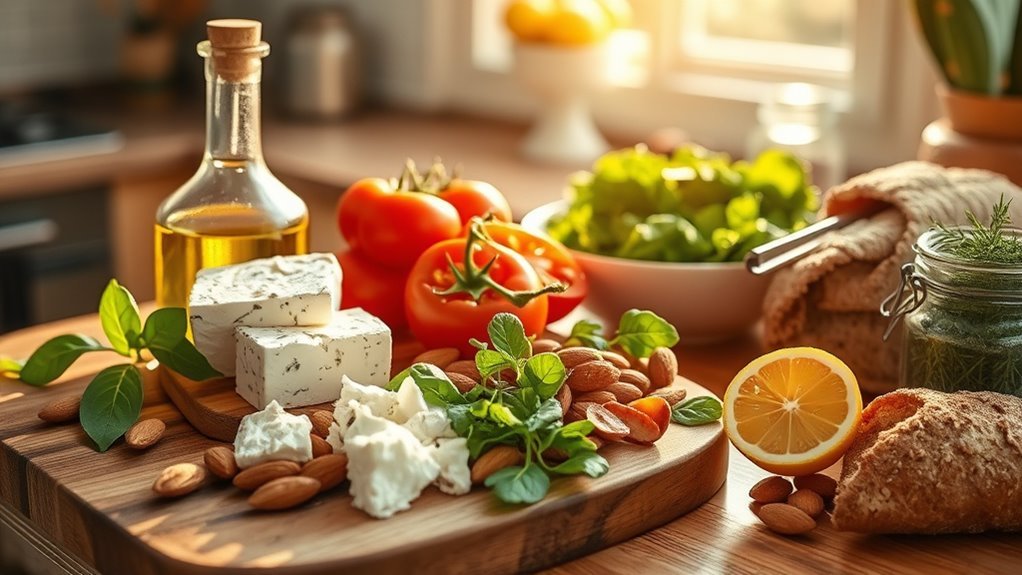
You might find it tricky to manage food variety while sticking to the Mediterranean diet, especially when adapting to personal tastes or handling social events. But don’t worry—you can customize meals to fit your preferences and plan ahead for gatherings. Let’s explore some practical tips to help you stay on track without feeling restricted.
Managing Food Variety
To keep your Mediterranean diet exciting and satisfying, focus on incorporating a wide range of colorful fruits, vegetables, and whole grains. Managing food variety is key to long-term adherence and a balanced diet. Start with these three strategies:
- Embrace meal planning and meal rotation by alternating fish, lean meats, and plant-based proteins weekly. This helps maintain ingredient diversity and nutritional balance.
- Experiment with regional recipes and diverse cooking methods. Try raw, roasted, grilled, or stewed dishes to prevent monotony.
- Use flavoring techniques like herbs, spices, and citrus to enhance taste without added salt or processed ingredients.
Adapting to Preferences
When adapting to the Mediterranean diet, tapping into familiar flavors and regional ingredients makes the shift smoother and more enjoyable. You can adapt recipes using ingredient substitution to fit dietary preferences without losing cultural relevance.
Make a gradual progression by swapping fried foods for baked options, and use cost-effective strategies like batch cooking to keep it affordable. Community resources support sustainable changes and improve access to fresh produce. Flavor customization lets you keep meals exciting while respecting your palate.
| Challenge | Solution | Benefit |
|---|---|---|
| Dietary preferences | Adapt recipes | Personalizes nutrition |
| Affordability | Bulk buying, batch cooking | Cost-effective strategies |
| Access to produce | Community resources | Sustainable changes |
| Transition | Gradual recipe swaps | Easier diet adaptation |
Navigating Social Situations
Adapting recipes and managing preferences lays a strong foundation, but social situations often test your commitment to the Mediterranean diet. To stay on track during social gatherings, consider these tips:
When dining out, choose grilled fish, vegetable sides, and salads dressed with olive oil. This helps maintain diet adherence while enjoying shared dishes.
Bring healthy snacks like nuts or fresh fruit to avoid less nutritious options and control hunger between meals.
Practice portion control by sharing dishes or serving smaller amounts, and opt for water or herbal tea over sugary drinks or moderate alcohol to support healthy choices.
Community Support and Trusted Resources for Success
Because sticking to a new diet can be challenging, having strong community support and trusted resources makes all the difference in maintaining the Mediterranean diet. You’ll find community support through peer groups and local health initiatives that boost adherence by creating shared goals and accountability.
Trusted resources like Cleveland Clinic research, American Heart Association guidelines, and CDC recommendations offer evidence-based advice to guide your journey. Access expert-led guidance from nutrition care teams who provide personalized counseling tailored to your health needs and preferences.
Educational materials such as brochures, recipes, and online tools help you sustain healthy habits long-term. Collaboration between healthcare providers, community organizations, and public health agencies strengthens community programs, ensuring you have the infrastructure and encouragement to succeed.
Frequently Asked Questions
How Often Is New Content Added to the Mediterranean Diet Hub?
You’ll find the content update frequency varies, typically monthly or quarterly, ensuring fresh recipe additions, diet tips refresh, and expert article updates. Seasonal feature releases and nutrition fact updates keep things timely.
They also include user story submissions and featured success stories to inspire you. Community challenge info and upcoming events get updated regularly, so you’re always in the loop. Signing up lets you catch every new post right away.
Can I Track My Progress Using the Hub’s Tools?
Yes, you can easily track your progress using the hub’s tools, so you won’t feel lost or overwhelmed. With meal logging, activity monitoring, and nutritional insights, you’ll see exactly how your choices impact your health.
You can set personalized goals for weight management and habit formation, receive reminder alerts, and enjoy progress visuals that keep you motivated. Plus, achievement badges celebrate your milestones, making progress tracking rewarding and effective.
Are There Mobile Apps Linked to the Mediterranean Diet Hub?
Yes, you can use the Mediterranean Diet Hub’s mobile app, which gives you access to Mediterranean recipes, diet tips, and personalized meal plans right on your phone. The app also offers nutritional info, cooking videos, and shopping lists to simplify your grocery trips.
You’ll find expert advice, user testimonials, and up-to-date dietary guidelines all designed to help you enjoy the health benefits of the Mediterranean diet every day.
Does the Hub Offer Personalized Diet Consultations?
You don’t get a one-size-fits-all meal plan here because who wants to eat like a generic robot? The hub offers personalized diet consultations with expert advice, nutrition coaching, and health consultations tailored to your dietary preferences.
They conduct thorough dietary assessments to craft custom recipes and tailored menus just for you. Plus, you’ll get ongoing health tracking and dietary adjustments to keep you on track and feeling great.
How Can I Contribute Recipes or Tips to the Community?
You can contribute by sharing recipes and community tips through the hub’s submission platforms or forums. Offer ingredient swaps, meal planning advice, and cooking techniques that make the Mediterranean diet easier to follow.
Include dietary modifications to suit different needs, highlight cultural influences, and suggest seasonal ingredients. Don’t forget snack ideas and beverage pairings to round out meals.
Engaging this way helps everyone enjoy and personalize their Mediterranean journey.
Conclusion
You’ll enjoy vibrant health, savor delicious meals, and embrace a lifestyle that’s both flexible and fulfilling. You’ll find expert advice, simple food lists, and easy meal plans that fit your needs.
You’ll overcome challenges with helpful tips and connect with a supportive community. By choosing the Mediterranean diet, you’re choosing balance, variety, and lasting wellness.
So plunge in, stay consistent, and watch your life transform one meal at a time.